Plug & Range

Best Level 2 EV Chargers

A 240V Level 2 charger is the upgrade that makes owning an EV effortless — these are the units worth your money, ranked on amps, cable reach and what they cost to install, not just the sticker price.

By Stephen V.Last updated How we pick

“Level 2” just means a 240V charger, and almost every serious home charger qualifies — so the real shopping decision is amperage, cable length and how much you’re paying for the badge on the box. The chargers below span a true budget plug-in unit up to a compact 48-amp smart charger, and every one of them is a genuine 240V charger with its own published certifications, not a Level 1 trickle-charger dressed up in marketing copy.

We rank them on the numbers that actually change your experience: maximum amps and the miles of range they add per hour, cable length, the circuit each one needs, and what you get for the price step up from budget to premium. The quick-pick table below gets you to an answer fast; the full write-ups underneath explain the trade-off behind each pick, including where the cheapest option is also the smartest one.

How this is funded:we earn a commission if you buy through our links, at no extra cost to you. It never changes which product we recommend, and we’ll tell you when we’d skip one. Full disclosure.

Quick picks

Ranked on published specs, charging speed, electrical fit and value. Select a row to jump to the full write-up. We have not bench-tested these chargers — here is exactly what we do instead.

#ProductBest forPrice
1
Emporia Level 2 EV Charger

Emporia Level 2 EV Charger

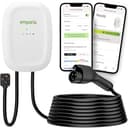
The value pick that never feels like one. You get the full 48 amps, an ENERGY STAR listing, real Wi-Fi energy tracking and a 25 ft cable for well under what the marquee brands charge. When someone asks us where to start, this is usually the first name out of our mouths.

Best overall value
$449.00 · View on Amazon

Price as of July 19, 2026. #ad How we’re funded

2
ChargePoint Home Flex

ChargePoint Home Flex

If you'd rather buy a charger once and be done, this is the safe call. You set the current in the app anywhere from 16 to 50 amps, so it fits whatever your panel can spare today and still has room to grow if you upgrade the circuit later. The app is the most polished of the bunch and the warranty is long.

Best flexible amperage
$494.00 · View on Amazon

Price as of July 19, 2026. #ad How we’re funded

3
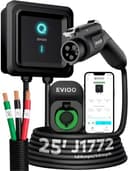
EVIQO 48A Level 2 Charger

EVIQO 48A Level 2 Charger

A lot of charger for the money. You get 48 amps, Wi-Fi scheduling, ENERGY STAR, and the longest usable reach in this group thanks to a 25 ft cable plus a 40-inch input lead. If Emporia is sold out or you want maximum cable, this is the value alternative to have in mind.

Best cable reach
$428.99 · View on Amazon

$479.0010% off

Price as of July 19, 2026. #ad How we’re funded

4
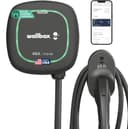
Wallbox Pulsar Plus

Wallbox Pulsar Plus

The one to reach for when wall space is tight. It's among the smallest 48A chargers made, and Power Boost load balancing lets it share a circuit without tripping the main — which can save you a panel upgrade. It's a polished, premium unit, and the price says so.

Best compact
$614.99 · View on Amazon

$699.9912% off

Price as of July 19, 2026. #ad How we’re funded

5
Grizzl-E Classic

Grizzl-E Classic

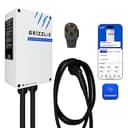
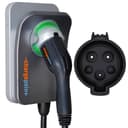
A charger that does one thing and refuses to complicate it. No app, no account, no firmware to brick — just a cast-aluminum box rated to keep working outdoors through a hard winter. If 'set it and forget it' is the whole brief, stop reading and buy this.

Best no-frills
$299.99 · View on Amazon

Price as of July 19, 2026. #ad How we’re funded

6
Lectron 40A Portable Level 2 Charger

Lectron 40A Portable Level 2 Charger

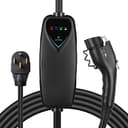
The least-expensive honest route into real Level 2 charging. Plug it into a NEMA 14-50 outlet, pull a true 40A / 9.6 kW, and unplug it to throw in the trunk for a trip. The trade-offs for the price are no app and a shorter warranty — both fair at this cost.

Best budget
$259.99 · View on Amazon

Price as of July 19, 2026. #ad How we’re funded

The picks in full

#1Best overall value

Emporia Level 2 EV Charger

The value pick that never feels like one. You get the full 48 amps, an ENERGY STAR listing, real Wi-Fi energy tracking and a 25 ft cable for well under what the marquee brands charge. When someone asks us where to start, this is usually the first name out of our mouths.

Strengths

  • 48A and ENERGY STAR at a genuinely value price
  • The app tracks energy use, not just an on/off toggle
  • Long 25 ft cable and a remote holster in the box

Trade-offs

  • 48A hardwired needs a 60A circuit; on a NEMA 14-50 plug it's capped at 40A
  • The app is less polished than ChargePoint's, and support is a smaller operation
Max output48 A
Power11.5 kW
ConnectorJ1772
InstallHardwired or NEMA 14-50 plug
Cable length25 ft
Warranty3 years
WiFi + appYes
CertificationsUL listed, ENERGY STAR

Our charging-speed math. Hardwired at 48A (11.5 kW), figure about 40 miles of range an hour at 3.5 mi/kWh. Drop to a 40A plug-in circuit and it's closer to 34.

Build note. Runs 48A hardwired, or 40A on a NEMA 14-50 outlet, with a 25 ft cable and a wall holster included.

Specs read from the manufacturer spec sheet, on July 19, 2026. “Not published” means the brand does not state that figure.

#2Best flexible amperage

ChargePoint Home Flex

If you'd rather buy a charger once and be done, this is the safe call. You set the current in the app anywhere from 16 to 50 amps, so it fits whatever your panel can spare today and still has room to grow if you upgrade the circuit later. The app is the most polished of the bunch and the warranty is long.

Strengths

  • Adjustable 16-50A fits a modest circuit now and a bigger one later
  • The most complete app here: scheduling, reminders and usage history
  • 3-year warranty and a generous 23 ft cable

Trade-offs

  • You pay a brand premium over value 48A units
  • Using the full 50A needs a 60A circuit most older panels can't spare
Max output50 A
Power12 kW
ConnectorJ1772
InstallHardwired (a plug-in NEMA 14-50 SKU is also sold)
Cable length23 ft
Warranty3 years
WiFi + appYes
CertificationsUL/cUL listed, ENERGY STAR

Our charging-speed math. Run it at the full 50 amps (about 12 kW) and, at a middle-of-the-road 3.5 miles per kWh, it puts back roughly 42 miles of range an hour. Turn it down to 40A to live on a 50A circuit and you're at about 34.

Build note. The headline feature is app-adjustable amperage — anywhere from 16A up to 50A, in software.

Specs read from the manufacturer spec sheet, on July 19, 2026. “Not published” means the brand does not state that figure.

#3Best cable reach

EVIQO 48A Level 2 Charger

A lot of charger for the money. You get 48 amps, Wi-Fi scheduling, ENERGY STAR, and the longest usable reach in this group thanks to a 25 ft cable plus a 40-inch input lead. If Emporia is sold out or you want maximum cable, this is the value alternative to have in mind.

Strengths

  • 48A output with Wi-Fi scheduling at a value price
  • 25 ft charging cable plus a 40 in input lead — excellent reach
  • UL, ETL, FCC and ENERGY STAR listings

Trade-offs

  • The hardwired version needs a 60A circuit and an electrician
  • A smaller brand with a shorter track record than ChargePoint or Wallbox
Max output48 A
Power11.5 kW
ConnectorJ1772
InstallHardwired
Cable length25 ft
Warranty3 years
WiFi + appYes
CertificationsUL, ETL, FCC, ENERGY STAR

Our charging-speed math. At 48A (11.5 kW) and 3.5 mi/kWh, about 40 miles of range an hour.

Build note. Ships with a 25 ft charging cable plus a 40 in input cable — among the longest total reach in class.

Specs read from the manufacturer spec sheet, on July 19, 2026. “Not published” means the brand does not state that figure.

#4Best compact

Wallbox Pulsar Plus

The one to reach for when wall space is tight. It's among the smallest 48A chargers made, and Power Boost load balancing lets it share a circuit without tripping the main — which can save you a panel upgrade. It's a polished, premium unit, and the price says so.

Strengths

  • Genuinely compact for a 48A charger — easy to tuck in a tight spot
  • Power Boost load balancing can sidestep a panel upgrade
  • Bluetooth and Wi-Fi with a clean, modern app

Trade-offs

  • One of the pricier chargers in this group
  • Hardwired only — no plug-in option, so it's not renter-friendly
Max output48 A
Power11.5 kW
ConnectorJ1772
InstallHardwired
Cable length25 ft
Warranty3 years
WiFi + appYes
CertificationsENERGY STAR

Our charging-speed math. At 48A (11.5 kW) and 3.5 mi/kWh, about 40 miles of range an hour — and Power Boost can throttle it down to protect a shared circuit.

Build note. One of the most compact 48A chargers in its class, carrying both Bluetooth and Wi-Fi.

Specs read from the manufacturer spec sheet, on July 19, 2026. “Not published” means the brand does not state that figure.

#5Best no-frills

Grizzl-E Classic

A charger that does one thing and refuses to complicate it. No app, no account, no firmware to brick — just a cast-aluminum box rated to keep working outdoors through a hard winter. If 'set it and forget it' is the whole brief, stop reading and buy this.

Strengths

  • Cast-aluminum NEMA 4 / IP67 body — built for the weather and the cold
  • Nothing to update, no account to lock you out
  • UL listed and ENERGY STAR at a mid price

Trade-offs

  • 40A caps its charging speed below the 48A units
  • No scheduling or energy tracking — you'll lean on the car's app for that
Max output40 A
Power9.6 kW
ConnectorJ1772
InstallNEMA 14-50 plug
Cable length24 ft
Warranty3 years
WiFi + appNo
CertificationsUL/cUL listed, ENERGY STAR

Our charging-speed math. At 40A (9.6 kW) and 3.5 mi/kWh it adds roughly 34 miles of range an hour — more than enough to refill a daily commute overnight.

Build note. A die-cast aluminum NEMA 4 / IP67 enclosure and no Wi-Fi at all — the reliability comes from having less to fail.

Specs read from the manufacturer spec sheet, on July 19, 2026. “Not published” means the brand does not state that figure.

#6Best budget

Lectron 40A Portable Level 2 Charger

The least-expensive honest route into real Level 2 charging. Plug it into a NEMA 14-50 outlet, pull a true 40A / 9.6 kW, and unplug it to throw in the trunk for a trip. The trade-offs for the price are no app and a shorter warranty — both fair at this cost.

Strengths

  • A real 40A / 9.6 kW at a budget price
  • Plug-in and portable — no hardwiring, and it travels
  • ETL listed to the UL 2594 / UL 2231 safety standards

Trade-offs

  • No Wi-Fi or app on the base model — the smart version is a separate SKU
  • Shorter 16 ft cable and a 2-year warranty
  • The brand doesn't publish an outdoor/IP enclosure rating
Max output40 A
Power9.6 kW
ConnectorJ1772
InstallNEMA 14-50 plug
Cable length16 ft
Warranty2 years
WiFi + appNo
CertificationsETL listed (UL 2594 / UL 2231)

Our charging-speed math. At 40A (9.6 kW) and 3.5 mi/kWh it adds roughly 34 miles of range an hour.

Build note. A portable plug-in unit — no hardwiring — and the base model carries no Wi-Fi or app.

Specs read from the manufacturer spec sheet, on July 19, 2026. “Not published” means the brand does not state that figure.

How to choose a Level 2 charger

Once you know you want a real 240V charger, three things decide which one: amperage (and the circuit it demands), what you’re paying extra for, and whether your panel can actually deliver the number on the box.

40A vs 48A, and the circuit each one needs

Most of the field here splits into two camps: 40-amp units and 48-amp units. At our standard reference of ~3.5 miles per kWh, 40A (9.6 kW) adds roughly 34 miles of range an hour, and 48A (11.5 kW) adds roughly 40 — a real but modest gap for most daily driving. The bigger difference is what each one demands from your electrical panel. Under the National Electrical Code’s Article 625, EV charging is treated as a continuous load, so a circuit is sized to 125% of what the charger actually draws — the “80% rule” in reverse. Run the math and it lands on round numbers: 40A × 1.25 = 50A, and 48A × 1.25 = 60A. In practice that means a 48-amp charger needs a 60-amp breaker, while a 40-amp charger runs on a more common 50-amp circuit. If your panel is already tight — a 100-amp service with a lot already on it looks very different from a 200-amp service — the “slower” 40-amp charger can be the easier, cheaper install, not just the budget one.

What actually decides the price

Two chargers can push the identical number of amps into your car and still be noticeably apart in price, because amperage isn’t what you’re paying for. It’s the app (a mature one, like ChargePoint’s, costs more to build and support), the enclosure (die-cast metal costs more than plastic, and a real outdoor rating costs more still), cable length, and extras like load balancing. Warranty terms move too — most of this list carries three years, but the cheapest portable unit here drops to two. None of that changes how fast the car fills. If you want the cheapest honest route to 40A, the plug-in Grizzl-E or a budget portable unit gets you there without paying for a screen you may never open.

Matching amps to your panel

Buy for the circuit you have, or the one you’re realistically willing to install — not the biggest number on the box. A 48-amp charger wired to a 50-amp circuit simply runs at 40A anyway, so you’ve paid the 48A premium for headroom you can’t use yet. Have an electrician run a load calculation on your panel before you buy; it’s a quick check and it’s the only way to know what you can actually spare without guessing. And remember the miles-per-hour figures above assume the ~3.5 mi/kWh reference — your own car’s efficiency will move the real number up or down, which is exactly why we print the assumption instead of hiding it. If you’re not sure which charging level you even need, our charging levels guide lays out Level 1 vs Level 2 vs DC fast charging in plain terms. Once the circuit is settled, deciding between a plain charger and an app-connected one is a separate question — our smart charger roundup covers which Wi-Fi features are worth paying for.
Frequently asked questions

What's the difference between a 40A and a 48A Level 2 charger?

About 6 miles of range per hour at our standard 3.5 mi/kWh reference — 34 for 40A versus 40 for 48A. The bigger difference is the circuit: a 48A charger needs a 60A breaker under the NEC's continuous-load rule, while a 40A charger runs on a more common 50A circuit.

Do I need a 60-amp circuit for a Level 2 charger?

Only if you want the full 48-50A that the higher-end chargers offer. A 40A charger — a real Level 2 unit — runs on a 50A circuit, which is a smaller, often cheaper electrical job. Have a licensed electrician confirm what your panel can spare either way.

Is a more expensive Level 2 charger faster?

Not by itself. Charging speed comes from amperage, and a 40A charger is a 40A charger whether it's a budget or premium brand. The extra money in a pricier unit usually buys a more polished app, a tougher weatherproof enclosure, or features like load balancing — not raw speed.

Can I plug in a Level 2 charger myself, or does it need an electrician?

A plug-in unit on an existing NEMA 14-50 outlet is as simple as any large appliance — plug it in. Installing the 240V circuit or outlet itself, or hardwiring a charger, should be done by a licensed electrician to code; that's true of every charger on this list.

Which Level 2 charger should I buy on a budget?

Start with a real 40A unit rather than the cheapest thing you can find — it's still a genuine Level 2 charger, just without app features. The Lectron 40A gets you there as a portable plug-in, and the Grizzl-E Classic is the no-app hardwired-feel alternative with a tougher outdoor-rated body.

Sources

Keep reading