Portable & Plug-In EV Chargers
Chargers you plug into a 240V outlet instead of hardwiring — take-anywhere Level 2 units, NEMA 14-50 plug-in chargers, and the cheapest honest way into real home charging.
Not every home charger needs an electrician standing over a breaker panel for an afternoon. A portable charger plugs into a 240-volt outlet the same way a clothes dryer or an RV does, so setup is as simple as finding the right receptacle and plugging in — no permanent wiring to the charger itself. That makes this the category for renters, apartment-adjacent garages, and anyone who wants to unplug the charger and toss it in the trunk for a road trip.
The trade-off is a lower amperage ceiling than a hardwired charger can reach, which we explain below. This hub covers the best portable chargers overall, a closer look at the NEMA 14-50 outlet most of them plug into, and the cheapest unitsactually worth buying. It also covers the tier below Level 2 — the Level 1 (120V) chargersthat run off an ordinary household outlet with no install at all, which for a plug-in hybrid or a short commute is often genuinely enough — and the portable chargers for Tesla and NACS drivers, where a native plug and the cheaper J1772-plus-adapter route both work. And if the only 240-volt receptacle you have is the one behind the dryer, our NEMA 14-30 dryer outlet pickscover the chargers built to run at the 24 amps that circuit allows — and why a 14-50 charger on an adapter is the wrong shortcut.
If the portable charger is a gift, our road-tripper gift list and new-EV-owner gift listcover the same units in gifter terms — and the Black Friday deals hub records what this tier has historically discounted by.
Everything in Portable
Best Portable EV Chargers
Level 2 chargers light enough to keep in the trunk — plug into a 14-50 at home or on the road, no hardwiring, real 40+ amps.
Our top pick
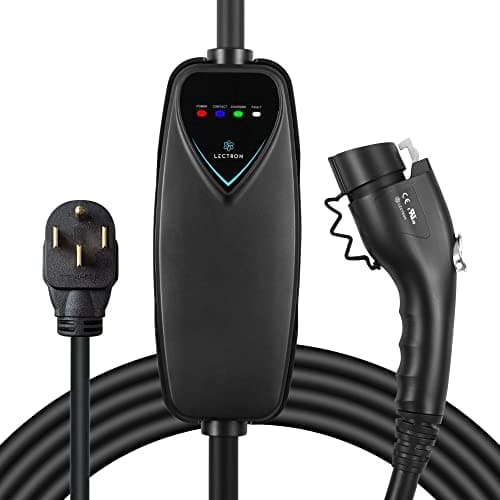
Lectron 40A Portable Level 2 Charger
$269.99 · View on AmazonPrice as of October 18, 2026. #ad How we’re funded
Best NEMA 14-50 EV Chargers
Plug-in chargers for the common 240V range-and-RV-style outlet — what the plug limits you to, and the units that make the most of it.
Best Budget EV Chargers
The cheapest chargers worth buying — where a low price is a smart trade-off, and where it quietly costs you amps, cable or a warranty.
Our top pick
Lectron 40A Portable Level 2 Charger
$269.99 · View on AmazonPrice as of October 18, 2026. #ad How we’re funded
Best Level 1 (120V) EV Chargers
The chargers that run off an ordinary household outlet with no electrician at all — honestly slow, and still the right answer for renters and plug-in hybrids.
Our top pick
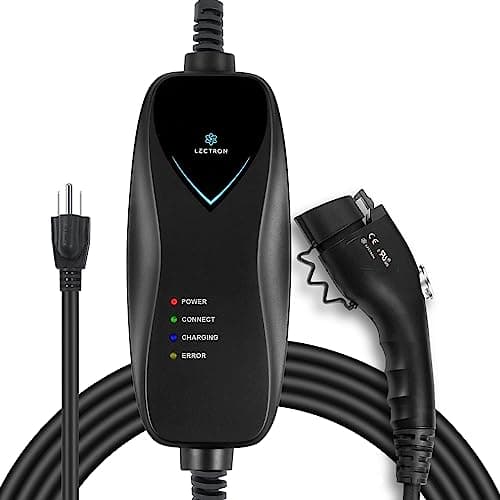
Lectron Level 1 Charger, 15A
Best Portable EV Chargers for Tesla (NACS)
A charger for the trunk that plugs straight into a Tesla — the native-NACS route, the cheaper J1772-plus-adapter route, and which one actually suits you.
Our top pick
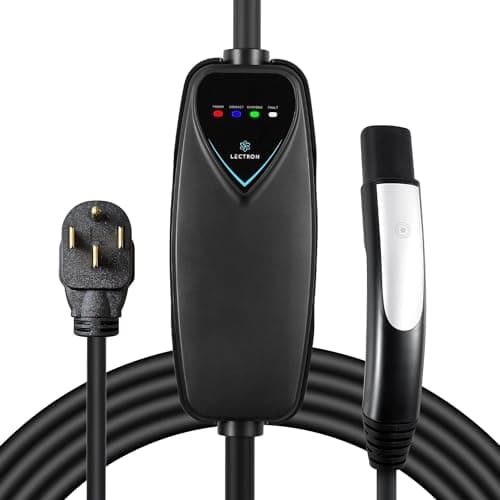
Lectron Level 2 Tesla (NACS) Portable Charger, 40A
Best EV Chargers for Road Trips
A charger that lives in the boot has a different job to one on your wall: it has to be safe at an outlet you did not install, which makes adjustable amperage the spec that matters.
Our top pick
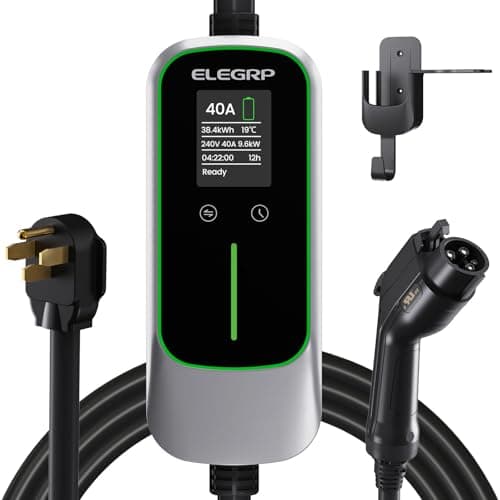
ELEGRP 40A Portable Level 2 Charger (ECP24-40A0-01)
$209.99 · View on AmazonPrice as of October 18, 2026. #ad How we’re funded
Best NEMA 14-30 EV Chargers for a Dryer Outlet
A four-prong dryer outlet is real Level 2 charging at 24 amps. The chargers built for it, the one adapter setup we would accept, and the popular listings we left off.
Our top pick
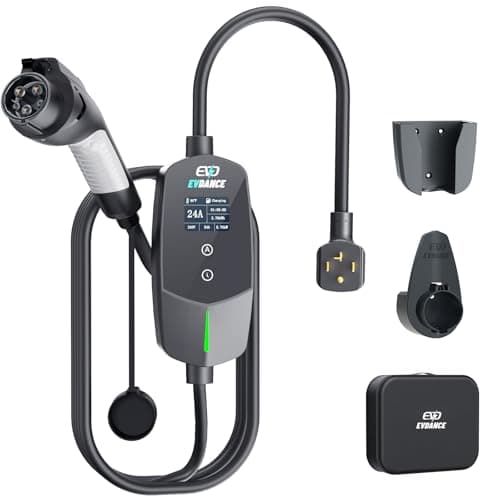
EVDANCE 24A NEMA 14-30 Portable Charger (EV-ACS2405U)
$269.99 · View on AmazonPrice as of October 18, 2026. #ad How we’re funded
Best NEMA 6-50 EV Chargers
The welder outlet in the garage is a 50-amp, 240-volt circuit — the same capacity as a NEMA 14-50. Which chargers reach it without a third-party adapter, and the one that ships the plug in the box.
Our top pick
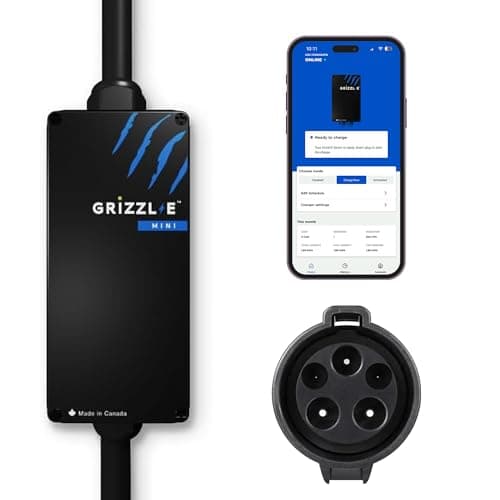
Grizzl-E Mini 40A Portable Charger (J1772)
$479.99 · View on AmazonPrice as of October 18, 2026. #ad How we’re funded
How to choose a portable EV charger
Plug-in vs hardwired: what you’re actually choosing
A hardwired charger is permanently wired straight to a dedicated breaker, with no outlet in between. A plug-in charger instead ends in a large twist-lock or blade plug that seats into a matching wall receptacle, exactly like a range or a dryer. The receptacle itself still has to be installed to code by a licensed electrician if your garage doesn’t already have one — a plug-in charger doesn’t skip that step, it just moves the permanent connection to something you can unplug later. What that buys you is real: the charger travels with you on a trip, moves with you if you rent or relocate, and can be swapped in minutes if it ever needs service, none of which a hardwired unit can do without another electrician visit.
The NEMA 14-50 outlet, in plain terms
Most portable EV chargers plug into a NEMA 14-50 — the same 240-volt, 50-amp outlet that’s been the standard for electric ranges and RV hookups for decades, which is exactly why it’s so widely available and inexpensive for an electrician to add. If your garage or driveway already has one for another appliance, confirm the circuit is actually free to share before assuming you can just plug in next to it — a shared circuit can trip under both loads at once. Our NEMA 14-50 page walks through what a properly sized circuit looks like and the chargers that make the most of it. If the 240V outlet you found is a three-slot welder receptacle rather than a four-prong one, our NEMA 6-50 page covers the same circuit capacity and the one charger that ships the right adapter in the box.
Why plug-in chargers cap out around 40 amps
A NEMA 14-50 outlet and plug are rated for 50 amps, but the National Electrical Code treats EV charging as a continuous load and requires the circuit to be sized to only 80% of that rating for anything running that long — which caps a plug-in charger at 40 amps in practice, even though the receptacle itself is stamped 50. A hardwired charger sidesteps that particular limit by wiring straight to its own dedicated breaker sized for the full load, which is how the fastest units in our Level 2 roundupreach 48 or even 50 amps. Forty amps is still a genuine 34 miles of range an hour, plenty for most daily driving, and it comes with the flexibility of a real cable — our tethered vs untethered guide covers how that attached cable compares to a socket-style charger if portability isn’t actually your top priority.
Frequently asked questions
Can I use a portable EV charger as my everyday home charger?
Yes — plenty of people do. There's no rule that a portable charger has to travel; if 40 amps covers your daily driving, leaving it plugged in permanently is a perfectly normal way to use one, and you still keep the option to unplug it later.
Do I still need an electrician for a plug-in charger?
Usually, for the outlet. The charger itself just plugs in, but the NEMA 14-50 receptacle behind it needs to be wired to a properly sized, dedicated circuit by a licensed electrician if one isn't already there — the charger doesn't remove that step, it just makes swapping the unit itself simple.
Why can't a plug-in charger deliver the full 50 amps of a NEMA 14-50 outlet?
Electrical code treats EV charging as a continuous load and limits it to 80% of a circuit's rating, so a 50-amp outlet supports 40 amps of continuous charging in practice. A hardwired charger avoids that ceiling by wiring to its own larger breaker instead of sharing a standard outlet's rating.
Is a portable charger slower than a hardwired one?
Often, yes — most portable units top out around 40 amps versus 48 or 50 for the fastest hardwired chargers, roughly a 34-versus-40-mile-per-hour difference. For most daily commutes that gap disappears over a full overnight charge, so it's rarely the deciding factor.