Home & Level 2 EV Chargers
The main event: home and Level 2 charger picks ranked on real specs, charging speed and the cost to run them — best overall, best Level 2, and best smart charger.
A home charger is the single upgrade that makes owning an electric car effortless: you plug in after dinner and wake up full, without ever thinking about a public plug. But “the best home charger” has no one answer, because the right unit depends on how you shop. The cheapest honest way into 240V charging is a different pick from a Tesla owner’s native-plug unit, or a smart charger you’ll actually open the app for every night.
If you want the whole field in one place, start with our best home EV chargers roundup, which ranks by the situation you are actually in rather than by spec sheet. Otherwise we split the field into the segments people genuinely buy by — best Level 2, best smart, best outdoor, plus best hardwired for a permanent install above 40 amps, best 48-amp for the fastest tier a house can feed, best for two EVs when one panel has to feed two cars, best for renterswhen you don’t own the wall, best ENERGY STAR when a utility rebate depends on the certification, and best long cable for the spec people regret most, and best NACS when the car takes a native Tesla plug, and best for a 100-amp panel when an electrician has told you the service has no capacity left, best with load management when the fix is a charger that watches the house and backs off, and best without Wi-Fiwhen you want nothing to sign into — and pick a winner in each. If you have already narrowed it to two chargers, our head-to-head comparisonssettle those matchups directly. Every charger here is a real Level 2 unit that’s currently sold, carries a UL or ETL safety listing, and is ranked on the numbers that decide it: maximum amps and the miles-per-hour they translate to, the connector, how it installs, cable length, weather rating and warranty. Each page leads with a quick-pick table so the answer is on the first screen, then reasons it out charger by charger — including who should skip the top pick.
Shopping in the run-up to the holidays? Our Black Friday & Cyber Monday deals hub records what has historically gone on sale in this category and what has not, and our gift guides re-explain these same picks for someone buying a charger as a present.
One more lens, if you are buying for the long term rather than for this week’s commute. Our most reliable home EV chargers page ranks the same field on the four durability promises a manufacturer will actually put in writing — enclosure rating, published operating temperature range, certification and warranty term — because nobody publishes a failure rate for this category and we are not going to invent one.
Everything in Home Chargers
Best Level 2 EV Chargers
The 240V chargers that actually top up a car overnight, from value 48-amp units to weatherproof workhorses — and how many amps you can really use.
Best Smart Wi-Fi EV Chargers
App-connected chargers that schedule around cheap overnight power and track energy — plus an honest note on which 'smart' features you'll actually open.
Our top pick
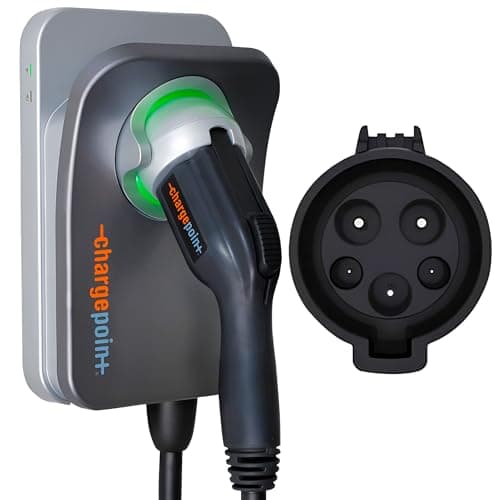
ChargePoint Home Flex
$516.71 · View on AmazonPrice as of October 18, 2026. #ad How we’re funded
Best Outdoor & Cold-Weather EV Chargers
Chargers rated to live fully exposed and keep working through a hard freeze — the enclosure ratings that matter, and the units that actually earn them.
Our top pick
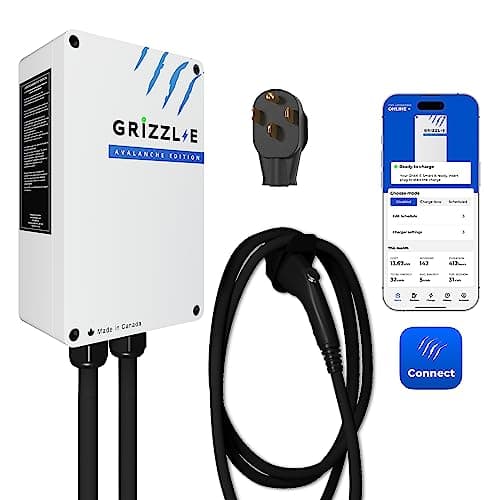
Grizzl-E Classic Connect
$349.99 · View on AmazonPrice as of October 18, 2026. #ad How we’re funded
Best Hardwired EV Chargers
The chargers that wire straight into the panel with no plug in the middle — why that's the more permanent install, and the units worth doing it for.
Our top pick
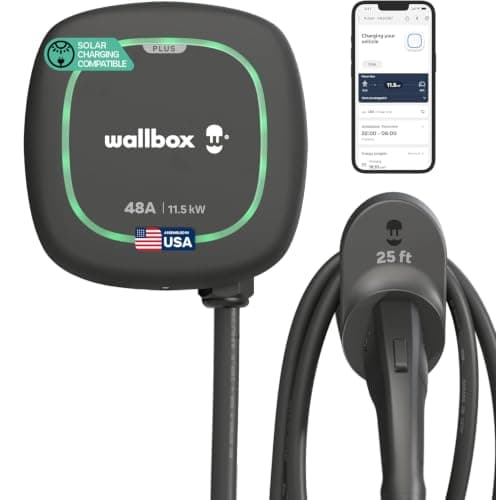
Wallbox Pulsar Plus
Best EV Chargers for Two EVs
Two cars, one panel: load management, shared circuits and scheduling — and the chargers that make a second EV possible without a service upgrade.
Our top pick
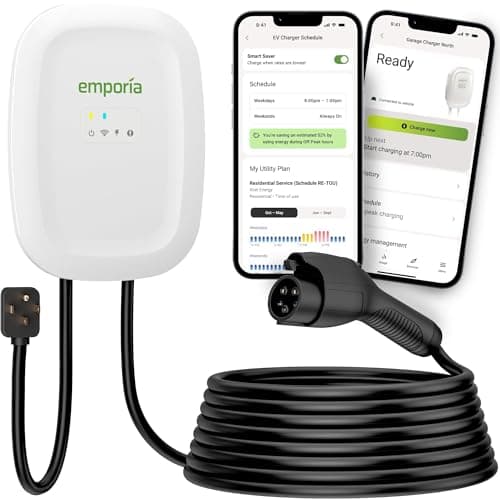
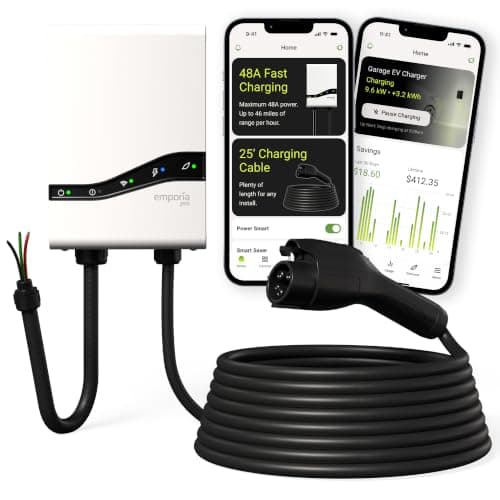
Emporia Pro with PowerSmart
$599.00 · View on AmazonPrice as of October 18, 2026. #ad How we’re funded
Best EV Chargers with Long Cables
Cable reach is the spec people regret most. Here's how far 25 feet actually gets you, and the chargers that give you the most of it.
Our top pick
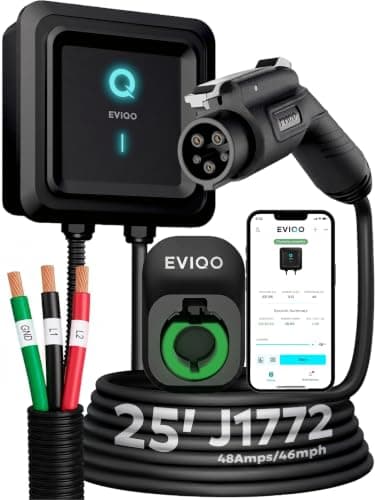
EVIQO 48A Level 2 Charger
Best Home EV Chargers
The whole field in one place, ranked by the situation you're actually in — first EV, tight panel, exposed wall, two cars, a rental — rather than by spec sheet alone.
Best 48-Amp EV Chargers
The fastest current a home charger can pull without a service upgrade — what 48 amps really buys you, the 60-amp circuit it demands, and the units worth it.
Best EV Chargers for Apartments & Renters
Charging without owning the wall: what you can install with a landlord's blessing, what needs no install at all, and the chargers that move out with you.
Our top pick
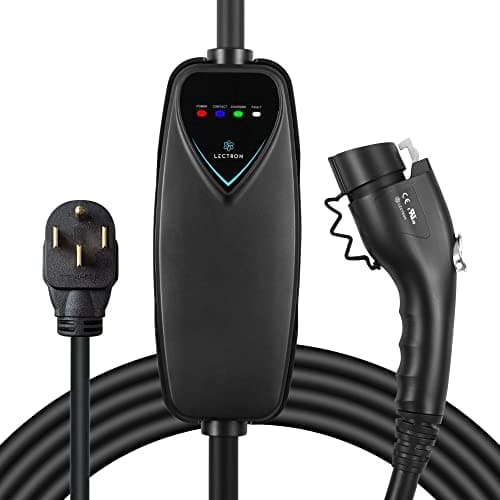
Lectron 40A Portable Level 2 Charger
$269.99 · View on AmazonPrice as of October 18, 2026. #ad How we’re funded
Best ENERGY STAR EV Chargers
Utility rebates and some tax incentives ask for the certification by name. Which of our picks actually publish an ENERGY STAR listing, and which quietly don't.
Best 40-Amp EV Chargers
Forty amps is the ceiling a NEMA 14-50 outlet can legally feed, which makes it the most common home charger there is — and the tier where the price spread is widest.
Our top pick
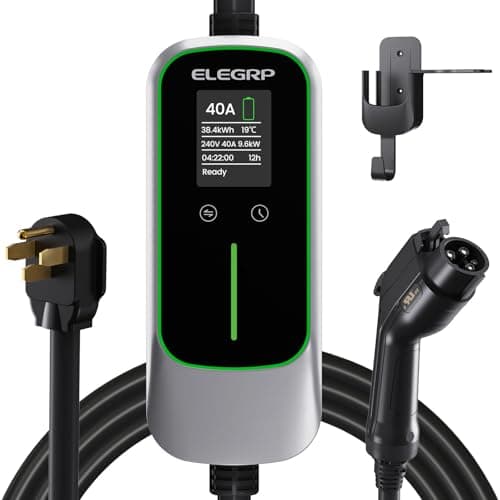
ELEGRP 40A Portable Level 2 Charger (ECP24-40A0-01)
$209.99 · View on AmazonPrice as of October 18, 2026. #ad How we’re funded
Best NACS (Tesla) Home EV Chargers
A native Tesla plug on the wall means no adapter to lose — but it also decides which cars can use your charger. The NACS field ranked, from a 48-amp hardwired unit to the cheapest way in.
Our top pick
EVIQO NACS 48A Level 2 Charger
Best EV Chargers for a 100-Amp Panel
A full panel is the reason most home charging plans stall. It is almost never a reason to buy a slower charger — only an adjustable one. The units that publish a range you can dial down, and the one that manages the load for you.
Our top pick
ChargePoint Home Flex
$516.71 · View on AmazonPrice as of October 18, 2026. #ad How we’re funded
Best EV Chargers Under $500
Every Level 2 charger on this site that a live price check puts under $500 today, ranked on what you give up at that price — and it re-checks itself daily.
Best EV Chargers for Solar Panels
Most chargers cannot see what your roof is making. The few that can need a second device to do it — here is which, what it costs you, and the cheaper way to get most of the benefit.
Best EV Chargers for Airbnb & Rental Hosts
A guest charger has a different job to your own: it has to fit any car, stop strangers using it, and tell you what it cost. The units that do those three things.
Best Level 2 Chargers for Plug-In Hybrids
A plug-in hybrid needs far less charger than a full EV. The cheaper, smaller-circuit units that fill one overnight — and the honest case for skipping Level 2 altogether.
Our top pick
ELEGRP 40A Portable Level 2 Charger (ECP24-40A0-01)
$209.99 · View on AmazonPrice as of October 18, 2026. #ad How we’re funded
Best EV Chargers Without Wi-Fi
Chargers with no app, no account and no firmware to keep working — ranked on what replaces the app, from a 48-amp hardwired unit to a dryer-outlet plug-in.
Our top pick
ELEGRP 40A Portable Level 2 Charger (ECP24-40A0-01)
$209.99 · View on AmazonPrice as of October 18, 2026. #ad How we’re funded
Best EV Chargers with Load Management
“Load management” is sold as one feature and is really three. The chargers that genuinely watch your panel and back off, the one that shares with a second charger for free, and the much cheaper option most people actually need.
Our top pick
Emporia Pro with PowerSmart
$599.00 · View on AmazonPrice as of October 18, 2026. #ad How we’re funded
Best 32-Amp EV Chargers
Thirty-two amps is a 40-amp circuit, which is what a lot of panels can actually spare. The chargers that can be set to 32A and held there — and which ones enforce it in hardware rather than in an app.
Our top pick
EVIQO 48A Level 2 Charger
Best Plug-In EV Chargers
No conduit, no hole in the drywall, no electrician on the day — a 240-volt receptacle and a plug. The plug-in Level 2 chargers worth buying, and the 40-amp ceiling that comes with the plug.
Our top pick
ELEGRP 40A Portable Level 2 Charger (ECP24-40A0-01)
$209.99 · View on AmazonPrice as of October 18, 2026. #ad How we’re funded
Best EV Chargers with Access Control
Anyone who can reach the connector can spend your electricity. The chargers that can require a card, an app or an invitation before they deliver a single amp — and the ones that cannot be locked at all.
Our top pick
Autel MaxiCharger Home
Best 50-Amp EV Chargers
Fifty amps is the highest output any home charger sells, and only three of the chargers we cover can reach it — each one asking for a 70-amp circuit to do it. The three that can, and the 48-amp units most people should buy instead.
Our top pick
ChargePoint Home Flex
$516.71 · View on AmazonPrice as of October 18, 2026. #ad How we’re funded
Most Reliable Home EV Chargers
Nobody can hand you a failure rate for a home charger, ours included. What brands do publish is the enclosure, the temperature range, the certification file and the warranty — four promises you can hold them to, ranked.
Our top pick
Grizzl-E Classic Connect
$349.99 · View on AmazonPrice as of October 18, 2026. #ad How we’re funded
Best Home EV Chargers for the Hyundai IONIQ 5
Hyundai publishes the number that settles this: 10.9 kW. That makes 48 amps the ceiling worth paying for, 40 amps a small compromise, and anything above 48 money you cannot spend — and on a new car the plug on the wall has to be NACS.
Our top pick
EVIQO NACS 48A Level 2 Charger
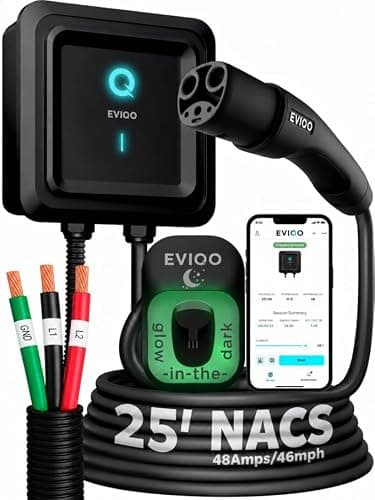
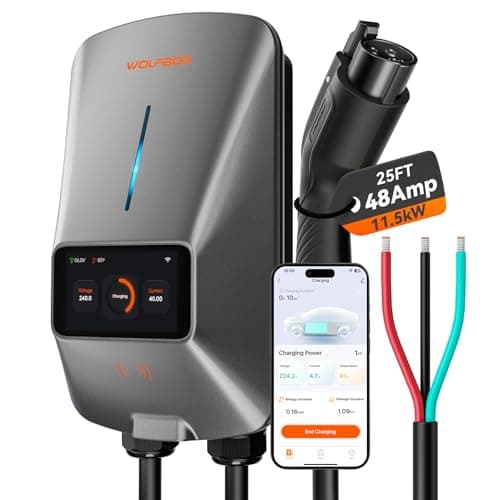
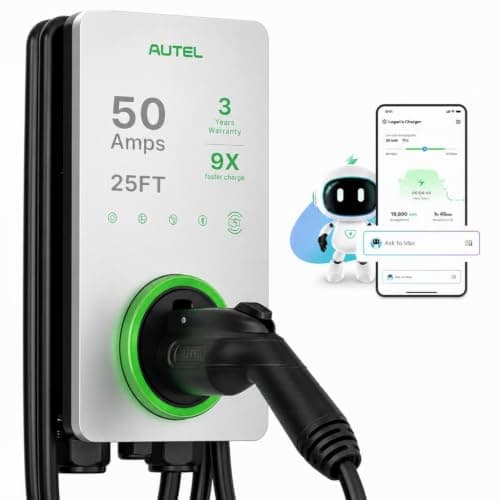
How to choose the right home charger
Two questions settle most of it. First, what do you drive?A Tesla — or any of the growing list of EVs shipping with a NACS port — is happiest with a native NACS charger, though a J1772 unit plus an adapter works fine too. Everything else uses J1772. Our best chargers for Tesla page covers the NACS route in full. Second, how much do you want the charger to do? If time-of-use rates make scheduling worthwhile, you’re in smart-charger territory; if you just want reliable overnight charging for as little as possible, start with the budget picks.
Amps decide charging speed — but your panel decides amps
The headline spec on any of these chargers is amperage. A 40-amp charger adds about 34 miles of range per hour; a 48-amp charger, about 40. The difference is real but modest, and it comes with a catch: by the National Electrical Code’s 80% continuous-load rule, a 48-amp charger needs a 60-amp circuit, while a 40-amp charger runs on a more common 50-amp circuit. If your panel is already crowded, the “slower” 40-amp charger can be the smarter, cheaper install. Our Level 2 roundup walks through matching amps to your circuit.
What actually decides the price
Three things move a charger’s price, and only one is about how fast it charges: the brand and its app (ChargePoint and Wallbox charge for polish), the build (a die-cast weatherproof enclosure costs more than plastic), and smart features (Wi-Fi, energy monitoring, load balancing). A budget unit and a premium one can push the exact same amps into your car. You’re paying for convenience and durability — real, but optional — and we flag when the cheaper option does the same core job.
The mistake buyers make
Overbuying amps they can’t use. A 48-amp charger on a panel that can only spare a 40-amp circuit simply runs at 40 amps — you paid for headroom you can’t reach. Buy for the circuit you have (or will realistically install), not for the biggest number on the box. And run the running-cost math before you fixate on speed: our cost-to-charge guide shows what a full charge actually costs on your rate. And if the circuit you have is a 40-amp one, our 32-amp roundupranks the chargers that can be held at 32 amps — and shows which of them enforce that in hardware rather than in an app.
Two more ways to narrow it down
If you would rather not pay an electrician on the day, our best plug-in chargersroundup covers the units that need only a 240-volt receptacle and a plug — along with the 40-amp ceiling that comes with every one of them, and why that ceiling is the receptacle rather than the charger. And if the charger is going somewhere other people can reach it, our access-control roundupranks the chargers that can require a card, an app or a named invitation before they deliver a single amp — and names the ones that cannot be locked at all.
If you are shopping at the top of the range
Fifty amps is the fastest output sold for a house, and our best 50-amp chargersroundup is the page that tells you what it costs: only three of the chargers we cover can reach it, and each of their manufacturers publishes the same requirement — a 70-amp circuit, not the 60-amp one a 48-amp charger needs. It also makes the case most buyers should hear, which is that the two amps between 48 and 50 are worth about 1.7 miles of range an hour.
If you drive a Hyundai IONIQ 5
One car gets its own page here, because Hyundai publishes the number that settles the whole decision and almost nobody quotes it: the IONIQ 5 accepts 10.9 kW of AC power, which is about 45 amps. Our best chargers for the IONIQ 5 works from that figure and from EPA’s published 240-volt charge times for every trim back to 2022, so you can see why 48 amps is the right ceiling, why a 50-amp charger is money you cannot spend on this car, and what the native NACS port on a new one does to the connector you need on the wall.
Frequently asked questions
Is a more expensive charger faster?
Not necessarily. Charging speed is set by amperage and your car — a 40-amp charger is a 40-amp charger whether it costs $260 or $500. The extra money buys an app, a tougher enclosure, or load balancing, not raw speed.
Do I need a smart Wi-Fi charger?
Only if you'll use it. Smart chargers help if your utility has time-of-use rates and you want to schedule around them, or you want energy data. But most EVs can schedule charging in the car's own app, so a simple non-smart charger is fine for many people.
Should I buy a NACS or a J1772 charger?
Match it to your car. Tesla and newer NACS-equipped EVs are happiest with a native NACS charger; every other EV uses J1772. Adapters bridge the two cheaply either way, so it's a convenience choice, not a compatibility trap.
How many amps do I need for a home EV charger?
For most drivers, 40 amps is plenty — it adds about 34 miles of range per hour, which refills a normal day's driving many times over during an overnight charge. Go to 48 amps only if you drive a lot of miles and your panel can carry the required 60-amp circuit.