Plug & Range

Best Smart Wi-Fi EV Chargers

Wi-Fi buys you scheduling, energy tracking and sometimes load balancing — but not every app-connected charger uses that connection the same way. Here are the ones worth the extra cost, and an honest note on the features you probably won’t open.

By Stephen V.Last updated How we pick

“Smart” on a charger’s box usually just means it has Wi-Fi and an app. What that app actually does for you varies a lot more than the marketing suggests — some chargers give you real scheduling and live energy data, others offer little beyond an on/off toggle you could get from a plain timer, and none of them make the car itself charge any faster. Every pick below has a genuinely useful app behind the Wi-Fi, not just the connectivity to claim the label.

We ranked them on what the app actually adds: scheduling flexibility, energy tracking you can trust, and — for one pick — load balancing that can spare you a panel upgrade. All five are real Level 2 chargers first, each with its own published certifications, and smart features layered on top rather than the other way around. Below the quick-pick table you’ll find full specs for each, plus a section on which smart features are worth paying for and which ones most owners never touch.

How this is funded:we earn a commission if you buy through our links, at no extra cost to you. It never changes which product we recommend, and we’ll tell you when we’d skip one. Full disclosure.

Quick picks

Ranked on published specs, charging speed, electrical fit and value. Select a row to jump to the full write-up. We have not bench-tested these chargers — here is exactly what we do instead.

#ProductBest forPrice
1
ChargePoint Home Flex

ChargePoint Home Flex

If you'd rather buy a charger once and be done, this is the safe call. You set the current in the app anywhere from 16 to 50 amps, so it fits whatever your panel can spare today and still has room to grow if you upgrade the circuit later. The app is the most polished of the bunch and the warranty is long.

Best app overall
$494.00 · View on Amazon

Price as of July 19, 2026. #ad How we’re funded

2
Emporia Level 2 EV Charger

Emporia Level 2 EV Charger

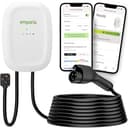
The value pick that never feels like one. You get the full 48 amps, an ENERGY STAR listing, real Wi-Fi energy tracking and a 25 ft cable for well under what the marquee brands charge. When someone asks us where to start, this is usually the first name out of our mouths.

Best value smart
$449.00 · View on Amazon

Price as of July 19, 2026. #ad How we’re funded

3
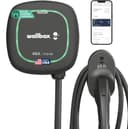
Wallbox Pulsar Plus

Wallbox Pulsar Plus

The one to reach for when wall space is tight. It's among the smallest 48A chargers made, and Power Boost load balancing lets it share a circuit without tripping the main — which can save you a panel upgrade. It's a polished, premium unit, and the price says so.

Best for load balancing
$614.99 · View on Amazon

$699.9912% off

Price as of July 19, 2026. #ad How we’re funded

4
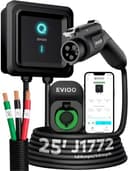
EVIQO 48A Level 2 Charger

EVIQO 48A Level 2 Charger

A lot of charger for the money. You get 48 amps, Wi-Fi scheduling, ENERGY STAR, and the longest usable reach in this group thanks to a 25 ft cable plus a 40-inch input lead. If Emporia is sold out or you want maximum cable, this is the value alternative to have in mind.

Best value long-cable
$428.99 · View on Amazon

$479.0010% off

Price as of July 19, 2026. #ad How we’re funded

5
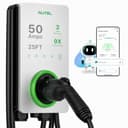
Autel MaxiCharger Home

Autel MaxiCharger Home

Built for the driveway that takes the full brunt of the weather. The NEMA 4X shell is rated to keep charging through brutal cold and heat, it delivers a full 50 amps, and the app is genuinely capable. If your charger will live fully exposed, this is the one to shortlist.

Best rugged smart
$424.00 · View on Amazon

$568.0025% off

Price as of July 19, 2026. #ad How we’re funded

The picks in full

#1Best app overall

ChargePoint Home Flex

If you'd rather buy a charger once and be done, this is the safe call. You set the current in the app anywhere from 16 to 50 amps, so it fits whatever your panel can spare today and still has room to grow if you upgrade the circuit later. The app is the most polished of the bunch and the warranty is long.

Strengths

  • Adjustable 16-50A fits a modest circuit now and a bigger one later
  • The most complete app here: scheduling, reminders and usage history
  • 3-year warranty and a generous 23 ft cable

Trade-offs

  • You pay a brand premium over value 48A units
  • Using the full 50A needs a 60A circuit most older panels can't spare
Max output50 A
Power12 kW
ConnectorJ1772
InstallHardwired (a plug-in NEMA 14-50 SKU is also sold)
Cable length23 ft
Warranty3 years
WiFi + appYes
CertificationsUL/cUL listed, ENERGY STAR

Our charging-speed math. Run it at the full 50 amps (about 12 kW) and, at a middle-of-the-road 3.5 miles per kWh, it puts back roughly 42 miles of range an hour. Turn it down to 40A to live on a 50A circuit and you're at about 34.

Build note. The headline feature is app-adjustable amperage — anywhere from 16A up to 50A, in software.

Specs read from the manufacturer spec sheet, on July 19, 2026. “Not published” means the brand does not state that figure.

#2Best value smart

Emporia Level 2 EV Charger

The value pick that never feels like one. You get the full 48 amps, an ENERGY STAR listing, real Wi-Fi energy tracking and a 25 ft cable for well under what the marquee brands charge. When someone asks us where to start, this is usually the first name out of our mouths.

Strengths

  • 48A and ENERGY STAR at a genuinely value price
  • The app tracks energy use, not just an on/off toggle
  • Long 25 ft cable and a remote holster in the box

Trade-offs

  • 48A hardwired needs a 60A circuit; on a NEMA 14-50 plug it's capped at 40A
  • The app is less polished than ChargePoint's, and support is a smaller operation
Max output48 A
Power11.5 kW
ConnectorJ1772
InstallHardwired or NEMA 14-50 plug
Cable length25 ft
Warranty3 years
WiFi + appYes
CertificationsUL listed, ENERGY STAR

Our charging-speed math. Hardwired at 48A (11.5 kW), figure about 40 miles of range an hour at 3.5 mi/kWh. Drop to a 40A plug-in circuit and it's closer to 34.

Build note. Runs 48A hardwired, or 40A on a NEMA 14-50 outlet, with a 25 ft cable and a wall holster included.

Specs read from the manufacturer spec sheet, on July 19, 2026. “Not published” means the brand does not state that figure.

#3Best for load balancing

Wallbox Pulsar Plus

The one to reach for when wall space is tight. It's among the smallest 48A chargers made, and Power Boost load balancing lets it share a circuit without tripping the main — which can save you a panel upgrade. It's a polished, premium unit, and the price says so.

Strengths

  • Genuinely compact for a 48A charger — easy to tuck in a tight spot
  • Power Boost load balancing can sidestep a panel upgrade
  • Bluetooth and Wi-Fi with a clean, modern app

Trade-offs

  • One of the pricier chargers in this group
  • Hardwired only — no plug-in option, so it's not renter-friendly
Max output48 A
Power11.5 kW
ConnectorJ1772
InstallHardwired
Cable length25 ft
Warranty3 years
WiFi + appYes
CertificationsENERGY STAR

Our charging-speed math. At 48A (11.5 kW) and 3.5 mi/kWh, about 40 miles of range an hour — and Power Boost can throttle it down to protect a shared circuit.

Build note. One of the most compact 48A chargers in its class, carrying both Bluetooth and Wi-Fi.

Specs read from the manufacturer spec sheet, on July 19, 2026. “Not published” means the brand does not state that figure.

#4Best value long-cable

EVIQO 48A Level 2 Charger

A lot of charger for the money. You get 48 amps, Wi-Fi scheduling, ENERGY STAR, and the longest usable reach in this group thanks to a 25 ft cable plus a 40-inch input lead. If Emporia is sold out or you want maximum cable, this is the value alternative to have in mind.

Strengths

  • 48A output with Wi-Fi scheduling at a value price
  • 25 ft charging cable plus a 40 in input lead — excellent reach
  • UL, ETL, FCC and ENERGY STAR listings

Trade-offs

  • The hardwired version needs a 60A circuit and an electrician
  • A smaller brand with a shorter track record than ChargePoint or Wallbox
Max output48 A
Power11.5 kW
ConnectorJ1772
InstallHardwired
Cable length25 ft
Warranty3 years
WiFi + appYes
CertificationsUL, ETL, FCC, ENERGY STAR

Our charging-speed math. At 48A (11.5 kW) and 3.5 mi/kWh, about 40 miles of range an hour.

Build note. Ships with a 25 ft charging cable plus a 40 in input cable — among the longest total reach in class.

Specs read from the manufacturer spec sheet, on July 19, 2026. “Not published” means the brand does not state that figure.

#5Best rugged smart

Autel MaxiCharger Home

Built for the driveway that takes the full brunt of the weather. The NEMA 4X shell is rated to keep charging through brutal cold and heat, it delivers a full 50 amps, and the app is genuinely capable. If your charger will live fully exposed, this is the one to shortlist.

Strengths

  • NEMA 4X enclosure rated for very cold and very hot conditions
  • Full 50A output paired with a 25 ft cable
  • Wi-Fi, Bluetooth and a capable app

Trade-offs

  • 50A means a 60A circuit and, usually, a hardwired install
  • The app and ecosystem are younger than ChargePoint's
Max output50 A
Power12 kW
ConnectorJ1772
InstallHardwired
Cable length25 ft
Warranty3 years
WiFi + appYes
CertificationsCSA certified, ENERGY STAR

Our charging-speed math. At its 50A ceiling (about 12 kW) and 3.5 mi/kWh, roughly 42 miles of range an hour.

Build note. A NEMA 4X weatherproof enclosure rated for operation down to around -40 degrees F.

Specs read from the manufacturer spec sheet, on July 19, 2026. “Not published” means the brand does not state that figure.

How to choose a smart charger

A Wi-Fi connection is only worth the premium if you’ll actually use what it enables. Here’s what to weigh before paying extra for “smart.”

The smart features actually worth paying for

Three app features earn their keep. Scheduling around time-of-use rates is the big one: if your utility charges less overnight, telling the charger to wait until off-peak hours can meaningfully cut your bill, and it’s the single feature most likely to pay for itself over a year of ownership. Energy trackingis genuinely useful if you want to know what a charge actually costs rather than guess — our cost-to-charge guide shows the kWh-times-rate math the app is doing behind the scenes, so you can sanity-check what it reports. And load balancing, like the Power Boost feature on the Wallbox Pulsar Plus, can let a 48A charger share a circuit with the rest of the house — the dryer, the range, the AC — without tripping the main. That’s occasionally the difference between charging today and paying an electrician to upgrade your panel first, and it’s the one smart feature that can genuinely change what circuit you need.

The feature you probably won’t use

Basic start/stop scheduling is the one most owners skip in practice, and it’s worth knowing why before you pay for it: most EVs already let you schedule charging from the car’s own app or infotainment screen, which talks to the car directly rather than routing through the charger’s Wi-Fi. If your car already does that job, a charger app’s scheduling is redundant — you’d be running the same schedule in two places. Wi-Fi reliability is the other honest caveat — any app-connected device can drop its home network connection, sit through a firmware update, or need re-pairing after a router reset, and none of these brands publish uptime figures we can cite. None of that stops the charger from doing its basic job: a unit that’s temporarily offline still delivers power to the car exactly like a non-smart charger would; it just can’t be rescheduled or monitored remotely until the connection comes back.

When a “dumb” charger is the smarter buy

If your utility doesn’t offer time-of-use pricing, your car already schedules itself, and you don’t care about energy graphs, a non-smart charger like the Grizzl-E Classiccharges at the exact same amps for less money, skips the setup friction of pairing an app to your home network, and has no account or firmware to lose support down the road. That’s not a lesser charger — it’s the correct answer for a specific buyer, and we’d rather say so than upsell you on a feature you’ll never open. Put the money you save toward more amps or a longer cable instead, and check that the circuit still matches what the charger needs. Our Level 2 roundup covers that simpler field, amps and circuits included, if that sounds like you.
Frequently asked questions

Do I need a smart Wi-Fi EV charger?

Only if you'll use what it enables — mainly scheduling around time-of-use electricity rates, or wanting energy-use data. Many EVs already schedule charging from the car's own app, which makes a charger's scheduling feature redundant for some owners. If neither applies to you, a non-smart charger charges at the same speed for less.

What can a smart charger's app actually do?

The useful features are start/stop scheduling (handy if your utility has cheaper overnight rates), energy tracking so you can see what a charge costs, and on some chargers, load balancing that shares an existing circuit safely. What it can't do is change your charging speed — that's set by amperage, not software.

Is load balancing worth paying for?

If your panel is close to its limit and a full circuit upgrade is expensive, yes — a charger with load balancing, like the Wallbox Pulsar Plus's Power Boost, can share power with the rest of the house instead of tripping the main breaker. If your panel already has plenty of spare capacity, it's a feature you'll never need to lean on.

Are smart chargers reliable, or does the Wi-Fi cause problems?

A smart charger still charges the car on its own even if the Wi-Fi drops — connectivity issues affect remote scheduling and monitoring, not the basic function. Like any connected device, it can occasionally need a firmware update or a router reconnect; none of the brands here publish uptime numbers, so treat the app as a convenience layer, not the core feature.

What's the best smart charger for someone on a budget?

The Emporia Level 2 gets you real Wi-Fi scheduling and energy tracking at a value price, without the premium of ChargePoint's more polished app. If you decide you don't need scheduling at all, a non-smart 40A charger is the cheaper route still.

Sources

Keep reading