Plug & Range

Best EV Charging Adapters (J1772 & NACS)

Two connector standards, one adapter each way. Here’s the J1772-to-Tesla adapter and the Tesla-to-J1772 adapter that cover almost every home-charging mismatch — and the amp ratings and certifications that separate a safe one from a gamble.

By Stephen V.Last updated How we pick

Two connectors run North American home charging right now: J1772, the plug nearly every non-Tesla EV has used since Level 2 charging began, and NACS(formally SAE J3400), Tesla’s connector, which the rest of the industry has been folding in. Almost nobody only ever sees one of them anymore — a Tesla owner runs into a J1772 charger at a friend’s house or a public station, and a J1772 driver runs into a Tesla Wall Connector at a rental or a relative’s garage. An adapter is what turns either situation into a non-event instead of a wiring project.

There are exactly two adapters that matter for home charging, and they go opposite directions. One turns a J1772 charger’s plug into something a Tesla or other NACS car can accept. The other turns a Tesla Wall Connector, Destination Charger or Mobile Connector into something a J1772 car can plug into. We cover both below, plus the amp ratings and certifications worth checking before you buy either — and a reminder that neither one touches DC fast charging or Superchargers, which run on a different system entirely.

How this is funded:we earn a commission if you buy through our links, at no extra cost to you. It never changes which product we recommend, and we’ll tell you when we’d skip one. Full disclosure.

Quick picks

Ranked on published specs, charging speed, electrical fit and value. Select a row to jump to the full write-up. We have not bench-tested these chargers — here is exactly what we do instead.

#ProductBest forPrice
1
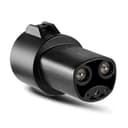
Lectron J1772 to Tesla (NACS) Adapter, 80A

Lectron J1772 to Tesla (NACS) Adapter, 80A

The single most useful accessory a Tesla or NACS owner can keep in the trunk. Snap it onto any J1772 home charger and it plugs straight into a Tesla — so you can buy the charger that's actually the best value and let this bridge the connector. It's rated to 80A/240V and UL 2252 certified, so it isn't the weak link.

Best for Tesla / NACS owners
$39.99 · View on Amazon

Price as of July 19, 2026. #ad How we’re funded

2
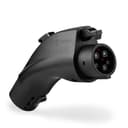
Lectron Tesla (NACS) to J1772 Adapter, 48A

Lectron Tesla (NACS) to J1772 Adapter, 48A

The mirror image of the J1772-to-Tesla adapter, for the other kind of driver: it lets a non-Tesla (J1772) car pull power from a Tesla Wall Connector, Destination Charger or Mobile Connector. Handy if your home charger is a NACS unit, or a relative's Tesla charger is the one in the garage. It's capped at 48A and SGS-certified to UL 2251 — and it is not for Superchargers.

Best for J1772 owners
$108.28 · View on Amazon

Price as of July 19, 2026. #ad How we’re funded

The picks in full

#1Best for Tesla / NACS owners

Lectron J1772 to Tesla (NACS) Adapter, 80A

The single most useful accessory a Tesla or NACS owner can keep in the trunk. Snap it onto any J1772 home charger and it plugs straight into a Tesla — so you can buy the charger that's actually the best value and let this bridge the connector. It's rated to 80A/240V and UL 2252 certified, so it isn't the weak link.

Strengths

  • Lets a Tesla or NACS car charge from any J1772 charger
  • Rated to 80A / 240V — never the bottleneck on a home circuit
  • UL 2252 certified and IP67-rated for water and dust

Trade-offs

  • One more thing to seat firmly and not lose
  • For AC home charging only — not a Supercharger or DC adapter
Max output80 A
PowerNot published
ConnectorNACS
InstallNot published
Cable lengthNot published
WarrantyNot published
WiFi + appNot published
CertificationsUL 2252 certified, IP67

Our charging-speed math. The adapter doesn't set the speed — the charger does. Rated to 80A, it simply passes through whatever your J1772 charger delivers (typically 40-48A / 9.6-11.5 kW at home).

Build note. Rated -22 to 122 degrees F; converts a J1772 connector to the Tesla/NACS (J3400) plug for AC home charging.

Specs read from the manufacturer spec sheet, on July 19, 2026. “Not published” means the brand does not state that figure.

#2Best for J1772 owners

Lectron Tesla (NACS) to J1772 Adapter, 48A

The mirror image of the J1772-to-Tesla adapter, for the other kind of driver: it lets a non-Tesla (J1772) car pull power from a Tesla Wall Connector, Destination Charger or Mobile Connector. Handy if your home charger is a NACS unit, or a relative's Tesla charger is the one in the garage. It's capped at 48A and SGS-certified to UL 2251 — and it is not for Superchargers.

Strengths

  • Lets a J1772 car use a Tesla Wall Connector or NACS home charger
  • 48A / 240V rating covers full-speed home AC charging
  • SGS certified to the UL 2251 standard

Trade-offs

  • Works with Tesla AC connectors only — not Superchargers (DC)
  • 48A ceiling, so it won't exceed a typical home circuit anyway
Max output48 A
Power11.5 kW
ConnectorJ1772
InstallNot published
Cable lengthNot published
WarrantyNot published
WiFi + appNot published
CertificationsSGS certified (UL 2251)

Our charging-speed math. At its 48A / 11.5 kW ceiling and 3.5 mi/kWh, about 40 miles of range an hour — assuming the Tesla source can supply that.

Build note. Converts a Tesla/NACS AC connector to J1772; works with Tesla Wall Connectors, Destination Chargers and Mobile Connectors, not Superchargers.

Specs read from the manufacturer spec sheet, on July 19, 2026. “Not published” means the brand does not state that figure.

The two directions, and which one you need

A J1772-to-Tesla adapterplugs into a J1772 charger — your own home unit or any public J1772 station — and presents a NACS plug on the other end, so a Tesla or any other NACS-port EV can charge from it. It’s the one to keep in the car, or on the wall, if your home charger, or a charger you visit regularly, is a J1772 unit.

A Tesla-to-J1772 adapterruns the other way: it plugs into a Tesla AC connector — specifically a Tesla Wall Connector, a Tesla Destination Charger, or Tesla’s portable Mobile Connector — and presents a J1772 plug a non-Tesla EV can accept. It’s the one to reach for if the only charger available to you is a Tesla source and your car takes J1772. Neither adapter has anything to do with Superchargers; those run on DC fast charging, a separate system covered in our J1772 vs NACS explainer.

Why the best-value J1772 charger plus an adapter often beats a native NACS unit

J1772 has been the standard for over a decade, so the market for J1772 home chargers is deep — more models, more price competition, and features like app-adjustable amperage that took years to mature. Native-NACS chargers are a newer, smaller lineup that’s still catching up. For a Tesla or NACS owner, that means buying whichever J1772 charger wins on value and features — see our Level 2 roundup— and adding a J1772-to-Tesla adapter can land you a better-equipped charger for similar or less money than a NACS-only unit, with the adapter as the only extra step. Seat it once and it disappears into the routine. We walk through this trade-off, and the reverse case for buying native, on our best chargers for Tesla page.

Amps: why the adapter is never the bottleneck

The J1772-to-Tesla adapter here is rated to 80A/240V; the Tesla-to-J1772 adapter is rated to 48A/240V. A home Level 2 charger tops out around 50A on a typical circuit, and most run 40–48A — so an 80A-rated adapter has enormous headroom, and a 48A-rated one comfortably covers what most home Tesla sources actually deliver. Either way, the adapter itself never sets your charging speed. The charger’s own amperage setting and the circuit behind it do that — the adapter just passes the current through.

Put a number on it: run a 48A J1772 charger — a common setting for units like the Emporia or EVIQO — through the 80A-rated J1772-to-Tesla adapter, and the adapter is nowhere near its ceiling. The charger, not the adapter, is still the part deciding how fast the car fills up. That’s the whole point of buying a generously rated adapter once: you never have to think about it again, no matter which charger you eventually pair it with.

Weatherproofing: one adapter publishes a rating, one doesn’t

The J1772-to-Tesla adapter carries an IP67 rating, so it’s built to handle rain and being left clipped to an exposed charger handle. Lectron doesn’t publish an outdoor or IP rating for the Tesla-to-J1772 adapter — that’s not a knock on it, just a spec the brand hasn’t stated, and we treat an unpublished rating as a finding rather than fill in a number ourselves. Until a brand states otherwise, we’d keep that one in the glovebox or a dry spot rather than leaving it exposed outdoors long-term.

Only buy a certified adapter

An adapter carries the full charging current, so certification isn’t a formality here the way it might be on a lower-stakes accessory. Both adapters we cover carry a specific, checkable certification: the J1772-to-Tesla adapter is UL 2252 certified, and the Tesla-to-J1772 adapter is SGS certified to UL 2251. Before buying any EV adapter, look for a named standard number from UL or SGS on the listing or the unit itself — not just a generic safety logo — the same way you’d check a home charger against the UL 2594 standard for EV supply equipment.
Frequently asked questions

Can I use a J1772 charger to charge my Tesla?

Yes. Plug a J1772-to-Tesla adapter into the charger's J1772 handle and it presents a NACS plug your Tesla, or other NACS-port EV, accepts. It works with any J1772 charger, at home or in public, up to the adapter's rated amperage.

Can a non-Tesla EV charge from a Tesla Wall Connector?

Yes, with a Tesla-to-J1772 adapter. It plugs into a Tesla Wall Connector, Destination Charger, or Mobile Connector and presents a J1772 plug. It does not work at a Tesla Supercharger, which is DC fast charging and a different system.

Will an adapter slow down my charging?

No, as long as it's rated above your charger's output, which both adapters here are. The adapter just passes current through; your charger's amperage setting and your home circuit are what actually decide charging speed.

Can I use these adapters at a Supercharger?

No. Both adapters covered here are AC-only, for home and destination charging. Tesla's Supercharger network is DC fast charging and requires the car's own native hardware, not a plug adapter like these.

What certification should I look for on an EV charging adapter?

Look for a named standard from UL or SGS, not just a generic safety logo. Our picks are UL 2252 certified (J1772-to-Tesla) and SGS certified to UL 2251 (Tesla-to-J1772) — the same rigor you'd expect from a UL 2594-listed home charger.

Sources

Keep reading