Plug & Range

Best EV Chargers with Access Control

A charger on an open driveway is a 240-volt vending machine with no coin slot. These are the four that can be told to refuse — and the distinction between a card reader, an app invitation and a padlock matters more than it sounds.

By Stephen V.Last updated How we pick

The Autel MaxiCharger is our top pick, because it is the only charger we cover whose manufacturer publishes card authentication as a feature of the hardware rather than as a property of an account. Autel’s own page lists app, AutoStart and RFID-card authentication, with the cards sold separately. That matters because a card reader keeps working when the Wi-Fi does not, and because handing someone a card is a far more natural thing to do (and undo) than adding them to an app.

Two things to be clear about before the picks. First, no residential charger we cover prevents a stranger from physically unplugging your car mid-charge — that is a function of the vehicle’s charge-port lock, which lives in the car’s settings, not the charger’s. Second, access control on a home charger is almost always a softwaregate on starting a session, not a lock on the socket. The one physical-security spec in this group is a negative finding: Leviton publishes the EV40P’s cover locking mechanism as “Phillips Head Screws, No Padlock Option”.

So we ranked on what the manufacturer publishes, in this order: whether authorisation can happen at the unitwithout a working internet connection, whether the brand names a multi-user mechanism rather than just an account login, whether per-session energy is reported (so you can see what was taken and bill it), and whether the charger speaks OCPP, which is the open protocol that lets a third-party back end manage authorisation. Where a brand only publishes “the app can start and stop charging”, we say so rather than dressing it up.

How this is funded:we earn a commission if you buy through our links, at no extra cost to you. It never changes which product we recommend, and we’ll tell you when we’d skip one. Full disclosure.

Quick picks

Ranked on published specs, charging speed, electrical fit and value. Select a row to jump to the full write-up. We have not bench-tested these chargers — here is exactly what we do instead.

#ProductBest forPrice
1
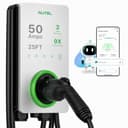
Autel MaxiCharger Home

Autel MaxiCharger Home

Built for the driveway that takes the full brunt of the weather. The NEMA 4X shell is rated to keep charging through brutal cold and heat, it delivers a full 50 amps, and the app is genuinely capable. If your charger will live fully exposed, this is the one to shortlist.

Best overall: published RFID cards plus app
$499.00 · View on Amazon

$568.0012% off

Price as of October 10, 2026. #ad How we’re funded

2
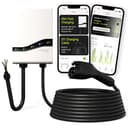
Emporia Pro with PowerSmart

Emporia Pro with PowerSmart

The answer to a full electrical panel. It's the same 48-amp, ENERGY STAR hardware as Emporia's standard charger, with PowerSmart load management added: paired with Emporia's own energy monitor, it watches what the rest of the house is drawing and dials the charger back instead of tripping the main. If an electrician has told you a charger means a service upgrade, this is the unit that can make that quote go away.

Best for sharing with named people
$599.00 · View on Amazon

Price as of October 10, 2026. #ad How we’re funded

3
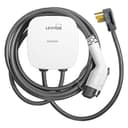
Leviton EV Series Smart Home Charger (EV40P)

Leviton EV Series Smart Home Charger (EV40P)

The one charger here from a brand your electrician already stocks. Forty amps, ENERGY STAR, a NEMA 3R shell, a 25-foot cable and a certification list longer than anything else in this registry — plus the My Leviton app, which is the same app that runs Leviton's load centers and switches. You pay a real premium for that, and what it buys is a company that will still be answering the phone in ten years.

Best for an OCPP back end
$499.85 · View on Amazon

Price as of October 10, 2026. #ad How we’re funded

4
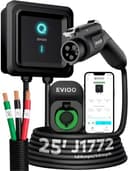
EVIQO 48A Level 2 Charger

EVIQO 48A Level 2 Charger

A lot of charger for the money. You get 48 amps, Wi-Fi scheduling, ENERGY STAR, and the longest usable reach in this group thanks to a 25 ft cable plus a 40-inch input lead. If Emporia is sold out or you want maximum cable, this is the value alternative to have in mind.

Cheapest app-gated start/stop
$449.99 · View on Amazon

$510.0012% off

Price as of October 10, 2026. #ad How we’re funded

The picks in full

#1Best overall: published RFID cards plus app

Autel MaxiCharger Home

Built for the driveway that takes the full brunt of the weather. The NEMA 4X shell is rated to keep charging through brutal cold and heat, it delivers a full 50 amps, and the app is genuinely capable. If your charger will live fully exposed, this is the one to shortlist.

Strengths

  • NEMA 4X enclosure rated for very cold and very hot conditions
  • Full 50A output paired with a 25 ft cable
  • Wi-Fi, Bluetooth and a capable app

Trade-offs

  • 50A means a 60A circuit and, usually, a hardwired install
  • The app and ecosystem are younger than ChargePoint's
Max output50 A
Power12 kW
ConnectorJ1772
InstallHardwired
Cable length25 ft
Warranty3 years
WiFi + appYes
CertificationsCSA certified, ENERGY STAR

Our charging-speed math. At its 50A ceiling (about 12 kW) and 3.5 mi/kWh, roughly 42 miles of range an hour.

Build note. Re-read from Autel's own page on 2026-10-04: 12 kW / 50 A with the output adjustable 16-50 A, 208/240 V AC, hardwired, a 70 A circuit required for full output, a 25 ft J1772 cable, an IP65 / NEMA 4X enclosure with a -40 to 131°F (-40 to 55°C) operating range, Bluetooth, Wi-Fi, Ethernet, CAN and RS485 connectivity, app / AutoStart / RFID-card authentication (cards sold separately) and a 3-year warranty. On load management the page is unusually specific, and it is two different features: it "supports both Adaptive Load Management (ALM) and charger-to-charger Dynamic Load Balancing (DLB)", with "ALM requir[ing] compatible additional hardware, while DLB works between chargers without additional hardware". Autel does not name the ALM hardware on this page, so we do not either.

Specs read from the manufacturer spec sheet, on October 4, 2026. “Not published” means the brand does not state that figure.

#2Best for sharing with named people

Emporia Pro with PowerSmart

The answer to a full electrical panel. It's the same 48-amp, ENERGY STAR hardware as Emporia's standard charger, with PowerSmart load management added: paired with Emporia's own energy monitor, it watches what the rest of the house is drawing and dials the charger back instead of tripping the main. If an electrician has told you a charger means a service upgrade, this is the unit that can make that quote go away.

Strengths

  • PowerSmart load management can avoid a panel or service upgrade
  • Full 48A, ENERGY STAR and a 25 ft cable, same as the standard model
  • The app adds peak-demand management on top of ordinary scheduling

Trade-offs

  • PowerSmart needs Emporia's Vue energy monitor — that's a second device to buy and install
  • You pay a clear premium over the standard Emporia for one feature
Max output48 A
Power11.5 kW
ConnectorJ1772
InstallHardwired (a NEMA 14-50 SKU is also sold)
Cable length25 ft
Warranty3 years
WiFi + appYes
CertificationsUL listed, ENERGY STAR

Our charging-speed math. At the full 48A (11.5 kW) and 3.5 mi/kWh, about 40 miles of range an hour — and PowerSmart will quietly reduce that when the rest of the house is drawing hard, which is the entire point of it.

Build note. Emporia publishes PowerSmart load management as dynamically adjusting charging speed to prevent overloading the panel; it requires the Emporia Vue energy monitor.

Specs read from the manufacturer spec sheet, on August 11, 2026. “Not published” means the brand does not state that figure.

#3Best for an OCPP back end

Leviton EV Series Smart Home Charger (EV40P)

The one charger here from a brand your electrician already stocks. Forty amps, ENERGY STAR, a NEMA 3R shell, a 25-foot cable and a certification list longer than anything else in this registry — plus the My Leviton app, which is the same app that runs Leviton's load centers and switches. You pay a real premium for that, and what it buys is a company that will still be answering the phone in ten years.

Strengths

  • ENERGY STAR certified, with an unusually deep listing set (UL 2594, 2231, 2251, 62, 991, 1998, 840)
  • NEMA 3R enclosure and a cable rated to -30°C, so an outdoor install is in spec
  • 25 ft cable and a pre-attached NEMA 14-50 input lead — a genuinely quick install

Trade-offs

  • The most expensive 40-amp charger we cover, by a wide margin
  • Leviton does not publish an adjustable-amperage range for this model
  • 2-year warranty is shorter than ChargePoint's 3
Max output40 A
Power9.6 kW
ConnectorJ1772
InstallNEMA 14-50 plug (pre-attached 3 ft input cable)
Cable length25 ft
Warranty2 years
WiFi + appYes
CertificationsUL 2594, UL 2231-1, UL 2231-2, UL 2251, UL 62, UL 991, UL 1998, UL 840, CSA C22.2 #280, NFPA 70 Article 625, OCPP 1.6, ENERGY STAR

Our charging-speed math. Forty amps at 240V is 9.6 kW, and at a middle-of-the-road 3.5 miles per kWh that is roughly 34 miles of range an hour — about 340 miles across a ten-hour overnight window.

Build note. Leviton publishes 208/240 VAC, 40A, 9.6 kW, a 25 ft (7.6 m) J1772 cable, a NEMA Type 3R water-resistant enclosure, an operating range of -30°C to 50°C, altitude to 6,500 ft, Wi-Fi 802.11 b/g/n with the My Leviton app, optional RFID control, OCPP 1.6 compliance and a 2-year limited warranty.

Specs read from the manufacturer spec sheet, on August 19, 2026. “Not published” means the brand does not state that figure.

#4Cheapest app-gated start/stop

EVIQO 48A Level 2 Charger

A lot of charger for the money. You get 48 amps, Wi-Fi scheduling, ENERGY STAR, and the longest usable reach in this group thanks to a 25 ft cable plus a 40-inch input lead. If Emporia is sold out or you want maximum cable, this is the value alternative to have in mind.

Strengths

  • 48A output with Wi-Fi scheduling at a value price
  • 25 ft charging cable plus a 40 in input lead — excellent reach
  • UL, ETL, FCC and ENERGY STAR listings

Trade-offs

  • The hardwired version needs a 60A circuit and an electrician
  • A smaller brand with a shorter track record than ChargePoint or Wallbox
Max output48 A
Power11.5 kW
ConnectorJ1772
InstallHardwired
Cable length25 ft
Warranty3 years
WiFi + appYes
CertificationsUL, ETL, FCC, ENERGY STAR

Our charging-speed math. At 48A (11.5 kW) and 3.5 mi/kWh, about 40 miles of range an hour.

Build note. Re-read from EVIQO's own page on 2026-10-04, which publishes more than the spec table above implies. The 25 ft charging cable plus a 40 in input cable is still among the longest total reach in class, and the current is adjustable two ways: 6-48 A in 1-amp increments from the app, and a hardware DIP switch that caps the maximum at 16, 32, 40 or 48 A. The same DIP block can raise the output to 50 A, which EVIQO says requires a 70 A circuit; the 48 A default needs a 60 A one. The enclosure is IP66 / NEMA-4 rated -22°F to 122°F, the warranty is 3 years and extendable to 4, and the app does remote start/stop, consumption and cost tracking, reminders, up to three schedules and over-the-air updates. No load management or load balancing is described anywhere on the page.

Specs read from the manufacturer spec sheet, on October 4, 2026. “Not published” means the brand does not state that figure.

The four mechanisms, and what each one is actually worth

“Access control” covers four quite different things on a product page. Knowing which one you are buying is the whole exercise.

1. A card reader at the unit (RFID). You tap a card and the charger delivers current. This is the strongest of the four for a home, because the credential is physical: you can hand one to a houseguest or a tenant and take it back, and nothing depends on your router being up. Autel publishes RFID-card authentication for the MaxiCharger, with cards sold separately. Leviton publishes “Optional RFID Control” for the EV40P — with a caveat we cover below.

2. A named multi-user invitation. The brand lets you invite specific people, each with their own identity, so sessions are attributable. Emporia publishes this as Invite2Charge, which its own page describes as “multi-user access control for EV chargers”. This is the right shape for a household with two drivers, a duplex, or a driveway shared with a neighbour you are splitting the bill with.

3. App start/stop on one account. The charger sits idle until the owner’s app says go. EVIQO publishes remote start/stop, scheduling, and consumption and cost tracking in its app, and that is a real gate — a stranger plugging in gets nothing. It is also the weakest of the four in practice, because there is one credential, it is yours, and sharing it means sharing everything.

4. OCPP. Open Charge Point Protocol lets the charger take its authorisation decisions from a third-party back end rather than the manufacturer’s cloud. Leviton publishes OCPP 1.6 compliance for the EV40P. For almost every household this is irrelevant; for a landlord, a small HOA or anyone who wants to bill per kWh with software they choose, it is the only spec on this page that matters. Our condo and HOA guide is the companion read.

The Leviton caveat, stated plainly

Leviton’s EV40P listing advertises “Optional RFID Control”. On the same page, the ERFID card accessory is described as an “Additional Access Control (RFID) Card for use with Leviton EV320 and EV480 Level 2 Electric Vehicle Charging Stations” — two commercial station families, and not the EV40P.

Both of those statements are Leviton’s own, on the same page, on the date we read it. We are not going to resolve them for you by guessing, because which one is true decides whether you can authorise a charge with a card on this model or not. If card authentication is the reason you are buying, confirm it with Leviton for your exact model number before you order — or buy the Autel, where it is published against the product itself. What the EV40P unambiguously has is the My Leviton app, Wi-Fi 802.11 b/g/n, OCPP 1.6 compliance, and the deepest certification list in our registry. See our full EV40P review for the rest.

The chargers that cannot do this at all

Worth naming rather than quietly omitting, because “no app” is a feature we recommend elsewhere on this site and it is precisely the wrong feature here.

The Lectron NEXUS J1772 48Apublishes no app, no Wi-Fi and no account anywhere on its product page — Lectron sells the networked build as a separate SKU. It is a good charger and it is permanently open: energise the circuit and it will charge whatever is plugged into it. The same is true of the ELEGRP 40A, which has a delay timer on the unit and no radio, and of the Lectron 40A portable. If you specifically wanted a charger with nothing to log into, our no-Wi-Fi roundupis the page for you — just understand that it is also a roundup of chargers anyone can use.

Grizzl-E’s Classic Connect and Mini both carry the Grizzl-E Connect app over 2.4 GHz Wi-Fi, but United Chargers does not publish a card reader, a named multi-user invitation or OCPP for either, so they are not ranked here. The ChargePoint Home Flexis account-based and genuinely well-run software, but ChargePoint’s own Power Management FAQ names only its commercial CT4000 and CPF50 station families for the features people assume the Home Flex shares — so we are careful about what we claim for it on pages like this one.

A cheaper answer, if the problem is just your own household

If what you actually want is for the charger not to run at the wrong time rather than not to run for the wrong person, a schedule does that for free on anything with an app, and it costs nothing. Our time-of-use guide covers the version of this that saves money. If the concern is a shared circuit rather than a shared charger, the answer is load management, not access control, and our load-management roundup is the right list. And if you are hosting paying guests, our short-term-rental roundupweighs access control against the two other things a host needs — fitting every car that turns up, and per-session energy figures.

The verdict

If you want a credential you can hand over and take back, buy the Autel MaxiCharger. RFID cards are published against the product, the app and AutoStart are there as well, and the IP65 / NEMA 4X shell with a −40°F to 131°F range is the most weather-tolerant thing we cover — which matters, because an exposed driveway is where this problem exists. Buy the cards at the same time; Autel sells them separately.

If the people you are sharing with are people you know, buy the Emporia Pro. Invite2Charge is the only named multi-user mechanism in this group, you get 48 amps, ENERGY STAR and a 25 ft cable with it, and PowerSmart load management is there if the panel is tight — though it needs Emporia’s Vue monitor as a second device.

And if you only need the charger to stay dark until you say otherwise, buy the EVIQO 48A. App start/stop, per-session energy and cost, three schedules, 48 amps and the longest total reach here (a 25 ft cable plus a 40-inch input lead) for the least money on this page. One account, one credential, and no card to lose.
Frequently asked questions

Can someone use my EV charger without permission?

On most home chargers, yes. A Level 2 charger with no app gate is live whenever its circuit is energised, and any car with a matching connector will take a charge on your meter. The chargers on this page can require an RFID card, an app command or a named invitation before they deliver current. If you already own a charger with an app, check whether it has an authorisation or start/stop setting — many owners never turn it on.

Can I lock my EV charger so nobody can unplug it?

The charger is the wrong place to solve that. What stops a connector being pulled out of the car mid-session is the vehicle's own charge-port lock, which is a setting in the car. On the charger side, physical locking is rarely published at all: Leviton is unusually explicit that the EV40P's cover uses Phillips head screws with no padlock option. A lockable outdoor enclosure around the receptacle is a separate purchase and an electrician's conversation.

What is RFID on an EV charger?

A card reader in the unit. You tap a card against the charger and it authorises a session. Its advantage over an app is that the credential is physical and local — you can hand a card to a guest and take it back, and it does not depend on your Wi-Fi or the manufacturer's cloud being reachable. Autel publishes RFID-card authentication for the MaxiCharger with cards sold separately. Cards are usually brand-specific, not interchangeable.

What is OCPP and do I need it at home?

Open Charge Point Protocol is an open standard that lets a charger take instructions — including who is allowed to charge — from a back-end system that is not the manufacturer's. For an ordinary household it is irrelevant. It becomes the most important spec on the page if you are a landlord, a small HOA or anyone who needs to bill per kilowatt-hour using software you control, because it means you are not locked into one brand's cloud. Leviton publishes OCPP 1.6 compliance for the EV40P.

Can I see how much electricity someone used on my charger?

On some of these, yes, and it is a different feature from access control. EVIQO publishes consumption and cost tracking in its app. Emporia's whole proposition is energy data, and its chargers report measured energy at the wall. That wall-side figure is the one you want if you are splitting a bill, because it includes charging losses the car's own display does not. Our energy-monitoring guide explains the gap between the two numbers.

Is a no-Wi-Fi EV charger a security problem?

It is a trade, and worth making deliberately. A charger with no radio has no account to be breached, no firmware to be pushed and no cloud to go offline — which is exactly why we recommend them elsewhere. It also cannot refuse anyone. The Lectron NEXUS J1772, the ELEGRP 40A and the Lectron 40A portable are all in this category. If the charger is inside a locked garage, that is a perfectly sound choice; on an open driveway it is not.

Will access control stop my electricity bill going up?

Only if someone else is genuinely charging on your supply. If the bill rose after you bought an EV, the cause is almost certainly the EV — a typical home charge is a large, regular load and it shows. Our cost-to-charge guide walks through the arithmetic so you can check your own figures before assuming a neighbour is to blame, and our time-of-use guide covers the part of the bill you can actually move.

Sources

  • Autel — MaxiCharger AC Elite Home 50 A product page — Manufacturer page: 12 kW / 50 A with the output adjustable 16-50 A, a 70 A circuit required for full output, 208/240 V AC, hardwired, a 25 ft SAE J1772 cable, IP65 / NEMA 4X, an operating range of -40 to 131 °F (-40 to 55 °C), a 3-year warranty, and Bluetooth, Wi-Fi, Ethernet, CAN and RS485 connectivity with app, AutoStart and RFID-card authentication (cards sold separately). On load management it states that the charger “supports both Adaptive Load Management (ALM) and charger-to-charger Dynamic Load Balancing (DLB) for more flexible home energy management” and that “ALM requires compatible additional hardware, while DLB works between chargers without additional hardware” (accessed October 4, 2026)
  • Emporia Energy — EV Chargers (Classic and Pro) — Manufacturer page: the Classic and the Pro both list Solar Charging Integration, and both require the Vue Home Energy Monitor for it — with the Vue added, the charger 'automatically charge[s] with your excess solar power'. PowerSmart load management on the Pro requires the Vue plus the PowerSmart upgrade; Emporia also lists Invite2Charge, described as 'multi-user access control for EV chargers' (accessed September 18, 2026)
  • Leviton — EV40P product page (access-control and enclosure lines) — Manufacturer page, fetched 2026-10-11. The product description lists "Optional RFID Control" alongside "Wi-Fi Compatible (Wi-Fi Function 802.11 b/g/n)" and the My Leviton app, and the standards block lists OCPP 1.6 compliance. Under Product Features the page publishes "Cover Locking Mechanism : Phillips Head Screws, No Padlock Option" — the enclosure cannot be padlocked shut. The same page's related-products strip describes the ERFID accessory as an "Additional Access Control (RFID) Card for use with Leviton EV320 and EV480 Level 2 Electric Vehicle Charging Stations", naming the commercial stations and not the EV40P, which conflicts with the EV40P's own "Optional RFID Control" claim. Also re-confirmed on this date: 208/240 VAC, 40 A, 9.6 kW, a 25 ft J1772 cable, a pre-attached 3 ft input lead with a NEMA 14-50P plug, a NEMA Type 3R enclosure, status indicators for Power Present / Charging / Fault, UL 2594 / 2231-1 / 2231-2 / 2251 / 62 / 991 / 1998 / 840 plus CSA C22.2 #280 and NFPA 70 Article 625, and a 2-year limited warranty (accessed October 11, 2026)
  • Leviton — EV40P Level 2 smart charger product page — Manufacturer page, fetched 2026-10-04: 40 A, 9.6 kW, a 25 ft (7.6 m) cable, a NEMA Type 3R enclosure, an operating range of -30 °C to 50 °C, UL 2594 / 2231-1 / 2231-2 / 2251 / 62 / 991 / 1998 and OCPP 1.6 compliance, and a 2-year limited warranty. Recorded for a negative finding as much as a positive one: the page states NO load management, load shedding, load balancing or circuit-sharing capability, and publishes no adjustable amperage range — it is specified as a fixed 40-amp unit (accessed October 4, 2026)
  • EVIQO — Level 2 48 A hardwired charging station product page — Manufacturer page, fetched 2026-10-04: 48 A / 11.5 kW as standard with a 50 A output available by changing internal DIP switches (which it says requires a 70 A circuit), current adjustable 6-48 A in 1-amp increments from the app, and hardware DIP switches that set the maximum at 16, 32, 40 or 48 A. A 25 ft charging cable plus a 40 in input cable, an IP66 / NEMA-4 enclosure rated -22 °F to 122 °F, UL / ETL / FCC / ENERGY STAR certification, and a 3-year warranty extendable to 4. The app does remote start/stop, current setting, consumption and cost tracking, charging reminders, up to three custom schedules and over-the-air firmware updates. Hardwired only, and a 60 A dedicated circuit is stated for 48 A output. No load management or load balancing is described anywhere on the page (accessed October 4, 2026)
  • Lectron — NEXUS Level 2 J1772 48 A hardwired charging station — Manufacturer page: up to 48 A at 240 V (11.5 kW), SAE J1772, hardwired installation requiring a professional, IP66 indoor/outdoor rating, a 23 ft cable with a wall-mount J-hook and plug holder, UL 2594 / UL 2231 / UL 2251 certification under an ETL listing plus FCC and ENERGY STAR, and a 3-year warranty. No app, Wi-Fi or account is listed anywhere on the page; Lectron sells the networked build as a separate SKU (accessed October 4, 2026)
  • ChargePoint — Power Management FAQ — ChargePoint's own FAQ for its Power Management feature, which allocates a circuit's capacity across stations. Fetched 2026-10-04: it states that “currently, the CT4000 and CPF50 station families support Power Management with the appropriate cloud plan” — both commercial station families. The residential Home Flex is not named anywhere on the page, and no home hardware requirement, home power-sharing behavior or whole-house panel monitoring is described (accessed October 4, 2026)
  • ELEGRP — 40 A Level 2 EV Charger (NEMA 14-50) product page — Manufacturer page, fetched 2026-10-05: a NEMA 14-50 plug delivering up to 9.6 kW with “5 adjustable current levels (16/20/24/32/40A) to match your home capacity”, a 25 ft cable, a 1-12 hour delay timer, an IP67 charging station with an IP54 connector, a published range of -21 °F to 121 °F, ETL certification with ELEGRP's PBE overheat protection, a carrying case, and “up to a 2-year warranty”. The page states Tesla vehicles are compatible “using a NACS adapter (sold separately)”, and its own comparison table lists a separate 16 A sibling model on NEMA 6-20 (240 V) / NEMA 5-15 or 5-20 (120 V) plugs — the 32 A and 40 A models are both NEMA 14-50 only. ELEGRP's marketing figure is “up to 37 miles/h”, which assumes a more efficient car than our 3.5 mi/kWh reference (accessed October 5, 2026)
  • UL Solutions — EV Charging Infrastructure Services — UL on EVSE safety certification: ANSI/UL 2594 is the Standard for Electric Vehicle Supply Equipment (accessed July 19, 2026)

Keep reading