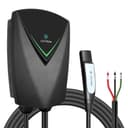
Plug & Range

Best ENERGY STAR EV Chargers

For most buyers the ENERGY STAR mark is a rounding error on the power bill. For anyone claiming a utility rebate it can be the whole ballgame — because plenty of programs ask for it by name.

By Stephen V.Last updated How we pick

ENERGY STAR certification on an EV charger is not about how fast it charges — it cannot change that. It is about what the unit draws when it is doing nothing. ENERGY STAR reports that certified chargers use about 40% less energy in standby than non-certified units. A charger spends the overwhelming majority of its life idle, so that is a real if modest saving.

The reason we built this page is different, and more practical: rebate eligibility. A large number of utility EV-charger rebate programs require the unit to be ENERGY STAR certified, and they check the model number. If you are counting on a rebate to bring the price down, the certification stops being a nice-to-have and becomes a pass/fail. Every charger below publishes one. Underneath, we name the picks on this site that don’t, because that is exactly the kind of thing a roundup usually leaves out.

How this is funded:we earn a commission if you buy through our links, at no extra cost to you. It never changes which product we recommend, and we’ll tell you when we’d skip one. Full disclosure.

Quick picks

Ranked on published specs, charging speed, electrical fit and value. Select a row to jump to the full write-up. We have not bench-tested these chargers — here is exactly what we do instead.

#ProductBest forPrice
1
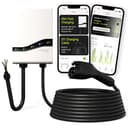
Emporia Level 2 EV Charger

Emporia Level 2 EV Charger

The value pick that never feels like one. You get the full 48 amps, an ENERGY STAR listing, real Wi-Fi energy tracking and a 25 ft cable for well under what the marquee brands charge. When someone asks us where to start, this is usually the first name out of our mouths.

Best overall certified
$449.00 · View on Amazon

Price as of September 2, 2026. #ad How we’re funded

2
ChargePoint Home Flex

ChargePoint Home Flex

If you'd rather buy a charger once and be done, this is the safe call. You set the current in the app anywhere from 16 to 50 amps, so it fits whatever your panel can spare today and still has room to grow if you upgrade the circuit later. The app is the most polished of the bunch and the warranty is long.

Best certified premium
$494.00 · View on Amazon

Price as of September 2, 2026. #ad How we’re funded

3
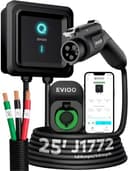
EVIQO 48A Level 2 Charger

EVIQO 48A Level 2 Charger

A lot of charger for the money. You get 48 amps, Wi-Fi scheduling, ENERGY STAR, and the longest usable reach in this group thanks to a 25 ft cable plus a 40-inch input lead. If Emporia is sold out or you want maximum cable, this is the value alternative to have in mind.

Best certified value
$428.98 · View on Amazon

$479.0010% off

Price as of September 2, 2026. #ad How we’re funded

4
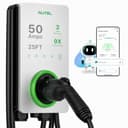
Autel MaxiCharger Home

Autel MaxiCharger Home

Built for the driveway that takes the full brunt of the weather. The NEMA 4X shell is rated to keep charging through brutal cold and heat, it delivers a full 50 amps, and the app is genuinely capable. If your charger will live fully exposed, this is the one to shortlist.

Best certified for extreme weather
$499.00 · View on Amazon

$568.0012% off

Price as of September 2, 2026. #ad How we’re funded

5
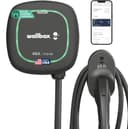
Wallbox Pulsar Plus

Wallbox Pulsar Plus

The one to reach for when wall space is tight. It's among the smallest 48A chargers made, and Power Boost load balancing lets it share a circuit without tripping the main — which can save you a panel upgrade. It's a polished, premium unit, and the price says so.

Best certified compact
$614.99 · View on Amazon

$699.9912% off

Price as of September 2, 2026. #ad How we’re funded

6
Emporia Pro with PowerSmart

Emporia Pro with PowerSmart

The answer to a full electrical panel. It's the same 48-amp, ENERGY STAR hardware as Emporia's standard charger, with PowerSmart load management added: paired with Emporia's own energy monitor, it watches what the rest of the house is drawing and dials the charger back instead of tripping the main. If an electrician has told you a charger means a service upgrade, this is the unit that can make that quote go away.

Best certified with load management
$599.00 · View on Amazon

Price as of September 2, 2026. #ad How we’re funded

7
Lectron Nexus NACS (Tesla) Charger

Lectron Nexus NACS (Tesla) Charger

For a Tesla owner who doesn't want to babysit an adapter. The native NACS (J3400) connector goes straight into the car at a full 48 amps, with the safety listings you want to see. There's no app — but a Tesla schedules charging in the car anyway, so you're not really missing one.

Best certified for Tesla
$429.99 · View on Amazon

$459.997% off

Price as of September 2, 2026. #ad How we’re funded

The picks in full

#1Best overall certified

Emporia Level 2 EV Charger

The value pick that never feels like one. You get the full 48 amps, an ENERGY STAR listing, real Wi-Fi energy tracking and a 25 ft cable for well under what the marquee brands charge. When someone asks us where to start, this is usually the first name out of our mouths.

Strengths

  • 48A and ENERGY STAR at a genuinely value price
  • The app tracks energy use, not just an on/off toggle
  • Long 25 ft cable and a remote holster in the box

Trade-offs

  • 48A hardwired needs a 60A circuit; on a NEMA 14-50 plug it's capped at 40A
  • The app is less polished than ChargePoint's, and support is a smaller operation
Max output48 A
Power11.5 kW
ConnectorJ1772
InstallHardwired or NEMA 14-50 plug
Cable length25 ft
Warranty3 years
WiFi + appYes
CertificationsUL listed, ENERGY STAR

Our charging-speed math. Hardwired at 48A (11.5 kW), figure about 40 miles of range an hour at 3.5 mi/kWh. Drop to a 40A plug-in circuit and it's closer to 34.

Build note. Runs 48A hardwired, or 40A on a NEMA 14-50 outlet, with a 25 ft cable and a wall holster included.

Specs read from the manufacturer spec sheet, on July 19, 2026. “Not published” means the brand does not state that figure.

#2Best certified premium

ChargePoint Home Flex

If you'd rather buy a charger once and be done, this is the safe call. You set the current in the app anywhere from 16 to 50 amps, so it fits whatever your panel can spare today and still has room to grow if you upgrade the circuit later. The app is the most polished of the bunch and the warranty is long.

Strengths

  • Adjustable 16-50A fits a modest circuit now and a bigger one later
  • The most complete app here: scheduling, reminders and usage history
  • 3-year warranty and a generous 23 ft cable

Trade-offs

  • You pay a brand premium over value 48A units
  • Using the full 50A needs a 60A circuit most older panels can't spare
Max output50 A
Power12 kW
ConnectorJ1772
InstallHardwired (a plug-in NEMA 14-50 SKU is also sold)
Cable length23 ft
Warranty3 years
WiFi + appYes
CertificationsUL/cUL listed, ENERGY STAR

Our charging-speed math. Run it at the full 50 amps (about 12 kW) and, at a middle-of-the-road 3.5 miles per kWh, it puts back roughly 42 miles of range an hour. Turn it down to 40A to live on a 50A circuit and you're at about 34.

Build note. The headline feature is app-adjustable amperage — anywhere from 16A up to 50A, in software.

Specs read from the manufacturer spec sheet, on July 19, 2026. “Not published” means the brand does not state that figure.

#3Best certified value

EVIQO 48A Level 2 Charger

A lot of charger for the money. You get 48 amps, Wi-Fi scheduling, ENERGY STAR, and the longest usable reach in this group thanks to a 25 ft cable plus a 40-inch input lead. If Emporia is sold out or you want maximum cable, this is the value alternative to have in mind.

Strengths

  • 48A output with Wi-Fi scheduling at a value price
  • 25 ft charging cable plus a 40 in input lead — excellent reach
  • UL, ETL, FCC and ENERGY STAR listings

Trade-offs

  • The hardwired version needs a 60A circuit and an electrician
  • A smaller brand with a shorter track record than ChargePoint or Wallbox
Max output48 A
Power11.5 kW
ConnectorJ1772
InstallHardwired
Cable length25 ft
Warranty3 years
WiFi + appYes
CertificationsUL, ETL, FCC, ENERGY STAR

Our charging-speed math. At 48A (11.5 kW) and 3.5 mi/kWh, about 40 miles of range an hour.

Build note. Ships with a 25 ft charging cable plus a 40 in input cable — among the longest total reach in class.

Specs read from the manufacturer spec sheet, on July 19, 2026. “Not published” means the brand does not state that figure.

#4Best certified for extreme weather

Autel MaxiCharger Home

Built for the driveway that takes the full brunt of the weather. The NEMA 4X shell is rated to keep charging through brutal cold and heat, it delivers a full 50 amps, and the app is genuinely capable. If your charger will live fully exposed, this is the one to shortlist.

Strengths

  • NEMA 4X enclosure rated for very cold and very hot conditions
  • Full 50A output paired with a 25 ft cable
  • Wi-Fi, Bluetooth and a capable app

Trade-offs

  • 50A means a 60A circuit and, usually, a hardwired install
  • The app and ecosystem are younger than ChargePoint's
Max output50 A
Power12 kW
ConnectorJ1772
InstallHardwired
Cable length25 ft
Warranty3 years
WiFi + appYes
CertificationsCSA certified, ENERGY STAR

Our charging-speed math. At its 50A ceiling (about 12 kW) and 3.5 mi/kWh, roughly 42 miles of range an hour.

Build note. A NEMA 4X weatherproof enclosure rated for operation down to around -40 degrees F.

Specs read from the manufacturer spec sheet, on July 19, 2026. “Not published” means the brand does not state that figure.

#5Best certified compact

Wallbox Pulsar Plus

The one to reach for when wall space is tight. It's among the smallest 48A chargers made, and Power Boost load balancing lets it share a circuit without tripping the main — which can save you a panel upgrade. It's a polished, premium unit, and the price says so.

Strengths

  • Genuinely compact for a 48A charger — easy to tuck in a tight spot
  • Power Boost load balancing can sidestep a panel upgrade
  • Bluetooth and Wi-Fi with a clean, modern app

Trade-offs

  • One of the pricier chargers in this group
  • Hardwired only — no plug-in option, so it's not renter-friendly
Max output48 A
Power11.5 kW
ConnectorJ1772
InstallHardwired
Cable length25 ft
Warranty3 years
WiFi + appYes
CertificationsENERGY STAR

Our charging-speed math. At 48A (11.5 kW) and 3.5 mi/kWh, about 40 miles of range an hour — and Power Boost can throttle it down to protect a shared circuit.

Build note. One of the most compact 48A chargers in its class, carrying both Bluetooth and Wi-Fi.

Specs read from the manufacturer spec sheet, on July 19, 2026. “Not published” means the brand does not state that figure.

#6Best certified with load management

Emporia Pro with PowerSmart

The answer to a full electrical panel. It's the same 48-amp, ENERGY STAR hardware as Emporia's standard charger, with PowerSmart load management added: paired with Emporia's own energy monitor, it watches what the rest of the house is drawing and dials the charger back instead of tripping the main. If an electrician has told you a charger means a service upgrade, this is the unit that can make that quote go away.

Strengths

  • PowerSmart load management can avoid a panel or service upgrade
  • Full 48A, ENERGY STAR and a 25 ft cable, same as the standard model
  • The app adds peak-demand management on top of ordinary scheduling

Trade-offs

  • PowerSmart needs Emporia's Vue energy monitor — that's a second device to buy and install
  • You pay a clear premium over the standard Emporia for one feature
Max output48 A
Power11.5 kW
ConnectorJ1772
InstallHardwired (a NEMA 14-50 SKU is also sold)
Cable length25 ft
Warranty3 years
WiFi + appYes
CertificationsUL listed, ENERGY STAR

Our charging-speed math. At the full 48A (11.5 kW) and 3.5 mi/kWh, about 40 miles of range an hour — and PowerSmart will quietly reduce that when the rest of the house is drawing hard, which is the entire point of it.

Build note. Emporia publishes PowerSmart load management as dynamically adjusting charging speed to prevent overloading the panel; it requires the Emporia Vue energy monitor.

Specs read from the manufacturer spec sheet, on August 11, 2026. “Not published” means the brand does not state that figure.

#7Best certified for Tesla

Lectron Nexus NACS (Tesla) Charger

For a Tesla owner who doesn't want to babysit an adapter. The native NACS (J3400) connector goes straight into the car at a full 48 amps, with the safety listings you want to see. There's no app — but a Tesla schedules charging in the car anyway, so you're not really missing one.

Strengths

  • Native NACS connector — no J1772-to-Tesla adapter to keep track of
  • Full 48A output and a weather-rated IP66 body
  • UL/ETL safety listings plus ENERGY STAR

Trade-offs

  • No Wi-Fi app — you schedule in the Tesla app instead
  • Best for Tesla/NACS cars; other EVs need a NACS-to-J1772 adapter
Max output48 A
Power11.5 kW
ConnectorNACS
InstallHardwired
Cable length23 ft
Warranty3 years
WiFi + appNo
CertificationsUL 2594/2231/2251 (ETL listed), ENERGY STAR, FCC

Our charging-speed math. At 48A (11.5 kW) and 3.5 mi/kWh, about 40 miles of range an hour into a Tesla.

Build note. A native NACS (J3400) connector plugs straight into a Tesla with no adapter; a holster is included.

Specs read from the manufacturer spec sheet, on July 19, 2026. “Not published” means the brand does not state that figure.

What ENERGY STAR actually certifies on a charger

It is an efficiency mark, not a safety mark and not a speed mark. The two get conflated constantly, so to be clear about which does what:

  • UL / cUL / ETL listing to ANSI/UL 2594 is the safetyqualification — an independent lab testing the unit against the standard for EV supply equipment. This is the one that is genuinely non-negotiable, and it is unrelated to price. Our guide on whether cheap EV chargers are safe covers how to read these marks and which claimed “listings” mean nothing.
  • ENERGY STAR is the efficiency qualification, focused largely on standby and idle draw. ENERGY STAR reports roughly 40% less standby energy use for certified chargers.
  • Amperage is what determines charging speed, and no certification affects it. A certified 40-amp charger and an uncertified 40-amp charger fill the car at the same rate.

So the direct financial case for ENERGY STAR on its own is small. The indirect case — rebates — is frequently worth hundreds of dollars.

Why rebate programs care

Utilities that pay for home chargers want a defensible, externally-audited definition of “a proper charger” so they are not reimbursing anything with a plug on it. ENERGY STAR is the ready-made list, so a great many programs simply adopt it: the unit must appear in the ENERGY STAR certified product database, by model number.

Two practical consequences follow, and both catch people out:

  • Certification attaches to a model number, not a brand.A manufacturer can have one certified model and one that is not. Buying “a Grizzl-E” or “an Emporia” does not guarantee eligibility — buying a specific SKU does.
  • Certification does not carry over to a successor product. When a brand replaces a model, the new one needs its own listing. We hit exactly this on this site, and it is documented below.

Always check your own utility’s program terms and confirm your exact model in the ENERGY STAR product finder before you buy. Our rebates and tax credits guide covers the federal 30C credit’s status alongside what utility programs typically ask for.

The picks on this site that do NOT publish an ENERGY STAR listing

This is the part most roundups omit, and it is the reason to trust the rest of the page. Three chargers we recommend elsewhere are deliberately absent from the list above:

  • Grizzl-E Classic Connect. Grizzl-E publishes a UL/cUL listing (file E510712) for this model and no ENERGY STAR figure. The discontinuedGrizzl-E Classic that it replaced did carry one, under a different model number — and that certification does not carry over. If a rebate depends on it, this is precisely the trap described above.
  • Grizzl-E Ultimate 48A. Same situation: UL/cUL published, no ENERGY STAR listing published for this model.
  • Lectron 40Aand the Level 1 Lectron units. These carry ETL listings to UL 2594 / UL 2231 — the safety qualification — but Lectron does not publish an ENERGY STAR listing for them.

None of that makes those chargers worse buys. The Grizzl-E units remain our recommendation for exposed outdoor installs precisely because of specs no certification captures, like a published −22°F operating floor. It simply means that if your purchase depends on a rebate, they may not qualify — and we would rather tell you before you buy than after.

Choosing between the certified units

Since every pick above clears the same certification bar, choose on everything else.

The Emporia Level 2 is the value default: a genuine 48 amps, real energy tracking rather than an on/off toggle, and 25 feet of cable. The ChargePoint Home Flexcosts more and earns it if your circuit is not settled — software-adjustable output from 16 to 50 amps means you install for the panel you have and turn it up later.

The EVIQO 48A publishes the longest total reach we cover, 25 feet of cable plus a 40-inch input lead. The Autel MaxiChargeris the certified option built for genuinely brutal weather, with a NEMA 4X body rated to around −40°F — the one charger that gives you the extreme-climate build and the certification together.

The Wallbox Pulsar Plus is the compact choice, with Power Boost load balancing that can let it share a circuit. The Emporia Prois the answer when an electrician says your panel has no spare capacity — note that Emporia publishes PowerSmart load management as requiring the separate Vue energy monitor. And the Lectron Nexus NACS is the certified native-NACS unit for a Tesla owner who never wants an adapter in the chain.

If rebates are not part of your decision, ignore this page’s filter entirely and start from our main home charger roundup, which ranks on the situation you are in rather than on a certification.
Frequently asked questions

Does an ENERGY STAR EV charger save much money?

On the power bill directly, not much. ENERGY STAR reports that certified chargers use about 40% less energy in standby than non-certified ones — real, but small in dollar terms, because standby draw is a small number to begin with. The certification's practical value is usually rebate eligibility: many utility programs require it by name, and those rebates are often worth hundreds of dollars.

Is ENERGY STAR the same as a UL listing?

No, and the difference matters. UL, cUL and ETL listings to ANSI/UL 2594 are safety certifications — an independent lab testing the unit against the EV supply equipment standard. ENERGY STAR is an efficiency certification focused largely on standby power. A charger can carry one without the other. The safety listing is the non-negotiable one.

Do I need an ENERGY STAR charger to claim a rebate?

It depends on your utility, but a great many programs do require it, and they verify by model number rather than by brand. Check your specific program's terms and confirm your exact model in the ENERGY STAR product finder before purchasing — certification attaches to a model number, so a brand having one certified charger does not make all of its chargers eligible.

Does ENERGY STAR certification carry over when a manufacturer updates a model?

No. A successor product needs its own listing under its own model number. This happened on this site: the discontinued Grizzl-E Classic carried an ENERGY STAR listing, and the Classic Connect that replaced it does not publish one. If you are shopping from an older review or a rebate list, confirm the certification against the model you are actually buying.

Does an ENERGY STAR charger charge faster?

No. Charging speed is set by amperage and by your car's onboard charger, and no certification changes either. A certified 48-amp charger and an uncertified 48-amp charger add range at the same rate — roughly 40 miles per hour at a 3.5 mi/kWh reference efficiency.

Sources

Keep reading