Plug & Range

Best 48-Amp EV Chargers

Forty-eight amps is the fastest a home charger goes before you're into commercial territory — and the point where the wiring starts costing more than the box. Here's what it buys, and who should actually pay for it.

By Stephen V.Last updated How we pick

Forty-eight amps is the practical ceiling for a residential EV charger. It delivers about 11.5 kW, which at our standard reference of roughly 3.5 miles of range per kWh works out to about 40 miles of range an hour. That is genuinely the top of the class for AC charging at home — the only common step above it is a 50-amp unit, and above that you are into 80-amp equipment that most homes cannot feed at all.

The catch is not the charger, it is the circuit. Under the National Electrical Code’s continuous-load rule, a 48-amp charger has to sit on a 60-amp circuit. That is a bigger breaker, thicker conductors and, in a lot of older houses, a service the panel simply cannot spare. Every unit below is a real 48-amp charger; the buying guide underneath is mostly about whether you should be shopping at this tier at all.

How this is funded:we earn a commission if you buy through our links, at no extra cost to you. It never changes which product we recommend, and we’ll tell you when we’d skip one. Full disclosure.

Quick picks

Ranked on published specs, charging speed, electrical fit and value. Select a row to jump to the full write-up. We have not bench-tested these chargers — here is exactly what we do instead.

#ProductBest forPrice
1
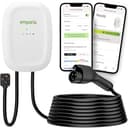
Emporia Level 2 EV Charger

Emporia Level 2 EV Charger

The value pick that never feels like one. You get the full 48 amps, an ENERGY STAR listing, real Wi-Fi energy tracking and a 25 ft cable for well under what the marquee brands charge. When someone asks us where to start, this is usually the first name out of our mouths.

Best overall 48A
$449.00 · View on Amazon

Price as of September 2, 2026. #ad How we’re funded

2
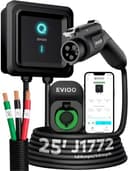
EVIQO 48A Level 2 Charger

EVIQO 48A Level 2 Charger

A lot of charger for the money. You get 48 amps, Wi-Fi scheduling, ENERGY STAR, and the longest usable reach in this group thanks to a 25 ft cable plus a 40-inch input lead. If Emporia is sold out or you want maximum cable, this is the value alternative to have in mind.

Best value 48A
$428.98 · View on Amazon

$479.0010% off

Price as of September 2, 2026. #ad How we’re funded

3
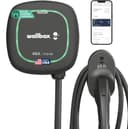
Wallbox Pulsar Plus

Wallbox Pulsar Plus

The one to reach for when wall space is tight. It's among the smallest 48A chargers made, and Power Boost load balancing lets it share a circuit without tripping the main — which can save you a panel upgrade. It's a polished, premium unit, and the price says so.

Best compact 48A
$614.99 · View on Amazon

$699.9912% off

Price as of September 2, 2026. #ad How we’re funded

4
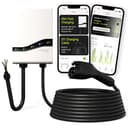
Emporia Pro with PowerSmart

Emporia Pro with PowerSmart

The answer to a full electrical panel. It's the same 48-amp, ENERGY STAR hardware as Emporia's standard charger, with PowerSmart load management added: paired with Emporia's own energy monitor, it watches what the rest of the house is drawing and dials the charger back instead of tripping the main. If an electrician has told you a charger means a service upgrade, this is the unit that can make that quote go away.

Best for a tight panel
$599.00 · View on Amazon

Price as of September 2, 2026. #ad How we’re funded

5
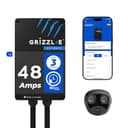
Grizzl-E Ultimate 48A

Grizzl-E Ultimate 48A

The Grizzl-E for people who wanted more than 40 amps. It keeps the metal UL Type 4 body and the published -22F floor that make the Classic Connect our exposed-install pick, then raises the ceiling to 48A and adds an OCPP radio on top of the Grizzl-E Connect app. Two catches: it is hardwire-only, so there is no unplugging it and taking it with you, and the SKU Amazon carries today is the NACS cable version, so a J1772 car needs an adapter permanently in the chain.

Best weatherproof 48A
6
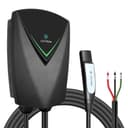
Lectron Nexus NACS (Tesla) Charger

Lectron Nexus NACS (Tesla) Charger

For a Tesla owner who doesn't want to babysit an adapter. The native NACS (J3400) connector goes straight into the car at a full 48 amps, with the safety listings you want to see. There's no app — but a Tesla schedules charging in the car anyway, so you're not really missing one.

Best 48A for Tesla
$429.99 · View on Amazon

$459.997% off

Price as of September 2, 2026. #ad How we’re funded

The picks in full

#1Best overall 48A

Emporia Level 2 EV Charger

The value pick that never feels like one. You get the full 48 amps, an ENERGY STAR listing, real Wi-Fi energy tracking and a 25 ft cable for well under what the marquee brands charge. When someone asks us where to start, this is usually the first name out of our mouths.

Strengths

  • 48A and ENERGY STAR at a genuinely value price
  • The app tracks energy use, not just an on/off toggle
  • Long 25 ft cable and a remote holster in the box

Trade-offs

  • 48A hardwired needs a 60A circuit; on a NEMA 14-50 plug it's capped at 40A
  • The app is less polished than ChargePoint's, and support is a smaller operation
Max output48 A
Power11.5 kW
ConnectorJ1772
InstallHardwired or NEMA 14-50 plug
Cable length25 ft
Warranty3 years
WiFi + appYes
CertificationsUL listed, ENERGY STAR

Our charging-speed math. Hardwired at 48A (11.5 kW), figure about 40 miles of range an hour at 3.5 mi/kWh. Drop to a 40A plug-in circuit and it's closer to 34.

Build note. Runs 48A hardwired, or 40A on a NEMA 14-50 outlet, with a 25 ft cable and a wall holster included.

Specs read from the manufacturer spec sheet, on July 19, 2026. “Not published” means the brand does not state that figure.

#2Best value 48A

EVIQO 48A Level 2 Charger

A lot of charger for the money. You get 48 amps, Wi-Fi scheduling, ENERGY STAR, and the longest usable reach in this group thanks to a 25 ft cable plus a 40-inch input lead. If Emporia is sold out or you want maximum cable, this is the value alternative to have in mind.

Strengths

  • 48A output with Wi-Fi scheduling at a value price
  • 25 ft charging cable plus a 40 in input lead — excellent reach
  • UL, ETL, FCC and ENERGY STAR listings

Trade-offs

  • The hardwired version needs a 60A circuit and an electrician
  • A smaller brand with a shorter track record than ChargePoint or Wallbox
Max output48 A
Power11.5 kW
ConnectorJ1772
InstallHardwired
Cable length25 ft
Warranty3 years
WiFi + appYes
CertificationsUL, ETL, FCC, ENERGY STAR

Our charging-speed math. At 48A (11.5 kW) and 3.5 mi/kWh, about 40 miles of range an hour.

Build note. Ships with a 25 ft charging cable plus a 40 in input cable — among the longest total reach in class.

Specs read from the manufacturer spec sheet, on July 19, 2026. “Not published” means the brand does not state that figure.

#3Best compact 48A

Wallbox Pulsar Plus

The one to reach for when wall space is tight. It's among the smallest 48A chargers made, and Power Boost load balancing lets it share a circuit without tripping the main — which can save you a panel upgrade. It's a polished, premium unit, and the price says so.

Strengths

  • Genuinely compact for a 48A charger — easy to tuck in a tight spot
  • Power Boost load balancing can sidestep a panel upgrade
  • Bluetooth and Wi-Fi with a clean, modern app

Trade-offs

  • One of the pricier chargers in this group
  • Hardwired only — no plug-in option, so it's not renter-friendly
Max output48 A
Power11.5 kW
ConnectorJ1772
InstallHardwired
Cable length25 ft
Warranty3 years
WiFi + appYes
CertificationsENERGY STAR

Our charging-speed math. At 48A (11.5 kW) and 3.5 mi/kWh, about 40 miles of range an hour — and Power Boost can throttle it down to protect a shared circuit.

Build note. One of the most compact 48A chargers in its class, carrying both Bluetooth and Wi-Fi.

Specs read from the manufacturer spec sheet, on July 19, 2026. “Not published” means the brand does not state that figure.

#4Best for a tight panel

Emporia Pro with PowerSmart

The answer to a full electrical panel. It's the same 48-amp, ENERGY STAR hardware as Emporia's standard charger, with PowerSmart load management added: paired with Emporia's own energy monitor, it watches what the rest of the house is drawing and dials the charger back instead of tripping the main. If an electrician has told you a charger means a service upgrade, this is the unit that can make that quote go away.

Strengths

  • PowerSmart load management can avoid a panel or service upgrade
  • Full 48A, ENERGY STAR and a 25 ft cable, same as the standard model
  • The app adds peak-demand management on top of ordinary scheduling

Trade-offs

  • PowerSmart needs Emporia's Vue energy monitor — that's a second device to buy and install
  • You pay a clear premium over the standard Emporia for one feature
Max output48 A
Power11.5 kW
ConnectorJ1772
InstallHardwired (a NEMA 14-50 SKU is also sold)
Cable length25 ft
Warranty3 years
WiFi + appYes
CertificationsUL listed, ENERGY STAR

Our charging-speed math. At the full 48A (11.5 kW) and 3.5 mi/kWh, about 40 miles of range an hour — and PowerSmart will quietly reduce that when the rest of the house is drawing hard, which is the entire point of it.

Build note. Emporia publishes PowerSmart load management as dynamically adjusting charging speed to prevent overloading the panel; it requires the Emporia Vue energy monitor.

Specs read from the manufacturer spec sheet, on August 11, 2026. “Not published” means the brand does not state that figure.

#5Best weatherproof 48A

Grizzl-E Ultimate 48A

The Grizzl-E for people who wanted more than 40 amps. It keeps the metal UL Type 4 body and the published -22F floor that make the Classic Connect our exposed-install pick, then raises the ceiling to 48A and adds an OCPP radio on top of the Grizzl-E Connect app. Two catches: it is hardwire-only, so there is no unplugging it and taking it with you, and the SKU Amazon carries today is the NACS cable version, so a J1772 car needs an adapter permanently in the chain.

Strengths

  • 48A / 11.5 kW in the same UL Type 4 metal case, published from -22F to 122F
  • Speaks OCPP as well as Grizzl-E's own app — rare on a home charger
  • 25 ft cable, and current can be dialed to 40, 32, 24 or 16 amps

Trade-offs

  • The live Amazon SKU is the NACS cable — a J1772 car needs an adapter to use it
  • Hardwire only — no plug, so it is not renter-friendly and not portable
  • 48A needs a 60-amp circuit, which is the install many older panels can't take
  • Grizzl-E publishes UL/cUL for this model but no ENERGY STAR listing
Max output48 A
Power11.5 kW
ConnectorNACS
InstallHardwired
Cable length25 ft
Warranty3 years
WiFi + appYes
CertificationsUL/cUL listed (file E510712)

Our charging-speed math. At 48A (11.5 kW) and 3.5 mi/kWh, roughly 40 miles of range an hour — about six more than the 40A Classic Connect, and it needs a 60-amp circuit to get there.

Build note. A metal case rated UL Type 4 indoor/outdoor, published for -30C to +50C (-22F to 122F), with 2.4 GHz Wi-Fi on an extended-range antenna, OCPP support and current selectable at 40, 32, 24 or 16 amps. Grizzl-E publishes the Ultimate 48A with a J1772 or a NACS output cable; the SKU Amazon lists today (GRS-077-W-HW-25N48-A-GB) is the NACS one, which is the connector our spec table records.

Specs read from the manufacturer spec sheet, on August 21, 2026. “Not published” means the brand does not state that figure.

#6Best 48A for Tesla

Lectron Nexus NACS (Tesla) Charger

For a Tesla owner who doesn't want to babysit an adapter. The native NACS (J3400) connector goes straight into the car at a full 48 amps, with the safety listings you want to see. There's no app — but a Tesla schedules charging in the car anyway, so you're not really missing one.

Strengths

  • Native NACS connector — no J1772-to-Tesla adapter to keep track of
  • Full 48A output and a weather-rated IP66 body
  • UL/ETL safety listings plus ENERGY STAR

Trade-offs

  • No Wi-Fi app — you schedule in the Tesla app instead
  • Best for Tesla/NACS cars; other EVs need a NACS-to-J1772 adapter
Max output48 A
Power11.5 kW
ConnectorNACS
InstallHardwired
Cable length23 ft
Warranty3 years
WiFi + appNo
CertificationsUL 2594/2231/2251 (ETL listed), ENERGY STAR, FCC

Our charging-speed math. At 48A (11.5 kW) and 3.5 mi/kWh, about 40 miles of range an hour into a Tesla.

Build note. A native NACS (J3400) connector plugs straight into a Tesla with no adapter; a holster is included.

Specs read from the manufacturer spec sheet, on July 19, 2026. “Not published” means the brand does not state that figure.

What 48 amps actually buys you

Against the 40-amp tier, the honest answer is about six miles of range per hour— roughly 40 against 34 at our 3.5 mi/kWh reference. Across a ten-hour overnight window that is 400 miles against 340. Both numbers comfortably exceed what any normal day of driving removes from a battery, which is why the upgrade is genuinely unnecessary for most single-car households.

There are three situations where the extra amps do real work:

  • You regularly arrive home near-empty.Refilling 250–300 miles overnight is where 40 amps starts to run out of night and 48 does not.
  • Two EVs share one charger. Rotating two cars through a single unit halves the effective window for each, which is exactly when the faster tier stops being theoretical. Our two-EV roundup covers this case properly, including load management.
  • Your car can actually take it.This one gets missed. A car with a 7.7 kW onboard AC charger will draw 7.7 kW from a 48-amp charger and 7.7 kW from a 40-amp one — identical. The charger is only ever the ceiling, never the floor. Check your vehicle’s onboard charger rating before paying for amps it will refuse.

The 60-amp circuit is the real purchase

NEC Article 625 treats EV charging as a continuous load, so the circuit is sized to 125% of the charger’s draw. Forty-eight amps × 1.25 = 60 amps. In practice that means:

  • Hardwiring, in almost every case. A NEMA 14-50 receptacle is a 50-amp device, so it caps a charger at 40 amps of continuous draw no matter what the unit is rated for. If you want the full 48, the charger goes straight into the circuit. Our hardwired vs plug-in comparisoncovers what you give up by doing that — portability, renter-friendliness, and a thirty-second swap if the unit ever fails.
  • Heavier conductors and a longer run cost more. The distance from the panel to the wall is a bigger line item at 60 amps than at 50.
  • Panel headroom you may not have. If the load calculation says there is no room, you are looking at a service upgrade that can cost several times the charger. Our panel capacity guide walks the calculation, and our installation cost guide covers what the quote is made of.

This is the whole reason the Emporia Prois on this list. Its PowerSmart load management is Emporia’s published answer to a panel with no spare capacity: it adjusts charging speed dynamically to avoid overloading the service, which can turn a service upgrade into a normal install. Note the catch we state on its review — Emporia publishes that the feature requires the Vue energy monitor, which is a separate device.

How to choose between these six

All six deliver the same 48 amps. What separates them is everything around it.

Plug-in flexibility. The Emporia Level 2is the only pick here sold both hardwired and as a plug-in unit. On a 14-50 plug it is capped at 40 amps like anything else — but that optionality is genuinely useful if you are not sure yet whether your circuit will support the full 48, or if you might move.

Reach. The EVIQO 48A publishes the longest total run of anything we cover: 25 feet of charging cable plus a 40-inch input lead on the supply side. If the parking spot and the panel are at opposite ends of the garage, that decides it.

Physical size and shared circuits. The Wallbox Pulsar Plusis among the smallest 48-amp chargers made, and its Power Boost load balancing lets it share a circuit without tripping the main — a second route around a panel upgrade.

Weather. The Grizzl-E Ultimate 48Ais the one to reach for if the charger is going somewhere genuinely exposed. It carries the same UL Type 4 metal case and published −22°F operating floor as the smaller Classic Connect, with the ceiling raised to 48 amps and an OCPP radio on top of the vendor app. It is hardwire-only, which at this tier you were probably doing anyway. Check the connector before you order: Grizzl-E builds it with a J1772 or a NACS cable, and the SKU Amazon lists today is the NACS one, so a J1772 car would need an adapter permanently in the chain.

Tesla and NACS. The Lectron Nexus NACSgives a Tesla or NACS-native car a full 48 amps with no adapter in the chain. It has no app — which matters less than it sounds, because the car already schedules its own charging.

Certification, and what to check before you buy

Every pick here carries a UL, cUL or ETL listing against the ANSI/UL 2594 standard for EV supply equipment. Most also carry an ENERGY STAR listing — which matters beyond efficiency, because a number of utility rebate programs ask for it by name. One honest exception on this page: Grizzl-E publishes UL/cUL for the Ultimate 48A but no ENERGY STAR listing, so if a rebate depends on that box, confirm your exact model number first. Our ENERGY STAR roundup sorts our picks by which ones actually publish the certification, and our rebates guide covers what the programs typically require.

Before you commit at this tier, confirm three numbers: your car’s onboard AC charger rating (it may be lower than 11.5 kW), the spare capacity in your panel, and the run length from panel to charger. Any one of them can make 40 amps the smarter buy — our 40A vs 48A comparison lays out exactly where the line falls.
Frequently asked questions

Do I need a 60-amp circuit for a 48-amp EV charger?

Yes. NEC Article 625 treats EV charging as a continuous load, so the circuit must be rated to 125% of the charger's continuous draw — 48 × 1.25 = 60 amps. This is also why a 48-amp charger is almost always hardwired: a NEMA 14-50 receptacle is a 50-amp device and caps continuous draw at 40 amps regardless of what the charger is rated for.

How much faster is a 48-amp charger than a 40-amp one?

About six miles of range per hour — roughly 40 against 34 at our standard 3.5 miles-per-kWh reference. Over a ten-hour overnight window that is 400 miles against 340. For most single-car households the difference never shows up, because neither number is the constraint on a normal day's driving.

Will a 48-amp charger charge my car faster if my car only accepts 7.7 kW?

No. The charger sets the ceiling, not the floor. If your vehicle's onboard AC charger is rated at 7.7 kW, it will draw 7.7 kW from a 48-amp charger and 7.7 kW from a 40-amp charger — identical. Check your car's onboard charger rating before paying for amperage it cannot use; this is the single most common way people overbuy.

Can I plug a 48-amp charger into a NEMA 14-50 outlet?

Some 48-amp chargers are sold in a plug-in version, but on a 14-50 outlet they are limited to 40 amps of continuous draw, because the receptacle is a 50-amp device and the 80% continuous-load rule applies. You get the unit's full 48 amps only by hardwiring it to a 60-amp circuit.

Is a 48-amp charger worth it for a single EV?

Usually not, unless you regularly arrive home near-empty. The extra amps mostly buy margin you won't use, while the 60-amp circuit they require is where the real cost sits. The clearest cases for 48 amps are two EVs sharing one charger, a long daily commute that removes 150+ miles, or a household that plugs in late and leaves early.

Sources

Keep reading