Plug & Range

Best EV Chargers for Apartments & Renters

Every charger roundup assumes you own the wall. If you don't, the ranking changes completely — portability and 'needs no electrician' beat amperage every time. These are the units that work when the building isn't yours.

By Stephen V.Last updated How we pick

The standard home-charger advice — hardwire a 48-amp unit to a new 60-amp circuit — is useless if you rent. You cannot re-wire someone else’s building, a hardwired charger becomes the landlord’s fixture the moment it’s terminated, and you certainly cannot take it with you. So this list is ranked on a different axis: how little permission and how little electrical work does it need, and does it move out with you?

The good news is that renting does not mean going without. There are three tiers available to you, and the slowest one is far more usable than its reputation suggests. Every pick below is a real, currently-purchasable unit with published specs; the guide underneath covers what to ask a landlord, and the honest arithmetic on whether a 120V outlet is enough for your commute.

How this is funded:we earn a commission if you buy through our links, at no extra cost to you. It never changes which product we recommend, and we’ll tell you when we’d skip one. Full disclosure.

Quick picks

Ranked on published specs, charging speed, electrical fit and value. Select a row to jump to the full write-up. We have not bench-tested these chargers — here is exactly what we do instead.

#ProductBest forPrice
1
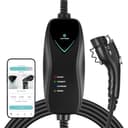
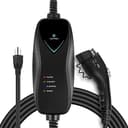
Lectron 40A Portable Level 2 Charger

Lectron 40A Portable Level 2 Charger

The least-expensive honest route into real Level 2 charging. Plug it into a NEMA 14-50 outlet, pull a true 40A / 9.6 kW, and unplug it to throw in the trunk for a trip. The trade-offs for the price are no app and a shorter warranty — both fair at this cost.

Best overall for renters
$269.99 · View on Amazon

Price as of September 2, 2026. #ad How we’re funded

2
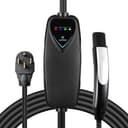
Lectron Level 1 Charger, 15A

Lectron Level 1 Charger, 15A

The charger you buy when you can't install anything. It plugs into an ordinary 120V household outlet and pulls 15 amps — the top of what a standard circuit will give you — which makes it the fastest thing you can do with zero electrical work. It is genuinely slow next to a 240V unit, and we won't pretend otherwise. But for a plug-in hybrid, a short commute or a rented parking spot, slow-and-installed beats fast-and-impossible.

Best with no install at all
$159.99 · View on Amazon

Price as of September 2, 2026. #ad How we’re funded

3
Lectron Level 1 Charger, 12A (Wi-Fi)

Lectron Level 1 Charger, 12A (Wi-Fi)

Level 1 charging with a brain. It gives up three amps against the plain 15A version and gets back the Lectron app — live charging status, scheduled sessions, and a kWh cap so you can stop a charge at a set amount. On Level 1 that scheduling matters more than it sounds: a trickle charge runs for most of the night anyway, so being able to start it when your off-peak rate does is worth more than the amps you traded away.

Best for off-peak scheduling
$169.99 · View on Amazon

Price as of September 2, 2026. #ad How we’re funded

4
Lectron Level 2 Tesla (NACS) Portable Charger, 40A

Lectron Level 2 Tesla (NACS) Portable Charger, 40A

The straightforward native-NACS answer for a Tesla owner who wants real Level 2 speed without hardwiring anything. Plug it into a NEMA 14-50, pull a full 40 amps, and unplug it when you move or travel. There is no app and no adjustable current — what you are buying is the Tesla plug on the end of a proper 40-amp portable charger, at a price well under a wall-mounted NACS station.

Best for a Tesla renter
$279.89 · View on Amazon

Price as of September 2, 2026. #ad How we’re funded

5
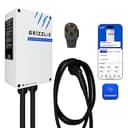
Grizzl-E Classic Connect

Grizzl-E Classic Connect

Grizzl-E retired the old no-app Classic and replaced it with this, and it kept the part that mattered: a metal case rated UL Type 4 for a spot with no shelter, published to keep operating down to -22F. What changed is that the electronics caught up — Wi-Fi, an app, and current you can dial from 40A down to 16A to fit a circuit you already have. It's the rugged pick that no longer asks you to give up scheduling to get it.

Best if you can add an outlet
$349.99 · View on Amazon

Price as of September 2, 2026. #ad How we’re funded

The picks in full

#1Best overall for renters

Lectron 40A Portable Level 2 Charger

The least-expensive honest route into real Level 2 charging. Plug it into a NEMA 14-50 outlet, pull a true 40A / 9.6 kW, and unplug it to throw in the trunk for a trip. The trade-offs for the price are no app and a shorter warranty — both fair at this cost.

Strengths

  • A real 40A / 9.6 kW at a budget price
  • Plug-in and portable — no hardwiring, and it travels
  • ETL listed to the UL 2594 / UL 2231 safety standards

Trade-offs

  • No Wi-Fi or app on the base model — the smart version is a separate SKU
  • Shorter 16 ft cable and a 2-year warranty
  • The brand doesn't publish an outdoor/IP enclosure rating
Max output40 A
Power9.6 kW
ConnectorJ1772
InstallNEMA 14-50 plug
Cable length16 ft
Warranty2 years
WiFi + appNo
CertificationsETL listed (UL 2594 / UL 2231)

Our charging-speed math. At 40A (9.6 kW) and 3.5 mi/kWh it adds roughly 34 miles of range an hour.

Build note. A portable plug-in unit — no hardwiring — and the base model carries no Wi-Fi or app.

Specs read from the manufacturer spec sheet, on July 19, 2026. “Not published” means the brand does not state that figure.

#2Best with no install at all

Lectron Level 1 Charger, 15A

The charger you buy when you can't install anything. It plugs into an ordinary 120V household outlet and pulls 15 amps — the top of what a standard circuit will give you — which makes it the fastest thing you can do with zero electrical work. It is genuinely slow next to a 240V unit, and we won't pretend otherwise. But for a plug-in hybrid, a short commute or a rented parking spot, slow-and-installed beats fast-and-impossible.

Strengths

  • Works from any standard 120V outlet — no electrician, no install
  • 15A is the practical ceiling for Level 1, so it's the fastest version of the slow option
  • IP65 weather resistance and a 16 ft cable at a budget price

Trade-offs

  • Level 1 is genuinely slow — plan in overnights, not hours
  • No app or scheduling on this version
  • Lectron doesn't publish a warranty term for it
Max output15 A
Power1.8 kW
ConnectorJ1772
InstallNEMA 5-15 plug (standard 120V outlet)
Cable length16 ft
WarrantyNot published
WiFi + appNo
CertificationsETL listed (UL 2594 / UL 2231)

Our charging-speed math. 15A at 120V is about 1.8 kW, so at 3.5 mi/kWh it adds roughly 6 miles of range an hour — call it 60-plus miles across a 10-hour overnight, before charging losses.

Build note. Lectron publishes 120V / 15A / 1.8 kW through a NEMA 5-15 plug, a 16 ft cable and an IP65-rated body with over-voltage, over-current and short-circuit protection.

Specs read from the manufacturer spec sheet, on August 11, 2026. “Not published” means the brand does not state that figure.

#3Best for off-peak scheduling

Lectron Level 1 Charger, 12A (Wi-Fi)

Level 1 charging with a brain. It gives up three amps against the plain 15A version and gets back the Lectron app — live charging status, scheduled sessions, and a kWh cap so you can stop a charge at a set amount. On Level 1 that scheduling matters more than it sounds: a trickle charge runs for most of the night anyway, so being able to start it when your off-peak rate does is worth more than the amps you traded away.

Strengths

  • App gives real-time status, scheduling and a kWh charge limit
  • Same no-install 120V convenience as the plain model
  • ETL listing to the same UL 2594 / UL 2231 standards

Trade-offs

  • 12A instead of 15A — slower again than an already slow charging level
  • You're paying for an app on a charger that mostly runs unattended overnight
  • No published warranty term
Max output12 A
Power1.44 kW
ConnectorJ1772
InstallNEMA 5-15 plug (standard 120V outlet)
Cable length16 ft
WarrantyNot published
WiFi + appYes
CertificationsETL listed (UL 2594 / UL 2231)

Our charging-speed math. 12A at 120V is about 1.44 kW, so at 3.5 mi/kWh that's roughly 5 miles of range an hour — about 50 miles across a 10-hour overnight, before losses.

Build note. Lectron publishes 120V / 12A / up to 1.44 kW, a 16 ft cable, an IP65-rated control box, and a Lectron app that schedules sessions and caps a charge at a chosen number of kWh.

Specs read from the manufacturer spec sheet, on August 11, 2026. “Not published” means the brand does not state that figure.

#4Best for a Tesla renter

Lectron Level 2 Tesla (NACS) Portable Charger, 40A

The straightforward native-NACS answer for a Tesla owner who wants real Level 2 speed without hardwiring anything. Plug it into a NEMA 14-50, pull a full 40 amps, and unplug it when you move or travel. There is no app and no adjustable current — what you are buying is the Tesla plug on the end of a proper 40-amp portable charger, at a price well under a wall-mounted NACS station.

Strengths

  • Native NACS connector — nothing to seat, nothing to lose, no adapter
  • A real 40A / 9.6 kW from an ordinary NEMA 14-50 outlet
  • IP65 control box and IP55 handle, rated by Lectron for outdoor use
  • Plug-in and portable, so it moves with you and travels

Trade-offs

  • No Wi-Fi or app on this SKU — the smart version is a separate, dearer listing
  • No adjustable current, so it cannot be trimmed down for an unverified outlet
  • A J1772 car needs a NACS-to-J1772 adapter — buy a J1772 charger instead
  • Lectron does not publish a warranty term for this model
Max output40 A
Power9.6 kW
ConnectorNACS
InstallNEMA 14-50 plug
Cable length16 ft
WarrantyNot published
WiFi + appNo
CertificationsETL listed (UL 2594 / UL 2231), UL 2251 handle, FCC

Our charging-speed math. At 40A on 240V (9.6 kW) and our 3.5 mi/kWh reference, roughly 34 miles of range an hour. Lectron's own figure is up to 36 miles an hour, which assumes a slightly more efficient car than our reference.

Build note. Lectron publishes 240V, 40 A and 9.6 kW through a NEMA 14-50 plug on a 16 ft cable, a native Tesla (NACS) connector, an IP65-rated control box with an IP55-rated handle tested to 10,000-plus insertions, protection against overvoltage, overcurrent and short circuits, and ETL/FCC certification against UL 2594 and UL 2231 with a UL 2251 handle. This SKU has no Wi-Fi or app.

Specs read from the manufacturer spec sheet, on August 21, 2026. “Not published” means the brand does not state that figure.

#5Best if you can add an outlet

Grizzl-E Classic Connect

Grizzl-E retired the old no-app Classic and replaced it with this, and it kept the part that mattered: a metal case rated UL Type 4 for a spot with no shelter, published to keep operating down to -22F. What changed is that the electronics caught up — Wi-Fi, an app, and current you can dial from 40A down to 16A to fit a circuit you already have. It's the rugged pick that no longer asks you to give up scheduling to get it.

Strengths

  • Metal case rated UL Type 4 indoor/outdoor, published from -22F to 122F
  • Current adjusts from 40A down to 16A, so it fits the circuit you already have
  • 25 ft cable — among the longest here — on a simple plug-in NEMA 14-50 install

Trade-offs

  • 40A caps its charging speed below the 48A units
  • Scheduling now runs through Wi-Fi and an account — the old Classic's nothing-to-update simplicity is gone
  • Grizzl-E publishes UL/cUL only for this model, not the ENERGY STAR listing the discontinued Classic carried
Max output40 A
Power9.6 kW
ConnectorJ1772
InstallNEMA 14-50 plug
Cable length25 ft
Warranty3 years
WiFi + appYes
CertificationsUL/cUL listed (file E510712)

Our charging-speed math. At 40A (9.6 kW) and 3.5 mi/kWh it adds roughly 34 miles of range an hour — more than enough to refill a daily commute overnight. Dial it down to 16A and you're at about 13.

Build note. A metal case rated UL Type 4 indoor/outdoor and published for -30C to +50C (-22F to 122F), with 2.4 GHz Wi-Fi and current adjustable from 40A down to 16A.

Specs read from the manufacturer spec sheet, on August 11, 2026. “Not published” means the brand does not state that figure.

Your three tiers, from no permission to some permission

Tier 1 — a standard 120V outlet (no permission, no install, no cost)

Level 1 charging runs from an ordinary household outlet. No electrician, no permit, no landlord conversation, no install cost. It is genuinely slow: at 15 amps and 120 volts you get about 1.8 kW, which at our 3.5 mi/kWh reference is roughly 6 miles of range an hour— call it 60-plus miles across a ten-hour overnight, before charging losses.

Here is the honest test, and it surprises people: the average US driver covers around 35–40 miles a day. If that is you, and you can plug in overnight, Level 1 replaces your daily driving with hours to spare. It stops working when you drive far more than that, when you cannot reach an outlet from your parking spot, or when you need to recover a big trip quickly. Our Level 1 vs Level 2 comparison runs the decision properly, and the Level 1 roundup covers the field.

One safety point that is not optional: plug the charger directly into the wall outlet. Never run a Level 1 charger through a household extension cord or a power strip — it draws its rated current continuously for hours, and generic cords are not built for that duty.

Tier 2 — an existing 240V outlet (no new wiring)

This is the sweet spot most renters miss. Plenty of garages, carports and parking areas already have a 240V receptacle in them for a dryer, a welder, a workshop tool or an RV pad. If there is a NEMA 14-50 within reach of your parking spot, a plug-in Level 2 charger turns it into a real 40-amp charging point with no electrical work at all — about 34 miles of range an hour.

Two cautions. First, confirm with the landlord or building manager that you may use it, and confirm what else is on that circuit. Second, get an electrician to verify the receptacle is on a correctly-sized dedicated circuit and in good condition — an old, loose or under-sized 14-50 is a genuine fire risk under continuous EV load in a way it never was for the occasional dryer cycle. Our outlet types guide explains which receptacle gives how many amps and why adapting between them is a bad idea.

Tier 3 — asking for an outlet to be added

If there is no 240V outlet, the ask that most often gets approved is not “install me a charger” but “install a NEMA 14-50 receptacle.” It is a smaller job, it is a permanent improvement that stays with the property, it serves any future tenant with an EV, and it does not commit the building to a particular brand of hardware. Offer to pay for it. Our installation guide covers what the work involves and our cost guide gives you a realistic number to put in the request.

Why every pick here is plug-in

There is not a hardwired unit on this page, and that is deliberate. A plug-in charger has three properties that matter enormously when the building is not yours:

  • It moves. Unplug it on moving day and it comes with you, leaving a receptacle behind rather than an argument about fixtures.
  • It needs no charger-specific electrical work. The landlord is approving an outlet, not a permanent installation of your equipment on their wall.
  • It travels.A parent’s driveway, a holiday rental, an RV pad — a plug-in unit works at any correctly-rated outlet you can find. Our RV park guide covers that case, and the portable roundup ranks on portability specifically.

Which of these five is yours

The Lectron 40Atakes the overall slot: it is the cheapest honest route into real Level 2 charging, it is built and sized to be carried, and it plugs into a 14-50. The trade-offs are specific — no app, a 16-foot cable, a two-year warranty, and Lectron publishes no enclosure rating, so keep it sheltered rather than hanging on an exposed wall.

The Lectron Level 1 (15A) is the answer when there is genuinely no 240V option. Fifteen amps is the practical ceiling for Level 1, so it is the fastest version of the slow route, and it carries an IP65 rating and a 16-foot cable.

The Lectron Level 1 Wi-Fi (12A)trades three amps for the Lectron app — scheduling and a kWh charge cap. On Level 1 that trade is better than it looks: a trickle charge runs most of the night anyway, so being able to start it when your off-peak rate does is often worth more than the amps. If your utility has time-of-use pricing and you are on Level 1, this is the one.

The Lectron Level 2 Tesla (NACS) 40Ais the renter’s answer for a Tesla or other NACS car: a native Tesla plug on a proper 40-amp portable charger, so a 14-50 in a garage or carport gives you real Level 2 with no adapter and nothing installed, and it unplugs and moves out with you. Read the current setting before you buy, though: Lectron publishes no adjustable range for it, so it draws its full 40 amps or nothing — on an outlet you cannot verify, that is a reason to look at a charger with a dial instead. If a 240V outlet is out of reach entirely, the Lectron Level 1 Tesla covers the same car from an ordinary household socket at 15 amps.

The Grizzl-E Classic Connectis here for the renter who successfully gets a 14-50 added, or has one in a carport. It costs more than the Lectron, and what that buys is a UL Type 4 metal case with a published −22°F operating floor, 25 feet of cable and a Wi-Fi app — worth it if your parking spot has no roof over it.

What to ask before you buy

Three questions settle this, and all three are about the building rather than the charger. Can you reach your parking spot from an outlet?Cable length and where the car’s charge port sits decide more here than amperage does. Is there already a 240V receptacle? If yes, you are one purchase away from real Level 2 charging. What does your lease say about alterations and electricity use?Some buildings meter parking areas separately, and some explicitly prohibit running a cord across a walkway — which is a legitimate trip hazard, not just landlord fussiness.
Frequently asked questions

Can I charge an EV in an apartment without installing anything?

Yes, if you can reach a standard 120V outlet from your parking spot. Level 1 charging needs no electrician, no permit and no install cost, and adds roughly 6 miles of range an hour — about 60 miles across a ten-hour overnight. Given the average US driver covers around 35-40 miles a day, that is enough for a lot of people. Plug the charger straight into the wall outlet, never into an extension cord or power strip.

Is Level 1 charging really enough for a daily commute?

Often, yes. At about 6 miles of range per hour, an overnight session replaces roughly 60 miles of driving. If your daily round trip is under about 40 miles and you can plug in most nights, Level 1 keeps up without you thinking about it. It stops being enough if you drive much further, if you cannot plug in every night, or if you need to recover a long trip quickly.

What should I ask my landlord for?

Ask for a NEMA 14-50 receptacle rather than for a charger. It is a smaller job, it is a permanent improvement that stays with the property and serves any future tenant with an EV, and it does not commit the building to your choice of hardware. Offering to pay for the work materially improves your odds, and it leaves you owning a charger you can unplug and take when you move.

Can I use the dryer outlet in my building's laundry area?

Only with permission, and only after an electrician confirms the receptacle and its circuit are sound and correctly sized. An EV draws its rated current continuously for hours, which is a far harder duty than an occasional dryer cycle — an old or loose receptacle that has been fine for years can overheat under that load. Also check the outlet type: a dryer outlet is often a NEMA 10-30 or 14-30, not a 14-50, which means fewer amps and a different plug.

Should a renter buy a hardwired charger?

No. A hardwired charger is terminated directly into the building's circuit and effectively becomes part of the property, so you cannot take it with you and removing it is an electrician's job. Every pick on this page is plug-in for exactly that reason — it unplugs on moving day and leaves a receptacle behind rather than a dispute about fixtures.

Sources

Keep reading