Plug & Range

Best 32-Amp EV Chargers

Nobody sells a “32-amp charger” as such. What you are shopping for is a charger that can be <em>set</em> to 32 amps and held there — and the difference between doing that in an app and doing it with a switch is the whole page.

By Stephen V.Last updated How we pick

The EVIQO 48A is our top pick, because it is the only charger here that enforces a 32-amp limit in hardware and in software at the same time. EVIQO publishes internal DIP switches that cap the maximum at 16, 32, 40 or 48 amps, plus an app slider that moves from 6 amps up to whatever the switch allows, in 1-amp increments. Set the switch to 32 and the charger cannot be talked above 32 by anyone with the app, a new phone or a firmware update. If you want 32 amps for a reason — and on this page you almost certainly do — that is the version of the setting that actually holds.

Here is why people land on this number. EV charging is a continuous load under NEC Article 625, so a circuit is sized to 125% of the charger's draw: 32 amps of charging needs a 40-amp circuit. A great many existing panels can spare a 40-amp breaker and cannot spare the 60-amp one a 48-amp charger demands, and a 40-amp circuit uses smaller, cheaper wire over a long run. Thirty-two amps at 240 volts is 7.68 kW, which at our 3.5 miles-per-kWh reference is roughly 27 miles of range an hour, or about 270 miles across a ten-hour night. For most households that is not a compromise; it is simply enough.

So we ranked on what the manufacturer publishes, in this order: whether 32 amps is a documented setting rather than something you hope the app offers, whether the limit can be enforced in hardware, where the setting lives and who can change it, install type, and then the usual enclosure, certification and warranty questions. No pick is here because it happens to be a 32-amp unit — none of them is. Every one is a higher-rated charger with a published way down to 32, which is both how the market works and the thing the listings are worst at explaining.

How this is funded:we earn a commission if you buy through our links, at no extra cost to you. It never changes which product we recommend, and we’ll tell you when we’d skip one. Full disclosure.

Quick picks

Ranked on published specs, charging speed, electrical fit and value. Select a row to jump to the full write-up. We have not bench-tested these chargers — here is exactly what we do instead.

#ProductBest forPrice
1
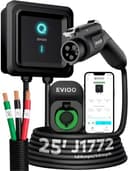
EVIQO 48A Level 2 Charger

EVIQO 48A Level 2 Charger

A lot of charger for the money. You get 48 amps, Wi-Fi scheduling, ENERGY STAR, and the longest usable reach in this group thanks to a 25 ft cable plus a 40-inch input lead. If Emporia is sold out or you want maximum cable, this is the value alternative to have in mind.

Best overall: 32A capped in hardware
$449.99 · View on Amazon

$510.0012% off

Price as of October 5, 2026. #ad How we’re funded

2
ChargePoint Home Flex

ChargePoint Home Flex

If you'd rather buy a charger once and be done, this is the safe call. You set the current in the app anywhere from 16 to 50 amps, so it fits whatever your panel can spare today and still has room to grow if you upgrade the circuit later. The app is the most polished of the bunch and the warranty is long.

Best app, with 32A as a listed step
$549.00 · View on Amazon

Price as of October 5, 2026. #ad How we’re funded

3
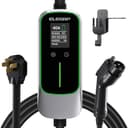
ELEGRP 40A Portable Level 2 Charger (ECP24-40A0-01)

ELEGRP 40A Portable Level 2 Charger (ECP24-40A0-01)

The cheapest charger in this registry that still publishes everything you would want to check: 9.6 kW, five current levels from 16 to 40 amps, an IP67 body with a stated -21°F floor, ETL certification and a 2-year warranty. There is no Wi-Fi and no app — you get a 1-to-12-hour delay timer on the unit instead — and for a lot of households that is the correct amount of charger.

Cheapest, and no app to set it
$209.99 · View on Amazon

Price as of October 5, 2026. #ad How we’re funded

4
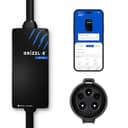
Grizzl-E Mini 40A Portable Charger (J1772)

Grizzl-E Mini 40A Portable Charger (J1772)

The only charger on our dryer-outlet page that can grow past one. It is a UL-certified 40-amp portable on a NEMA 14-50 plug, and United Chargers puts a NEMA 14-30P adapter in the box alongside 6-50P, TT-30P and 5-15P adapters — so it runs at 24 amps on your dryer outlet today and at 40 the day an electrician fits a 14-50. The catch is the one that matters most here: it ships set to 40 amps, United Chargers' current Mini manual says outright that the charger cannot detect a circuit's amperage limit, and turning it down before the first session is your job.

Best portable with a 32A hardware cap
$479.99 · View on Amazon

Price as of October 5, 2026. #ad How we’re funded

5
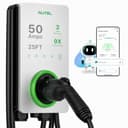
Autel MaxiCharger Home

Autel MaxiCharger Home

Built for the driveway that takes the full brunt of the weather. The NEMA 4X shell is rated to keep charging through brutal cold and heat, it delivers a full 50 amps, and the app is genuinely capable. If your charger will live fully exposed, this is the one to shortlist.

Best for a fully exposed install
$568.00 · View on Amazon

Price as of October 5, 2026. #ad How we’re funded

The picks in full

#1Best overall: 32A capped in hardware

EVIQO 48A Level 2 Charger

A lot of charger for the money. You get 48 amps, Wi-Fi scheduling, ENERGY STAR, and the longest usable reach in this group thanks to a 25 ft cable plus a 40-inch input lead. If Emporia is sold out or you want maximum cable, this is the value alternative to have in mind.

Strengths

  • 48A output with Wi-Fi scheduling at a value price
  • 25 ft charging cable plus a 40 in input lead — excellent reach
  • UL, ETL, FCC and ENERGY STAR listings

Trade-offs

  • The hardwired version needs a 60A circuit and an electrician
  • A smaller brand with a shorter track record than ChargePoint or Wallbox
Max output48 A
Power11.5 kW
ConnectorJ1772
InstallHardwired
Cable length25 ft
Warranty3 years
WiFi + appYes
CertificationsUL, ETL, FCC, ENERGY STAR

Our charging-speed math. At 48A (11.5 kW) and 3.5 mi/kWh, about 40 miles of range an hour.

Build note. Re-read from EVIQO's own page on 2026-10-04, which publishes more than the spec table above implies. The 25 ft charging cable plus a 40 in input cable is still among the longest total reach in class, and the current is adjustable two ways: 6-48 A in 1-amp increments from the app, and a hardware DIP switch that caps the maximum at 16, 32, 40 or 48 A. The same DIP block can raise the output to 50 A, which EVIQO says requires a 70 A circuit; the 48 A default needs a 60 A one. The enclosure is IP66 / NEMA-4 rated -22°F to 122°F, the warranty is 3 years and extendable to 4, and the app does remote start/stop, consumption and cost tracking, reminders, up to three schedules and over-the-air updates. No load management or load balancing is described anywhere on the page.

Specs read from the manufacturer spec sheet, on October 4, 2026. “Not published” means the brand does not state that figure.

#2Best app, with 32A as a listed step

ChargePoint Home Flex

If you'd rather buy a charger once and be done, this is the safe call. You set the current in the app anywhere from 16 to 50 amps, so it fits whatever your panel can spare today and still has room to grow if you upgrade the circuit later. The app is the most polished of the bunch and the warranty is long.

Strengths

  • Adjustable 16-50A fits a modest circuit now and a bigger one later
  • The most complete app here: scheduling, reminders and usage history
  • 3-year warranty and a generous 23 ft cable

Trade-offs

  • You pay a brand premium over value 48A units
  • Using the full 50A needs a 60A circuit most older panels can't spare
Max output50 A
Power12 kW
ConnectorJ1772
InstallHardwired (a plug-in NEMA 14-50 SKU is also sold)
Cable length23 ft
Warranty3 years
WiFi + appYes
CertificationsUL/cUL listed, ENERGY STAR

Our charging-speed math. Run it at the full 50 amps (about 12 kW) and, at a middle-of-the-road 3.5 miles per kWh, it puts back roughly 42 miles of range an hour. Turn it down to 40A to live on a 50A circuit and you're at about 34.

Build note. The headline feature is app-adjustable amperage — anywhere from 16A up to 50A, in software.

Specs read from the manufacturer spec sheet, on July 19, 2026. “Not published” means the brand does not state that figure.

#3Cheapest, and no app to set it

ELEGRP 40A Portable Level 2 Charger (ECP24-40A0-01)

The cheapest charger in this registry that still publishes everything you would want to check: 9.6 kW, five current levels from 16 to 40 amps, an IP67 body with a stated -21°F floor, ETL certification and a 2-year warranty. There is no Wi-Fi and no app — you get a 1-to-12-hour delay timer on the unit instead — and for a lot of households that is the correct amount of charger.

Strengths

  • Five current levels (16/20/24/32/40A) — it fits whatever circuit you have
  • IP67 with a published -21°F to 121°F range, and a carrying case in the box
  • 2-year warranty and full ETL certification at the bottom of the price band

Trade-offs

  • No Wi-Fi, no app and no energy monitoring — just an on-unit delay timer
  • Not ENERGY STAR listed, so it may not qualify for some utility rebates
  • 40 amps is the plug-in ceiling; a 48-amp unit needs hardwiring
Max output40 A
Power9.6 kW
ConnectorJ1772
InstallNEMA 14-50 plug
Cable length25 ft
Warranty2 years
WiFi + appNo
CertificationsETL certified

Our charging-speed math. Forty amps at 240V is 9.6 kW, and at 3.5 miles per kWh that is roughly 34 miles of range an hour. ELEGRP's own figure is 37 miles an hour, which assumes a slightly more efficient car than our reference.

Build note. ELEGRP publishes 240V, up to 9.6 kW, five selectable current levels of 16, 20, 24, 32 and 40 amps, a NEMA 14-50 plug, a 25 ft cable measured plug-end to connector, a J1772 connector, ETL certification with its PBE overheat protection, an IP67 rating with a -21°F to 121°F range, a 1-12 hour delayed start, a carrying case and a 2-year warranty.

Specs read from the manufacturer spec sheet, on August 19, 2026. “Not published” means the brand does not state that figure.

#4Best portable with a 32A hardware cap

Grizzl-E Mini 40A Portable Charger (J1772)

The only charger on our dryer-outlet page that can grow past one. It is a UL-certified 40-amp portable on a NEMA 14-50 plug, and United Chargers puts a NEMA 14-30P adapter in the box alongside 6-50P, TT-30P and 5-15P adapters — so it runs at 24 amps on your dryer outlet today and at 40 the day an electrician fits a 14-50. The catch is the one that matters most here: it ships set to 40 amps, United Chargers' current Mini manual says outright that the charger cannot detect a circuit's amperage limit, and turning it down before the first session is your job.

Strengths

  • Three-year warranty and a UL certification from an established North American brand
  • The NEMA 14-30P adapter comes in the box from the manufacturer, not as a third-party add-on
  • A DIP switch inside can cap it at 24 amps in hardware, and no Wi-Fi setting can exceed that cap
  • Runs at a full 40 amps on a NEMA 14-50 if the outlet is upgraded later

Trade-offs

  • Ships set to 40 amps and cannot detect the circuit — on a 14-30 it must be turned down before first use
  • Setting the hardware cap means unplugging it and removing the front cover to reach the switch
  • By a wide margin the most expensive pick, for capacity a dryer outlet will never let you use
  • The adapter adds a plug-and-socket joint that a native 14-30 cord does not have
  • The Amazon J1772 listing describes browser-based Wi-Fi settings, not the Grizzl-E Connect app the newer Mini Connect uses
Max output40 A
Power9.6 kW
ConnectorJ1772
InstallNEMA 14-50 plug, with 14-30P, 6-50P, TT-30P and 5-15P adapters included
Cable length24 ft
Warranty3 years
WiFi + appYes
CertificationsUL certified (United Chargers UL file E510712)

Our charging-speed math. On a NEMA 14-30 dryer outlet it must run at 24 amps: 24A at 240V is 5.76 kW, which at our 3.5 miles-per-kWh reference is roughly 20 miles of range an hour, or about 200 miles across a ten-hour overnight window. On a NEMA 14-50 at its full 40 amps (9.6 kW), it is roughly 34 miles an hour.

Build note. United Chargers publishes a 40A / 9.6 kW maximum on a 50A circuit with the output adjustable down to 7A at 240V (and 7-12A at 120V, which the charger detects automatically), a NEMA 14-50 input plug on an 18-inch lead, four NEMA 14-50R adapters in the box (5-15P, TT-30P, 14-30P and 6-50P), a UL Type 4 indoor/outdoor rating, a -22°F to 122°F operating range, a 6.9 x 3.1 x 2.4 in body weighing 9.8 lb, built-in GFCI, UL file E510712 and a 3-year warranty. Two lines decide how it belongs on a dryer outlet: both Mini manuals give the factory default maximum as 40A, and the current Mini Connect manual adds that the charger "can not detect the circuit amperage limit" (the automatic detection both manuals describe is of 120V versus 240V, not of the circuit's amperage). The limit can be lowered on the Wi-Fi settings page, or capped in hardware with a four-position DIP switch at 40, 32, 24 or 16A; the Wi-Fi setting can never exceed the DIP switch. On cable length, grizzl-e.com lists 25 ft for the current Mini Connect, while this Amazon J1772 listing and United Chargers' original Mini manual both say 24 ft, so we record the lower figure.

Specs read from the manufacturer spec sheet, on September 15, 2026. “Not published” means the brand does not state that figure.

#5Best for a fully exposed install

Autel MaxiCharger Home

Built for the driveway that takes the full brunt of the weather. The NEMA 4X shell is rated to keep charging through brutal cold and heat, it delivers a full 50 amps, and the app is genuinely capable. If your charger will live fully exposed, this is the one to shortlist.

Strengths

  • NEMA 4X enclosure rated for very cold and very hot conditions
  • Full 50A output paired with a 25 ft cable
  • Wi-Fi, Bluetooth and a capable app

Trade-offs

  • 50A means a 60A circuit and, usually, a hardwired install
  • The app and ecosystem are younger than ChargePoint's
Max output50 A
Power12 kW
ConnectorJ1772
InstallHardwired
Cable length25 ft
Warranty3 years
WiFi + appYes
CertificationsCSA certified, ENERGY STAR

Our charging-speed math. At its 50A ceiling (about 12 kW) and 3.5 mi/kWh, roughly 42 miles of range an hour.

Build note. Re-read from Autel's own page on 2026-10-04: 12 kW / 50 A with the output adjustable 16-50 A, 208/240 V AC, hardwired, a 70 A circuit required for full output, a 25 ft J1772 cable, an IP65 / NEMA 4X enclosure with a -40 to 131°F (-40 to 55°C) operating range, Bluetooth, Wi-Fi, Ethernet, CAN and RS485 connectivity, app / AutoStart / RFID-card authentication (cards sold separately) and a 3-year warranty. On load management the page is unusually specific, and it is two different features: it "supports both Adaptive Load Management (ALM) and charger-to-charger Dynamic Load Balancing (DLB)", with "ALM requir[ing] compatible additional hardware, while DLB works between chargers without additional hardware". Autel does not name the ALM hardware on this page, so we do not either.

Specs read from the manufacturer spec sheet, on October 4, 2026. “Not published” means the brand does not state that figure.

Why 32 amps, and not 40 or 48

Three reasons, and they are all about the house rather than the car.

The panel. A load calculation on an older 100- or 125-amp service frequently comes back with room for 40 amps and no room for 60. That single number decides the charger, not the other way round, and it is why our 100-amp panel roundup exists. Thirty-two amps of charging fits inside a 40-amp breaker with the 125% continuous-load margin NEC Article 625 requires; 40 amps of charging does not.

The wire. A 40-amp circuit is typically 8 AWG copper where a 60-amp circuit is 6 AWG. On a short run inside a garage that price difference is trivial. On a long run to a detached garage or across a basement it is not, and it compounds with conduit and labour — our detached garage guide gets into why long runs are not priced linearly.

The car. Some cars cannot use more than 32 amps anyway. A vehicle with a 7.2 kW onboard charger accepts about 30 amps and ignores anything above it, so paying for a 48-amp charger and a 60-amp circuit buys nothing at all. Find your own vehicle's figure before you buy — our onboard charger limits guide shows where it is published, and our 32A vs 40A comparison works through the eight-amp difference in practice.

The thing the listings hide: where the setting lives

Almost every Level 2 charger sold today has some way to reduce its current. They are not equivalent, and on this page the difference is the ranking.

A hardware cap is a physical switch inside the unit. Once it is set, no app, account, firmware update, factory reset or second household member can exceed it. If an electrician signs off on a 40-amp circuit and a 32-amp charger, a hardware cap is how that stays true in three years' time. The cost is that changing it means powering the unit down and opening it.

An app limitis a number in software, usually stored in the manufacturer's cloud. It is far more convenient — you can drop to 24 amps for an evening during peak pricing and put it back at midnight — and it is genuinely enough for most people. But it is a setting rather than a limit, and it is only as reliable as the account that owns it.

An on-unit selector— a button or a rotary step on the charger itself, with no app involved — sits between the two. There is nothing to log into and nothing in a cloud, and it is as easy to change as pressing a button, which cuts both ways. Our guide to what amps to set your charger to covers the mechanics on each type, and our load management roundup is the page for when a fixed limit is not enough and you need the charger to watch the whole house.

What each pick publishes

EVIQO 48A. The only pick that gives you both mechanisms. EVIQO's own page states the two levels of control plainly: DIP switches set the maximum at 16, 32, 40 or 48 amps, and the app then fine-tunes from 6 amps up to that maximum in 1-amp steps. Thirty-two is a named switch position, not an approximation. Around that you get 11.5 kW of headroom you are choosing not to use, a 25 ft cable plus a 40-inch input lead, an IP66 / NEMA-4 enclosure published for -22°F to 122°F, UL, ETL, FCC and ENERGY STAR listings, and a three-year warranty extendable to four. The catch is that it is hardwired only, so you are paying an electrician anyway — which, if you are reading this page because of your panel, you probably are. Our EVIQO 48A review has the full picture and our EVIQO vs ChargePoint comparison settles this exact matchup.

ChargePoint Home Flex. ChargePoint's datasheet publishes app-adjustable output at 16, 24, 32, 40, 48 or 50 amps, so 32 is a documented step rather than a slider position you have to trust. The same datasheet states the rule this page is built on, using its own example: the breaker must be rated for 125% of the maximum load. What you are buying over the EVIQO is the most mature app in the category and a brand that has been in home charging since before it was a category, plus the one flexibility nothing else here offers — ChargePoint also sells a plug-in NEMA 14-50 version of the same charger, which means a 32-amp install on an existing 40-amp circuit without hardwiring. The limit is app-side only; ChargePoint's datasheet describes no hardware cap. Full detail in our Home Flex review.

ELEGRP 40A. The cheapest way to arrive at exactly 32 amps, and it does it without an app, an account or a radio. ELEGRP publishes five current levels — 16, 20, 24, 32 and 40 amps — set on the unit itself, plus a 1-to-12-hour delay timer for off-peak charging, a 25 ft cable, an IP67 body with a published -21°F to 121°F range, ETL certification and a two-year warranty. It is a NEMA 14-50 plug-in, so on an existing 40-amp circuit you want a 14-50 receptacle fitted on that breaker rather than a 50-amp one, and your electrician should know that is the plan. It is also the top pick on our no-Wi-Fi roundup for the same reason it is here: one setting, set once, with nothing to maintain.

Grizzl-E Mini. The portable with a hardware cap. United Chargers publishes a four-position DIP switch at 40, 32, 24 or 16 amps, and the Wi-Fi current slider can never exceed whatever the switch is set to — so 32 is enforceable here as firmly as on the EVIQO, in a unit you can unplug and take with you. It is a UL Type 4 metal case, -22°F to 122°F, 24 ft of cable, three years of warranty and UL file E510712. Two cautions, both from the manufacturer's own manual: it ships set to 40 amps, and the manual states the charger “can not detect the circuit amperage limit”, so turning it down to 32 is your job before the first session. It is also the most expensive unit here, for capacity a 40-amp circuit will not let you use. Our Grizzl-E Mini review leads with exactly that setting.

Autel MaxiCharger Home. The pick for a charger mounted somewhere genuinely hostile. Autel publishes output adjustable across 16 to 50 amps, an IP65 / NEMA 4X enclosure and — the spec that earns it a place — a published operating range of -40°F to 131°F, the widest of anything we cover. It is hardwired, CSA certified and ENERGY STAR listed with a three-year warranty. Note that Autel specifies a 70-amp circuit for its full 50-amp output; at 32 amps you are running it far inside its design envelope, which is a perfectly sensible way to own a charger. It also leads our outdoor roundup.

And a charger that cannot do this at all

Worth naming rather than silently omitting: the Lectron NEXUS J1772 48Ais a good charger and the wrong one for this page. Lectron publishes no adjustable current range for it, which makes it a fixed 48-amp unit requiring a 60-amp circuit — precisely the circuit the readers of this page do not have. The Leviton EV40P has the same problem one tier down: Leviton's page specifies a fixed 40 amps and publishes no adjustable range, so it needs a 50-amp circuit and cannot be fitted to a 40-amp one. A charger's maximum tells you nothing about its minimum.

The verdict

If an electrician has told you 40 amps is what the panel can spare, buy the EVIQO and set the DIP switch to 32. You get a hardware cap that survives app updates and house guests, the longest total cable reach in the group, ENERGY STAR for rebate paperwork, and the option to raise the limit later if you ever upgrade the service. It is the only pick here where the number on your permit and the number in the charger cannot drift apart.

If you want the best app, or you want to avoid hardwiring altogether, buy the ChargePoint — 32 amps is a published step, the plug-in SKU lets you use an existing 40-amp circuit with a receptacle rather than a conduit run, and the software around it is the most mature in the category. Just know the limit lives in an account.

And if you want this to be simple and cheap, buy the ELEGRP. Five levels on the unit, pick 32, fit a 14-50 on the 40-amp circuit, and you are done — no app, no account, no firmware, and the lowest live price on this page. For a household whose car cannot take more than 32 amps anyway, that is not the budget option. It is the right one.
Frequently asked questions

What size circuit does a 32-amp EV charger need?

A 40-amp circuit. NEC Article 625 treats EV charging as a continuous load, so the circuit is sized to 125% of the charger's draw: 32 amps × 1.25 = 40 amps. ChargePoint's own Home Flex datasheet states the same rule with its own example, a 50-amp breaker for 40-amp output. If you are having a receptacle fitted rather than hardwiring, it should be a NEMA 14-50 on that 40-amp breaker, and your electrician should know the charger will be set to 32 amps.

How fast does a 32-amp charger charge?

Thirty-two amps at 240 volts is 7.68 kW. At our 3.5 miles-per-kWh reference efficiency that is roughly 27 miles of range an hour, or about 270 miles across a ten-hour overnight window — more than a typical US daily commute by a wide margin. A 48-amp charger adds about 40 miles an hour instead, which only matters if you regularly need to refill most of a battery between evening and morning.

Is a 32-amp EV charger enough?

For most households, yes. The question is not whether 32 amps is fast but whether it refills your actual daily driving overnight, and at roughly 27 miles of range an hour it refills about 270 miles in ten hours. It stops being enough if you drive several hundred miles a day, if you share one charger between two EVs, or if you often have only two or three hours plugged in. Our two-EV roundup covers the first of those cases.

Can any EV charger be set to 32 amps?

No, and this is the trap. Plenty of chargers publish no adjustable current range at all — the Lectron NEXUS J1772 48A and the Leviton EV40P are both examples among the units we cover, and both are fixed-output chargers that cannot be fitted to a smaller circuit. A charger's maximum amperage tells you nothing about its minimum. Look for a published adjustable range or a list of selectable levels before you assume you can turn one down.

Is a hardware DIP switch better than setting amps in the app?

For a circuit-limited install, yes. A DIP switch is a physical cap that no app, account, firmware update or factory reset can exceed, so the limit your electrician signed off on stays true permanently. An app limit is more convenient — you can drop to 24 amps during peak pricing and raise it again at midnight — but it is a setting rather than a limit. The EVIQO 48A and the Grizzl-E Mini publish both mechanisms; the ChargePoint Home Flex's datasheet describes the app-side adjustment only.

Will my car actually use 32 amps?

Check your own vehicle's onboard charger rating, because some cars cap below that. A car with a 7.2 kW onboard charger accepts about 30 amps and will simply ignore anything more, which means a 48-amp charger on a 60-amp circuit would buy it nothing. The figure is published per model and per trim rather than per brand, so it has to be looked up for your exact car — our onboard charger limits guide shows where to find it.

Is 32 amps the same as 7.7 kW?

Close enough that the two numbers are used interchangeably. Thirty-two amps at 240 volts is 7.68 kW, which brands round to 7.7 kW or sometimes 7.6. If a listing advertises 7.7 kW, it is describing a 32-amp charger on a 40-amp circuit. Where a figure is rounded differently by a manufacturer, we record their number and show our own arithmetic alongside it.

Sources

  • EVIQO — Level 2 48 A hardwired charging station product page — Manufacturer page, fetched 2026-10-04: 48 A / 11.5 kW as standard with a 50 A output available by changing internal DIP switches (which it says requires a 70 A circuit), current adjustable 6-48 A in 1-amp increments from the app, and hardware DIP switches that set the maximum at 16, 32, 40 or 48 A. A 25 ft charging cable plus a 40 in input cable, an IP66 / NEMA-4 enclosure rated -22 °F to 122 °F, UL / ETL / FCC / ENERGY STAR certification, and a 3-year warranty extendable to 4. The app does remote start/stop, current setting, consumption and cost tracking, charging reminders, up to three custom schedules and over-the-air firmware updates. Hardwired only, and a 60 A dedicated circuit is stated for 48 A output. No load management or load balancing is described anywhere on the page (accessed October 4, 2026)
  • ChargePoint — Home Flex datasheet — Manufacturer datasheet: output adjustable in the app to 16, 24, 32, 40, 48 or 50 A (up to 12 kW); the dedicated dual-pole breaker must be rated for 125% of the maximum load (its example: a 50 A breaker for 40 A output) (accessed September 18, 2026)
  • ELEGRP — 40 A Level 2 EV Charger (NEMA 14-50) product page — Manufacturer page, fetched 2026-10-05: a NEMA 14-50 plug delivering up to 9.6 kW with “5 adjustable current levels (16/20/24/32/40A) to match your home capacity”, a 25 ft cable, a 1-12 hour delay timer, an IP67 charging station with an IP54 connector, a published range of -21 °F to 121 °F, ETL certification with ELEGRP's PBE overheat protection, a carrying case, and “up to a 2-year warranty”. The page states Tesla vehicles are compatible “using a NACS adapter (sold separately)”, and its own comparison table lists a separate 16 A sibling model on NEMA 6-20 (240 V) / NEMA 5-15 or 5-20 (120 V) plugs — the 32 A and 40 A models are both NEMA 14-50 only. ELEGRP's marketing figure is “up to 37 miles/h”, which assumes a more efficient car than our 3.5 mi/kWh reference (accessed October 5, 2026)
  • United Chargers — Grizzl-E Mini / Mini Connect User Manual and Installation Guide (Rev. 2.0, April 30, 2026) — Manufacturer manual: ships four NEMA 14-50R adapters (5-15P, TT-30P, 14-30P, 6-50P); the factory default maximum current is 40A; the Wi-Fi current slider runs from 7A up to the DIP switch setting, the DIP switch sets 40, 32, 24 or 16A, and "the charger can not detect the circuit amperage limit"; only 80% of the circuit rating may be used (accessed September 15, 2026)
  • Autel — MaxiCharger AC Elite Home 50 A product page — Manufacturer page: 12 kW / 50 A with the output adjustable 16-50 A, a 70 A circuit required for full output, 208/240 V AC, hardwired, a 25 ft SAE J1772 cable, IP65 / NEMA 4X, an operating range of -40 to 131 °F (-40 to 55 °C), a 3-year warranty, and Bluetooth, Wi-Fi, Ethernet, CAN and RS485 connectivity with app, AutoStart and RFID-card authentication (cards sold separately). On load management it states that the charger “supports both Adaptive Load Management (ALM) and charger-to-charger Dynamic Load Balancing (DLB) for more flexible home energy management” and that “ALM requires compatible additional hardware, while DLB works between chargers without additional hardware” (accessed October 4, 2026)
  • Lectron — NEXUS Level 2 J1772 48 A hardwired charging station — Manufacturer page: up to 48 A at 240 V (11.5 kW), SAE J1772, hardwired installation requiring a professional, IP66 indoor/outdoor rating, a 23 ft cable with a wall-mount J-hook and plug holder, UL 2594 / UL 2231 / UL 2251 certification under an ETL listing plus FCC and ENERGY STAR, and a 3-year warranty. No app, Wi-Fi or account is listed anywhere on the page; Lectron sells the networked build as a separate SKU (accessed October 4, 2026)
  • Leviton — EV40P Level 2 smart charger product page — Manufacturer page, fetched 2026-10-04: 40 A, 9.6 kW, a 25 ft (7.6 m) cable, a NEMA Type 3R enclosure, an operating range of -30 °C to 50 °C, UL 2594 / 2231-1 / 2231-2 / 2251 / 62 / 991 / 1998 and OCPP 1.6 compliance, and a 2-year limited warranty. Recorded for a negative finding as much as a positive one: the page states NO load management, load shedding, load balancing or circuit-sharing capability, and publishes no adjustable amperage range — it is specified as a fixed 40-amp unit (accessed October 4, 2026)
  • NFPA — Using the Latest NEC for EV Charger Installations — NFPA on NEC (NFPA 70) Article 625: EV charging is a continuous load, so circuits are sized to 125% of load (the 80% rule) (accessed July 19, 2026)
  • ENERGY STAR — Electric Vehicle Chargers — ENERGY STAR on EVSE efficiency: certified chargers use about 40% less energy in standby than non-certified units (accessed July 19, 2026)

Keep reading