Plug & Range

Level 1 vs Level 2 EV Charging

Five miles an hour against forty, and a free install against a four-figure one. Almost everyone assumes they need Level 2. A large minority genuinely don't — here's the test.

By Stephen V.Last updated How we pick

This is the first real decision in home charging, and it is usually made by reflex. Level 2 is faster, so people buy Level 2, and then discover the install quote afterwards. That is the wrong order, because the honest answer for a large minority of drivers is that a 120V outlet they already own is enough.

The two levels differ on exactly two things that matter: speed and what it costs to get there. They do not differ on the price of a charge, on battery health, or on safety. Below we put real numbers on both, give you a one-line test to settle it, and name the picks at each level.

How this is funded:we earn a commission if you buy through our links, at no extra cost to you. It never changes which product we recommend, and we’ll tell you when we’d skip one. Full disclosure.

Quick picks

Ranked on published specs, charging speed, electrical fit and value. Select a row to jump to the full write-up. We have not bench-tested these chargers — here is exactly what we do instead.

#ProductBest forPrice
1
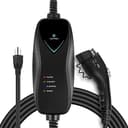
Lectron Level 1 Charger, 15A

Lectron Level 1 Charger, 15A

The charger you buy when you can't install anything. It plugs into an ordinary 120V household outlet and pulls 15 amps — the top of what a standard circuit will give you — which makes it the fastest thing you can do with zero electrical work. It is genuinely slow next to a 240V unit, and we won't pretend otherwise. But for a plug-in hybrid, a short commute or a rented parking spot, slow-and-installed beats fast-and-impossible.

Best Level 1 overall
$159.99 · View on Amazon

Price as of September 2, 2026. #ad How we’re funded

2
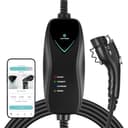
Lectron Level 1 Charger, 12A (Wi-Fi)

Lectron Level 1 Charger, 12A (Wi-Fi)

Level 1 charging with a brain. It gives up three amps against the plain 15A version and gets back the Lectron app — live charging status, scheduled sessions, and a kWh cap so you can stop a charge at a set amount. On Level 1 that scheduling matters more than it sounds: a trickle charge runs for most of the night anyway, so being able to start it when your off-peak rate does is worth more than the amps you traded away.

Best Level 1 for off-peak rates
$169.99 · View on Amazon

Price as of September 2, 2026. #ad How we’re funded

3
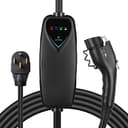
Lectron 40A Portable Level 2 Charger

Lectron 40A Portable Level 2 Charger

The least-expensive honest route into real Level 2 charging. Plug it into a NEMA 14-50 outlet, pull a true 40A / 9.6 kW, and unplug it to throw in the trunk for a trip. The trade-offs for the price are no app and a shorter warranty — both fair at this cost.

Cheapest route to Level 2
$269.99 · View on Amazon

Price as of September 2, 2026. #ad How we’re funded

4
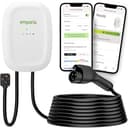
Emporia Level 2 EV Charger

Emporia Level 2 EV Charger

The value pick that never feels like one. You get the full 48 amps, an ENERGY STAR listing, real Wi-Fi energy tracking and a 25 ft cable for well under what the marquee brands charge. When someone asks us where to start, this is usually the first name out of our mouths.

Best Level 2 overall
$449.00 · View on Amazon

Price as of September 2, 2026. #ad How we’re funded

The picks in full

#1Best Level 1 overall

Lectron Level 1 Charger, 15A

The charger you buy when you can't install anything. It plugs into an ordinary 120V household outlet and pulls 15 amps — the top of what a standard circuit will give you — which makes it the fastest thing you can do with zero electrical work. It is genuinely slow next to a 240V unit, and we won't pretend otherwise. But for a plug-in hybrid, a short commute or a rented parking spot, slow-and-installed beats fast-and-impossible.

Strengths

  • Works from any standard 120V outlet — no electrician, no install
  • 15A is the practical ceiling for Level 1, so it's the fastest version of the slow option
  • IP65 weather resistance and a 16 ft cable at a budget price

Trade-offs

  • Level 1 is genuinely slow — plan in overnights, not hours
  • No app or scheduling on this version
  • Lectron doesn't publish a warranty term for it
Max output15 A
Power1.8 kW
ConnectorJ1772
InstallNEMA 5-15 plug (standard 120V outlet)
Cable length16 ft
WarrantyNot published
WiFi + appNo
CertificationsETL listed (UL 2594 / UL 2231)

Our charging-speed math. 15A at 120V is about 1.8 kW, so at 3.5 mi/kWh it adds roughly 6 miles of range an hour — call it 60-plus miles across a 10-hour overnight, before charging losses.

Build note. Lectron publishes 120V / 15A / 1.8 kW through a NEMA 5-15 plug, a 16 ft cable and an IP65-rated body with over-voltage, over-current and short-circuit protection.

Specs read from the manufacturer spec sheet, on August 11, 2026. “Not published” means the brand does not state that figure.

#2Best Level 1 for off-peak rates

Lectron Level 1 Charger, 12A (Wi-Fi)

Level 1 charging with a brain. It gives up three amps against the plain 15A version and gets back the Lectron app — live charging status, scheduled sessions, and a kWh cap so you can stop a charge at a set amount. On Level 1 that scheduling matters more than it sounds: a trickle charge runs for most of the night anyway, so being able to start it when your off-peak rate does is worth more than the amps you traded away.

Strengths

  • App gives real-time status, scheduling and a kWh charge limit
  • Same no-install 120V convenience as the plain model
  • ETL listing to the same UL 2594 / UL 2231 standards

Trade-offs

  • 12A instead of 15A — slower again than an already slow charging level
  • You're paying for an app on a charger that mostly runs unattended overnight
  • No published warranty term
Max output12 A
Power1.44 kW
ConnectorJ1772
InstallNEMA 5-15 plug (standard 120V outlet)
Cable length16 ft
WarrantyNot published
WiFi + appYes
CertificationsETL listed (UL 2594 / UL 2231)

Our charging-speed math. 12A at 120V is about 1.44 kW, so at 3.5 mi/kWh that's roughly 5 miles of range an hour — about 50 miles across a 10-hour overnight, before losses.

Build note. Lectron publishes 120V / 12A / up to 1.44 kW, a 16 ft cable, an IP65-rated control box, and a Lectron app that schedules sessions and caps a charge at a chosen number of kWh.

Specs read from the manufacturer spec sheet, on August 11, 2026. “Not published” means the brand does not state that figure.

#3Cheapest route to Level 2

Lectron 40A Portable Level 2 Charger

The least-expensive honest route into real Level 2 charging. Plug it into a NEMA 14-50 outlet, pull a true 40A / 9.6 kW, and unplug it to throw in the trunk for a trip. The trade-offs for the price are no app and a shorter warranty — both fair at this cost.

Strengths

  • A real 40A / 9.6 kW at a budget price
  • Plug-in and portable — no hardwiring, and it travels
  • ETL listed to the UL 2594 / UL 2231 safety standards

Trade-offs

  • No Wi-Fi or app on the base model — the smart version is a separate SKU
  • Shorter 16 ft cable and a 2-year warranty
  • The brand doesn't publish an outdoor/IP enclosure rating
Max output40 A
Power9.6 kW
ConnectorJ1772
InstallNEMA 14-50 plug
Cable length16 ft
Warranty2 years
WiFi + appNo
CertificationsETL listed (UL 2594 / UL 2231)

Our charging-speed math. At 40A (9.6 kW) and 3.5 mi/kWh it adds roughly 34 miles of range an hour.

Build note. A portable plug-in unit — no hardwiring — and the base model carries no Wi-Fi or app.

Specs read from the manufacturer spec sheet, on July 19, 2026. “Not published” means the brand does not state that figure.

#4Best Level 2 overall

Emporia Level 2 EV Charger

The value pick that never feels like one. You get the full 48 amps, an ENERGY STAR listing, real Wi-Fi energy tracking and a 25 ft cable for well under what the marquee brands charge. When someone asks us where to start, this is usually the first name out of our mouths.

Strengths

  • 48A and ENERGY STAR at a genuinely value price
  • The app tracks energy use, not just an on/off toggle
  • Long 25 ft cable and a remote holster in the box

Trade-offs

  • 48A hardwired needs a 60A circuit; on a NEMA 14-50 plug it's capped at 40A
  • The app is less polished than ChargePoint's, and support is a smaller operation
Max output48 A
Power11.5 kW
ConnectorJ1772
InstallHardwired or NEMA 14-50 plug
Cable length25 ft
Warranty3 years
WiFi + appYes
CertificationsUL listed, ENERGY STAR

Our charging-speed math. Hardwired at 48A (11.5 kW), figure about 40 miles of range an hour at 3.5 mi/kWh. Drop to a 40A plug-in circuit and it's closer to 34.

Build note. Runs 48A hardwired, or 40A on a NEMA 14-50 outlet, with a 25 ft cable and a wall holster included.

Specs read from the manufacturer spec sheet, on July 19, 2026. “Not published” means the brand does not state that figure.

What the two levels actually are

Level 1is an ordinary 120-volt household outlet — a NEMA 5-15 socket, the same one a lamp uses. Chargers at this level draw 12 to 15 amps, which works out to roughly 1.44 to 1.8 kW. No electrician, no permit, no panel work, no landlord conversation.

Level 2 is a 240-volt circuit, the kind an electric range or a dryer uses. Home chargers here run 16 to 50 amps, or roughly 3.8 to 12 kW. It needs a dedicated circuit installed by a licensed electrician, and in most jurisdictions a permit and an inspection. Our charging levels guidecovers where DC fast charging fits in — the short version is that it is a public-infrastructure technology and does not exist for homes.

Speed: the numbers, not the adjectives

At our standard reference of roughly 3.5 miles of range per kWh:

  • Level 1 at 12A (1.44 kW) — about 5 miles of range per hour. Roughly 50 miles across a ten-hour overnight.
  • Level 1 at 15A (1.8 kW) — about 6 miles per hour. Roughly 60 miles overnight.
  • Level 2 at 40A (9.6 kW) — about 34 miles per hour. Roughly 340 miles overnight.
  • Level 2 at 48A (11.5 kW) — about 40 miles per hour. Roughly 400 miles overnight.

That is a six- to eight-fold difference, and it is the entire case for Level 2. Your own figure depends on your car’s efficiency, which is why we print the assumption instead of a single flat number — our charge-time guide puts these rates against real battery sizes.

The test that settles it

Forget the hourly rates for a moment. What matters is whether the charger refills what you used, in the hours the car sits at home. So:

Take your weekly mileage and divide by seven.

  • Under about 40 miles a day:Level 1 keeps up. An overnight session replaces your driving with margin, and the charging speed becomes invisible — you plug in, you go to bed, the car is full. The average US driver sits in this band.
  • Roughly 40 to 80 miles a day:Level 1 works but you will notice it. You will lose a little ground on weekdays and recover at weekends. Workable if the car sits home all weekend; irritating if it doesn’t.
  • Over about 80 miles a day: you want Level 2. A trickle charge cannot keep pace, and you will end up planning around the charger, which is exactly what home charging is supposed to eliminate.

Two adjustments. If you drive a plug-in hybrid, shift the whole scale down — an 8 to 18 kWh battery fills overnight on Level 1 easily, and a Level 2 charger would spend most of the night idle. If you cannot plug in every night, shift it up, because Level 1 relies on getting a full window most nights.

Cost: where the real gap is

The chargers themselves are not that far apart. The install is.

Level 1 costs nothing to install, because there is nothing to install. Level 2 needs a dedicated 240V circuit. A US utility publishes a Level 2 charging station at roughly $500–$700 with installation averaging $400–$1,200 on top, excluding the charger — and that range widens fast if the panel is far from the parking spot or has no spare capacity. Our installation cost guide breaks down what moves the number, and our panel capacity guide covers the scenario that turns a normal install into a service upgrade.

Worth checking before you assume the worst: incentives. Our rebates and tax credits guide covers the federal 30C credit’s status and what utility programs typically require — several of them ask for ENERGY STAR certification by model number.

Three things that are the same at both levels

The cost of a charge.Electricity is billed in kWh. Putting 40 kWh into a battery costs the same whether it arrived at 1.4 kW or 11.5 kW. Level 2 buys you time, not cheaper power. The only asterisks are that charging losses are proportionally slightly higher on Level 1 (the car’s systems draw power for a longer session), and that on a time-of-use tariff a fast charger fits more easily inside a cheap overnight window. Run your own rate through our cost-to-charge guide.

Safety.Both levels are covered by the same third-party certification regime — UL, cUL or ETL listing against ANSI/UL 2594 for EV supply equipment, and UL 2231 for personnel protection. A certified Level 1 charger is not a lesser-safety product. See our guide on whether cheap EV chargers are safe.

Battery health.Slower AC charging is, if anything, marginally gentler on a battery than faster AC charging — and both are far gentler than DC fast charging. Nobody should choose Level 1 for battery health, but nobody should avoid Level 2 for it either. Our guide on whether home charging hurts your battery works through what the DOE actually publishes on this.

The one rule that applies to both

Never run either through a household extension cord or power strip. An EV charger draws its rated current continuously for hours. Generic cords are not built for that duty, their conductors are usually undersized, and every additional plug-and-socket joint is another place for heat to build. Plug the charger directly into the wall. If the outlet is out of reach, move the car or have an outlet added.

How to pick, and what to buy

Start on Level 1 if you can. This is genuinely the advice we would give a friend: if you can reach an outlet from your parking spot, buy a Level 1 charger first and live with it for a month. It costs a fraction of a Level 2 install and it tells you empirically whether you need one. A great many people find they never get round to upgrading. The Lectron Level 1 at 15 amps is the fastest version of that route; if your utility charges by time of day, the Wi-Fi version trades three amps for a scheduled start, which on a session that long is usually the better deal.

Go to Level 2 when the mileage says so, or when you already have a 240V outlet, or when you have two EVs. If a 14-50 receptacle already exists near the car, the Lectron 40A converts it into real Level 2 charging for very little. If you are installing properly and want one charger to be done with, the Emporia Level 2is our overall pick — 48 amps, ENERGY STAR listed, 25 feet of cable. The full field is on our best home chargers roundup, and renters should start with our apartment and rental picks.
Frequently asked questions

Is Level 1 charging enough for most people?

For a substantial minority, yes. Level 1 adds roughly 5 to 6 miles of range per hour, or 50 to 60 miles across an overnight session — and the average US driver covers about 35 to 40 miles a day. If your daily average is under 40 miles and you can plug in most nights, Level 1 keeps up without you thinking about it. Over about 80 miles a day, you want Level 2.

How much faster is Level 2 than Level 1?

Six to eight times. Level 1 delivers about 5 to 6 miles of range per hour; Level 2 delivers about 34 miles per hour at 40 amps and about 40 at 48 amps. Across a ten-hour overnight window, that is roughly 50-60 miles against 340-400.

Is it cheaper to charge on Level 1 or Level 2?

Neither — electricity is billed by the kilowatt-hour, so the same charge costs the same at either level. Two small caveats: charging losses are proportionally slightly higher on Level 1 because the car's systems stay awake for a longer session, and on a time-of-use tariff a Level 2 charger can fit an entire charge inside the cheap overnight window while a Level 1 session may spill into peak hours.

Do I need an electrician for Level 1 charging?

No. Level 1 runs from a standard 120V household outlet with no new wiring, no permit and no install cost. Level 2 is the opposite: a dedicated 240V circuit that should be installed by a licensed electrician, usually with a permit and an inspection.

Can I use an extension cord with a Level 1 charger?

No. This applies to both levels and it is the one hard rule. An EV charger draws its rated current continuously for hours, which household extension cords and power strips are not rated for — the conductors are usually undersized and every extra connection point is somewhere heat can build. Plug the charger straight into a wall outlet.

Is Level 2 charging worse for the battery?

No, not meaningfully. Both Level 1 and Level 2 are AC charging, and both are far gentler on a battery than DC fast charging. Slower charging is marginally kinder in theory, but the difference between 1.8 kW and 11.5 kW at home is not a reason to choose one over the other — pick on speed and install cost instead.

Sources

Keep reading