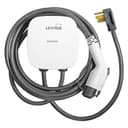
The four published promises, side by side
Every figure in this table comes from the manufacturer’s own spec page or datasheet on the dated visit recorded in our sources below. Where a brand does not publish a figure, the cell says so — a blank is a finding, not a gap in our research.
| Charger | Enclosure | Published temperature range | Certification, as stated | Warranty |
|---|
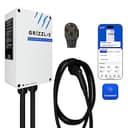
| Grizzl-E Classic Connect | UL Type 4 (NEMA 4), metal | −22°F to 122°F | UL/cUL, file E510712 | 3 years, or 5 years as a purchase option |
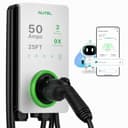
| Autel MaxiCharger AC Elite Home | IP65 / NEMA 4X | −40°F to 131°F | CSA certified, ENERGY STAR | 3 years |
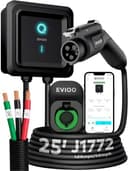
| EVIQO 48A | IP66 / NEMA 4 | −22°F to 122°F | UL, ETL, FCC, ENERGY STAR | 3 years, extendable to 4 |
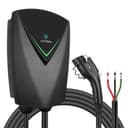
| Lectron NEXUS J1772 | IP66 | Not published | ETL to UL 2594 / 2231 / 2251, ENERGY STAR, FCC | 3 years |
| Leviton EV40P | NEMA Type 3R | −22°F to 122°F (−30°C to 50°C) | UL 2594, 2231-1, 2231-2, 2251, 62, 991, 1998, 840; CSA C22.2 #280 | 2 years |
Why the enclosure rating is the first column
Two different scales get used, and the difference between them is not cosmetic. A NEMA Type 3R enclosure is rated for falling rain, sleet and snow — it is a rainproof box. NEMA 4 and Type 4 add hose-directed water, and NEMA 4X adds corrosion resistance on top of that. The IP numbers run in parallel: IP65 is dust-tight and protected against water jets, IP66 against stronger jets.
For a charger on a sheltered garage wall, any of these is more than enough and the column stops mattering. For a charger on an unprotected exterior wall that takes weather off a driveway, the gap between a 3R box and a Type 4 box is the whole question, and it is why the Leviton EV40P finishes fifth on this page despite having the longest list of standards on it. Our outdoor and cold-weather roundup ranks that constraint on its own terms.
What a temperature range tells you, and what a blank one does
Autel publishes −40°F to 131°F for the MaxiCharger, which is the widest range any brand in our registry commits to in print and the single reason it sits second here. Grizzl-E, EVIQO, Leviton, ELEGRP and EVDANCE all publish a range in the −22°F-ish to 122°F band. Those are all real commitments you could hold a manufacturer to.
Then there is the blank. Lectron’s NEXUS pages publish IP66 and no operating temperature range at all, and ChargePoint’s Home Flex datasheet publishes an enclosure rating without one either. That is not evidence the hardware is fragile; plenty of equipment works far outside what its maker is willing to print. But if you live somewhere that hits −20°F, the honest reading is that one of these manufacturers has told you where the limit is and the other has not, and a warranty conversation at −20°F goes very differently depending on which you bought. Our cold-weather charging guide covers what the cold does to the charge itself.
How specifically is the certification stated?
Every charger on this page carries a named third-party safety listing, which is our floor rather than a feature — our cheap-charger safety guide explains why we will not recommend a charger without one. What separates them is precision.
Grizzl-E publishes a UL file number you can look up. Leviton publishes eight individual UL standards plus the CSA standard and a reference to NFPA 70 Article 625. EVDANCE publishes its Intertek ETL control number (5034626) in the manual. Those are checkable claims. “UL listed” or “ETL certified” with no standard and no file number is a weaker statement, and in the budget half of this market it is sometimes a claim about one component rather than the whole unit. Worth knowing: the ENERGY STAR certified-product list is a separate independent check you can run yourself on any model number, and neither ELEGRP nor EVDANCE appears anywhere on it.
The warranty is the only number with teeth
Everything above is a specification. The warranty is a liability, which makes it the most honest signal on the page — a manufacturer sets the term knowing what its own returns look like.
Three years is the standard across the mid and premium end: Grizzl-E, Autel, EVIQO, Lectron’s NEXUS, Wallbox, ChargePoint and Emporia all publish three. Leviton publishes two, which is the shortest term among the serious wall units here. EVIQO will sell you a fourth year, and Grizzl-E will sell you a fifth. At the budget end the terms get much shorter — ELEGRP states “up to a 2-year warranty,” EVDANCE states twelve months, and several Lectron portables publish no term at all, which is the honest reason none of them appears on a page about reliability.
One practical note that matters more than the number: a hardwired charger that fails is an electrician’s visit to replace, where a plug-in charger on a NEMA 14-50 is a box you unplug and ship back. That is a real argument for the Grizzl-E and the Leviton over the hardwired units, and it is covered properly in our hardwired vs plug-in comparison.
What we deliberately left off
Wallbox Pulsar Plus.It is a charger we rate elsewhere and it belongs on a reliability shortlist on reputation. It is not here because of a sourcing problem we have to report: when we re-read wallbox.com’s own Pulsar Plus page on October 4, 2026, it stated neither an enclosure rating nor a warranty term. Our registry carries NEMA 4 and three years for it from an earlier dated read, and we still publish those figures with that date attached — but a page ranked on published promises cannot rank a charger whose maker has stopped publishing two of them. See Autel vs Wallbox for the full matchup.
The Emporia Level 2.Emporia’s standard 48-amp charger is a frequent top pick on this site, but as of the date on this page its Amazon listing shows no buyable offer, so it is not ranked here. The Emporia we can price is the Pro.
Every portable and every adapter.A portable charger lives in a trunk, gets plugged into receptacles of unknown age and is designed around being moved — a different reliability question with different answers, and a warranty field that is frequently blank. Our portable charger roundup is the right page for that.
The verdict
Buy the Grizzl-E Classic Connect if you want the longest guarantee. A metal Type 4 case, a published UL file, a 25 ft cable, a published −22°F to 122°F range, and the option to buy five years of warranty at the point of sale. It is 40 amps rather than 48, so it is slower than most of this page — about 34 miles of range an hour at our 3.5 mi/kWh reference against 40 — and that is the trade. It also plugs into a NEMA 14-50 rather than needing an electrician to free it.
Buy the Autel MaxiCharger if the charger lives outside in a real climate. −40°F to 131°F, IP65 / NEMA 4X, 50 amps adjustable from 16, a 25 ft cable and three years. The caveat is the circuit: Autel publishes a 70-amp requirement for its full output, which is a bigger ask than most panels will give — see our 50-amp roundup.
And buy the Lectron NEXUS if your definition of reliable is “nothing to log into.” No app, no Wi-Fi, no account, no firmware — Lectron sells the networked build as a different SKU, and the ENERGY STAR certified list records both of them separately, so the no-radio version is a documented product rather than a marketing line. Fewer dependencies genuinely is fewer failure modes. The missing temperature range is the price of admission, and it is why it is fourth here rather than first.