Plug & Range

Best 50-Amp EV Chargers

Fifty amps is the fastest output sold for a house, and it is the one amperage tier where the charger is the cheap part. Three units in our registry can reach it. Each one asks for a 70-amp circuit to do it.

By Stephen V.Last updated How we pick

The ChargePoint Home Flex is our top pick at this tier, because it is the only charger we cover that publishes 50 amps as one step in a range you can set yourself — 16, 24, 32, 40, 48 or 50 A, chosen in the app. That matters more than the headline number. If the electrician comes back and says the panel can only carry a 50-amp circuit, the same charger drops to 40 amps and carries on; a charger that can only do one amperage becomes the wrong product the moment the quote changes.

Before the picks, the thing almost nobody puts on the box. A 50-amp charger does not run on a 50-amp circuit. EV charging is a continuous loadunder NEC Article 625, so the breaker has to be sized at 125% of the charger’s output — ChargePoint states that rule on its own datasheet. One hundred and twenty-five percent of 50 amps is 62.5, and the next standard breaker above that is 70 amps, which is exactly what Autel publishes as the circuit requirement for its 50-amp unit and exactly what EVIQO publishes for raising its charger from 48 amps to 50. Three manufacturers, three separate pages, the same number.

And here is what the 70-amp circuit buys you. Fifty amps at 240 volts is 12 kW; forty-eight amps is 11.5 kW. The gap is 480 watts, or about 1.7 miles of range an hourat our 3.5 miles-per-kWh reference — seventeen miles across a ten-hour night. So we ranked these on whether the 50 amps is actually reachable in a normal house, on how many steps the current can be set to, on cable and enclosure, and on what the charger does when you inevitably run it at 48 or 40 instead. Two of the five picks below are 48-amp chargers, and that is a recommendation rather than an omission.

How this is funded:we earn a commission if you buy through our links, at no extra cost to you. It never changes which product we recommend, and we’ll tell you when we’d skip one. Full disclosure.

Quick picks

Ranked on published specs, charging speed, electrical fit and value. Select a row to jump to the full write-up. We have not bench-tested these chargers — here is exactly what we do instead.

#ProductBest forPrice
1
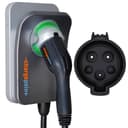
ChargePoint Home Flex

ChargePoint Home Flex

If you'd rather buy a charger once and be done, this is the safe call. You set the current in the app anywhere from 16 to 50 amps, so it fits whatever your panel can spare today and still has room to grow if you upgrade the circuit later. The app is the most polished of the bunch and the warranty is long.

Best overall: 50 amps as a setting, not a fixed ceiling
$549.00 · View on Amazon

Price as of October 11, 2026. #ad How we’re funded

2
Autel MaxiCharger Home

Autel MaxiCharger Home

Built for the driveway that takes the full brunt of the weather. The NEMA 4X shell is rated to keep charging through brutal cold and heat, it delivers a full 50 amps, and the app is genuinely capable. If your charger will live fully exposed, this is the one to shortlist.

Best for an exposed wall, and clearest about the 70-amp circuit
$499.00 · View on Amazon

$568.0012% off

Price as of October 11, 2026. #ad How we’re funded

3
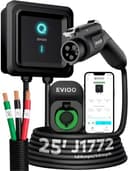
EVIQO 48A Level 2 Charger

EVIQO 48A Level 2 Charger

A lot of charger for the money. You get 48 amps, Wi-Fi scheduling, ENERGY STAR, and the longest usable reach in this group thanks to a 25 ft cable plus a 40-inch input lead. If Emporia is sold out or you want maximum cable, this is the value alternative to have in mind.

Cheapest route to 50 amps, via internal DIP switches
$449.99 · View on Amazon

$510.0012% off

Price as of October 11, 2026. #ad How we’re funded

4
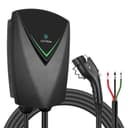
Lectron Nexus J1772 48A (Hardwired)

Lectron Nexus J1772 48A (Hardwired)

The fastest charger we can find that has nothing to log into. It is a full 48 amps, ETL-listed to UL 2594, IP66 for an outside wall, and — unusually for a charger with no app — it is on the ENERGY STAR certified list under its own model number, which is the kind of proof a rebate administrator will actually accept. The price of that simplicity is real: no published way to dial the current down, so it wants a 60-amp circuit and nothing less, and no scheduling of its own, so your car has to do that part.

Best 48-amp alternative with nothing to log into
$429.99 · View on Amazon

Price as of October 11, 2026. #ad How we’re funded

5
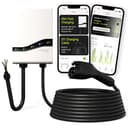
Emporia Pro with PowerSmart

Emporia Pro with PowerSmart

The answer to a full electrical panel. It's the same 48-amp, ENERGY STAR hardware as Emporia's standard charger, with PowerSmart load management added: paired with Emporia's own energy monitor, it watches what the rest of the house is drawing and dials the charger back instead of tripping the main. If an electrician has told you a charger means a service upgrade, this is the unit that can make that quote go away.

Best when a 70-amp circuit is not on the table
$599.00 · View on Amazon

Price as of October 11, 2026. #ad How we’re funded

The picks in full

#1Best overall: 50 amps as a setting, not a fixed ceiling

ChargePoint Home Flex

If you'd rather buy a charger once and be done, this is the safe call. You set the current in the app anywhere from 16 to 50 amps, so it fits whatever your panel can spare today and still has room to grow if you upgrade the circuit later. The app is the most polished of the bunch and the warranty is long.

Strengths

  • Adjustable 16-50A fits a modest circuit now and a bigger one later
  • The most complete app here: scheduling, reminders and usage history
  • 3-year warranty and a generous 23 ft cable

Trade-offs

  • You pay a brand premium over value 48A units
  • Using the full 50A needs a 70A circuit most older panels can't spare
Max output50 A
Power12 kW
ConnectorJ1772
InstallHardwired (a plug-in NEMA 14-50 SKU is also sold)
Cable length23 ft
Warranty3 years
WiFi + appYes
CertificationsUL/cUL listed, ENERGY STAR

Our charging-speed math. Run it at the full 50 amps (about 12 kW) and, at a middle-of-the-road 3.5 miles per kWh, it puts back roughly 42 miles of range an hour. Turn it down to 40A to live on a 50A circuit and you're at about 34.

Build note. The headline feature is app-adjustable amperage — anywhere from 16A up to 50A, in software.

Specs read from the manufacturer spec sheet, on July 19, 2026. “Not published” means the brand does not state that figure.

#2Best for an exposed wall, and clearest about the 70-amp circuit

Autel MaxiCharger Home

Built for the driveway that takes the full brunt of the weather. The NEMA 4X shell is rated to keep charging through brutal cold and heat, it delivers a full 50 amps, and the app is genuinely capable. If your charger will live fully exposed, this is the one to shortlist.

Strengths

  • NEMA 4X enclosure rated for very cold and very hot conditions
  • Full 50A output paired with a 25 ft cable
  • Wi-Fi, Bluetooth and a capable app

Trade-offs

  • 50A means a 70A circuit and, usually, a hardwired install
  • The app and ecosystem are younger than ChargePoint's
Max output50 A
Power12 kW
ConnectorJ1772
InstallHardwired
Cable length25 ft
Warranty3 years
WiFi + appYes
CertificationsCSA certified, ENERGY STAR

Our charging-speed math. At its 50A ceiling (about 12 kW) and 3.5 mi/kWh, roughly 42 miles of range an hour.

Build note. Re-read from Autel's own page on 2026-10-04: 12 kW / 50 A with the output adjustable 16-50 A, 208/240 V AC, hardwired, a 70 A circuit required for full output, a 25 ft J1772 cable, an IP65 / NEMA 4X enclosure with a -40 to 131°F (-40 to 55°C) operating range, Bluetooth, Wi-Fi, Ethernet, CAN and RS485 connectivity, app / AutoStart / RFID-card authentication (cards sold separately) and a 3-year warranty. On load management the page is unusually specific, and it is two different features: it "supports both Adaptive Load Management (ALM) and charger-to-charger Dynamic Load Balancing (DLB)", with "ALM requir[ing] compatible additional hardware, while DLB works between chargers without additional hardware". Autel does not name the ALM hardware on this page, so we do not either.

Specs read from the manufacturer spec sheet, on October 4, 2026. “Not published” means the brand does not state that figure.

#3Cheapest route to 50 amps, via internal DIP switches

EVIQO 48A Level 2 Charger

A lot of charger for the money. You get 48 amps, Wi-Fi scheduling, ENERGY STAR, and the longest usable reach in this group thanks to a 25 ft cable plus a 40-inch input lead. If Emporia is sold out or you want maximum cable, this is the value alternative to have in mind.

Strengths

  • 48A output with Wi-Fi scheduling at a value price
  • 25 ft charging cable plus a 40 in input lead — excellent reach
  • UL, ETL, FCC and ENERGY STAR listings

Trade-offs

  • The hardwired version needs a 60A circuit and an electrician
  • A smaller brand with a shorter track record than ChargePoint or Wallbox
Max output48 A
Power11.5 kW
ConnectorJ1772
InstallHardwired
Cable length25 ft
Warranty3 years
WiFi + appYes
CertificationsUL, ETL, FCC, ENERGY STAR

Our charging-speed math. At 48A (11.5 kW) and 3.5 mi/kWh, about 40 miles of range an hour.

Build note. Re-read from EVIQO's own page on 2026-10-04, which publishes more than the spec table above implies. The 25 ft charging cable plus a 40 in input cable is still among the longest total reach in class, and the current is adjustable two ways: 6-48 A in 1-amp increments from the app, and a hardware DIP switch that caps the maximum at 16, 32, 40 or 48 A. The same DIP block can raise the output to 50 A, which EVIQO says requires a 70 A circuit; the 48 A default needs a 60 A one. The enclosure is IP66 / NEMA-4 rated -22°F to 122°F, the warranty is 3 years and extendable to 4, and the app does remote start/stop, consumption and cost tracking, reminders, up to three schedules and over-the-air updates. No load management or load balancing is described anywhere on the page.

Specs read from the manufacturer spec sheet, on October 4, 2026. “Not published” means the brand does not state that figure.

#4Best 48-amp alternative with nothing to log into

Lectron Nexus J1772 48A (Hardwired)

The fastest charger we can find that has nothing to log into. It is a full 48 amps, ETL-listed to UL 2594, IP66 for an outside wall, and — unusually for a charger with no app — it is on the ENERGY STAR certified list under its own model number, which is the kind of proof a rebate administrator will actually accept. The price of that simplicity is real: no published way to dial the current down, so it wants a 60-amp circuit and nothing less, and no scheduling of its own, so your car has to do that part.

Strengths

  • 48A / 11.5 kW with no Wi-Fi, no account and no app to keep working
  • ENERGY STAR certified under its own model number (LECHGNexusHWJ1772), listed with network capability "No"
  • ETL listed to UL 2594, UL 2231 and UL 2251, with an IP66 indoor/outdoor body
  • 23 ft cable, a wall-mount J-hook and a plug holder included, with a 3-year warranty

Trade-offs

  • Lectron publishes no adjustable current range for this model, so it needs a 60-amp circuit to be used at all
  • Hardwired only — a licensed electrician, and it stays with the house
  • No scheduling on the charger: off-peak charging has to be set in the car
  • No operating-temperature range published, which is the spec a cold-climate install turns on
Max output48 A
Power11.5 kW
ConnectorJ1772
InstallHardwired
Cable length23 ft
Warranty3 years
WiFi + appNo
CertificationsETL listed to UL 2594, UL 2231 and UL 2251; FCC; ENERGY STAR (confirmed on the certifier's own list as model LECHGNexusHWJ1772)

Our charging-speed math. Forty-eight amps at 240V is about 11.5 kW, which at our 3.5 miles-per-kWh reference is roughly 40 miles of range an hour, or about 400 miles across a ten-hour overnight window. Lectron's own figure is 46 miles an hour, which assumes a more efficient car than our reference — plan around 40.

Build note. Lectron publishes up to 48 A at 240 V (11.5 kW), an SAE J1772 connector, a hardwired installation it says requires a professional, an IP66 rating for indoor and outdoor use, a 23 ft cable with a wall-mount J-hook and plug holder, UL 2594 / UL 2231 / UL 2251 certification under an ETL listing plus FCC and ENERGY STAR, and a 3-year warranty. Nothing on the page describes Wi-Fi, an app or an account, and the no-app build is a separately certified model: the ENERGY STAR certified AC-EVSE list carries LECHGNexusHWJ1772 with network capability "No" and a separate LECHGNexusHWJ1772-APP row with network capability "Yes". Two figures to note. The ENERGY STAR entry gives the output cord as 22 ft where Lectron and the Amazon listing both say 23 ft, and we record the manufacturer's figure that both of those agree on. And Lectron publishes neither an adjustable current range nor an operating-temperature range for this model, so neither is recorded here — the first of those is the reason it cannot be fitted to a circuit smaller than 60 amps.

Specs read from the manufacturer spec sheet, on October 4, 2026. “Not published” means the brand does not state that figure.

#5Best when a 70-amp circuit is not on the table

Emporia Pro with PowerSmart

The answer to a full electrical panel. It's the same 48-amp, ENERGY STAR hardware as Emporia's standard charger, with PowerSmart load management added: paired with Emporia's own energy monitor, it watches what the rest of the house is drawing and dials the charger back instead of tripping the main. If an electrician has told you a charger means a service upgrade, this is the unit that can make that quote go away.

Strengths

  • PowerSmart load management can avoid a panel or service upgrade
  • Full 48A, ENERGY STAR and a 25 ft cable, same as the standard model
  • The app adds peak-demand management on top of ordinary scheduling

Trade-offs

  • PowerSmart needs Emporia's Vue energy monitor — that's a second device to buy and install
  • You pay a clear premium over the standard Emporia for one feature
Max output48 A
Power11.5 kW
ConnectorJ1772
InstallHardwired (a NEMA 14-50 SKU is also sold)
Cable length25 ft
Warranty3 years
WiFi + appYes
CertificationsUL listed, ENERGY STAR

Our charging-speed math. At the full 48A (11.5 kW) and 3.5 mi/kWh, about 40 miles of range an hour — and PowerSmart will quietly reduce that when the rest of the house is drawing hard, which is the entire point of it.

Build note. Emporia publishes PowerSmart load management as dynamically adjusting charging speed to prevent overloading the panel; it requires the Emporia Vue energy monitor.

Specs read from the manufacturer spec sheet, on August 11, 2026. “Not published” means the brand does not state that figure.

Why a 50-amp charger needs a 70-amp circuit

This is the whole page in one calculation, so it is worth doing slowly.

NEC Article 625 treats EV charging as a continuous load — three hours or more of uninterrupted current. Continuous loads get a circuit sized at 125% of the load, which is the same rule people usually quote backwards as “80% of the breaker.” ChargePoint publishes it plainly in the Home Flex datasheet, with its own worked example: a 50-amp breaker for 40-amp output.

Run the same arithmetic at the top of the range. Fifty amps × 1.25 = 62.5 amps. There is no 62.5-amp breaker, so you go to the next standard size up, and that is 70. Autel’s own product page for the 50-amp MaxiCharger states a 70 A circuit required for full output. EVIQO, whose charger ships at 48 amps and can be raised to 50 by changing internal DIP switches, states that the 50-amp setting requires a 70 A circuit where the 48-amp default needs a 60. Nobody is hiding this. It simply never appears in the part of the listing people read.

A 70-amp circuit is a real step up from the 60-amp one a 48-amp charger needs: a larger breaker, heavier conductors, and a bigger bite out of a service that may well not have it to give. If an electrician has already told you the panel is tight, our 100-amp panel roundup and our panel capacity guide are the pages to read before this one, because the answer there is usually a smaller charger rather than a bigger panel.

What 50 amps actually gets you over 48

OutputPower at 240 VCircuit requiredRange per hour (3.5 mi/kWh)
40 A9.6 kW50 Aabout 34 miles
48 A11.5 kW60 Aabout 40 miles
50 A12 kW70 Aabout 42 miles

Two amps. Seventeen miles across a ten-hour night. For that you are buying a heavier circuit and, in a lot of houses, a panel conversation. We think the honest reading is that 50 amps is worth having as a setting— it costs nothing to own a charger that can go there if you ever upgrade the service — and rarely worth engineering the house around today. The 40-amp vs 48-amp comparison works through the rung below this one, where the same logic applies at a much smaller price.

There is also a ceiling you cannot buy past. Many EVs have an onboard AC charger rated at 11.5 kW or less, and several popular ones are limited to about 7.7 kW. The charger never pushes more than the car will accept, so a 12 kW wall unit on a 7.7 kW car charges at 7.7 kW. Check your own car’s figure before you spend anything — our onboard charger limits guide shows where to find it, and this is the most common way people overbuy at this tier.

What separates these five

Whether the 50 amps is a setting or a fixed ceiling.ChargePoint publishes six steps — 16, 24, 32, 40, 48 and 50 A — set in the app. Autel publishes a continuous 16 to 50 A range. Those two are the chargers that survive a change of plan. EVIQO is adjustable 6 to 48 A from the app with a hardware DIP switch capping the maximum at 16, 32, 40 or 48, and the same DIP block is what raises it to 50. The Lectron NEXUS publishes no adjustable range at all, which is why it appears here as a 48-amp pick and not a 50-amp one: it needs a 60-amp circuit and cannot be dialed down to live on anything smaller.

Whether reaching 50 amps means opening the enclosure. This is the EVIQO footnote and it deserves saying out loud. Getting 50 amps out of it is not an app slider; it is a DIP switch inside the unit, which means a cover off and, realistically, the electrician who is already there for the 70-amp circuit. It also puts the charger in a configuration other than the 48-amp one it is sold and listed in. If you want 50 amps as a normal, documented, app-selectable setting, buy the ChargePoint or the Autel. If you want the cheapest hardware that can physically do it, this is it.

The enclosure, and whether a temperature range is published at all. Autel publishes IP65 / NEMA 4X and −40°F to 131°F, the widest range in our registry, which is why it is the pick for a wall with no shelter. EVIQO publishes IP66 / NEMA 4 rated −22°F to 122°F. ChargePoint publishes a NEMA 3R enclosure. The Lectron NEXUS publishes IP66 but nooperating-temperature range — a blank field, which in a cold climate is a finding rather than a detail. Our outdoor roundup is the page for that constraint.

What happens when 70 amps is not available.This is where the Emporia Pro earns its place on a 50-amp page. It is a 48-amp charger, so it is not competing on output — it competes by making the circuit question go away. PowerSmart load management watches the rest of the house and reduces charging speed when everything else is drawing hard, which is the one mechanism on this page that can turn a “you need a service upgrade” quote into a charger purchase. The catch is published and real: it needs Emporia’s Vue energy monitor, a second device to buy and install. Our load-management roundup compares that against the other approaches.

Cable, because it is the spec people regret.Autel, EVIQO and Emporia all publish 25 ft. ChargePoint and the Lectron NEXUS publish 23 ft, and EVIQO adds a 40-inch input lead on top of its 25 ft output cable, which is the longest total reach of the five. Measure the route around the car rather than through it before you decide — the long-cable roundup exists because this is the measurement people get wrong.

What we deliberately left off

The 48-amp field in general. There are more 48-amp chargers in our registry than appear here. The 48-amp roundup ranks that tier properly, and if you have read this far and concluded that 70 amps is not happening in your house, that is the page you actually want. This one is deliberately narrow: it is for people searching for the top of the range and entitled to know what it costs.

The Emporia Level 2.Emporia’s standard 48-amp charger is a frequent top pick elsewhere on this site, but as of the date on this page its Amazon listing shows no buyable offer, so it is not ranked here and the Pro is the Emporia we can price. Our Emporia Level 2 vs Pro comparison covers the difference for anyone who finds the standard model back in stock.

Every plug-in charger. None can appear on this page, and the reason is the receptacle rather than the charger: the largest socket in general household use is a 50-amp NEMA 14-50 or 6-50, 80% of 50 amps is 40, and so every plug-in Level 2 unit stops at 40 amps. Fifty amps is hardwired by definition. Our plug-in roundup and hardwired vs plug-in comparison cover that trade in full.

The verdict

For almost everyone shopping at this tier, buy the ChargePoint Home Flex. Not because 50 amps is the right choice — usually it is not — but because it is the charger that stays right whichever way the electrician’s answer comes back. Six published current steps from 16 to 50 A, the most complete app here, ENERGY STAR for the rebate paperwork, and a three-year warranty. You pay a brand premium, and the Amazon listing our buy link resolves to is the hardwired build — which is the one you want on a 70-amp circuit anyway.

If the charger is going on an exposed wall, buy the Autel MaxiCharger. Fifty amps, a published 16 to 50 A range, an IP65 / NEMA 4X shell rated −40°F to 131°F, a 25 ft cable, and RFID-card authentication if other people can reach it. It is also the manufacturer that states the 70-amp circuit requirement most plainly, which we count in its favor. One caveat: Autel’s Adaptive Load Management “requires compatible additional hardware” that the page does not name, so do not buy it for that feature.

And if the 70-amp circuit is not happening, stop chasing 50 amps. At 48 amps you give up about 1.7 miles of range an hour and you need a 60-amp circuit instead of a 70. Take the Lectron NEXUS if you want a fast charger with no app, account or firmware in the chain, or the Emporia Pro if an electrician has told you the panel has nothing left and PowerSmart is the thing that makes the install possible. Either is a better outcome than a 12 kW charger throttled to 9.6 kW because the circuit behind it was all the house could spare.
Frequently asked questions

What size breaker does a 50-amp EV charger need?

A 70-amp breaker. EV charging is a continuous load under NEC Article 625, so the circuit is sized at 125% of the charger's output — 50 × 1.25 = 62.5 amps, and the next standard breaker above that is 70. Autel publishes a 70 A circuit requirement for its 50-amp charger, and EVIQO publishes the same figure for raising its unit from 48 to 50 amps. The conductor sizing is your electrician's call, not ours.

Can I plug a 50-amp EV charger into a NEMA 14-50 outlet?

No, and nobody sells one that tries. A NEMA 14-50 is a 50-amp receptacle, and 80% of 50 amps is 40 — so every plug-in Level 2 charger on the US market stops at 40 amps. Fifty amps is a hardwired install on a 70-amp circuit. If you have a 14-50 and want the fastest charger that fits it, our 40-amp roundup is the right list.

Is a 50-amp charger worth it over a 48-amp one?

Rarely. Fifty amps at 240 volts is 12 kW against 11.5 kW for 48 — about 1.7 extra miles of range an hour at 3.5 mi/kWh, or seventeen miles across a ten-hour night. For that you need a 70-amp circuit instead of a 60-amp one. What is worth having is a charger that can be set to 50 amps if you ever upgrade the service, which is a different thing from installing 70 amps today.

Which EV chargers actually deliver 50 amps?

Of the chargers in our registry, three. The ChargePoint Home Flex publishes 50 A as one of six app-selectable steps. The Autel MaxiCharger is a 50-amp unit adjustable from 16 A. The EVIQO 48A can be raised to 50 A by changing internal DIP switches, which EVIQO says requires a 70 A circuit. Everything else we cover tops out at 48 amps or below.

Will my car even use 50 amps?

Check before you buy, because many cars will not. The charger never delivers more than the vehicle's onboard AC charger will accept, and plenty of popular EVs are limited to around 11.5 kW or 7.7 kW. A 12 kW wall charger on a 7.7 kW car charges at 7.7 kW. Our onboard charger limits guide explains where to find your own vehicle's figure rather than trusting a table that will go stale.

Do I need a 200-amp panel for a 50-amp EV charger?

Not automatically, but a 70-amp continuous circuit is a large block of capacity and the question belongs to a load calculation rather than a rule of thumb. What matters is your service size and everything already on it, which is exactly what a load calculation measures. If the answer comes back tight, a 48-amp charger on a 60-amp circuit, or a charger with load management, is usually far cheaper than a service upgrade.

Does a 50-amp charger need a GFCI breaker?

Ask your electrician and your local inspector rather than us — GFCI requirements for EVSE circuits are jurisdictional and the relevant NEC language has been revised more than once. What we can say is that every charger here carries its own ground-fault protection certified under UL 2231-2, which is more sensitive than a panel breaker and is a common source of nuisance trips when the two are stacked. Our ground-fault guide covers how they interact.

Is 50 amps the fastest home EV charger?

For AC charging at home, yes — 12 kW is the top of what residential Level 2 equipment is sold to deliver, and nothing on a house circuit goes faster. DC fast charging is a different technology and is not installed in homes. Our fastest-home-charger guide works through what 'fastest' really means once the car's own onboard charger is taken into account.

Sources

  • ChargePoint — Home Flex datasheet — Manufacturer datasheet: output adjustable in the app to 16, 24, 32, 40, 48 or 50 A (up to 12 kW); the dedicated dual-pole breaker must be rated for 125% of the maximum load (its example: a 50 A breaker for 40 A output) (accessed September 18, 2026)
  • Autel — MaxiCharger AC Elite Home 50 A product page — Manufacturer page: 12 kW / 50 A with the output adjustable 16-50 A, a 70 A circuit required for full output, 208/240 V AC, hardwired, a 25 ft SAE J1772 cable, IP65 / NEMA 4X, an operating range of -40 to 131 °F (-40 to 55 °C), a 3-year warranty, and Bluetooth, Wi-Fi, Ethernet, CAN and RS485 connectivity with app, AutoStart and RFID-card authentication (cards sold separately). On load management it states that the charger “supports both Adaptive Load Management (ALM) and charger-to-charger Dynamic Load Balancing (DLB) for more flexible home energy management” and that “ALM requires compatible additional hardware, while DLB works between chargers without additional hardware” (accessed October 4, 2026)
  • EVIQO — Level 2 48 A hardwired charging station product page — Manufacturer page, fetched 2026-10-04: 48 A / 11.5 kW as standard with a 50 A output available by changing internal DIP switches (which it says requires a 70 A circuit), current adjustable 6-48 A in 1-amp increments from the app, and hardware DIP switches that set the maximum at 16, 32, 40 or 48 A. A 25 ft charging cable plus a 40 in input cable, an IP66 / NEMA-4 enclosure rated -22 °F to 122 °F, UL / ETL / FCC / ENERGY STAR certification, and a 3-year warranty extendable to 4. The app does remote start/stop, current setting, consumption and cost tracking, charging reminders, up to three custom schedules and over-the-air firmware updates. Hardwired only, and a 60 A dedicated circuit is stated for 48 A output. No load management or load balancing is described anywhere on the page (accessed October 4, 2026)
  • Lectron — NEXUS Level 2 J1772 48 A hardwired charging station — Manufacturer page: up to 48 A at 240 V (11.5 kW), SAE J1772, hardwired installation requiring a professional, IP66 indoor/outdoor rating, a 23 ft cable with a wall-mount J-hook and plug holder, UL 2594 / UL 2231 / UL 2251 certification under an ETL listing plus FCC and ENERGY STAR, and a 3-year warranty. No app, Wi-Fi or account is listed anywhere on the page; Lectron sells the networked build as a separate SKU (accessed October 4, 2026)
  • Emporia Energy — EV Chargers (Classic and Pro) — Manufacturer page: the Classic and the Pro both list Solar Charging Integration, and both require the Vue Home Energy Monitor for it — with the Vue added, the charger 'automatically charge[s] with your excess solar power'. PowerSmart load management on the Pro requires the Vue plus the PowerSmart upgrade; Emporia also lists Invite2Charge, described as 'multi-user access control for EV chargers' (accessed September 18, 2026)
  • NFPA — Using the Latest NEC for EV Charger Installations — NFPA on NEC (NFPA 70) Article 625: EV charging is a continuous load, so circuits are sized to 125% of load (the 80% rule) (accessed July 19, 2026)
  • U.S. DOE Alternative Fuels Data Center — Electric Vehicle Charging Stations — US DOE on charging levels: Level 1 (~1.9 kW, ~5 mi/hr), Level 2 (2.9-19.2 kW, ~7.2 kW typical residential, ~25 mi/hr), and DC fast charging (accessed July 19, 2026)
  • UL Solutions — EV Charging Infrastructure Services — UL on EVSE safety certification: ANSI/UL 2594 is the Standard for Electric Vehicle Supply Equipment (accessed July 19, 2026)
  • FuelEconomy.gov — Electric Vehicles: Learn More About the Label — DOE/EPA on EV efficiency: kWh per 100 miles and MPGe, accounting for AC charging losses (accessed July 19, 2026)

Keep reading