The published specs, side by side
| | Autel MaxiCharger Home | Emporia Pro |
|---|
| Max output | 50 A / 12 kW | 48 A / 11.5 kW |
|---|
| Published adjustable range | 16–50 A | Not published |
|---|
| Circuit for full output | 70 A (Autel’s own figure) | 60 A at 48 A |
|---|
| Install | Hardwired | Hardwired (a NEMA 14-50 SKU is also sold) |
|---|
| Cable | 25 ft | 25 ft |
|---|
| Enclosure | IP65 / NEMA 4X | NEMA 4 |
|---|
| Operating range | −40 to 131 °F | Not published |
|---|
| Load management | ALM (needs unnamed extra hardware) + charger-to-charger DLB | PowerSmart (needs the Emporia Vue monitor) |
|---|
| Solar surplus charging | Not stated on the product page | Yes, with the Vue monitor |
|---|
| Access control | App, AutoStart, RFID cards (sold separately) | Invite2Charge multi-user |
|---|
| Certification | CSA certified, ENERGY STAR | UL listed, ENERGY STAR |
|---|
| Warranty | 3 years | 3 years |
|---|
At 50 amps and 12 kW, our 3.5 miles-per-kWh reference puts the Autel at roughly 42 miles of range an hour. At 48 amps and 11.5 kW the Emporia is about 40. Two miles an hour is not a reason to choose either one, and the 70-amp circuit Autel specifies for its full output is a reason not to: most panels that can find 60 amps cannot find 70, so in practice both of these chargers run at 48 amps in most houses and charge at the same speed.
Where the Autel wins
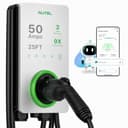
The weather. A published operating range of −40°F to 131°F in an IP65 / NEMA 4X enclosure is the widest figure in our registry, and it is a publishedfigure rather than an enclosure rating standing in for one. Emporia publishes NEMA 4 and no temperature range at all, which is not the same as publishing a bad one — it means we cannot tell you. If the charger is going on an exposed wall in a cold state, that asymmetry decides it. Our outdoor and cold-weather roundup ranks the whole field this way.
A published adjustable range. Autel publishes 16 to 50 amps. That is the spec that lets one charger fit a 20-amp circuit today and a 60-amp circuit after a panel upgrade, and it is the single most useful thing on a spec sheet for anyone whose electrical situation is uncertain. Emporia publishes 48 amps hardwired and 40 amps on a plug, and no range below that — so we will not tell you it can be set to 32, because Emporia does not say so. Our 100-amp panel roundup is built entirely on this distinction.
Authorisation at the unit. Autel publishes RFID-card authentication alongside the app and AutoStart, with cards sold separately. A physical credential works when the Wi-Fi does not, and it is the natural thing to hand a houseguest. Emporia’s Invite2Charge is a named multi-user mechanism and genuinely good, but it lives in an app and an account. Our access-control roundup ranks both.
Where the Emporia Pro wins
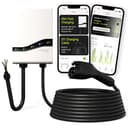
Load management that watches the house. This is the feature worth paying for, and it is the reason the Pro exists. Emporia publishes PowerSmart as dynamically adjusting charging speed to prevent overloading the panel. Paired with Emporia’s Vue energy monitor it sees what the dryer, the oven and the air conditioning are doing and dials the charger back instead of tripping the main. If a load calculation came back saying “service upgrade”, that is a four-figure quote this feature can sometimes remove.
Autel’s page is unusually honest about its own version, and it is two different features: Adaptive Load Management, which it says “requires compatible additional hardware”, and charger-to-charger Dynamic Load Balancing, which “works between chargers without additional hardware”. The second one shares a circuit between two Autels and does not watch the house. The first one does what PowerSmart does — but Autel does not name the hardware on that page, so we cannot tell you what it costs or whether you can buy it. Emporia names its box. Our load-management roundup pulls that distinction apart across the whole field.
Energy data, and solar. Emporia is an energy-monitoring company that happens to make a charger, and it shows. The Vue monitor plus the charger gives you whole-house circuit-level consumption with the charge session inside it, which is a different proposition from a charger that reports its own kWh. Emporia also publishes solar charging integration — running the car on surplus production — which again needs the Vue. Autel’s product page states no solar feature. Our solar roundup and our energy-monitoring guide cover what those features really deliver.
A plug-in option. Emporia sells the Pro as a NEMA 14-50 SKU as well as hardwired, capped at 40 amps on the plug. The Autel is hardwired, full stop. If you want to be able to take the charger with you, that is a genuine difference — see our guide to moving house with a charger.
The honest cost comparison
Compare the installed totals, not the box prices. The Autel needs a hardwired install and, for its full 50 amps, a 70-amp circuit that most houses will not supply — so budget it as a 48-amp charger on a 60-amp circuit, which is what it will be. The Emporia Pro needs a hardwired install at 48 amps, plus the Vue energy monitor if you want the feature you bought the Pro for, plus the PowerSmart upgrade Emporia lists alongside it. A Pro without a Vue is a more expensive standard Emporia. Add those line items before you decide which one is the cheaper charger, and read our installation-cost guide for the electrical side.
The verdict
Exposed wall, cold winters, a circuit you are unsure of, or guests you want to hand a card to: the Autel MaxiCharger. A −40°F published floor, NEMA 4X, 16-to-50-amp adjustability and a card reader in the hardware. You will almost certainly run it at 48 amps rather than 50, and that is fine — the adjustability is the point, not the ceiling.
A full panel, a solar array, or a real appetite for energy data: the Emporia Pro. PowerSmart is the best-documented whole-house load management of the two, the Vue makes the charge session part of a household picture rather than an isolated number, and Invite2Charge handles a two-driver household cleanly. Budget for the Vue from the start.
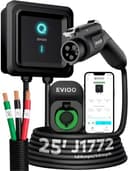
Neither feature, and you want 48 amps for less: the EVIQO 48A. A 25 ft cable plus a 40-inch input lead for the longest total reach here, a DIP switch that caps the maximum at 16, 32, 40 or 48 amps, an app slider from 6 amps in 1-amp steps, IP66 / NEMA 4 rated −22°F to 122°F, ENERGY STAR, and a warranty extendable to four years. EVIQO publishes no load management anywhere, so if the panel is the problem this is the wrong charger — but if it is not, this is a lot of charger for the money. Read the full EVIQO review, or the head-to-head with the brand it is most often compared against in EVIQO vs Emporia.