Plug & Range

Grizzl-E Classic Connect vs ChargePoint Home Flex

Two connected chargers that disagree about where the money should go: into the box that survives the weather, or into the amps and the app. Neither is wrong.

By Stephen V.Last updated How we pick

Most charger comparisons are two versions of the same idea at different prices. This one is not. The Grizzl-E Classic Connect is a metal-cased charger rated UL Type 4 and published to operate from −22°F to 122°F, pulling up to 40 amps from a NEMA 14-50 outlet. The ChargePoint Home Flex is a hardwired-first charger with software-adjustable output from 16 to 50 amps, the most mature app in the category, and a NEMA 3R enclosure.

Both are connected now — Grizzl-E replaced its old no-app Classic with this Wi-Fi model, so the classic “dumb box versus smart box” framing for these two is out of date. What is left is a sharper disagreement: Grizzl-E spent the budget on a housing that can live outside in a real winter, ChargePoint spent it on a higher ceiling and a better app. Below we settle it on published specs — enclosure, amps, install, cable and certification — and name the right buyer for each.

How this is funded:we earn a commission if you buy through our links, at no extra cost to you. It never changes which product we recommend, and we’ll tell you when we’d skip one. Full disclosure.

Quick picks

Ranked on published specs, charging speed, electrical fit and value. Select a row to jump to the full write-up. We have not bench-tested these chargers — here is exactly what we do instead.

#ProductBest forPrice
1
Grizzl-E Classic Connect

Grizzl-E Classic Connect

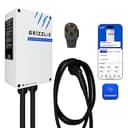
Grizzl-E retired the old no-app Classic and replaced it with this, and it kept the part that mattered: a metal case rated UL Type 4 for a spot with no shelter, published to keep operating down to -22F. What changed is that the electronics caught up — Wi-Fi, an app, and current you can dial from 40A down to 16A to fit a circuit you already have. It's the rugged pick that no longer asks you to give up scheduling to get it.

Better for exposed installs
$349.99 · View on Amazon

Price as of September 2, 2026. #ad How we’re funded

2
ChargePoint Home Flex

ChargePoint Home Flex

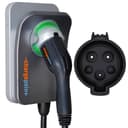
If you'd rather buy a charger once and be done, this is the safe call. You set the current in the app anywhere from 16 to 50 amps, so it fits whatever your panel can spare today and still has room to grow if you upgrade the circuit later. The app is the most polished of the bunch and the warranty is long.

Better for tight or uncertain circuits
$494.00 · View on Amazon

Price as of September 2, 2026. #ad How we’re funded

The picks in full

#1Better for exposed installs

Grizzl-E Classic Connect

Grizzl-E retired the old no-app Classic and replaced it with this, and it kept the part that mattered: a metal case rated UL Type 4 for a spot with no shelter, published to keep operating down to -22F. What changed is that the electronics caught up — Wi-Fi, an app, and current you can dial from 40A down to 16A to fit a circuit you already have. It's the rugged pick that no longer asks you to give up scheduling to get it.

Strengths

  • Metal case rated UL Type 4 indoor/outdoor, published from -22F to 122F
  • Current adjusts from 40A down to 16A, so it fits the circuit you already have
  • 25 ft cable — among the longest here — on a simple plug-in NEMA 14-50 install

Trade-offs

  • 40A caps its charging speed below the 48A units
  • Scheduling now runs through Wi-Fi and an account — the old Classic's nothing-to-update simplicity is gone
  • Grizzl-E publishes UL/cUL only for this model, not the ENERGY STAR listing the discontinued Classic carried
Max output40 A
Power9.6 kW
ConnectorJ1772
InstallNEMA 14-50 plug
Cable length25 ft
Warranty3 years
WiFi + appYes
CertificationsUL/cUL listed (file E510712)

Our charging-speed math. At 40A (9.6 kW) and 3.5 mi/kWh it adds roughly 34 miles of range an hour — more than enough to refill a daily commute overnight. Dial it down to 16A and you're at about 13.

Build note. A metal case rated UL Type 4 indoor/outdoor and published for -30C to +50C (-22F to 122F), with 2.4 GHz Wi-Fi and current adjustable from 40A down to 16A.

Specs read from the manufacturer spec sheet, on August 11, 2026. “Not published” means the brand does not state that figure.

#2Better for tight or uncertain circuits

ChargePoint Home Flex

If you'd rather buy a charger once and be done, this is the safe call. You set the current in the app anywhere from 16 to 50 amps, so it fits whatever your panel can spare today and still has room to grow if you upgrade the circuit later. The app is the most polished of the bunch and the warranty is long.

Strengths

  • Adjustable 16-50A fits a modest circuit now and a bigger one later
  • The most complete app here: scheduling, reminders and usage history
  • 3-year warranty and a generous 23 ft cable

Trade-offs

  • You pay a brand premium over value 48A units
  • Using the full 50A needs a 60A circuit most older panels can't spare
Max output50 A
Power12 kW
ConnectorJ1772
InstallHardwired (a plug-in NEMA 14-50 SKU is also sold)
Cable length23 ft
Warranty3 years
WiFi + appYes
CertificationsUL/cUL listed, ENERGY STAR

Our charging-speed math. Run it at the full 50 amps (about 12 kW) and, at a middle-of-the-road 3.5 miles per kWh, it puts back roughly 42 miles of range an hour. Turn it down to 40A to live on a 50A circuit and you're at about 34.

Build note. The headline feature is app-adjustable amperage — anywhere from 16A up to 50A, in software.

Specs read from the manufacturer spec sheet, on July 19, 2026. “Not published” means the brand does not state that figure.

Enclosure: the clearest win on the page

Grizzl-E publishes a UL Type 4 indoor/outdoor rating on a metal case, plus an operating range of −30°C to +50°C. ChargePoint publishes NEMA 3R. Those are not close.

NEMA 3R covers falling rain, sleet and external ice formation — the assumption is a wall that gets weather but not a beating. Type 4 adds windblown dust and water directed from a hose. The metal shell rather than molded plastic is the physical expression of the same intent. The figure we’d actually shop on, though, is the temperature range: an enclosure rating tells you about water, and a published −22°F floor tells you about January. Most brands publish the first and stay quiet about the second.

If your charger is going on an exterior wall with no overhang, in a place with real winters or salted roads, this section ends the comparison. If your charger is going inside a closed garage, this section is irrelevant — neither rating will ever be tested, and paying for Type 4 is paying for a specification that will spend a decade doing nothing. Our outdoor charger roundup covers what the ratings mean in more depth.

Charging speed, and what the gap costs

Grizzl-E tops out at 40 amps, about 9.6 kW, which at our standard reference of roughly 3.5 miles of range per kWh is about 34 miles of range per hour. ChargePoint reaches 50 amps, about 12 kW, or about 42 miles per hour.

Eight miles an hour is the largest speed gap in any of our head-to-heads, and it still barely matters for most drivers. Over a ten-hour overnight window it is 340 miles against 420 — both far more than a normal day’s driving. Where it becomes real is a specific scenario: recovering from a nearly empty battery after a long trip, or refilling two cars from one charger on rotating nights. Our two-EV roundup covers that second case.

The important asterisk is the circuit. To get 50 amps out of the ChargePoint you need a 60-amp circuit, because NEC Article 625 treats EV charging as a continuous load and sizes the circuit to 125% of the draw. Grizzl-E’s 40 amps runs on a 50-amp circuit. So the honest comparison is not “42 miles an hour versus 34” — it is “42 miles an hour and a 60-amp circuit versus 34 miles an hour anda 50-amp one.” On a tight panel, that reframing flips the answer. Our 40A vs 48A comparison and our how many amps guide both work this through.

Install: plug-in versus hardwired

The Grizzl-E Classic Connect plugs into a NEMA 14-50 outlet — the same 240V receptacle style used for an electric range or an RV hookup. The ChargePoint Home Flex is sold hardwired, with a plug-in NEMA 14-50 SKU also available.

A plug-in charger has three practical advantages that matter more than they sound. You can take it with you when you move, which is decisive if you rent. You can replace it yourself in thirty seconds if it fails outside warranty, rather than booking an electrician. And the electrical work is a familiar outlet installation rather than a charger-specific termination.

Hardwiring wins on two counts: it removes a plug-and-socket joint that carries continuous current for hours every night, and it seals better against weather. It is also the only route above 40 amps, since the 14-50 receptacle is a 50-amp device. Our hardwired vs plug-in comparison covers all of this properly, and our installation guide covers what either job involves.

The app question, asked honestly

Both chargers connect now. Grizzl-E’s Classic Connect joins a 2.4 GHz Wi-Fi network and pairs with the Grizzl-E Connect app for statistics, schedules, remote control and utility demand/response programs. ChargePoint has the most mature app in home charging, and a longer track record of maintaining it. If the app is the deciding factor for you, ChargePoint wins that on maturity rather than on features.

What a charger app is genuinely good for is scheduling around a cheaper overnight electricity rate, and measuring energy at the wall. The first of those — the valuable one — every modern EV can already do from the car, for free, with a schedule that travels with the vehicle rather than with the parking spot. So treat app maturity as a tiebreaker, not the headline. The second, energy measured at the wall rather than estimated by the car, is real but narrower: you want it if you’re checking charging against your utility bill, and you don’t if you’re not. Our smart charger roundup covers which app features actually earn their keep.

Both can also be dialed down in software, which is the spec that decides tight panels. ChargePoint’s range is 16 to 50 amps; the Grizzl-E’s is 16 to 40. If your panel can only spare a 30-amp circuit today, either one will fit it — but only the ChargePoint still has room to grow to 50 amps if you upgrade the circuit later.

Cable, certification and warranty

Cable. Grizzl-E publishes 25 feet, ChargePoint 23. Close enough not to decide anything.

Certification.Both are UL/cUL listed against the ANSI/UL 2594 EV supply equipment standard, so neither is cutting safety corners to reach its price. They differ on ENERGY STAR: ChargePoint publishes an ENERGY STAR listing for the Home Flex, and Grizzl-E does not publish one for the Classic Connect — the discontinued Grizzl-E Classic had one, and it does not carry over to the new model number. If an ENERGY STAR listing is a condition of a rebate you’re counting on, confirm your exact model in the ENERGY STAR product finder first.

Warranty. Both three years as standard. Grizzl-E sells a 5-year extension separately, which ChargePoint does not offer.

The verdict, by buyer

Buy the Grizzl-E Classic Connect if the charger will live somewhere genuinely exposed and you want a published temperature rating rather than a vague promise of weather resistance, or if you rent and want a charger you can unplug and take with you. Its 40 amps runs on a more common 50-amp circuit, which frequently makes it the cheaper total install as well as the cheaper box. It is our cold-climate and exposed-install pick across the site for exactly these reasons.

Buy the ChargePoint Home Flexif your panel is tight or your circuit is not settled yet — adjustable amperage all the way to 50 is the single best hedge on the market — or if you want a charger app with the longest track record of still being maintained in five years. Also buy it if you specifically want energy measured at the wall rather than estimated by the car.

Buy neither if you want 48 amps in a weather-rated body: that is the EVIQO 48A or the Emporia Level 2, both of which sit between these two philosophically. And if your charger must survive a genuinely brutal climate and reach higher amps, the Autel MaxiCharger is the NEMA 4X unit that refuses to make you choose.
Frequently asked questions

Is the Grizzl-E Classic Connect better than the ChargePoint Home Flex?

For an exposed outdoor install, yes — its UL Type 4 metal case and published -22F operating floor are a real step above ChargePoint's NEMA 3R. For a tight or uncertain electrical panel, no — ChargePoint's software-adjustable 16-50A output is the better hedge, because the Grizzl-E's adjustment range stops at 40A.

How much faster is the ChargePoint Home Flex?

About eight miles of range per hour — roughly 42 against 34 at our standard 3.5 miles-per-kWh reference. But reaching 50 amps requires a 60-amp circuit under the NEC's continuous-load rule, while the Grizzl-E's 40 amps runs on a more common 50-amp circuit, so the fair comparison includes the electrical work.

Does the Grizzl-E Classic Connect have an app?

Yes. It joins a 2.4 GHz Wi-Fi network and pairs with the Grizzl-E Connect app for charging statistics, schedules, remote control and utility demand/response programs. This is the change from the discontinued Grizzl-E Classic, which had no app at all — that no-software version is no longer sold.

Which is easier to install?

The Grizzl-E, because it plugs into a NEMA 14-50 outlet rather than being hardwired — and a 40-amp charger needs only a 50-amp circuit. ChargePoint sells a plug-in version too, but reaching its full 50 amps requires hardwiring to a 60-amp circuit.

Which is better for a renter?

The Grizzl-E, comfortably. It plugs into an outlet, so it comes with you when you move and leaves behind a receptacle rather than a hardwired box. The plug-in ChargePoint SKU is a reasonable alternative, but a hardwired charger of any brand is the wrong shape for a rented property.

Sources

Keep reading