Plug & Range

Smart vs Basic EV Charger: Is Wi-Fi Worth It?

Almost every roundup treats “smart” as automatically better. Most of what the app does, your car already does for free — but one feature genuinely earns its money.

By Stephen V.Last updated How we pick

A “smart” EV charger is one with Wi-Fi and a phone app. A basic one is a box that delivers current when a car is plugged in. Both charge the same car at the same speed from the same circuit — amps are amps, and no app makes electricity move faster.

The premium for connectivity is real money, and the standard advice to just buy the smart one skips the question that actually matters: which of these features can your car already do?For scheduling — the headline reason people buy a smart charger — the answer is almost always “yes, for free, and better.” For one other feature, the answer is a genuine no, and that is where the money is worth spending.

How this is funded:we earn a commission if you buy through our links, at no extra cost to you. It never changes which product we recommend, and we’ll tell you when we’d skip one. Full disclosure.

Quick picks

Ranked on published specs, charging speed, electrical fit and value. Select a row to jump to the full write-up. We have not bench-tested these chargers — here is exactly what we do instead.

#ProductBest forPrice
1
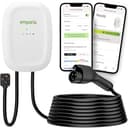
Emporia Level 2 EV Charger

Emporia Level 2 EV Charger

The value pick that never feels like one. You get the full 48 amps, an ENERGY STAR listing, real Wi-Fi energy tracking and a 25 ft cable for well under what the marquee brands charge. When someone asks us where to start, this is usually the first name out of our mouths.

Best smart charger for the money
$449.00 · View on Amazon

Price as of September 2, 2026. #ad How we’re funded

2
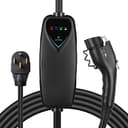
Lectron 40A Portable Level 2 Charger

Lectron 40A Portable Level 2 Charger

The least-expensive honest route into real Level 2 charging. Plug it into a NEMA 14-50 outlet, pull a true 40A / 9.6 kW, and unplug it to throw in the trunk for a trip. The trade-offs for the price are no app and a shorter warranty — both fair at this cost.

Best basic charger
$269.99 · View on Amazon

Price as of September 2, 2026. #ad How we’re funded

The picks in full

#1Best smart charger for the money

Emporia Level 2 EV Charger

The value pick that never feels like one. You get the full 48 amps, an ENERGY STAR listing, real Wi-Fi energy tracking and a 25 ft cable for well under what the marquee brands charge. When someone asks us where to start, this is usually the first name out of our mouths.

Strengths

  • 48A and ENERGY STAR at a genuinely value price
  • The app tracks energy use, not just an on/off toggle
  • Long 25 ft cable and a remote holster in the box

Trade-offs

  • 48A hardwired needs a 60A circuit; on a NEMA 14-50 plug it's capped at 40A
  • The app is less polished than ChargePoint's, and support is a smaller operation
Max output48 A
Power11.5 kW
ConnectorJ1772
InstallHardwired or NEMA 14-50 plug
Cable length25 ft
Warranty3 years
WiFi + appYes
CertificationsUL listed, ENERGY STAR

Our charging-speed math. Hardwired at 48A (11.5 kW), figure about 40 miles of range an hour at 3.5 mi/kWh. Drop to a 40A plug-in circuit and it's closer to 34.

Build note. Runs 48A hardwired, or 40A on a NEMA 14-50 outlet, with a 25 ft cable and a wall holster included.

Specs read from the manufacturer spec sheet, on July 19, 2026. “Not published” means the brand does not state that figure.

#2Best basic charger

Lectron 40A Portable Level 2 Charger

The least-expensive honest route into real Level 2 charging. Plug it into a NEMA 14-50 outlet, pull a true 40A / 9.6 kW, and unplug it to throw in the trunk for a trip. The trade-offs for the price are no app and a shorter warranty — both fair at this cost.

Strengths

  • A real 40A / 9.6 kW at a budget price
  • Plug-in and portable — no hardwiring, and it travels
  • ETL listed to the UL 2594 / UL 2231 safety standards

Trade-offs

  • No Wi-Fi or app on the base model — the smart version is a separate SKU
  • Shorter 16 ft cable and a 2-year warranty
  • The brand doesn't publish an outdoor/IP enclosure rating
Max output40 A
Power9.6 kW
ConnectorJ1772
InstallNEMA 14-50 plug
Cable length16 ft
Warranty2 years
WiFi + appNo
CertificationsETL listed (UL 2594 / UL 2231)

Our charging-speed math. At 40A (9.6 kW) and 3.5 mi/kWh it adds roughly 34 miles of range an hour.

Build note. A portable plug-in unit — no hardwiring — and the base model carries no Wi-Fi or app.

Specs read from the manufacturer spec sheet, on July 19, 2026. “Not published” means the brand does not state that figure.

Scheduling: your car already does this, and does it better

The most-advertised smart feature is scheduling — charge overnight when electricity is cheap rather than the moment you plug in. It is genuinely valuable. On a time-of-use rate the difference between charging at 6pm and 1am can be most of the cost of running the car, which our time-of-use charging guide works through with the arithmetic.

But essentially every EV sold in the last decade schedules charging from the car, free, with departure times and charge limits. And the car’s version is better than the charger’s in a way that is easy to miss: the schedule travels with the vehicle.Charge at a friend’s house, a holiday rental, a second home, and your settings come with you. A charger-side schedule stays bolted to one wall.

There is also a failure mode worth knowing about. If you set a schedule in both the car and the charger and they disagree, you get a car that did not charge and no obvious reason why. It is one of the more common causes of the “woke up to an empty battery” complaint, and our troubleshooting guide covers it. Pick one scheduler and turn the other off.

The one feature worth paying for: measured energy

Here is what your car genuinely cannot tell you. A vehicle reports energy added to the battery. Your utility bills you for energy that came through the wall. Those are different numbers, because charging is not perfectly efficient — some energy is lost as heat in the cable, the charger and the car’s onboard converter, and more of it is lost in the cold.

A charger with energy monitoring measures the wall side. That is the number that matches your bill, and it is the only way to know what charging actually costs you rather than what it theoretically should. If you are the sort of person who wants to check the arithmetic in our cost-to-charge guideagainst your own house, this is the feature that lets you do it — and our energy monitoring guide covers what to do with the data.

This is the honest case for spending the extra money, and it is a narrower case than the marketing makes. If you will look at the number twice and never again, you are buying a subscription to your own curiosity.

Load management is a different thing, and it is not optional

One feature often filed under “smart” is not a convenience at all: load management, which measures whole-house demand and throttles the charger so the panel is never overloaded.

If an electrician has told you your panel cannot carry a full-current charger circuit, this is not a nice-to-have — it is the thing standing between you and a service upgrade that can cost several times what the charger does. That is a structural requirement, not a smart feature, and it needs sensing equipment installed at the panel. Our load management guide explains how it works and our Emporia Level 2 vs Pro comparison is the concrete version of that decision.

What connectivity costs you

Three real downsides, none of them fatal, all of them worth naming:

  • It is one more thing that breaks.A garage is close to the worst place in a house for 2.4 GHz Wi-Fi — often the far corner, often behind masonry, sometimes in a detached building. Pairing failures are common enough that we wrote a whole Wi-Fi setup guide about them.
  • It depends on a company staying interested.A charger tied to one manufacturer’s cloud loses its app features if that manufacturer exits the market. This has happened in this category. The hardware keeps charging; the smarts do not.
  • It is a device on your network. Not a reason to avoid one, but a reason to keep its firmware current and put it on a guest network if you separate your IoT devices.

A basic charger has none of these problems. It is a contactor, a cable and a safety listing, and it will do exactly the same job in ten years as it does today.

What you must never trade away

Whichever side you land on, the specification that is not negotiable is certification. A basic charger from a reputable brand with ETL or UL listing against UL 2594 is a perfectly good purchase. An uncertified charger is not, regardless of how many app features it advertises — and cheap connected chargers are exactly where you find that combination.

Our are cheap EV chargers safe guide explains how to read those marks and which listings mean nothing. Buying basic should mean buying simpler, never buying unlisted.

The verdict, by buyer

Buy a smart charger if you genuinely want measured energy data, if you need load management to avoid a panel upgrade, or if your car is old enough that it cannot schedule charging itself. Our smart charger roundup covers the field, and the Emporia Level 2 is where we would start: it is the cheapest way to get real wall-side measurement rather than an app that only toggles things.

Buy a basic chargerif your car schedules its own charging, your panel has room, and you would rather spend the difference on amps, cable length or a better enclosure — all of which you will notice more often than an app. The Lectron 40A is the honest example: ETL listed against UL 2594 and UL 2231, a genuine 40 amps from a 14-50 outlet, no app, and a shorter two-year warranty as the trade.

The mistake to avoid is paying a connectivity premium for scheduling you already have, on a charger whose enclosure or cable length is worse than the basic unit you passed over. Check our main roundup and compare the specs you will use every day before the ones you will use once.
Frequently asked questions

Is a smart EV charger worth it?

It depends on one thing: whether your car can schedule its own charging. Almost every modern EV can, for free, with a schedule that travels with the vehicle rather than the wall. If yours can, the main reason to pay for a smart charger is measured energy data — what came through the wall, which the car cannot tell you — or load management if your panel is full.

Does a smart charger charge faster than a basic one?

No. Charging speed is set by the charger's rated amps, your circuit and your car's onboard charger. An app cannot make electricity move faster. A 40-amp basic charger and a 40-amp smart charger deliver identical speed.

Can I schedule charging without a smart charger?

Yes, from the car, on essentially every EV sold in the last decade — departure time, scheduled start and charge limit. It is free, and the schedule travels with the vehicle. Just do not set a schedule in both the car and the charger, because when the two disagree you get a car that did not charge and no obvious reason why.

What is the one smart feature actually worth paying for?

Energy monitoring that measures the wall side. Your car reports energy added to the battery, which excludes charging losses; your utility bills you for what came through the wall. Those numbers never match, and only one of them is on your bill. A charger with real metering is the only way to see it.

Is a basic EV charger safe?

Yes, provided it carries a genuine safety listing — ETL or UL listing against UL 2594 for EV supply equipment. Simplicity is not the risk; missing certification is. Never trade a safety listing for a lower price, and be especially careful with cheap connected chargers, which is where uncertified units most often turn up.

Sources

Keep reading