The specification that actually decides an outdoor install
Nearly every buyer shopping outdoor chargers compares enclosure ratings, and nearly every buyer is comparing the wrong number. An enclosure rating tells you about ingress— dust and water getting in. It tells you nothing at all about what happens at −15°F.
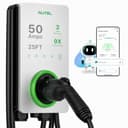
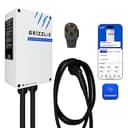
Autel publishes a NEMA 4X enclosure and an operating range down to around −40°F. Grizzl-E publishes UL Type 4 and, for the Classic Connect, an operating range down to −22°F. Both are genuine outdoor ratings; the “X” on the Autel adds corrosion resistance, which is a real consideration within reach of road salt or coastal air.
Eighteen degrees sounds like a technicality until you look at where it lands. A typical January in Minneapolis, Fargo or northern Maine goes below −22°F in a cold snap most winters. If that is your climate, the Autel is operating inside its published envelope and the Grizzl-E is outside it. If your winters bottom out around zero — which covers most of the United States — both units are comfortably within spec and this difference is worth nothing to you.
That is the honest read: this is a threshold, not a gradient. You are either in the small band of climates where it matters or you are not. Our cold-weather charging guide covers what else changes when it gets genuinely cold, and why the car, not the charger, is usually the thing that slows down.
Install type: the difference you will feel every other day
The Autel MaxiCharger is hardwired. The Grizzl-E Classic Connect has a NEMA 14-50 plug.
That single fact carries most of the practical consequences. The Grizzl-E works today if a 14-50 outlet already exists near the car, with no electrician at all. It comes with you if you move. If it fails outside warranty you unplug it and plug in a replacement. And if you rent, it is one of the very few real Level 2 options you can put in without a conversation with your landlord about their wiring — see our renters and apartments roundup for the rest of that picture.
The Autel needs a circuit run and terminated by an electrician, and once it is on the wall it is effectively part of the building. What you buy for that inconvenience is 50 amps — and a hardwired connection has no plug and receptacle in the path, which is one fewer thing to heat up and degrade over years of drawing full current for hours at a time. Our hardwired vs plug-in comparison works through that trade properly.
Speed: 50 amps against 40
The Autel is rated at 50 amps (about 12 kW) and the Grizzl-E Classic Connect at 40 amps (about 9.6 kW). At our standard reference of 3.5 miles per kWh, that is roughly 42 miles of range per hour against 34.
Eight miles an hour is a real difference on paper and almost never a real difference in a driveway. Both units replace a normal day’s driving several times over in an overnight window. The case where it matters is the genuinely long day — you came home on 15% and you leave at six — and even then you are talking about the difference between full at 2am and full at 3am.
The more important consequence is the circuit. Fifty amps of continuous draw needs a 60-amp circuitunder the NEC’s 125% continuous-load rule; 40 amps needs a 50-amp circuit. On a tight panel that is the difference between a straightforward install and a service upgrade that can cost more than the charger several times over. Run your own numbers with our panel capacity guide and our how many amps do you need guide before you let the amperage decide this for you.
Certification and rebates
Autel publishes CSA certification and an ENERGY STAR listing. Grizzl-E publishes UL/cUL listing (file E510712) and no ENERGY STAR listing for the Classic Connect.
Both are properly certified for safety — CSA and UL are both accredited testing laboratories, and either satisfies an inspector. The ENERGY STAR gap is the practical one, because a number of utility rebate programs require ENERGY STAR certification by model number. If your utility offers a few hundred dollars back on a qualifying charger, that requirement can quietly reverse the price difference between these two. Check your own utility’s terms first; our rebates and tax credits guide explains what these programs typically ask for, and our ENERGY STAR roundup lists which of our picks actually publish a listing.
Where they are level
Cable. Both publish 25 feet, which is the long end of this class and enough for most realistic garage and driveway geometry. Warranty. Three years each. Connector.Both J1772, so both fit every non-Tesla EV sold in North America, and a Tesla with the adapter that came with the car — our J1772 vs NACS explainer covers where that stands now.
Smart features. Both are Wi-Fi connected with scheduling in an app. Neither app is a reason to buy either charger, for the reason we keep coming back to: your car can already schedule its own charging, for free, with a schedule that travels with the vehicle instead of the parking space. We argue that case in full in our smart vs basic comparison.
The verdict, by buyer
Buy the Autel MaxiChargerif your winters genuinely go below −22°F, if the charger will be within reach of road salt or sea air, or if you are hardwiring anyway and simply want the faster of the two on a panel that can carry 60 amps. The NEMA 4X shell and the −40°F published range are the most weather-capable combination we cover.
Buy the Grizzl-E Classic Connectif you rent, if you might move, if a 14-50 outlet already exists near the car, or if your panel is tight enough that a 50-amp circuit is comfortable and a 60-amp one is not. In an ordinary cold climate — which is nearly all of them — it is just as weatherproof in practice and considerably easier to live with.
Look elsewhere if the wall is sheltered. Both of these carry a weather premium in build and price that a garage install simply does not use. Our main roundup covers the field, and our outdoor roundup ranks specifically on the ratings discussed here.