Plug & Range

Grizzl-E Classic Connect vs Grizzl-E Ultimate 48A

Same brand, same rugged reputation, eight more amps. The upgrade is not really about speed — it is about whether you are willing to hardwire.

By Stephen V.Last updated How we pick

Grizzl-E has built its reputation on one idea: a metal box that does not care about the weather. Both of these chargers deliver that. Both carry the same UL Type 4 indoor/outdoor enclosure, the same UL/cUL listing under file E510712, the same 25-foot cable and the same three-year warranty.

So the question is not which one is tougher. It is whether the Ultimate’s eight extra amps and its OCPP radio are worth giving up the thing that makes the Classic Connect so easy to live with — its plug. For a lot of buyers the honest answer is no, and we will show you how to tell which one you are.

One thing to settle before any of that, because it is not a preference: they no longer ship the same car-side connector.Grizzl-E builds the Ultimate 48A with a J1772 or a NACS cable, but the only version Amazon lists today is the NACS one, while the Classic Connect on this page is J1772. So if you drive a Tesla or another NACS car the Ultimate plugs straight in and the Classic needs an adapter — and if you drive anything else, it is the other way round.

How this is funded:we earn a commission if you buy through our links, at no extra cost to you. It never changes which product we recommend, and we’ll tell you when we’d skip one. Full disclosure.

Quick picks

Ranked on published specs, charging speed, electrical fit and value. Select a row to jump to the full write-up. We have not bench-tested these chargers — here is exactly what we do instead.

#ProductBest forPrice
1
Grizzl-E Classic Connect

Grizzl-E Classic Connect

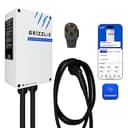
Grizzl-E retired the old no-app Classic and replaced it with this, and it kept the part that mattered: a metal case rated UL Type 4 for a spot with no shelter, published to keep operating down to -22F. What changed is that the electronics caught up — Wi-Fi, an app, and current you can dial from 40A down to 16A to fit a circuit you already have. It's the rugged pick that no longer asks you to give up scheduling to get it.

Better for most homes
$349.99 · View on Amazon

Price as of September 2, 2026. #ad How we’re funded

2
Grizzl-E Ultimate 48A

Grizzl-E Ultimate 48A

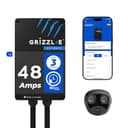
The Grizzl-E for people who wanted more than 40 amps. It keeps the metal UL Type 4 body and the published -22F floor that make the Classic Connect our exposed-install pick, then raises the ceiling to 48A and adds an OCPP radio on top of the Grizzl-E Connect app. Two catches: it is hardwire-only, so there is no unplugging it and taking it with you, and the SKU Amazon carries today is the NACS cable version, so a J1772 car needs an adapter permanently in the chain.

Better for a hardwired 60-amp circuit

The picks in full

#1Better for most homes

Grizzl-E Classic Connect

Grizzl-E retired the old no-app Classic and replaced it with this, and it kept the part that mattered: a metal case rated UL Type 4 for a spot with no shelter, published to keep operating down to -22F. What changed is that the electronics caught up — Wi-Fi, an app, and current you can dial from 40A down to 16A to fit a circuit you already have. It's the rugged pick that no longer asks you to give up scheduling to get it.

Strengths

  • Metal case rated UL Type 4 indoor/outdoor, published from -22F to 122F
  • Current adjusts from 40A down to 16A, so it fits the circuit you already have
  • 25 ft cable — among the longest here — on a simple plug-in NEMA 14-50 install

Trade-offs

  • 40A caps its charging speed below the 48A units
  • Scheduling now runs through Wi-Fi and an account — the old Classic's nothing-to-update simplicity is gone
  • Grizzl-E publishes UL/cUL only for this model, not the ENERGY STAR listing the discontinued Classic carried
Max output40 A
Power9.6 kW
ConnectorJ1772
InstallNEMA 14-50 plug
Cable length25 ft
Warranty3 years
WiFi + appYes
CertificationsUL/cUL listed (file E510712)

Our charging-speed math. At 40A (9.6 kW) and 3.5 mi/kWh it adds roughly 34 miles of range an hour — more than enough to refill a daily commute overnight. Dial it down to 16A and you're at about 13.

Build note. A metal case rated UL Type 4 indoor/outdoor and published for -30C to +50C (-22F to 122F), with 2.4 GHz Wi-Fi and current adjustable from 40A down to 16A.

Specs read from the manufacturer spec sheet, on August 11, 2026. “Not published” means the brand does not state that figure.

#2Better for a hardwired 60-amp circuit

Grizzl-E Ultimate 48A

The Grizzl-E for people who wanted more than 40 amps. It keeps the metal UL Type 4 body and the published -22F floor that make the Classic Connect our exposed-install pick, then raises the ceiling to 48A and adds an OCPP radio on top of the Grizzl-E Connect app. Two catches: it is hardwire-only, so there is no unplugging it and taking it with you, and the SKU Amazon carries today is the NACS cable version, so a J1772 car needs an adapter permanently in the chain.

Strengths

  • 48A / 11.5 kW in the same UL Type 4 metal case, published from -22F to 122F
  • Speaks OCPP as well as Grizzl-E's own app — rare on a home charger
  • 25 ft cable, and current can be dialed to 40, 32, 24 or 16 amps

Trade-offs

  • The live Amazon SKU is the NACS cable — a J1772 car needs an adapter to use it
  • Hardwire only — no plug, so it is not renter-friendly and not portable
  • 48A needs a 60-amp circuit, which is the install many older panels can't take
  • Grizzl-E publishes UL/cUL for this model but no ENERGY STAR listing
Max output48 A
Power11.5 kW
ConnectorNACS
InstallHardwired
Cable length25 ft
Warranty3 years
WiFi + appYes
CertificationsUL/cUL listed (file E510712)

Our charging-speed math. At 48A (11.5 kW) and 3.5 mi/kWh, roughly 40 miles of range an hour — about six more than the 40A Classic Connect, and it needs a 60-amp circuit to get there.

Build note. A metal case rated UL Type 4 indoor/outdoor, published for -30C to +50C (-22F to 122F), with 2.4 GHz Wi-Fi on an extended-range antenna, OCPP support and current selectable at 40, 32, 24 or 16 amps. Grizzl-E publishes the Ultimate 48A with a J1772 or a NACS output cable; the SKU Amazon lists today (GRS-077-W-HW-25N48-A-GB) is the NACS one, which is the connector our spec table records.

Specs read from the manufacturer spec sheet, on August 21, 2026. “Not published” means the brand does not state that figure.

The real difference is the install, not the amps

The Classic Connect is a 40-amp charger on a NEMA 14-50 plug. The Ultimate 48A is a 48-amp charger that is hardwired only.

That is not a small footnote on a spec sheet. It changes who can install it, what it costs, whether it moves with you, and what happens when it breaks:

  • If a 14-50 outlet already exists near the car, the Classic Connect works this afternoon with no electrician. The Ultimate needs a circuit run and terminated no matter what is already on the wall.
  • If you rent or might move, the Classic Connect unplugs and comes with you. A hardwired charger is terminated into the building’s wiring and effectively becomes the property’s.
  • If it fails outside warranty, swapping a plug-in unit takes seconds. Swapping a hardwired one is an electrician’s visit.
  • If your panel is tight, 40 amps of continuous draw needs a 50-amp circuit while 48 amps needs a 60-amp one, under the NEC’s 125% continuous-load rule. That difference in breaker size is exactly where a lot of older panels run out of room.

Our hardwired vs plug-in comparison covers that trade in general, and our panel capacity guide walks the load calculation an electrician actually runs before quoting you.

What eight amps actually buys

Forty amps is about 9.6 kW. Forty-eight is about 11.5 kW. At our standard reference of 3.5 miles per kWh that is roughly 34 miles of range per hour against 40— a difference of about six miles an hour.

Six miles an hour over an eight-hour overnight window is around fifty miles. That sounds like a lot until you ask when you would ever need it. The average American drives well under forty miles a day, and both of these chargers replace that in little over an hour. The scenario where 48 amps earns its keep is narrow: a genuinely long commute, a big battery arriving nearly empty, and a short parking window — or two EVs sharing one charger and one night.

We go through this arithmetic properly in our 40A vs 48A comparison, and the short version is the same there: buy the amps your panel can spare comfortably, not the biggest number on the shelf. Paying for 48 amps and then running the charger at 40 because the panel cannot carry more is money spent on nothing.

The Ultimate adds OCPP. Here is whether you care.

The Ultimate carries an OCPPradio. OCPP is an open protocol for talking to charging stations, and it is genuinely meaningful in one specific way: it means the charger is not permanently married to one manufacturer’s cloud. If the brand’s own app is discontinued, an OCPP charger can in principle be pointed at another management platform instead.

That is not a hypothetical risk in this category. Home chargers have been orphaned before when a manufacturer exited the market, and an app-dependent charger whose app stops being updated loses its scheduling and monitoring even though the hardware is fine.

The honest counterweight: for a normal household, OCPP is a feature you will almost certainly never use directly. Pointing a charger at a third-party OCPP backend is not a consumer-friendly afternoon. It is real insurance rather than a daily benefit, and you should price it that way. If you want smart features you will genuinely use every week, our smart charger roundupis the better starting point — and our smart vs basic comparison makes the case that the car’s own scheduler covers most of what people think they need an app for.

The Classic Connect has one trick the spec sheet hides

The Classic Connect is adjustable from 40 amps down to 16. That matters more than it sounds on a constrained panel: it means one charger can be dialed to whatever circuit you can actually get, rather than forcing the circuit to match the charger. If an electrician tells you the panel can spare a 30-amp circuit and no more, the Classic Connect can be set to 24 amps and work properly, where a fixed 48-amp unit simply cannot be installed.

Our how many amps do you need guide covers how to find that ceiling for your own house before you shop, and our load management guide covers what to do when the answer comes back tighter than you hoped.

What neither of them has

Neither model publishes an ENERGY STAR listing. Both are properly safety-certified — UL/cUL listed under file E510712 — so this is not a safety gap. It is a rebate gap, and it can be an expensive one, because a number of utility programs require ENERGY STAR certification by model number before they will pay out.

If your utility offers a charger rebate, check that requirement before you buy either of these. Our rebates and tax credits guide explains what these programs typically ask for, and our ENERGY STAR rounduplists the picks that do publish a listing — including the Emporia Level 2, which is the obvious cross-shop if a rebate is on the table.

Cold weather: identical, and worth knowing the number

Both share the same UL Type 4 enclosure and the same cold-weather reputation, with Grizzl-E publishing an operating range down to around −22°F. That covers the great majority of North American winters. If yours regularly goes below it, neither Grizzl-E is the right answer and our Autel vs Grizzl-E comparison explains what to buy instead.

The verdict, by buyer

Buy the Classic Connect if you rent, might move, already have a 14-50 outlet, have a panel that is tight, or simply want the option to unplug the thing. For most households this is the better buy, and the six miles an hour you give up will never once be the reason you are late.

Buy the Ultimate 48Aif you are hardwiring anyway, your panel can comfortably carry a 60-amp circuit, and you either genuinely need the speed — a big battery on a short parking window, or two cars sharing one charger — or you specifically want OCPP as insurance against app abandonment.

Buy neither if the charger is going in a dry garage. The Grizzl-E build quality is aimed at weather you are not going to get, and the money is better spent elsewhere in our main roundup.
Frequently asked questions

What is the difference between the Grizzl-E Classic Connect and the Ultimate?

Two things that matter. The Classic Connect is 40 amps on a NEMA 14-50 plug; the Ultimate is 48 amps and hardwired only. The Ultimate also adds an OCPP radio. Enclosure, safety listing, cable length and warranty are the same on both.

Is the Grizzl-E Ultimate worth the upgrade?

Only if you are hardwiring anyway and your panel can carry a 60-amp circuit. The speed difference is about six miles of range per hour at our 3.5 mi/kWh reference, which almost never changes whether your car is ready in the morning. If a 14-50 outlet already exists or you might move, the Classic Connect's plug is worth more than the extra amps.

Can the Grizzl-E Ultimate be plugged into a NEMA 14-50 outlet?

No. Grizzl-E publishes the Ultimate 48A as a hardwired unit. Forty-eight amps of continuous draw also exceeds what a NEMA 14-50 receptacle may carry, since a 50-amp receptacle is limited to 40 amps of continuous load under the NEC's 125% rule.

Does either Grizzl-E qualify for utility rebates?

Neither publishes an ENERGY STAR listing, and many utility rebate programs require ENERGY STAR certification by model number. Both are UL/cUL listed for safety, so this is a rebate question rather than a safety one — but check your utility's terms before buying, because the rebate can be worth more than the price difference between the two.

What is OCPP and do I need it?

OCPP is an open protocol for communicating with charging stations. Its practical value at home is insurance: an OCPP charger is not permanently tied to one manufacturer's cloud, so it can in principle be pointed at another platform if the brand's app is discontinued. For a normal household it is not a feature you will use week to week.

Sources

Keep reading