Plug & Range

Best Home EV Chargers for the Hyundai IONIQ 9

Hyundai publishes both numbers that decide this: the car accepts 11 kW of AC power, and the port is NACS from the factory. The only thing left to work out is how much the pack size changes the usual 40-versus-48-amp answer.

By Stephen V.Last updated How we pick

The EVIQO NACS 48A is our top pick for an IONIQ 9: a native NACS connector so no adapter lives on the car overnight, 48 amps so the car’s full 11-kW appetite is covered, and a 25 ft cable in an IP66 / NEMA 4 case with ENERGY STAR certification for the rebate paperwork. If your panel cannot spare a 60-amp circuit, buy the ChargePoint Home Flex NACS instead and set it to whatever an electrician can actually give you.

Hyundai publishes the figure that settles the sizing question, in two places on its own US IONIQ 9 page. The home-charging card says “10 to 100% in about 9 hours and 40 minutes”, and its disclaimer spells out the conditions: “Approximately 9 hours and 40 minutes to charge from 10% to 100% on a 11-kW, 240V AC Level 2 charger.” The specifications table repeats it as “AC Level II, Standard 240V (from 10% to 100% charge): 9 hours 40 minutes”. 11 kW at 240 volts is about 46 amps.

That is the ceiling, and it makes 48 amps the first standard charger size that covers the car completely. But the IONIQ 9 is not simply a bigger IONIQ 5 with the same answer: the pack is large enough that the gap between a 40-amp charger and a 48-amp one stops being a rounding error. That is the part of this page worth reading before you let anyone talk you into the cheaper install.

How this is funded:we earn a commission if you buy through our links, at no extra cost to you. It never changes which product we recommend, and we’ll tell you when we’d skip one. Full disclosure.

Quick picks

Ranked on published specs, charging speed, electrical fit and value. Select a row to jump to the full write-up. We have not bench-tested these chargers — here is exactly what we do instead.

#ProductBest forPrice
1

EVIQO NACS 48A Level 2 Charger

The native-NACS charger that finally makes the Tesla-plug tax disappear. It is the same hardware as EVIQO's J1772 unit — 48 amps, 25 ft of cable, IP66, ENERGY STAR — with a Tesla plug on the end and, unlike either of the other hardwired NACS picks here, a published 6-48A adjustable range. That last spec is the one that lets it fit a panel that cannot carry a 60-amp circuit, which is the constraint that actually stops most 48-amp installs.

Best overall: native NACS, 48 amps, 25 ft cable
2
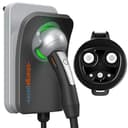
ChargePoint Home Flex NACS

ChargePoint Home Flex NACS

The Home Flex you already know, with a factory NACS cable. If you're a Tesla owner who wants ChargePoint's mature app and the same adjustable 16-50A amperage — instead of a plain no-app NACS unit — this is the way to get it. You pay a premium for exactly that.

Best for a tight panel: NACS, adjustable 16–50 A
$549.00 · View on Amazon

Price as of November 12, 2026. #ad How we’re funded

3
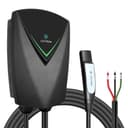
Lectron Nexus NACS (Tesla) Charger

Lectron Nexus NACS (Tesla) Charger

For a Tesla owner who doesn't want to babysit an adapter. The native NACS (J3400) connector goes straight into the car at a full 48 amps, with the safety listings you want to see. There's no app — but a Tesla schedules charging in the car anyway, so you're not really missing one.

Best 48 amps with no app and no account
$429.99 · View on Amazon

$459.997% off

Price as of November 12, 2026. #ad How we’re funded

4
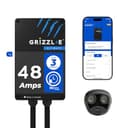
Grizzl-E Ultimate 48A

Grizzl-E Ultimate 48A

The Grizzl-E for people who wanted more than 40 amps. It keeps the metal UL Type 4 body and the published -22F floor that make the Classic Connect our exposed-install pick, then raises the ceiling to 48A and adds an OCPP radio on top of the Grizzl-E Connect app. Two catches: it is hardwire-only, so there is no unplugging it and taking it with you, and the SKU Amazon carries today is the NACS cable version, so a J1772 car needs an adapter permanently in the chain.

Best for a cold, fully exposed install
$349.99 · View on Amazon

$479.9927% off

Price as of November 12, 2026. #ad How we’re funded

5
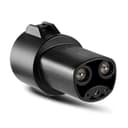
Lectron J1772 to Tesla (NACS) Adapter, 80A

Lectron J1772 to Tesla (NACS) Adapter, 80A

The single most useful accessory a Tesla or NACS owner can keep in the trunk. Snap it onto any J1772 home charger and it plugs straight into a Tesla — so you can buy the charger that's actually the best value and let this bridge the connector. It's rated to 80A/240V and UL 2252 certified, so it isn't the weak link.

Cheapest fix if you already own a J1772 charger
$39.99 · View on Amazon

Price as of November 12, 2026. #ad How we’re funded

The picks in full

#1Best overall: native NACS, 48 amps, 25 ft cable

EVIQO NACS 48A Level 2 Charger

The native-NACS charger that finally makes the Tesla-plug tax disappear. It is the same hardware as EVIQO's J1772 unit — 48 amps, 25 ft of cable, IP66, ENERGY STAR — with a Tesla plug on the end and, unlike either of the other hardwired NACS picks here, a published 6-48A adjustable range. That last spec is the one that lets it fit a panel that cannot carry a 60-amp circuit, which is the constraint that actually stops most 48-amp installs.

Strengths

  • Adjustable 6-48A — the only hardwired NACS pick here that can be dialed down to fit a smaller circuit
  • 25 ft cable plus a 40 in input lead, the longest reach of the NACS group
  • UL, ETL, FCC and ENERGY STAR listings at the bottom of the 48-amp NACS price band
  • Published -22°F to 122°F operating range on an IP66 / NEMA-4 body

Trade-offs

  • Hardwired only — a licensed electrician and a 60A circuit to use the full 48 amps
  • A smaller brand than ChargePoint, with a shorter track record behind the app
  • A J1772 car needs a NACS-to-J1772 adapter to use it at all
Max output48 A
Power11.5 kW
ConnectorNACS
InstallHardwired
Cable length25 ft
Warranty3 years
WiFi + appYes
CertificationsUL, ETL, FCC, ENERGY STAR

Our charging-speed math. At 48A (11.5 kW) and our 3.5 mi/kWh reference, roughly 40 miles of range an hour into a Tesla or other NACS car.

Build note. EVIQO publishes 240V, 48A (50A max) and 11.5 kW through a hardwired connection on a 60A-or-greater circuit, a native NACS connector, a 25 ft charging cable plus a 40 in input lead, an IP66 / NEMA-4 enclosure, a -22°F to 122°F operating range, a current range adjustable from 6 to 48A in the app, Wi-Fi with scheduling, energy and cost tracking and over-the-air firmware updates, UL/ETL/FCC listings, ENERGY STAR certification, and a 3-year standard warranty (4 years extended).

Specs read from the manufacturer spec sheet, on August 25, 2026. “Not published” means the brand does not state that figure.

#2Best for a tight panel: NACS, adjustable 16–50 A

ChargePoint Home Flex NACS

The Home Flex you already know, with a factory NACS cable. If you're a Tesla owner who wants ChargePoint's mature app and the same adjustable 16-50A amperage — instead of a plain no-app NACS unit — this is the way to get it. You pay a premium for exactly that.

Strengths

  • Native NACS cable with ChargePoint's flexible 16-50A amperage
  • The most mature app of the NACS options here
  • 3-year warranty and an outdoor-rated NEMA 3R body

Trade-offs

  • The priciest NACS pick — you're paying for the app and the badge
  • 50A output needs a 60A circuit to use in full
Max output50 A
Power12 kW
ConnectorNACS
InstallHardwired
Cable length23 ft
Warranty3 years
WiFi + appYes
CertificationsUL/cUL listed, ENERGY STAR

Our charging-speed math. At its 50A ceiling (about 12 kW) and 3.5 mi/kWh, roughly 42 miles of range an hour into a Tesla.

Build note. The same Home Flex hardware with a factory NACS cable for Tesla and NACS EVs.

Specs read from the manufacturer spec sheet, on July 19, 2026. “Not published” means the brand does not state that figure.

#3Best 48 amps with no app and no account

Lectron Nexus NACS (Tesla) Charger

For a Tesla owner who doesn't want to babysit an adapter. The native NACS (J3400) connector goes straight into the car at a full 48 amps, with the safety listings you want to see. There's no app — but a Tesla schedules charging in the car anyway, so you're not really missing one.

Strengths

  • Native NACS connector — no J1772-to-Tesla adapter to keep track of
  • Full 48A output and a weather-rated IP66 body
  • UL/ETL safety listings plus ENERGY STAR

Trade-offs

  • No Wi-Fi app — you schedule in the Tesla app instead
  • Best for Tesla/NACS cars; other EVs need a NACS-to-J1772 adapter
Max output48 A
Power11.5 kW
ConnectorNACS
InstallHardwired
Cable length23 ft
Warranty3 years
WiFi + appNo
CertificationsUL 2594/2231/2251 (ETL listed), ENERGY STAR, FCC

Our charging-speed math. At 48A (11.5 kW) and 3.5 mi/kWh, about 40 miles of range an hour into a Tesla.

Build note. A native NACS (J3400) connector plugs straight into a Tesla with no adapter; a holster is included.

Specs read from the manufacturer spec sheet, on July 19, 2026. “Not published” means the brand does not state that figure.

#4Best for a cold, fully exposed install

Grizzl-E Ultimate 48A

The Grizzl-E for people who wanted more than 40 amps. It keeps the metal UL Type 4 body and the published -22F floor that make the Classic Connect our exposed-install pick, then raises the ceiling to 48A and adds an OCPP radio on top of the Grizzl-E Connect app. Two catches: it is hardwire-only, so there is no unplugging it and taking it with you, and the SKU Amazon carries today is the NACS cable version, so a J1772 car needs an adapter permanently in the chain.

Strengths

  • 48A / 11.5 kW in the same UL Type 4 metal case, published from -22F to 122F
  • Speaks OCPP as well as Grizzl-E's own app — rare on a home charger
  • 25 ft cable, and current can be dialed to 40, 32, 24 or 16 amps

Trade-offs

  • The live Amazon SKU is the NACS cable — a J1772 car needs an adapter to use it
  • Hardwire only — no plug, so it is not renter-friendly and not portable
  • 48A needs a 60-amp circuit, which is the install many older panels can't take
Max output48 A
Power11.5 kW
ConnectorNACS
InstallHardwired
Cable length25 ft
Warranty3 years
WiFi + appYes
CertificationsUL/cUL listed (file E510712); ENERGY STAR certified (GRS-077-W-HW-25J48-A-GB, qualified 2026-06-30)

Our charging-speed math. At 48A (11.5 kW) and 3.5 mi/kWh, roughly 40 miles of range an hour — about six more than the 40A Classic Connect, and it needs a 60-amp circuit to get there.

Build note. A metal case rated UL Type 4 indoor/outdoor, published for -30C to +50C (-22F to 122F), with 2.4 GHz Wi-Fi on an extended-range antenna, OCPP support and current selectable at 40, 32, 24 or 16 amps. Grizzl-E publishes the Ultimate 48A with a J1772 or a NACS output cable; the SKU Amazon lists today (GRS-077-W-HW-25N48-A-GB) is the NACS one, which is the connector our spec table records.

Specs read from the manufacturer spec sheet, on August 21, 2026. “Not published” means the brand does not state that figure.

#5Cheapest fix if you already own a J1772 charger

Lectron J1772 to Tesla (NACS) Adapter, 80A

The single most useful accessory a Tesla or NACS owner can keep in the trunk. Snap it onto any J1772 home charger and it plugs straight into a Tesla — so you can buy the charger that's actually the best value and let this bridge the connector. It's rated to 80A/240V and UL 2252 certified, so it isn't the weak link.

Strengths

  • Lets a Tesla or NACS car charge from any J1772 charger
  • Rated to 80A / 240V — never the bottleneck on a home circuit
  • UL 2252 certified and IP67-rated for water and dust

Trade-offs

  • One more thing to seat firmly and not lose
  • For AC home charging only — not a Supercharger or DC adapter
Max output80 A
PowerNot published
ConnectorNACS
InstallNot published
Cable lengthNot published
WarrantyNot published
WiFi + appNot published
CertificationsUL 2252 certified, IP67

Our charging-speed math. The adapter doesn't set the speed — the charger does. Rated to 80A, it simply passes through whatever your J1772 charger delivers (typically 40-48A / 9.6-11.5 kW at home).

Build note. Rated -22 to 122 degrees F; converts a J1772 connector to the Tesla/NACS (J3400) plug for AC home charging.

Specs read from the manufacturer spec sheet, on July 19, 2026. “Not published” means the brand does not state that figure.

Why 48 amps, and why nothing larger

A wall charger cannot push power into a car faster than the car’s own onboard charger will accept it. On the IONIQ 9 that limit is 11 kW, which is Hyundai’s own figure quoted above. Divide by 240 volts and you get about 46 amps. Chargers are not sold in 46-amp sizes, so the practical question is which standard size sits closest:

  • A 48-amp charger (11.5 kW)is the first standard size above the car’s ceiling. The car takes the 11 kW it wants and ignores the rest. This is the right answer.
  • A 40-amp charger (9.6 kW)is about 13% below the ceiling. On this car that is worth about an hour and a half on a full charge — see the arithmetic below.
  • A 50-amp charger (12 kW) delivers exactly the same charge rate to this car as a 48-amp one, because the car is the bottleneck in both cases, and it asks for a 70-amp circuit instead of a 60-amp one. For an IONIQ 9 that is cost without benefit.
  • An 80-amp charger needs a 100-amp circuit and delivers nothing this car can use. There is exactly one mainstream vehicle where that is a sensible purchase and it is a particular model year of the F-150 Lightning, not this.

Now the arithmetic the pack size changes.Using EPA’s own published figures for the 2026 RWD — 37 kWh per 100 miles across a 335-mile range — a complete charge draws roughly 124 kWh at the wall. (That is more than the pack holds, because EPA measures at the wall and therefore includes everything lost in the charger, the cable and the car’s own AC-to-DC conversion.) From there, ours:

  • At the car’s published 11 kW ceiling: about 11 hours 20 minutes empty to full.
  • At 9.6 kW, which is what a 40-amp charger supplies: about 12 hours 55 minutes.
  • At 7.7 kW, which is a 32-amp charger: about 16 hours.

In miles of range per hour of charging, using the same EPA figure: roughly 30 miles an hourat the car’s full rate, 26 on a 40-amp charger and 21 on a 32-amp one.

An hour and a half is the honest size of the 40-amp compromise here, against about half an hour on a mid-size EV like the Mustang Mach-E. It is still not a disaster — both chargers finish an overnight charge from 40% long before morning — but on a three-row SUV people actually drive to empty on road trips, it is the difference between a full car at 5am and a full car at 7am. Our 40A vs 48A comparison runs the general version of the trade-off, including what each one does to the install.

What the federal record shows, trim by trim

Hyundai gives one ceiling for the car. The DOE/EPA vehicle records give a measured full-charge time for each individual trim, which is the complementary fact: how long the whole job takes rather than how fast the car can drink.

The right-hand column is ours, not EPA’s and not Hyundai’s: EPA’s consumption figure times its range, divided by its charge time, which gives the average power drawn at the wall across a complete charge. It is an average rather than a peak, and it includes charging losses.

2026 trimEPA 240V charge timeEPA kWh/100 miEPA rangeDerived average power at the wall
RWD11.7 hr37335 mi~10.6 kW
AWD11.6 hr38320 mi~10.5 kW
AWD Performance11.5 hr40311 mi~10.8 kW

Two things to take from that table. First, all three trims land between about 10.5 and 10.8 kW, which sits just under Hyundai’s published 11 kW exactly as it should — an average across a full charge is always a little below the peak. Two independent sources agreeing is the useful result, and it is the reason we are comfortable telling you 48 amps is the ceiling worth buying.

Second, those are the longest 240-volt charge times EPA publishes for any Hyundai. That is not a slow onboard charger; it is simply a big battery. It is also why the 40-amp question matters more here than on the IONIQ 5, whose records run from 6.3 to 9.1 hours on the same 10.9-to-11-kW class of onboard charger.

One more reconciliation, because the two headline numbers look contradictory and are not. Hyundai quotes 9 hours 40 minutes; EPA quotes 11.5 to 11.7 hours. Hyundai is charging 90% of the pack (10% to 100%) and EPA is measuring a complete charge including the losses. Neither is wrong, and if you want the general version of this our guide to how long charging takes at home works through it from both ends.

The connector: NACS from the factory

This is simpler on the IONIQ 9 than on almost any other car on this site, because Hyundai states it directly: “With a built-in NACS port, you can plug into the Tesla Supercharger network without an adapter.” There is no model-year cut-over to worry about and no port to go and identify. Buy a charger with a NACS cable — picks 1 through 4 here — and you are done.

Two things worth knowing anyway. The adapter Hyundai supplies with the car runs the other way: the same page says DC fast charging at a 350-kW, 800-volt charger is done “using the CCS adapter included with the 2026 IONIQ 9”, with Tesla Superchargers reached through the native port instead. So that part in your trunk is a NACS-to-CCS adapter for public DC charging, and it does nothing for a J1772 wall charger at home.

And if you already own a perfectly good J1772 charger — from a previous car, or because it came with the house — pick 5 is the answer rather than a new wall unit. An 80-amp-rated, UL 2252 certified, IP67 J1772-to-NACS AC adapter costs a small fraction of a charger and solves the entire problem. Our J1772 vs NACS explainer covers what the transition does and does not change, and best NACS home chargers is the full field if you want more than the four options here.

Hardwired or plug-in, and the circuit behind it

Every 48-amp charger is hardwired, because 48 amps continuous needs a 60-amp circuit and no household receptacle is rated to carry it. A plug-in charger on a NEMA 14-50 outlet is capped at 40 amps, since the code limits a continuous load to 80% of the receptacle’s rating. So the fork in the road is:

  • Doing new electrical work anyway? Hardwire a 48-amp unit on a 60-amp circuit and match the car.
  • Already have a 14-50 outlet?A 40-amp plug-in charger costs about an hour and a half on a full charge and saves you an electrician. On this car that is a real trade rather than an automatic yes — decide it on how often you actually arrive home near empty.
  • Panel already full? Buy the adjustable charger (pick 2), set it to what the panel can give today, and turn it up if you ever upgrade. Read our load-management roundup before anyone quotes you a service upgrade.

For the numbers an electrician will work from, our breaker-size guide gives the minimum circuit for every output from 12 to 50 amps, and Level 2 electrical requirements runs through the whole list. If the IONIQ 9 is the second EV in the house, best chargers for two EVs covers feeding both from one panel.

What we did not rank, and why

Hyundai Home.Hyundai’s own page promotes a bundled program — “solar panels, energy storage systems and a 240-volt (Level 2) charger for your IONIQ 9” — and if you are buying solar and storage at the same time it is worth a quote. It is not ranked here because every buy link on this site resolves to a retailer we can show a live price for, and this is sold as an installed package through Hyundai’s channel. Get the quote; compare it against the hardware prices on this page plus an electrician.

Any charger above 48 amps, on the merits.The 50-amp units we recommend elsewhere are good chargers — see our 50-amp roundup — but on a car with an 11-kW ceiling the extra two amps deliver nothing while the 70-amp circuit costs real money. The ChargePoint appears here in its NACS version for its adjustability, not its top end.

Portables, as a primary charger.On a pack this size a 40-amp portable is a 13-hour proposition and a 32-amp one is a 16-hour proposition. Worth keeping one for trips — our road-trip portable roundup ranks on the adjustable current that matters at an outlet you did not install — but not as the thing you rely on every night.

Any claim about how this car behaves in the cold. We own no IONIQ 9 and have run no winter test, so we publish no cold-weather charge figures for it. Our cold-weather charging guide covers what is actually known in general.

The verdict

For most IONIQ 9 owners doing new electrical work: the EVIQO NACS 48A. It covers the car’s published 11-kW appetite with 48 amps, plugs in natively so no adapter lives on the car, carries a 25 ft cable and an IP66 / NEMA 4 enclosure, and is ENERGY STAR certified, which several utility rebate programs require. Hardwired on a 60-amp circuit, which is what 48 amps costs from anyone.

If the panel is the constraint: the ChargePoint Home Flex NACS. Six published current settings from 16 to 50 amps mean it fits the circuit you can actually get today and can be turned up later. You pay a brand premium for that and for the best app in the category — and on this car the ability to start at 32 amps and finish at 48 is worth more than it would be on a small EV.

If you do not want another account: the Lectron Nexus NACS 48A. The same 48 amps, ENERGY STAR certified, with nothing to sign into and nothing to stop working when a server goes away. The honest trade is no scheduling, so on a time-of-use rate you will be leaning on the car’s own departure timer. Our no-Wi-Fi roundup makes that case in full.

If it parks outside somewhere cold: the Grizzl-E Ultimate 48A. A cast-metal UL Type 4 case published from −22°F to 122°F, with OCPP as well as the maker’s own app, and an ENERGY STAR listing of its own (model GRS-077-W-HW-25J48-A-GB, qualified June 30, 2026) if a utility rebate is part of the budget. It is hardwire-only, so it is the pick that needs an electrician and a 60-amp circuit rather than an outlet.

And if there is already a working J1772 charger on the wall: buy the adapter. A small fraction of the price of a new charger, and the only thing standing between your existing hardware and a NACS port. Leaving it permanently fitted is slightly more to catch on and one more connection in the chain — that is the honest trade — but replacing a working charger over a plug shape is not a good use of money.
Frequently asked questions

What size home charger does a Hyundai IONIQ 9 need?

A 48-amp (11.5 kW) charger is the right ceiling. Hyundai publishes an 11-kW onboard charger for the IONIQ 9, which is about 46 amps at 240 volts, so 48 amps is the first standard size that covers the car completely. A 50-amp charger charges this car no faster while asking for a 70-amp circuit instead of a 60-amp one, and anything above that delivers nothing the car can accept.

How long does it take to charge an IONIQ 9 at home?

Hyundai's own figure is approximately 9 hours and 40 minutes from 10% to 100% on an 11-kW, 240-volt charger. EPA publishes longer times for a complete charge — 11.7 hours for the 2026 RWD, 11.6 for the AWD and 11.5 for the AWD Performance — because EPA measures the whole pack and includes the energy lost in the charger and cable. Both are correct; they measure different things.

Is a 40-amp charger enough for an IONIQ 9?

It works, but the gap is bigger than on a smaller EV. A complete charge on the 2026 RWD draws roughly 124 kWh at the wall using EPA's own figures — about 11 hours 20 minutes at the car's 11-kW ceiling against about 12 hours 55 minutes held to the 9.6 kW a 40-amp charger supplies. Call it an hour and a half. If you plug in at 40% every night you will never notice it; if you regularly arrive home near empty, buy 48 amps.

Does the IONIQ 9 have a NACS port?

Yes, from the factory. Hyundai's own US page states that with a built-in NACS port you can plug into the Tesla Supercharger network without an adapter, so there is no model-year question to resolve and no port to go and identify. Buy a charger with a NACS cable, or add a J1772-to-NACS AC adapter to a J1772 charger you already own.

Can I use a J1772 charger with an IONIQ 9?

Yes, with a J1772-to-NACS AC adapter, which costs a small fraction of a charger. Note that the adapter Hyundai includes with the car runs the other way — Hyundai's page describes DC fast charging at a 350-kW, 800-volt charger as using the CCS adapter included with the 2026 IONIQ 9, which is a NACS-to-CCS part for public DC charging and does nothing for a J1772 wall unit at home.

Why does the IONIQ 9 take longer to charge than an IONIQ 5?

Because the battery is bigger, not because the charger is slower. Both cars sit in the same 10.9-to-11-kW onboard-charger class, but EPA's 240-volt charge times run 6.3 to 9.1 hours across the IONIQ 5 lineup and 11.5 to 11.7 hours across the IONIQ 9 lineup. Same rate of fill, more to fill.

What circuit does an IONIQ 9 charger need?

A 60-amp circuit if you want the full 48 amps. EV charging is a continuous load, so the circuit is sized at 125% of the charger's output: 48 amps needs 60. If you install a plug-in charger on a NEMA 14-50 receptacle instead, the same 80% rule caps the charger at 40 amps, which on this car is about 26 miles of range an hour rather than 30.

Does the IONIQ 9's 800-volt architecture need a special home charger?

No. The 800-volt architecture is about DC fast charging, where the pack takes high-voltage DC directly — Hyundai publishes roughly 24 minutes from 10% to 80% on a 350-kW charger using the included CCS adapter. At home the car takes 240-volt AC and converts it with the same 11-kW onboard charger as any other Level 2 install, so a standard Level 2 charger is exactly right.

Sources

  • Hyundai USA — IONIQ 9 vehicle page, charging section and specifications — The manufacturer's own US page, fetched 2026-11-01. The figure this site needs is published twice. In the home-charging card: "240V AC home charger — 10 to 100% in about 9 hours and 40 minutes", with the disclaimer "Approximately 9 hours and 40 minutes to charge from 10% to 100% on a 11-kW, 240V AC Level 2 charger. Actual charging time varies based on a number of factors, including current battery charge level, output of the charging unit, vehicle and battery settings, battery temperature and outside temperature." And in the specifications table: "AC Level II, Standard 240V (from 10% to 100% charge): 9 hours 40 minutes". 11 kW at 240 V is about 46 amps. On the port: "With a built-in NACS port, you can plug into the Tesla Supercharger network without an adapter." On DC: "Approximately 24 minutes to charge from 10% to 80% on a 350-kW, 800V DC ultra-fast charger using the CCS adapter included with the 2026 IONIQ 9. Approximately 40 minutes to charge from 10% to 80% on a NACS V3 Supercharger using the vehicle's native NACS port." The page is JS-rendered, so the figures were recovered from the raw HTML rather than from a rendered fetch (accessed November 1, 2026)
  • FuelEconomy.gov — Hyundai IONIQ 9 (U.S. DOE / EPA vehicle records) — The federal fuel-economy records for the 2026 IONIQ 9, queried through the DOE/EPA vehicle web service on 2026-11-01. All three trims: RWD 11.7 h / 37 kWh per 100 mi / 335 mi; AWD 11.6 h / 38 / 320; AWD Performance 11.5 h / 40 / 311. EPA publishes a 240-volt full-charge time and a kWh-per-100-mile figure for each trim, measured at the wall and therefore inclusive of charging losses. These are the longest 240-volt charge times EPA publishes for any Hyundai, which is a direct consequence of the pack size rather than of a slower onboard charger (accessed November 1, 2026)
  • EVIQO — NACS 48 A hardwired home EV charger for Tesla product page — Manufacturer page, fetched 2026-10-05. The current control is published twice and the two statements differ: a banner reads “Easily set power (6-50A) for your home's capacity”, while the page's own FAQ is specific — “two levels of control. Hardware dip switch sets max amperage (16A / 32A / 40A / 48A). Then fine-tune with the app slider from 6A to your max in 1A increments.” We cite the FAQ. Also published: a native NACS connector, a 25 ft 4th-generation cable with a fluorescent holster, UL / ETL / FCC / ENERGY STAR certification, an IP66 / NEMA-4 enclosure rated -22 °F to 122 °F, 2.4 GHz Wi-Fi required for app features, up to 3 schedules with live energy and cost tracking and automatic over-the-air firmware, a 3-year standard warranty with a 4-year extended option, and a $480.99 direct price (from $599.00) on the date fetched. The page also carries third-party award and score claims we have not independently verified and do not repeat (accessed October 5, 2026)
  • ChargePoint — Home Flex datasheet — Manufacturer datasheet: output adjustable in the app to 16, 24, 32, 40, 48 or 50 A (up to 12 kW); the dedicated dual-pole breaker must be rated for 125% of the maximum load (its example: a 50 A breaker for 40 A output) (accessed September 18, 2026)
  • Lectron — NEXUS Level 2 NACS (Tesla) 48 A hardwired charging station — Manufacturer page, fetched 2026-10-05: up to 48 A at 240 V (11.52 kW), a native NACS connector, hardwired installation that the page states “requires professional hardwired installation by a licensed electrician on a dedicated 240V circuit”, an IP66 automotive-grade enclosure, a 23 ft cable of 16.0 mm (±0.5 mm) thickness with a wall-mount J-hook and plug holder, ETL listing to UL 2594 / UL 2231 / UL 2251, ENERGY STAR and FCC certification, protection against overcurrent, overvoltage and ground faults, and a 3-year warranty. Listed at $399.99 direct (from $459.99) on the date fetched. Recorded as much for a negative finding: the page publishes NO adjustable current range and no app, Wi-Fi or account anywhere — the amperage is not a setting on this SKU (accessed October 5, 2026)
  • United Chargers — Grizzl-E Classic Connect product page — Manufacturer page, fetched 2026-10-05: a 40 A plug-in Level 2 EVSE, “Max power 40A 10kW”, a NEMA 14-50 plug, adjustable current stated as “40A - 16A”, a 25 ft (7.6 m) output cable, UL Type 4 indoor/outdoor protection, certification “UL/cUL E510712”, Wi-Fi (2.4 GHz) with the Grizzl-E Connect mobile application, an operating temperature of -30 °C to +50 °C (-22 °F to 122 °F) and a 10.25 x 6.25 x 3.75 in enclosure. Available with a J1772 or a NACS output cable, and the warranty is a purchase option on the page — 3 year or 5 year. Listed at $349.99 direct on the date fetched. The page also advertises Demand/Response utility-program participation through the app (accessed October 5, 2026)
  • SAE International — J3400 North American Charging System (NACS) — The SAE J3400 / NACS standard (the Tesla-derived connector) now being adopted industry-wide (accessed July 19, 2026)
  • SAE International — J1772 Conductive Charge Coupler — The SAE J1772 connector standard for AC Level 1 and Level 2 charging in North America (accessed July 19, 2026)
  • NFPA — Using the Latest NEC for EV Charger Installations — NFPA on NEC (NFPA 70) Article 625: EV charging is a continuous load, so circuits are sized to 125% of load (the 80% rule) (accessed July 19, 2026)
  • ENERGY STAR — Electric Vehicle Chargers — ENERGY STAR on EVSE efficiency: certified chargers use about 40% less energy in standby than non-certified units (accessed July 19, 2026)
  • FuelEconomy.gov — Electric Vehicles: Learn More About the Label — DOE/EPA on EV efficiency: kWh per 100 miles and MPGe, accounting for AC charging losses (accessed July 19, 2026)
  • U.S. DOE Alternative Fuels Data Center — Electric Vehicle Charging Stations — US DOE on charging levels: Level 1 (~1.9 kW, ~5 mi/hr), Level 2 (2.9-19.2 kW, ~7.2 kW typical residential, ~25 mi/hr), and DC fast charging (accessed July 19, 2026)

Keep reading