Plug & Range

Best Home EV Chargers for the Kia EV6 and EV9

A compact crossover and a three-row SUV, and the same answer for both — which is itself a finding, not a shortcut. Here is the federal record that proves it, and the one number Kia does publish that changes what you should buy.

By Stephen V.Last updated How we pick

The EVIQO NACS 48A is our pick for both cars: a native NACS connector, 48 amps, a 25 ft cable in an IP66 / NEMA 4 case, and ENERGY STAR certification for the rebate paperwork. If the panel cannot spare a 60-amp circuit, buy the ChargePoint Home Flex NACS and set it to what you can actually get today.

Kia publishes the connector and not the ceiling. On the EV6 page, a feature badge reads “North American Charging System (NACS) Port” and the Power & Range section says “Standard NACS charging port located on driver’s side rear corner for easy access at charging stations”. On the EV9 page: “Built-in North American Charging System (NACS) charge port, providing access to more than 30,000 Tesla Superchargers”. That settles the plug. What neither page publishes is an onboard-charger kW or amp figure, or any 240-volt charge time — Kia’s only charge-time numbers are DC, 20 minutes for the EV6 and “as little as 24 mins” for the EV9 from 10% to 80% on an 800-volt fast charger. So the sizing question has to be answered from the DOE/EPA vehicle records instead.

And those records are why this is one page and not two.The EV6 is a mid-size crossover and the EV9 is a three-row SUV with a far larger battery, yet every trim of both — ten trims in total — lands between about 10.4 and 11.2 kW at the wall. They fill at the same rate. They just have different amounts to fill.

How this is funded:we earn a commission if you buy through our links, at no extra cost to you. It never changes which product we recommend, and we’ll tell you when we’d skip one. Full disclosure.

Quick picks

Ranked on published specs, charging speed, electrical fit and value. Select a row to jump to the full write-up. We have not bench-tested these chargers — here is exactly what we do instead.

#ProductBest forPrice
1

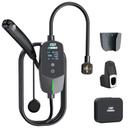
EVIQO NACS 48A Level 2 Charger

The native-NACS charger that finally makes the Tesla-plug tax disappear. It is the same hardware as EVIQO's J1772 unit — 48 amps, 25 ft of cable, IP66, ENERGY STAR — with a Tesla plug on the end and, unlike either of the other hardwired NACS picks here, a published 6-48A adjustable range. That last spec is the one that lets it fit a panel that cannot carry a 60-amp circuit, which is the constraint that actually stops most 48-amp installs.

Best overall for either car: native NACS, 48 amps
2
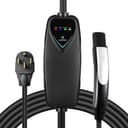
ChargePoint Home Flex NACS

ChargePoint Home Flex NACS

The Home Flex you already know, with a factory NACS cable. If you're a Tesla owner who wants ChargePoint's mature app and the same adjustable 16-50A amperage — instead of a plain no-app NACS unit — this is the way to get it. You pay a premium for exactly that.

Best when the panel can't spare 60 amps: adjustable 16–50 A
$549.00 · View on Amazon

Price as of November 12, 2026. #ad How we’re funded

3
Grizzl-E Ultimate 48A

Grizzl-E Ultimate 48A

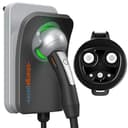
The Grizzl-E for people who wanted more than 40 amps. It keeps the metal UL Type 4 body and the published -22F floor that make the Classic Connect our exposed-install pick, then raises the ceiling to 48A and adds an OCPP radio on top of the Grizzl-E Connect app. Two catches: it is hardwire-only, so there is no unplugging it and taking it with you, and the SKU Amazon carries today is the NACS cable version, so a J1772 car needs an adapter permanently in the chain.

Best for a cold, fully exposed install
$349.99 · View on Amazon

$479.9927% off

Price as of November 12, 2026. #ad How we’re funded

4
EVDANCE 24A NEMA 14-30 Portable Charger, NACS (EV-ACS2405T)

EVDANCE 24A NEMA 14-30 Portable Charger, NACS (EV-ACS2405T)

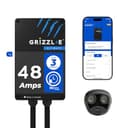
The same 24-amp, native NEMA 14-30 charger with a Tesla (NACS) connector on the end, which removes the adapter a Tesla owner would otherwise hang off a J1772 cord. The manual carries the same Intertek ETL mark and the same five current steps, and the handle has a button that opens a Tesla's charge-port door. It inherits the same one-year warranty and the same inconsistent paperwork, and it is the wrong buy for a household that also has a J1772 car.

Best with no new electrical work: 24 A on a dryer outlet
$279.99 · View on Amazon

Price as of November 12, 2026. #ad How we’re funded

5
Lectron Level 2 Tesla (NACS) Portable Charger, 40A

Lectron Level 2 Tesla (NACS) Portable Charger, 40A

The straightforward native-NACS answer for a Tesla owner who wants real Level 2 speed without hardwiring anything. Plug it into a NEMA 14-50, pull a full 40 amps, and unplug it when you move or travel. There is no app and no adjustable current — what you are buying is the Tesla plug on the end of a proper 40-amp portable charger, at a price well under a wall-mounted NACS station.

Best portable to keep in the car
$279.99 · View on Amazon

$319.9913% off

Price as of November 12, 2026. #ad How we’re funded

The picks in full

#1Best overall for either car: native NACS, 48 amps

EVIQO NACS 48A Level 2 Charger

The native-NACS charger that finally makes the Tesla-plug tax disappear. It is the same hardware as EVIQO's J1772 unit — 48 amps, 25 ft of cable, IP66, ENERGY STAR — with a Tesla plug on the end and, unlike either of the other hardwired NACS picks here, a published 6-48A adjustable range. That last spec is the one that lets it fit a panel that cannot carry a 60-amp circuit, which is the constraint that actually stops most 48-amp installs.

Strengths

  • Adjustable 6-48A — the only hardwired NACS pick here that can be dialed down to fit a smaller circuit
  • 25 ft cable plus a 40 in input lead, the longest reach of the NACS group
  • UL, ETL, FCC and ENERGY STAR listings at the bottom of the 48-amp NACS price band
  • Published -22°F to 122°F operating range on an IP66 / NEMA-4 body

Trade-offs

  • Hardwired only — a licensed electrician and a 60A circuit to use the full 48 amps
  • A smaller brand than ChargePoint, with a shorter track record behind the app
  • A J1772 car needs a NACS-to-J1772 adapter to use it at all
Max output48 A
Power11.5 kW
ConnectorNACS
InstallHardwired
Cable length25 ft
Warranty3 years
WiFi + appYes
CertificationsUL, ETL, FCC, ENERGY STAR

Our charging-speed math. At 48A (11.5 kW) and our 3.5 mi/kWh reference, roughly 40 miles of range an hour into a Tesla or other NACS car.

Build note. EVIQO publishes 240V, 48A (50A max) and 11.5 kW through a hardwired connection on a 60A-or-greater circuit, a native NACS connector, a 25 ft charging cable plus a 40 in input lead, an IP66 / NEMA-4 enclosure, a -22°F to 122°F operating range, a current range adjustable from 6 to 48A in the app, Wi-Fi with scheduling, energy and cost tracking and over-the-air firmware updates, UL/ETL/FCC listings, ENERGY STAR certification, and a 3-year standard warranty (4 years extended).

Specs read from the manufacturer spec sheet, on August 25, 2026. “Not published” means the brand does not state that figure.

#2Best when the panel can't spare 60 amps: adjustable 16–50 A

ChargePoint Home Flex NACS

The Home Flex you already know, with a factory NACS cable. If you're a Tesla owner who wants ChargePoint's mature app and the same adjustable 16-50A amperage — instead of a plain no-app NACS unit — this is the way to get it. You pay a premium for exactly that.

Strengths

  • Native NACS cable with ChargePoint's flexible 16-50A amperage
  • The most mature app of the NACS options here
  • 3-year warranty and an outdoor-rated NEMA 3R body

Trade-offs

  • The priciest NACS pick — you're paying for the app and the badge
  • 50A output needs a 60A circuit to use in full
Max output50 A
Power12 kW
ConnectorNACS
InstallHardwired
Cable length23 ft
Warranty3 years
WiFi + appYes
CertificationsUL/cUL listed, ENERGY STAR

Our charging-speed math. At its 50A ceiling (about 12 kW) and 3.5 mi/kWh, roughly 42 miles of range an hour into a Tesla.

Build note. The same Home Flex hardware with a factory NACS cable for Tesla and NACS EVs.

Specs read from the manufacturer spec sheet, on July 19, 2026. “Not published” means the brand does not state that figure.

#3Best for a cold, fully exposed install

Grizzl-E Ultimate 48A

The Grizzl-E for people who wanted more than 40 amps. It keeps the metal UL Type 4 body and the published -22F floor that make the Classic Connect our exposed-install pick, then raises the ceiling to 48A and adds an OCPP radio on top of the Grizzl-E Connect app. Two catches: it is hardwire-only, so there is no unplugging it and taking it with you, and the SKU Amazon carries today is the NACS cable version, so a J1772 car needs an adapter permanently in the chain.

Strengths

  • 48A / 11.5 kW in the same UL Type 4 metal case, published from -22F to 122F
  • Speaks OCPP as well as Grizzl-E's own app — rare on a home charger
  • 25 ft cable, and current can be dialed to 40, 32, 24 or 16 amps

Trade-offs

  • The live Amazon SKU is the NACS cable — a J1772 car needs an adapter to use it
  • Hardwire only — no plug, so it is not renter-friendly and not portable
  • 48A needs a 60-amp circuit, which is the install many older panels can't take
Max output48 A
Power11.5 kW
ConnectorNACS
InstallHardwired
Cable length25 ft
Warranty3 years
WiFi + appYes
CertificationsUL/cUL listed (file E510712); ENERGY STAR certified (GRS-077-W-HW-25J48-A-GB, qualified 2026-06-30)

Our charging-speed math. At 48A (11.5 kW) and 3.5 mi/kWh, roughly 40 miles of range an hour — about six more than the 40A Classic Connect, and it needs a 60-amp circuit to get there.

Build note. A metal case rated UL Type 4 indoor/outdoor, published for -30C to +50C (-22F to 122F), with 2.4 GHz Wi-Fi on an extended-range antenna, OCPP support and current selectable at 40, 32, 24 or 16 amps. Grizzl-E publishes the Ultimate 48A with a J1772 or a NACS output cable; the SKU Amazon lists today (GRS-077-W-HW-25N48-A-GB) is the NACS one, which is the connector our spec table records.

Specs read from the manufacturer spec sheet, on August 21, 2026. “Not published” means the brand does not state that figure.

#4Best with no new electrical work: 24 A on a dryer outlet

EVDANCE 24A NEMA 14-30 Portable Charger, NACS (EV-ACS2405T)

The same 24-amp, native NEMA 14-30 charger with a Tesla (NACS) connector on the end, which removes the adapter a Tesla owner would otherwise hang off a J1772 cord. The manual carries the same Intertek ETL mark and the same five current steps, and the handle has a button that opens a Tesla's charge-port door. It inherits the same one-year warranty and the same inconsistent paperwork, and it is the wrong buy for a household that also has a J1772 car.

Strengths

  • Native NEMA 14-30 plug and native NACS connector — no adapter at either end
  • 24-amp maximum matches a 30-amp circuit, with 10/12/16/20/24A steps below it
  • ETL listed (Intertek control number 5034626) to UL 2594 and UL 2231-2, per its user manual
  • A button on the handle opens a Tesla's charge-port door

Trade-offs

  • One-year warranty
  • A J1772 car cannot use it without a NACS-to-J1772 adapter — the wrong pick for a mixed household
  • Same documentation conflicts as the J1772 version, including store-page copy that tells Tesla owners they need a J1772 adapter
  • The 25 ft is total length, about 21.9 ft of it between control box and car
Max output24 A
Power5.76 kW
ConnectorNACS
InstallNEMA 14-30 plug (four-prong dryer outlet)
Cable length25 ft
Warranty1 year
WiFi + appNot published
CertificationsETL listed (Intertek 5034626) to UL 2594, UL 2231-2 and CSA C22.2

Our charging-speed math. At 24A and 240V (5.76 kW) and our 3.5 miles-per-kWh reference, roughly 20 miles of range an hour into a Tesla or other NACS car, or about 200 miles across a ten-hour overnight window.

Build note. From EVDANCE's user manual for model EV-ACS2405T: 24A maximum at 240V (5.76 kW); an SAE J3400 / NACS connector; current chosen with the A button before plugging in, in steps of 10, 12, 16, 20 or 24A; a display of current, voltage, power, kWh, session time and temperature; a 1-12 hour delayed start; a Type 4 enclosure; a -22°F to 122°F operating range; 25 ft total length; certification to UL 2231-2, UL 2594 and CSA C22.2 under an Intertek ETL mark (control number 5034626); and a 12-month warranty. The manual cover describes it as a non-OEM replacement for Tesla. EVDANCE's product page for this SKU lists a "6-32A" range and a "Dedicated 20A Circuit", and its description tells buyers a Tesla needs a J1772 adapter — text evidently carried over from the J1772 version. We record the manual. The Amazon listing does not state an app, so Wi-Fi is recorded as not published.

Specs read from the manufacturer spec sheet, on September 15, 2026. “Not published” means the brand does not state that figure.

#5Best portable to keep in the car

Lectron Level 2 Tesla (NACS) Portable Charger, 40A

The straightforward native-NACS answer for a Tesla owner who wants real Level 2 speed without hardwiring anything. Plug it into a NEMA 14-50, pull a full 40 amps, and unplug it when you move or travel. There is no app and no adjustable current — what you are buying is the Tesla plug on the end of a proper 40-amp portable charger, at a price well under a wall-mounted NACS station.

Strengths

  • Native NACS connector — nothing to seat, nothing to lose, no adapter
  • A real 40A / 9.6 kW from an ordinary NEMA 14-50 outlet
  • IP65 control box and IP55 handle, rated by Lectron for outdoor use
  • Plug-in and portable, so it moves with you and travels

Trade-offs

  • No Wi-Fi or app on this SKU — the smart version is a separate, dearer listing
  • No adjustable current, so it cannot be trimmed down for an unverified outlet
  • A J1772 car needs a NACS-to-J1772 adapter — buy a J1772 charger instead
  • Lectron does not publish a warranty term for this model
Max output40 A
Power9.6 kW
ConnectorNACS
InstallNEMA 14-50 plug
Cable length16 ft
WarrantyNot published
WiFi + appNo
CertificationsETL listed (UL 2594 / UL 2231), UL 2251 handle, FCC

Our charging-speed math. At 40A on 240V (9.6 kW) and our 3.5 mi/kWh reference, roughly 34 miles of range an hour. Lectron's own figure is up to 36 miles an hour, which assumes a slightly more efficient car than our reference.

Build note. Lectron publishes 240V, 40 A and 9.6 kW through a NEMA 14-50 plug on a 16 ft cable, a native Tesla (NACS) connector, an IP65-rated control box with an IP55-rated handle tested to 10,000-plus insertions, protection against overvoltage, overcurrent and short circuits, and ETL/FCC certification against UL 2594 and UL 2231 with a UL 2251 handle. This SKU has no Wi-Fi or app.

Specs read from the manufacturer spec sheet, on August 21, 2026. “Not published” means the brand does not state that figure.

What the federal record shows, across both cars

FuelEconomy.gov publishes, for every electric vehicle sold in the US, how long a complete charge takes on 240 volts and how many kilowatt-hours the car consumes per 100 miles. Multiply the consumption figure by the range and you get the energy a full charge draws from the wall; divide by the charge time and you get the average power the car pulled across the session.

The right-hand column is ours, not EPA’s and not Kia’s. It is an average across a complete charge rather than a peak — a car tapers near the top of the pack, so its peak sits above its average — and because EPA measures consumption at the wall it already includes everything lost in the charger, the cable and the car’s own AC-to-DC conversion.

2026 trimEPA 240V charge timeEPA kWh/100 miEPA rangeDerived average power at the wall
EV6 Standard Range RWD6.2 hr29.2237 mi~11.2 kW
EV6 Long Range RWD9.0 hr29.6319 mi~10.5 kW
EV6 Long Range AWD (19 in)8.8 hr31.6295 mi~10.6 kW
EV6 Long Range AWD (20 in)8.9 hr34.6270 mi~10.5 kW
EV6 AWD GT8.6 hr41.0231 mi~11.0 kW
EV9 Standard Range RWD8.1 hr38230 mi~10.8 kW
EV9 Long Range RWD10.7 hr38305 mi~10.8 kW
EV9 Long Range AWD10.7 hr40283 mi~10.6 kW
EV9 Long Range AWD GT-Line10.5 hr41280 mi~10.9 kW
EV9 GT10.8 hr43260 mi~10.4 kW

Ten trims, two body styles, a 0.8 kW spread. That is a tighter band than we have found on any other vehicle family on this site, and it has a practical consequence: a 48-amp charger supplies 11.5 kW, which is above every figure in that table.Buy 48 amps and the wall is never the limiting factor on either car. Nothing above 48 amps has anywhere to go — a 50-amp charger needs a 70-amp circuit instead of 60 and delivers the same rate, and an 80-amp charger needs a 100-amp circuit to deliver the same rate again.

What differs between the EV6 and the EV9 is the clock, not the rate

The EV6’s EPA charge times run from 6.2 to 9.0 hours; the EV9’s from 8.1 to 10.8. Same fill rate, bigger tank. That matters in exactly one place: how much the cheaper 40-amp install costs you.

A 40-amp charger supplies 9.6 kW, which sits inside the band above rather than over it. Our arithmetic on EPA’s own figures:

  • EV6 Long Range RWD. A complete charge draws roughly 94 kWh at the wall. EPA measures it at 9.0 hours; held to 9.6 kW it would take about 9 hours 50 minutes. Roughly 50 minutes of difference.
  • EV9 Long Range RWD. Roughly 116 kWh at the wall. EPA measures it at 10.7 hours; held to 9.6 kW, about 12 hours 5 minutes. Roughly an hour and twenty minutes.

In miles of range per hour of charging: an EV6 Long Range puts back roughly 35 to 38 miles an hour at the rate the records show, and an EV9 Long Range roughly 28 — the EV9 is simply a heavier, less efficient vehicle, which is a range story rather than a charging one.

So the decision is mostly about installation. A 48-amp charger is hardwired on a 60-amp circuit, because the code sizes a continuous load at 125% of the charger’s output. A 40-amp charger can plug into a NEMA 14-50 receptacle on a 50-amp circuit, which many garages already have. Our 40A vs 48A comparison runs the full trade-off, and hardwired vs plug-in covers the install side.

The one number Kia does publish, and what it implies

Buried in a footnote on Kia’s own home-charging accessory is the closest thing Kia gives to a home-charging requirement: “Home installation: 240V charging requires purchase of a Level 2 charger and may not be compatible with all devices and homes. Fastest charge requires activation with a ChargePoint account, plus a 50 A circuit and hardwired installation.”

A 50-amp circuit carrying a continuous load is limited to 40 amps by the same 80% rule. So Kia’s own “fastest charge” setup is a 40-amp charger. That is an inference on our part rather than a Kia statement about the car, and we are flagging it as one — but it is a useful reality check in both directions. It tells you 40 amps is a perfectly respectable answer that the manufacturer itself endorses. And it tells you that going to 48 amps, which is what we recommend, means going one step past what Kia will sell you — worth about 50 minutes on an EV6 and about 80 on an EV9.

Two more things from Kia’s own pages worth knowing before you buy anything. Kia describes its accessory charger as “available with J1772 or NACS connectors and backed by a 3-year limited warranty”, so the NACS version exists if you want the matched part. And Kia lists a “Dual Level 120V / 240V Portable Charging Cable” among the EV9’s features — check whether yours came with one before you buy a portable, because a dual-level cable on a 240-volt outlet may already cover the occasional-use case that pick 5 is for.

The connector, and the one case where it is not simple

Kia states the port plainly for both current cars: NACS, standard, and on the EV6 specifically on the driver’s side rear corner. So picks 1 through 5 here are all NACS units and you can buy with confidence.

The exception is an earlier car. Both nameplates were sold with the CCS1 inlet before the switch, and Kia’s own pages speak only for the current model year, so we are not going to publish a cut-over date we cannot source from Kia. The reliable check takes ten seconds: go look at your charge port. A single small oval socket is NACS. A round socket with a second two-pin section beneath it is CCS1, and its upper round half is the J1772 AC connector — in which case buy the J1772 equivalents instead, which are the larger and generally cheaper half of the market. Our 48-amp roundup covers that side, and J1772 vs NACS explains the transition and which adapters work at a home charger rather than only on DC.

If you own a working J1772 charger already and have just taken delivery of a NACS Kia, the sensible move is an 80-amp J1772-to-NACS AC adapter rather than a new wall unit. It costs a small fraction of a charger.

Where the car parks, and the cable that has to reach it

The EV6’s port is on the driver’s side rear corner, which Kia points out as a convenience at public chargers — and which, at home, decides whether a wall unit at the front of the garage reaches at all. The EV9 is a three-row SUV just under 17 feet long, so the same problem is larger.

Four of the five picks here carry 23 ft or 25 ft of cable. The planning rule we use is to assume about 60% of the rated lengthis usable once the cable routes along a wall, around a corner and down to the port rather than flying straight through the air — so treat a 25 ft cable as a 15-foot reach. Measure the real route with a tape before you choose a mounting spot, and read where to mount an EV charger first: mounting beside the parking space rather than in front of the bumper buys more usable reach than any extra cable. Our long-cable roundup ranks the field on that spec alone.

If it parks outside.Pick 3 is here for that: a cast-metal UL Type 4 case with a published operating range down to −22°F, which is the most specific cold-weather promise any manufacturer in this category puts in writing. Most brands publish an enclosure rating and stop. See best outdoor chargers for the full field, and cold-weather EV charging for what actually changes at the car when it is freezing.

What we did not rank, and why

Kia’s own accessory charger, and the Qmerit install. Kia’s EV6 page says it “has teamed up with Qmerit to offer a convenient home charger installation service”, and the matched charger is sold with a 3-year warranty in either connector. It is not ranked here because every buy link on this site resolves to a retailer we can show a live price for, and this is dealer-and-installer channel. Get the quote anyway and compare it against the hardware prices above plus an electrician — a bundled install is sometimes the better deal, and we would rather you check than assume.

Any onboard-charger rating for either car.Kia does not publish one that we could find, and we are not going to repeat a third-party figure as though it were the manufacturer’s. Every power number on this page is either EPA’s measurement or our labeled arithmetic on top of it.

Any model-year connector cut-over. Same reason. Looking at your own port is more reliable than a date we cannot source.

Chargers above 48 amps. Excluded on the merits, not on price. The table above is the argument.

The verdict

Either car, new electrical work: the EVIQO NACS 48A. 48 amps is above every figure in the EPA table for both nameplates, the native NACS plug means nothing hangs off the car overnight, and the 25 ft cable plus IP66 / NEMA 4 enclosure and ENERGY STAR certification cover an outdoor install and most rebate paperwork. Hardwired on a 60-amp circuit.

Panel already full: the ChargePoint Home Flex NACS. Six published current settings from 16 to 50 amps mean it goes in at whatever circuit you can get today and turns up later. You pay a brand premium for the flexibility and for the best app in the category.

Cold and fully exposed: the Grizzl-E Ultimate 48A.Metal case, UL Type 4, published from −22°F to 122°F, OCPP as well as the maker’s own app. Two honest catches: hardwire-only, and Grizzl-E publishes no ENERGY STAR listing for this model, so check your rebate terms first.

No electrician, and a dryer outlet in the garage: the EVDANCE 24A NACS. 24 amps on a NEMA 14-30 is about 5.8 kW, which on an EV9 Long Range is a roughly 20-hour full charge — so this is not the right primary charger for a big pack you run to empty. It is the right answer for an EV6 driven 40 miles a day by someone who would otherwise be on a 120-volt cord, and it needs no new circuit at all. It is also the only pick here that names its testing lab in a user manual rather than only on a listing, which is why it is here instead of the cheaper no-name alternatives.

And a portable for the trunk: the Lectron 40A NACS.For campgrounds, in-laws’ driveways and the NEMA 14-50 at a rental — check first whether your EV9 already came with Kia’s dual-level cable, because if it did, this is a duplicate purchase.
Frequently asked questions

What size home charger does a Kia EV6 or EV9 need?

48 amps covers both. Kia publishes no onboard-charger rating, so we derived the ceiling from the DOE/EPA vehicle records: across all ten 2026 trims of both cars, the average power at the wall over a complete charge lands between about 10.4 and 11.2 kW. A 48-amp charger supplies 11.5 kW, which is above every one of them. A 50-amp or 80-amp charger delivers the same rate while needing a bigger circuit.

Why is one page covering both the EV6 and the EV9?

Because the federal records say the home-charging decision is identical. Ten trims across a mid-size crossover and a three-row SUV all land inside a 0.8 kW band at the wall — they fill at the same rate and simply have different amounts to fill. What differs is the clock: EPA's 240-volt charge times run 6.2 to 9.0 hours for the EV6 and 8.1 to 10.8 for the EV9.

How long does it take to charge a Kia EV9 at home?

EPA publishes a complete 240-volt charge time for each 2026 trim: 8.1 hours for the Standard Range RWD, 10.7 for the Long Range RWD and Long Range AWD, 10.5 for the Long Range AWD GT-Line and 10.8 for the GT. Those are empty-to-full figures measured at the wall, so they include charging losses. An overnight charge from 40% rather than 0% is a fraction of that.

Is a 40-amp charger enough for an EV6 or EV9?

Yes for most people, and Kia itself effectively endorses it — a footnote on Kia's own accessory charger says the fastest charge needs a 50 A circuit and hardwired installation, and a 50-amp circuit is limited to 40 amps continuous. Our arithmetic on EPA's figures puts the cost of 40 amps at roughly 50 minutes on an EV6 Long Range and roughly an hour and twenty on an EV9 Long Range, across a complete empty-to-full charge.

Does the Kia EV6 or EV9 have a NACS port?

On the current cars, yes, and Kia says so on its own pages: the EV6 has a standard NACS charging port on the driver's side rear corner, and the EV9 a built-in NACS charge port with access to more than 30,000 Tesla Superchargers. Both nameplates were sold earlier with a CCS1 inlet, and we do not publish a cut-over date Kia does not publish. Go look at your port: one small oval socket is NACS, a round socket with a two-pin section beneath it is CCS1.

Can I use a J1772 charger with a NACS Kia?

Yes, with a J1772-to-NACS AC adapter, which costs a small fraction of a charger — the right answer if you already own a working J1772 wall unit. Note it is a different part from the NACS-to-CCS DC adapters sold for road trips, which do not work at a home charger.

Does the EV9's 800-volt architecture need a special home charger?

No. The 800-volt architecture is about DC fast charging, where Kia publishes 10% to 80% in as little as 24 minutes on a 350 kW charger. At home the car takes 240-volt AC and converts it onboard, so a standard Level 2 charger is exactly right and the records show the car drawing around 10.4 to 10.9 kW while it does.

What circuit does a Kia EV6 or EV9 charger need?

EV charging is a continuous load, so the circuit is sized at 125% of the charger's output. A 48-amp hardwired charger needs a 60-amp circuit. A 40-amp plug-in charger on a NEMA 14-50 receptacle needs a 50-amp circuit — which is what Kia's own accessory footnote describes. A 24-amp charger on a NEMA 14-30 dryer outlet needs no new circuit at all, if you can share the outlet.

Sources

  • FuelEconomy.gov — Kia EV6 and EV9 (U.S. DOE / EPA vehicle records) — The federal fuel-economy records for the 2026 EV6 and EV9, queried through the DOE/EPA vehicle web service on 2026-11-01. EV6: Standard Range RWD 6.2 h / 29.2 kWh per 100 mi / 237 mi; Long Range RWD 9.0 h / 29.6 / 319; Long Range AWD 19-inch 8.8 h / 31.6 / 295; Long Range AWD 20-inch 8.9 h / 34.6 / 270; AWD GT 8.6 h / 41.0 / 231. EV9: Standard Range RWD 8.1 h / 38 / 230; Long Range RWD 10.7 h / 38 / 305; Long Range AWD 10.7 h / 40 / 283; Long Range AWD GT-Line 10.5 h / 41 / 280; GT 10.8 h / 43 / 260. EPA publishes a 240-volt full-charge time and a kWh-per-100-mile figure for each trim, measured at the wall and therefore inclusive of charging losses (accessed November 1, 2026)
  • Kia USA — 2026 EV6 vehicle page (power, range and charging features) — The manufacturer's own US page, fetched 2026-11-01. Kia publishes the CONNECTOR plainly: a feature badge reading "North American Charging System (NACS) Port" and, under Power & Range, "Standard NACS charging port located on driver's side rear corner for easy access at charging stations" alongside "EPA-estimated all-electric range of 319 mi." Kia publishes NO onboard-charger kW or amp figure and NO 240-volt charge time for this car; its only charge-time figure is DC ("Can charge from 10%-80% w/ DC Fast Chargers in 20 min", footnoted to an 800V fast charger at about 72 degrees Fahrenheit). Kia's own home-charging accessory copy reads "a powerful Level 2 home charger — available with J1772 or NACS connectors and backed by a 3-year limited warranty". The page is JS-rendered; figures were read from the raw HTML (accessed November 1, 2026)
  • Kia USA — 2026 EV9 vehicle page (power, range and charging features) — The manufacturer's own US page, fetched 2026-11-01. On the connector: a feature badge reading "NACS Charging Port" plus "800V Charging Architecture", and under available features "Built-in North American Charging System (NACS) charge port, providing access to more than 30,000 Tesla Superchargers". A "Dual Level 120V / 240V Portable Charging Cable" is listed among the vehicle's features. On DC: "The EV9's innovative charging system offers ultra-fast DC fast charger compatibility and features a built-in NACS charge port. Using a 350kW DC fast charger, you can charge from 10-80% in as little as 24 mins." Kia publishes NO onboard-charger kW or amp figure and NO 240-volt charge time. The nearest thing to a home-charging requirement is a footnote on Kia's own accessory charger: "Home installation: 240V charging requires purchase of a Level 2 charger and may not be compatible with all devices and homes. Fastest charge requires activation with a ChargePoint account, plus a 50 A circuit and hardwired installation" — which describes Kia's accessory, not the car's ceiling. The page is JS-rendered; figures were read from the raw HTML (accessed November 1, 2026)
  • EVIQO — NACS 48 A hardwired home EV charger for Tesla product page — Manufacturer page, fetched 2026-10-05. The current control is published twice and the two statements differ: a banner reads “Easily set power (6-50A) for your home's capacity”, while the page's own FAQ is specific — “two levels of control. Hardware dip switch sets max amperage (16A / 32A / 40A / 48A). Then fine-tune with the app slider from 6A to your max in 1A increments.” We cite the FAQ. Also published: a native NACS connector, a 25 ft 4th-generation cable with a fluorescent holster, UL / ETL / FCC / ENERGY STAR certification, an IP66 / NEMA-4 enclosure rated -22 °F to 122 °F, 2.4 GHz Wi-Fi required for app features, up to 3 schedules with live energy and cost tracking and automatic over-the-air firmware, a 3-year standard warranty with a 4-year extended option, and a $480.99 direct price (from $599.00) on the date fetched. The page also carries third-party award and score claims we have not independently verified and do not repeat (accessed October 5, 2026)
  • ChargePoint — Home Flex datasheet — Manufacturer datasheet: output adjustable in the app to 16, 24, 32, 40, 48 or 50 A (up to 12 kW); the dedicated dual-pole breaker must be rated for 125% of the maximum load (its example: a 50 A breaker for 40 A output) (accessed September 18, 2026)
  • United Chargers — Grizzl-E Classic Connect product page — Manufacturer page, fetched 2026-10-05: a 40 A plug-in Level 2 EVSE, “Max power 40A 10kW”, a NEMA 14-50 plug, adjustable current stated as “40A - 16A”, a 25 ft (7.6 m) output cable, UL Type 4 indoor/outdoor protection, certification “UL/cUL E510712”, Wi-Fi (2.4 GHz) with the Grizzl-E Connect mobile application, an operating temperature of -30 °C to +50 °C (-22 °F to 122 °F) and a 10.25 x 6.25 x 3.75 in enclosure. Available with a J1772 or a NACS output cable, and the warranty is a purchase option on the page — 3 year or 5 year. Listed at $349.99 direct on the date fetched. The page also advertises Demand/Response utility-program participation through the app (accessed October 5, 2026)
  • EVDANCE — EV-ACS2405U portable 24 A NEMA 14-30 charger user manual — Manufacturer manual for the exact model we link, read 2026-09-15 and re-fetched live 2026-10-05 (HTTP 200): 24 A maximum at 240 V (5.76 kW); current chosen before the connector is plugged into the car by holding the A button through 10, 12, 16, 20 or 24 A; a 1.77 in display of current, voltage, power, kWh, session time and temperature; a 1-12 hour delayed start; a Type 4 enclosure; a -22 °F to 122 °F operating range; 25 ft total length; an SAE J1772 connector; certification to UL 2594, UL 2231-2 and CSA C22.2 under an Intertek ETL mark (control number 5034626); and a 12-month warranty. Recorded for the conflicts as well as the specs: the manual states a “32A breaker” where EVDANCE's own store page says a “Dedicated 20A Circuit” and a “6-32A” range, and the manual pictures Wi-Fi and Bluetooth icons the Amazon listing we link does not claim (accessed October 5, 2026)
  • NFPA — Using the Latest NEC for EV Charger Installations — NFPA on NEC (NFPA 70) Article 625: EV charging is a continuous load, so circuits are sized to 125% of load (the 80% rule) (accessed July 19, 2026)
  • ENERGY STAR — Electric Vehicle Chargers — ENERGY STAR on EVSE efficiency: certified chargers use about 40% less energy in standby than non-certified units (accessed July 19, 2026)
  • SAE International — J3400 North American Charging System (NACS) — The SAE J3400 / NACS standard (the Tesla-derived connector) now being adopted industry-wide (accessed July 19, 2026)
  • SAE International — J1772 Conductive Charge Coupler — The SAE J1772 connector standard for AC Level 1 and Level 2 charging in North America (accessed July 19, 2026)
  • U.S. DOE Alternative Fuels Data Center — Electric Vehicle Charging Stations — US DOE on charging levels: Level 1 (~1.9 kW, ~5 mi/hr), Level 2 (2.9-19.2 kW, ~7.2 kW typical residential, ~25 mi/hr), and DC fast charging (accessed July 19, 2026)

Keep reading