The real decision: which circuit are you plugging into?
Once the connector is settled, every remaining choice is electrical. A J1772 charger cannot draw more than the circuit it is attached to allows, and EV charging counts as a continuous load, so the usable current is 80 percent of the circuit rating. That single rule produces the whole table below, and it is why the order of these picks follows the circuit rather than the price.
| Your circuit | Max continuous current | Power | Range per hour (our math) | The J1772 pick |
|---|
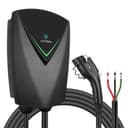
| Hardwired 60 A dedicated circuit | 48 A | 11.5 kW | ~40 miles | EVIQO 48A, or Lectron Nexus J1772 for no app |
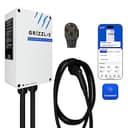
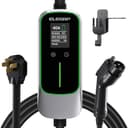
| NEMA 14-50 outlet (50 A, 240 V) | 40 A | 9.6 kW | ~34 miles | Grizzl-E Classic Connect, ELEGRP 40A |
| NEMA 14-30, four-prong dryer (30 A, 240 V) | 24 A | 5.76 kW | ~20 miles | EVDANCE 24A (native 14-30 plug) |
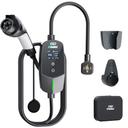
| NEMA 5-15, ordinary household socket (15 A, 120 V) | 12–15 A | 1.4–1.8 kW | ~5–6 miles | Lectron Level 1 15A |
Two things that table makes obvious. First, 48 amps is only available hardwired: a NEMA 14-50 is a 50-amp receptacle, so any charger plugged into one is capped at 40 amps by code rather than by cost. Second, the step from 24 amps to 48 is a step from about 200 to about 400 miles across a ten-hour overnight — and almost nobody drives either number in a day, which is why the cheaper circuit is so often the right answer. Our how many amps do I need guide walks through sizing it from your own mileage, and EV charger breaker size derives the breaker for each case.
What we ranked on, after the circuit
A safety listing we can point to.Every pick here publishes a listing from a nationally recognized laboratory against ANSI/UL 2594: ETL listings for the Lectron units, the ELEGRP and the EVDANCE — the last of those with Intertek control number 5034626 printed in its manual — and a UL file number, E510712, for the Grizzl-E. A named file or control number is a meaningfully stronger claim than the words “UL listed” on a box.
Whether the current can be dialed down.The EVIQO publishes 6 to 48 amps in one-amp app steps plus a hardware DIP cap at 16, 32, 40 or 48. The Grizzl-E adjusts 40 down to 16, the ELEGRP has five on-unit levels, the EVDANCE five steps to 24. The Lectron Nexus publishes none, which is why it needs the full 60-amp circuit to be used at all — the single most important caveat on this page.
ENERGY STAR, because a rebate may require it.The EVIQO and the Lectron Nexus are certified; the Nexus unusually appears on the certifier’s own list twice, as a networked and a non-networked model, so the no-radio build has its own paper trail. Grizzl-E publishes its UL file and no ENERGY STAR certification for the Classic Connect, and no ELEGRP or EVDANCE product appears on the certified list at all. If a utility rebate is part of your budget, that is a hard constraint and not a preference — see best ENERGY STAR chargers.
Then reach, enclosure and warranty.Four of the six picks publish 25 feet of cable (the Nexus 23, the Lectron Level 1 16). Enclosure ratings run from IP66 / NEMA 4 on the EVIQO and IP66 on the Nexus through UL Type 4 cast aluminum on the Grizzl-E to IP67 for the ELEGRP station — with the caveat that ELEGRP publishes IP54 for that same product’s connector, so station and connector ratings are not interchangeable. Warranty runs from one year (EVDANCE) to three, with Grizzl-E uniquely selling a three-year or five-year option at checkout.
A J1772 charger is the more flexible buy, even for a Tesla
This is the part worth knowing before you spend more on a native-NACS unit. A J1772 charger plus a J1772-to-NACS adapter will charge a Tesla; adapters for that direction cost around the price of a tank of fuel, and our registry carries one rated to 80 amps. A native-NACS charger, by contrast, cannot serve a J1772 car without an adapter in the other direction, and those are both dearer and less common.
So for a mixed-car household — one Tesla, one of anything else, which is an increasingly ordinary driveway — the cheapest correct answer is a J1772 charger and one adapter, not two chargers. The one case where native NACS genuinely wins is a single-Tesla household that wants nothing hanging off the connector: an adapter is one more thing to seat correctly, lose, or leave at the far end of the cable. Our J1772-to-Tesla adapter picks cover that hardware, and best NACS home chargersis this page’s mirror image for a car with the Tesla port.
How to choose between the picks
You are having an electrician out anyway:the EVIQO 48A. It is the most charger in this list — 48 amps, ENERGY STAR, IP66 / NEMA 4 rated −22°F to 122°F, the longest total reach here at 25 feet plus a 40-inch input lead — and its published 6-to-48-amp range means a tight panel does not disqualify it. Honest cons: hardwired only, so it stays with the house, and a shorter brand track record than ChargePoint or Emporia.
You already have a NEMA 14-50 outlet:the Grizzl-E Classic Connect. A cast-aluminum UL Type 4 case published from −22°F to 122°F, 25 feet of cable, Wi-Fi with an app, current adjustable 40 down to 16, and the longest warranty option in this registry at three or five years. Cons: 40 amps is its ceiling because of the plug, scheduling now needs an account, and Grizzl-E publishes no ENERGY STAR listing for this model.
You want the least money for a real 40 amps:the ELEGRP 40A, our budget pick. Five current levels, IP67 station, a stated −21°F floor, 25-foot cable, carrying case and ETL certification. Cons: no Wi-Fi or app at all (a 1-to-12-hour delay timer instead), no ENERGY STAR listing, and 40 amps is the plug-in ceiling. More of this bracket on our best chargers under $300 page.
You want nothing to log into:the Lectron Nexus J1772. A full 48 amps with no Wi-Fi, no account and no firmware, ETL listed to UL 2594 / UL 2231 / UL 2251, IP66, and on the ENERGY STAR certified list under its own model number with network capability recorded as “No”. Cons, and they are real: no published adjustable current, so it needs a 60-amp circuit to be used at all; no scheduling of its own, so the car has to do it; and Lectron publishes no operating-temperature range, which is the spec a cold-climate install turns on.
Your only 240-volt outlet is the dryer:the EVDANCE 24A. Its plug is a native NEMA 14-30, so nothing is adapted, and its 24-amp maximum is exactly what a 30-amp circuit allows — there is no setting that can ask that circuit for more. Cons: a one-year warranty, documentation that contradicts itself on the circuit it wants, and 25 feet that is total length rather than cable reach. See also our NEMA 14-30 picks and the dryer-circuit splitter guide if the outlet is still in use for laundry.
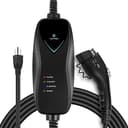
You cannot install anything:the Lectron Level 1 15A, into any household socket. Fifteen amps at 120 volts is about 1.8 kW and roughly 6 miles of range an hour — genuinely slow, and the right answer anyway for a plug-in hybrid, a short commute or a rented space. Cons: no app, no scheduling, and Lectron publishes no warranty term. Our do you need Level 2 guide is the honest version of that question.