Plug & Range

Best Home EV Chargers for the Ford Mustang Mach-E

Three different onboard-charger ratings for this car circulate online and Ford publishes none of them. So we skipped the rumor and used the one measurement the federal government does publish, for every trim, every year.

By Stephen V.Last updated How we pick

The EVIQO 48A is our pick for a Mustang Mach-E: 48 amps is above anything the car has ever been measured drawing, the 25 ft cable reaches a port on the far corner of the car, and the IP66 / NEMA 4 case and ENERGY STAR certification cover an outdoor install and most utility rebate paperwork. If your panel cannot spare a 60-amp circuit, buy the ChargePoint Home Flex instead and set it to what you can actually get.

Here is the problem this page exists to solve. Search for the Mach-E’s onboard charger and you will be told 10.5 kW, or 11 kW, or 11.5 kW, depending on which guide you land on. Those are three different answers to a question with one correct one, and every one of them is a third-party restatement.

Ford does not publish the figure.We checked ford.com’s Mustang Mach-E model and specs page, which publishes a “Complimentary Home Charger” line and the Power Promise but no kW, no amps, no charge time and no connector type. We checked Ford’s electric-vehicle home-charging support pages, which carry exactly that table of onboard-charger capabilities — for the F-150 Lightning, by model year, in detail — and carry nothing equivalent for the Mach-E. So rather than repeat a number we cannot trace to Ford, we used the one measurement that does exist for every trim of every model year: the DOE/EPA vehicle record.

How this is funded:we earn a commission if you buy through our links, at no extra cost to you. It never changes which product we recommend, and we’ll tell you when we’d skip one. Full disclosure.

Quick picks

Ranked on published specs, charging speed, electrical fit and value. Select a row to jump to the full write-up. We have not bench-tested these chargers — here is exactly what we do instead.

#ProductBest forPrice
1

EVIQO 48A Level 2 Charger

A lot of charger for the money. You get 48 amps, Wi-Fi scheduling, ENERGY STAR, and the longest usable reach in this group thanks to a 25 ft cable plus a 40-inch input lead. If Emporia is sold out or you want maximum cable, this is the value alternative to have in mind.

Best overall: 48 amps, 25 ft cable, ENERGY STAR
2
ChargePoint Home Flex

ChargePoint Home Flex

If you'd rather buy a charger once and be done, this is the safe call. You set the current in the app anywhere from 16 to 50 amps, so it fits whatever your panel can spare today and still has room to grow if you upgrade the circuit later. The app is the most polished of the bunch and the warranty is long.

Best when the panel can't spare 60 amps: adjustable 16–50 A
$549.00 · View on Amazon

Price as of November 12, 2026. #ad How we’re funded

3
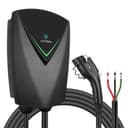
Lectron Nexus J1772 48A (Hardwired)

Lectron Nexus J1772 48A (Hardwired)

The fastest charger we can find that has nothing to log into. It is a full 48 amps, ETL-listed to UL 2594, IP66 for an outside wall, and — unusually for a charger with no app — it is on the ENERGY STAR certified list under its own model number, which is the kind of proof a rebate administrator will actually accept. The price of that simplicity is real: no published way to dial the current down, so it wants a 60-amp circuit and nothing less, and no scheduling of its own, so your car has to do that part.

Best 48 amps with no app and no account
$449.99 · View on Amazon

Price as of November 12, 2026. #ad How we’re funded

4
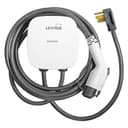
Leviton EV Series Smart Home Charger (EV40P)

Leviton EV Series Smart Home Charger (EV40P)

The one charger here from a brand your electrician already stocks. Forty amps, ENERGY STAR, a NEMA 3R shell, a 25-foot cable and a certification list longer than anything else in this registry — plus the My Leviton app, which is the same app that runs Leviton's load centers and switches. You pay a real premium for that, and what it buys is a company that will still be answering the phone in ten years.

Best plug-in: no electrician on install day
$499.85 · View on Amazon

Price as of November 12, 2026. #ad How we’re funded

5
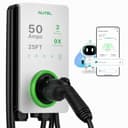
Autel MaxiCharger Home

Autel MaxiCharger Home

Built for the driveway that takes the full brunt of the weather. The NEMA 4X shell is rated to keep charging through brutal cold and heat, it delivers a full 50 amps, and the app is genuinely capable. If your charger will live fully exposed, this is the one to shortlist.

Best enclosure for a charger that lives outdoors
$499.00 · View on Amazon

$568.0012% off

Price as of November 12, 2026. #ad How we’re funded

The picks in full

#1Best overall: 48 amps, 25 ft cable, ENERGY STAR

EVIQO 48A Level 2 Charger

A lot of charger for the money. You get 48 amps, Wi-Fi scheduling, ENERGY STAR, and the longest usable reach in this group thanks to a 25 ft cable plus a 40-inch input lead. If Emporia is sold out or you want maximum cable, this is the value alternative to have in mind.

Strengths

  • 48A output with Wi-Fi scheduling at a value price
  • 25 ft charging cable plus a 40 in input lead — excellent reach
  • UL, ETL, FCC and ENERGY STAR listings

Trade-offs

  • The hardwired version needs a 60A circuit and an electrician
  • A smaller brand with a shorter track record than ChargePoint or Wallbox
Max output48 A
Power11.5 kW
ConnectorJ1772
InstallHardwired
Cable length25 ft
Warranty3 years
WiFi + appYes
CertificationsUL, ETL, FCC, ENERGY STAR

Our charging-speed math. At 48A (11.5 kW) and 3.5 mi/kWh, about 40 miles of range an hour.

Build note. Re-read from EVIQO's own page on 2026-10-04, which publishes more than the spec table above implies. The 25 ft charging cable plus a 40 in input cable is still among the longest total reach in class, and the current is adjustable two ways: 6-48 A in 1-amp increments from the app, and a hardware DIP switch that caps the maximum at 16, 32, 40 or 48 A. The same DIP block can raise the output to 50 A, which EVIQO says requires a 70 A circuit; the 48 A default needs a 60 A one. The enclosure is IP66 / NEMA-4 rated -22°F to 122°F, the warranty is 3 years and extendable to 4, and the app does remote start/stop, consumption and cost tracking, reminders, up to three schedules and over-the-air updates. No load management or load balancing is described anywhere on the page.

Specs read from the manufacturer spec sheet, on October 4, 2026. “Not published” means the brand does not state that figure.

#2Best when the panel can't spare 60 amps: adjustable 16–50 A

ChargePoint Home Flex

If you'd rather buy a charger once and be done, this is the safe call. You set the current in the app anywhere from 16 to 50 amps, so it fits whatever your panel can spare today and still has room to grow if you upgrade the circuit later. The app is the most polished of the bunch and the warranty is long.

Strengths

  • Adjustable 16-50A fits a modest circuit now and a bigger one later
  • The most complete app here: scheduling, reminders and usage history
  • 3-year warranty and a generous 23 ft cable

Trade-offs

  • You pay a brand premium over value 48A units
  • Using the full 50A needs a 70A circuit most older panels can't spare
Max output50 A
Power12 kW
ConnectorJ1772
InstallHardwired (a plug-in NEMA 14-50 SKU is also sold)
Cable length23 ft
Warranty3 years
WiFi + appYes
CertificationsUL/cUL listed, ENERGY STAR

Our charging-speed math. Run it at the full 50 amps (about 12 kW) and, at a middle-of-the-road 3.5 miles per kWh, it puts back roughly 42 miles of range an hour. Turn it down to 40A to live on a 50A circuit and you're at about 34.

Build note. The headline feature is app-adjustable amperage — anywhere from 16A up to 50A, in software.

Specs read from the manufacturer spec sheet, on July 19, 2026. “Not published” means the brand does not state that figure.

#3Best 48 amps with no app and no account

Lectron Nexus J1772 48A (Hardwired)

The fastest charger we can find that has nothing to log into. It is a full 48 amps, ETL-listed to UL 2594, IP66 for an outside wall, and — unusually for a charger with no app — it is on the ENERGY STAR certified list under its own model number, which is the kind of proof a rebate administrator will actually accept. The price of that simplicity is real: no published way to dial the current down, so it wants a 60-amp circuit and nothing less, and no scheduling of its own, so your car has to do that part.

Strengths

  • 48A / 11.5 kW with no Wi-Fi, no account and no app to keep working
  • ENERGY STAR certified under its own model number (LECHGNexusHWJ1772), listed with network capability "No"
  • ETL listed to UL 2594, UL 2231 and UL 2251, with an IP66 indoor/outdoor body
  • 23 ft cable, a wall-mount J-hook and a plug holder included, with a 3-year warranty

Trade-offs

  • Lectron publishes no adjustable current range for this model, so it needs a 60-amp circuit to be used at all
  • Hardwired only — a licensed electrician, and it stays with the house
  • No scheduling on the charger: off-peak charging has to be set in the car
  • No operating-temperature range published, which is the spec a cold-climate install turns on
Max output48 A
Power11.5 kW
ConnectorJ1772
InstallHardwired
Cable length23 ft
Warranty3 years
WiFi + appNo
CertificationsETL listed to UL 2594, UL 2231 and UL 2251; FCC; ENERGY STAR (confirmed on the certifier's own list as model LECHGNexusHWJ1772)

Our charging-speed math. Forty-eight amps at 240V is about 11.5 kW, which at our 3.5 miles-per-kWh reference is roughly 40 miles of range an hour, or about 400 miles across a ten-hour overnight window. Lectron's own figure is 46 miles an hour, which assumes a more efficient car than our reference — plan around 40.

Build note. Lectron publishes up to 48 A at 240 V (11.5 kW), an SAE J1772 connector, a hardwired installation it says requires a professional, an IP66 rating for indoor and outdoor use, a 23 ft cable with a wall-mount J-hook and plug holder, UL 2594 / UL 2231 / UL 2251 certification under an ETL listing plus FCC and ENERGY STAR, and a 3-year warranty. Nothing on the page describes Wi-Fi, an app or an account, and the no-app build is a separately certified model: the ENERGY STAR certified AC-EVSE list carries LECHGNexusHWJ1772 with network capability "No" and a separate LECHGNexusHWJ1772-APP row with network capability "Yes". Two figures to note. The ENERGY STAR entry gives the output cord as 22 ft where Lectron and the Amazon listing both say 23 ft, and we record the manufacturer's figure that both of those agree on. And Lectron publishes neither an adjustable current range nor an operating-temperature range for this model, so neither is recorded here — the first of those is the reason it cannot be fitted to a circuit smaller than 60 amps.

Specs read from the manufacturer spec sheet, on October 4, 2026. “Not published” means the brand does not state that figure.

#4Best plug-in: no electrician on install day

Leviton EV Series Smart Home Charger (EV40P)

The one charger here from a brand your electrician already stocks. Forty amps, ENERGY STAR, a NEMA 3R shell, a 25-foot cable and a certification list longer than anything else in this registry — plus the My Leviton app, which is the same app that runs Leviton's load centers and switches. You pay a real premium for that, and what it buys is a company that will still be answering the phone in ten years.

Strengths

  • ENERGY STAR certified, with an unusually deep listing set (UL 2594, 2231, 2251, 62, 991, 1998, 840)
  • NEMA 3R enclosure and a cable rated to -30°C, so an outdoor install is in spec
  • 25 ft cable and a pre-attached NEMA 14-50 input lead — a genuinely quick install

Trade-offs

  • The most expensive 40-amp charger we cover, by a wide margin
  • Leviton does not publish an adjustable-amperage range for this model
  • 2-year warranty is shorter than ChargePoint's 3
Max output40 A
Power9.6 kW
ConnectorJ1772
InstallNEMA 14-50 plug (pre-attached 3 ft input cable)
Cable length25 ft
Warranty2 years
WiFi + appYes
CertificationsUL 2594, UL 2231-1, UL 2231-2, UL 2251, UL 62, UL 991, UL 1998, UL 840, CSA C22.2 #280, NFPA 70 Article 625, OCPP 1.6, ENERGY STAR

Our charging-speed math. Forty amps at 240V is 9.6 kW, and at a middle-of-the-road 3.5 miles per kWh that is roughly 34 miles of range an hour — about 340 miles across a ten-hour overnight window.

Build note. Leviton publishes 208/240 VAC, 40A, 9.6 kW, a 25 ft (7.6 m) J1772 cable, a NEMA Type 3R water-resistant enclosure, an operating range of -30°C to 50°C, altitude to 6,500 ft, Wi-Fi 802.11 b/g/n with the My Leviton app, optional RFID control, OCPP 1.6 compliance and a 2-year limited warranty.

Specs read from the manufacturer spec sheet, on August 19, 2026. “Not published” means the brand does not state that figure.

#5Best enclosure for a charger that lives outdoors

Autel MaxiCharger Home

Built for the driveway that takes the full brunt of the weather. The NEMA 4X shell is rated to keep charging through brutal cold and heat, it delivers a full 50 amps, and the app is genuinely capable. If your charger will live fully exposed, this is the one to shortlist.

Strengths

  • NEMA 4X enclosure rated for very cold and very hot conditions
  • Full 50A output paired with a 25 ft cable
  • Wi-Fi, Bluetooth and a capable app

Trade-offs

  • 50A means a 70A circuit and, usually, a hardwired install
  • The app and ecosystem are younger than ChargePoint's
Max output50 A
Power12 kW
ConnectorJ1772
InstallHardwired
Cable length25 ft
Warranty3 years
WiFi + appYes
CertificationsCSA certified, ENERGY STAR

Our charging-speed math. At its 50A ceiling (about 12 kW) and 3.5 mi/kWh, roughly 42 miles of range an hour.

Build note. Re-read from Autel's own page on 2026-10-04: 12 kW / 50 A with the output adjustable 16-50 A, 208/240 V AC, hardwired, a 70 A circuit required for full output, a 25 ft J1772 cable, an IP65 / NEMA 4X enclosure with a -40 to 131°F (-40 to 55°C) operating range, Bluetooth, Wi-Fi, Ethernet, CAN and RS485 connectivity, app / AutoStart / RFID-card authentication (cards sold separately) and a 3-year warranty. On load management the page is unusually specific, and it is two different features: it "supports both Adaptive Load Management (ALM) and charger-to-charger Dynamic Load Balancing (DLB)", with "ALM requir[ing] compatible additional hardware, while DLB works between chargers without additional hardware". Autel does not name the ALM hardware on this page, so we do not either.

Specs read from the manufacturer spec sheet, on October 4, 2026. “Not published” means the brand does not state that figure.

What the federal record actually says

FuelEconomy.gov publishes two numbers for every electric vehicle sold in the US: how many hours a complete charge takes on a 240-volt supply, and how many kilowatt-hours the car consumes per 100 miles. Multiply the consumption figure by the car’s range and you get the energy a full charge draws; divide that by the charge time and you get the average power the car pulled from the wall across the whole session.

The right-hand column below is ourarithmetic on EPA’s published inputs, not a figure EPA or Ford publishes. Two things about it matter for how you read it. It is an averageacross a complete charge, not a peak — a car tapers near the top of the pack, so its peak is higher than its average. And because EPA measures consumption at the wall, the figure already includes everything lost in the charger, the cable and the car’s own AC-to-DC conversion.

2026 trimEPA 240V charge timeEPA kWh/100 miEPA rangeDerived average power at the wall
RWD7.8 hr31.4260 mi~10.5 kW
RWD Extended Range9.6 hr30.7320 mi~10.2 kW
AWD7.7 hr33.6240 mi~10.5 kW
AWD Extended Range10.2 hr32.3300 mi~9.5 kW
GT9.9 hr37.4280 mi~10.6 kW
Rally10.0 hr40.2255 mi~10.2 kW

Every 2026 Mach-E, from the cheapest RWD to the GT, lands between about 9.5 and 10.6 kW. There is no trim in the lineup — not the GT, not the Rally, not the big-battery AWD — that averages above 10.6 kW at the wall. That is the whole basis for everything below.

So: 48 amps, 40 amps, or more?

A 48-amp charger supplies 11.5 kW. That is above every figure in the table, with room to spare for the peak that sits above each average. Buy 48 amps and the charger is never the thing holding the car back. That is the clean answer and it is why the EVIQO is the top pick.

A 40-amp charger supplies 9.6 kW, which sits insidethe range in the table rather than above it — and that is the honest reason to prefer 48 amps if the electrical work is affordable. Here is the size of it, using EPA’s own numbers for the RWD Extended Range: a full charge draws roughly 98 kWh at the wall, EPA measures it at 9.6 hours, and held to 9.6 kW it would take about 10.2 hours. That is roughly 36 minutes across a complete empty-to-full charge. On an overnight charge from 20% you will never notice it.

So the real decision is not speed, it is installation. A 48-amp charger is hardwired and needs a 60-amp circuit, because the code sizes a continuous load at 125% of the charger’s output. A 40-amp charger can plug into a NEMA 14-50 receptacle on a 50-amp circuit — and if you already have one of those in the garage, you can install the charger yourself in an afternoon. Our 40A vs 48A comparison is the long version of this trade-off, and hardwired vs plug-in covers the install side.

Anything above 48 amps is money you cannot spend on this car. A 50-amp charger needs a 70-amp circuit instead of a 60-amp one, and an 80-amp charger needs a 100-amp circuit, and neither will move a single extra electron into a Mach-E that has never been measured averaging above 10.6 kW. The Autel below is a 50-amp unit and it is in this list for its enclosure, not for its top end — run it at 48 and the extra two amps are simply unused headroom.

One indirect signal worth noting, since Ford will not give a direct one: on the support page where Ford does publish charging capabilities, it lists its own wall unit as “up to 48A (11.5kW)”. Ford’s own answer to “how much charger does a Ford EV need” is a 48-amp box. That is an inference on our part rather than a statement about the Mach-E, and we are flagging it as one — but it points the same way the EPA table does.

Before you buy anything: check the Power Promise

If you are buying or leasing a new Mach-E rather than shopping for a car you already own, read this first. Ford’s own Mustang Mach-E page lists “Complimentary Home Charger” as a standard at-a-glance item and states: “A charger and standard installation are on us when you purchase or lease a new Ford EV.”

We are an affiliate site and we make nothing when you take a free charger from Ford, and we are telling you to check whether you qualify anyway, because that is the correct advice. What a program like that is worth depends on terms Ford sets and can change, and on what “standard installation” covers at your particular panel — so confirm the current terms with the dealer before you assume either way. The chargers below are for everyone the program does not cover: used buyers, second chargers, anyone who wants a different unit than the one offered, and anyone whose install turns out not to be standard.

Cable length and where the port is

The Mach-E’s charge port sits on the driver’s side front fender. If you reverse into a garage, or if the only free wall is behind where the rear bumper ends up, the cable has to travel the length of the car before it gets to the port. This is the spec buyers regret most often, and it cannot be fixed after the fact without buying another charger.

Four of the five picks here carry 23 ft or 25 ft, which is the long end of what this category offers. The planning rule we use is to assume about 60% of the rated length is usable once the cable routes along a wall, around a corner and down to the port rather than flying straight through the air. Measure the real route with a tape before you commit to a mounting spot, and read where to mount an EV charger first — mounting beside the parking space rather than in front of the bumper buys you more reach than any extra two feet of cable. Our long-cable roundup ranks the whole field on that one spec.

The connector: look at your own car

Every Mach-E we can source information for charges on AC through a CCS1 inlet, whose upper round half isthe J1772 AC connector — which is why all five picks on this page are J1772 units. The industry is in the middle of moving to NACS, Ford among the manufacturers making the change, and we are not going to assert a model-year cut-over for this car that we cannot source from Ford.

The reliable instruction is the simple one: go look at your charge port.A CCS1 inlet is a round socket with a second two-pin section beneath it. A NACS inlet is a single small oval socket. If yours is NACS, the same chargers are still the right chargers — buy the NACS build where one exists, or add a J1772-to-NACS adapter, which costs a small fraction of a charger. Our J1772 vs NACS explainer covers what the transition does and does not change, and best NACS home chargers is the field if you need the native plug.

What we did not rank, and why

Ford’s own Connected Charger Station.It is a 48-amp unit and by Ford’s own published figure it does the job. It is not ranked here because every buy link on this site resolves to a retailer we can show a live price for, and Ford sells that unit through its own channel and dealers. If the Power Promise is offering you one, take it.

Any onboard-charger figure for this car.This is the second time we are saying it because it is the thing most likely to be misread: we do not publish a kW rating for the Mach-E’s onboard charger, because Ford does not, and the numbers circulating are third-party. Everything on this page is either EPA’s measurement or our labeled arithmetic on top of it.

Portables, as a primary charger. A 40-amp portable is a travel and backup tool. If you want one for the trunk as well, our portable charger roundup is the page.

Anything about how this car behaves in the cold. We own no Mach-E and have run no winter test, so we publish no cold-weather charge figures for it. Our cold-weather charging guide covers what is actually known in general.

The verdict

For most Mach-E owners doing new electrical work: the EVIQO 48A. It is above every power figure in the EPA table with headroom to spare, it has a 25 ft cable for a port at the far corner of the car, and the IP66 / NEMA 4 case plus ENERGY STAR certification handle an outdoor install and the rebate paperwork. It is hardwired on a 60-amp circuit, which is what 48 amps costs from anyone.

If the panel is the constraint: the ChargePoint Home Flex. Six published current settings from 16 to 50 amps mean it fits whatever circuit an electrician can actually give you today and can be turned up later. You pay a brand premium for that and for the best app in the category.

If you do not want another account: the Lectron Nexus 48A.Same 48 amps, ENERGY STAR certified, no app, nothing to sign into and nothing to stop working when a server goes away. The trade is real — no scheduling, so if you are on a time-of-use rate you will be relying on the car’s own departure timer instead. Our no-Wi-Fi roundup makes that case in full.

If you already have a NEMA 14-50 and no interest in an electrician: the Leviton EV40P. 40 amps is the hard ceiling on anything that plugs in, because the code caps a continuous load at 80% of the receptacle’s rating. On a Mach-E that costs you around half an hour on a full charge, and saves you an install.

And if the charger lives outdoors: the Autel MaxiCharger. An IP65 / NEMA 4X enclosure is the most weather protection in this list. Buy it for that and run it at 48 amps; the fiftieth amp has nowhere to go on this car.
Frequently asked questions

What size home charger does a Ford Mustang Mach-E need?

A 48-amp (11.5 kW) charger covers every version of this car with headroom. Ford publishes no onboard-charger rating for the Mach-E, so we derived the ceiling from the DOE/EPA vehicle records: across all six 2026 trims the car averages between about 9.5 and 10.6 kW at the wall over a complete charge. A 48-amp charger is above all of them. A 40-amp charger is close enough that the difference is about half an hour on a full charge.

What is the Mustang Mach-E's onboard charger rating?

Ford does not publish one, which is why three different figures circulate. We checked ford.com's Mustang Mach-E model and specs page and Ford's electric-vehicle home-charging support pages on 2026-10-25; the support pages carry a detailed onboard-charger table for the F-150 Lightning and nothing equivalent for the Mach-E, and the model page publishes no kW, amps or charge time at all. Rather than repeat an untraceable number, we use EPA's measured 240-volt charge times, which are published for every trim.

How long does it take to charge a Mustang Mach-E on a Level 2 charger?

EPA publishes a complete 240-volt charge time for each 2026 trim: 7.8 hours for the RWD, 9.6 for the RWD Extended Range, 7.7 for the AWD, 10.2 for the AWD Extended Range, 9.9 for the GT and 10.0 for the Rally. Those are empty-to-full figures measured at the wall, so they include charging losses. A real overnight charge from 20% rather than 0% is a fraction of that.

Is a 40-amp charger enough for a Mustang Mach-E?

For almost everyone, yes. Using EPA's own figures for the 2026 RWD Extended Range, a full charge draws roughly 98 kWh at the wall; EPA measures it at 9.6 hours, and a 40-amp charger held to 9.6 kW would take about 10.2 hours — roughly 36 minutes longer across a complete charge. The real argument for 48 amps is not speed, it is that 40-amp chargers plug in and 48-amp chargers are hardwired on a 60-amp circuit.

Will a 50-amp or 80-amp charger charge a Mach-E faster?

No. No 2026 Mach-E trim has been measured averaging above 10.6 kW at the wall, so a 48-amp charger already has headroom over the car. A 50-amp charger needs a 70-amp circuit instead of 60, and an 80-amp charger needs a 100-amp circuit, and neither delivers anything the car can use. Buy a bigger charger for its enclosure, its app or its resale to a future car — not for speed on this one.

Does a new Mustang Mach-E come with a free home charger?

Ford's own Mustang Mach-E page lists a complimentary home charger as an at-a-glance item and states that a charger and standard installation are included when you purchase or lease a new Ford EV. Terms are Ford's and can change, and what counts as a standard installation depends on your panel, so confirm the current offer with the dealer. If you qualify, take it — this page is for everyone it does not cover.

Does the Mustang Mach-E use J1772 or NACS?

Every Mach-E we can source information for charges on AC through a CCS1 inlet, whose upper round half is the J1772 connector — so all five picks here are J1772 units. The industry is moving to NACS and we will not assert a model-year cut-over for this car that Ford does not publish. Go look at your own port: a single small oval socket is NACS, a round socket with a two-pin section beneath it is CCS1. If yours is NACS, a J1772-to-NACS adapter costs a small fraction of a charger.

What circuit does a Mach-E charger need?

EV charging is a continuous load, so the circuit is sized at 125% of the charger's output. A 48-amp hardwired charger needs a 60-amp circuit. A 40-amp plug-in charger on a NEMA 14-50 receptacle needs a 50-amp circuit — which is the same 80% rule read from the other end, and the reason no plug-in charger is sold above 40 amps.

Sources

  • FuelEconomy.gov — Ford Mustang Mach-E (U.S. DOE / EPA vehicle records) — The federal fuel-economy records for the Mustang Mach-E, queried through the DOE/EPA vehicle web service on 2026-10-25. All six 2026 trims: RWD 7.8 h / 31.4 kWh per 100 mi / 260 mi; RWD Extended 9.6 h / 30.7 / 320; AWD 7.7 h / 33.6 / 240; AWD Extended 10.2 h / 32.3 / 300; GT 9.9 h / 37.4 / 280; Rally 10.0 h / 40.2 / 255. EPA publishes a 240-volt full-charge time and a kWh-per-100-mile consumption figure for each, and the consumption figure is measured at the wall, so it includes charging losses. Ford publishes no onboard-charger kW or amp figure for the Mustang Mach-E on any page of ford.com we could reach on this date (accessed October 25, 2026)
  • Ford — Mustang Mach-E models and specs page (ford.com) — The manufacturer's own US model page, fetched 2026-10-25. It publishes "Complimentary Home Charger" as an at-a-glance spec and states the Ford Power Promise: "A charger and standard installation are on us when you purchase or lease a new Ford EV." It publishes NO onboard-charger kW or amp figure, no 240-volt charge time and no charge-port connector type for the Mustang Mach-E — a negative finding our Mach-E page relies on. The same was true of ford.com's electric-vehicle home-charging support pages on this date, which carry those figures for the F-150 Lightning but not for the Mach-E (accessed October 25, 2026)
  • Ford — F-150 Lightning Charging Frequently Asked Questions (ford.com support) — Ford's own US support page, fetched 2026-10-25. It is the only manufacturer source we have found that publishes the Lightning's onboard-charger ceiling by model year, and it states that the ceiling changed: "The F-150 Lightning cannot charge faster than the capability of its onboard charger"; "2022-2023 F-150 Lightning Extended Range: 80A (19.2kW)"; "2022-2023 F-150 Lightning Standard Range: 48A (11.3kW)"; "2024-2025 F-150 Lightning Extended and Standard Range: 48A (11.3kW)". The same page publishes Ford's own home-equipment outputs — Ford Mobile Power Cord 12A (2.4kW) on Level 1 and 30A (7.2kW) on Level 2, and "Ford Connected Charger Station: up to 48A (11.5kW)" — plus estimated 0-100% charge times on a 240V 30-amp charger of 18 hours (2025 standard range), 20 hours (2025 extended range, 123 kWh) and 23 hours (2025 extended range, 131 kWh), and about 2 miles of range per hour on 120V (accessed October 25, 2026)
  • EVIQO — Level 2 48 A hardwired charging station product page — Manufacturer page, fetched 2026-10-04: 48 A / 11.5 kW as standard with a 50 A output available by changing internal DIP switches (which it says requires a 70 A circuit), current adjustable 6-48 A in 1-amp increments from the app, and hardware DIP switches that set the maximum at 16, 32, 40 or 48 A. A 25 ft charging cable plus a 40 in input cable, an IP66 / NEMA-4 enclosure rated -22 °F to 122 °F, UL / ETL / FCC / ENERGY STAR certification, and a 3-year warranty extendable to 4. The app does remote start/stop, current setting, consumption and cost tracking, charging reminders, up to three custom schedules and over-the-air firmware updates. Hardwired only, and a 60 A dedicated circuit is stated for 48 A output. No load management or load balancing is described anywhere on the page (accessed October 4, 2026)
  • ChargePoint — Home Flex datasheet — Manufacturer datasheet: output adjustable in the app to 16, 24, 32, 40, 48 or 50 A (up to 12 kW); the dedicated dual-pole breaker must be rated for 125% of the maximum load (its example: a 50 A breaker for 40 A output) (accessed September 18, 2026)
  • Lectron — NEXUS Level 2 J1772 48 A hardwired charging station — Manufacturer page: up to 48 A at 240 V (11.5 kW), SAE J1772, hardwired installation requiring a professional, IP66 indoor/outdoor rating, a 23 ft cable with a wall-mount J-hook and plug holder, UL 2594 / UL 2231 / UL 2251 certification under an ETL listing plus FCC and ENERGY STAR, and a 3-year warranty. No app, Wi-Fi or account is listed anywhere on the page; Lectron sells the networked build as a separate SKU (accessed October 4, 2026)
  • Autel — MaxiCharger AC Elite Home 50 A product page — Manufacturer page: 12 kW / 50 A with the output adjustable 16-50 A, a 70 A circuit required for full output, 208/240 V AC, hardwired, a 25 ft SAE J1772 cable, IP65 / NEMA 4X, an operating range of -40 to 131 °F (-40 to 55 °C), a 3-year warranty, and Bluetooth, Wi-Fi, Ethernet, CAN and RS485 connectivity with app, AutoStart and RFID-card authentication (cards sold separately). On load management it states that the charger “supports both Adaptive Load Management (ALM) and charger-to-charger Dynamic Load Balancing (DLB) for more flexible home energy management” and that “ALM requires compatible additional hardware, while DLB works between chargers without additional hardware” (accessed October 4, 2026)
  • NFPA — Using the Latest NEC for EV Charger Installations — NFPA on NEC (NFPA 70) Article 625: EV charging is a continuous load, so circuits are sized to 125% of load (the 80% rule) (accessed July 19, 2026)
  • ENERGY STAR — Electric Vehicle Chargers — ENERGY STAR on EVSE efficiency: certified chargers use about 40% less energy in standby than non-certified units (accessed July 19, 2026)
  • SAE International — J1772 Conductive Charge Coupler — The SAE J1772 connector standard for AC Level 1 and Level 2 charging in North America (accessed July 19, 2026)
  • U.S. DOE Alternative Fuels Data Center — Electric Vehicle Charging Stations — US DOE on charging levels: Level 1 (~1.9 kW, ~5 mi/hr), Level 2 (2.9-19.2 kW, ~7.2 kW typical residential, ~25 mi/hr), and DC fast charging (accessed July 19, 2026)
  • U.S. DOE Alternative Fuels Data Center — Charging Electric Vehicles at Home — US DOE on home EV charging: most owners charge overnight on Level 1 or Level 2, installs follow NEC Article 625, with example home-charging costs (accessed July 19, 2026)

Keep reading