What OCPP actually does for a house
Three honest use cases, and one non-use case.
Surviving a dead app.The real one. If the manufacturer’s cloud is retired, an OCPP charger is hardware you may be able to re-point rather than hardware that has quietly become a dumb box. Our guide to how long EV chargers last makes the broader point: the electronics usually outlive the software.
Home-automation control. If you already run an energy or home-automation system, OCPP is the interface that lets it start, stop and throttle the charger directly, instead of you scripting against an app that was never meant to be scripted. This is the main reason enthusiasts search for it.
Utility and demand-response programs.Some programs ask a charger to reduce output at peak times. Most residential programs today reach the charger through the manufacturer’s own cloud rather than through OCPP, and Grizzl-E, for instance, advertises demand-response participation through its own app. OCPP is an alternative route, not the usual one.
And the non-use case: speed.OCPP has no effect on how fast your car charges. That is set by amps and by your car’s onboard charger, which our guide to onboard charger limits explains. If the protocol is the only thing attracting you to a charger that is otherwise wrong for your circuit, buy the right charger instead.
What the makers publish, and what they do not
This is where a page like this earns its keep, because the differences are in the wording rather than in a spec row.
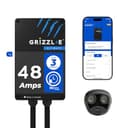
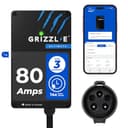
Grizzl-Eis the most forthcoming. Both Ultimate models carry “Communication: OCPP” in United Chargers’ own technical specification table, alongside Wi-Fi and the Grizzl-E Connect app. No version is given, and no setup documentation is published on the product page.
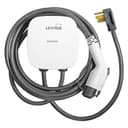
Levitonis the only one that names a version. Its EV40P page lists “OCPP 1.6” compliance in the same breath as UL 2594, UL 2231-1, UL 2231-2, UL 2251, UL 62, UL 991 and UL 1998 — the deepest standards list of any product in this registry. The same page is honest about what the charger cannot do: it publishes no load management, no load shedding and no adjustable amperage at all. It is a fixed 40-amp unit.
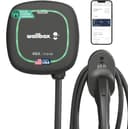
Wallboxis the awkward case, and we have ranked it last for a specific reason. On the US Pulsar Plus page, OCPP appears exactly once — in a sentence saying that the charger’s solar-charging feature is not compatible with OCPP or with multiple-charger installations. That is an acknowledgement of OCPP rather than a specification of it: no version, no profile, and a stated incompatibility with one of the features people buy the charger for. On the same read, that page published neither an enclosure rating nor a warranty term.
Everyone else publishes nothing.Across the rest of this registry — Emporia, ChargePoint, EVIQO, Autel, ELEGRP, Lectron, EVDANCE, WOLFBOX — we found no OCPP claim on the manufacturer page we cite for each product. Autel publishes the richest connectivity list of the group (Bluetooth, Wi-Fi, Ethernet, CAN and RS485) and still does not name OCPP. Absence here means “not published”, which is how every unknown is treated on this site; it is not proof that a charger cannot do it.
How to choose between the four
Most households: the Grizzl-E Ultimate 48A. It is the cheapest of the four, it is 48 amps on a 60-amp circuit, and the enclosure is the reason Grizzl-E units are our standing recommendation for fully exposed installs. One catch we state everywhere: the only child listing Amazon carries for the Ultimate 48A is the NACS output-cable version, so a J1772 car needs a permanent adapter in the chain.
If paperwork matters: the Leviton. A named OCPP version and seven UL standards is the strongest documentary position here, which is also what makes it the easiest charger to get past an HOA or a cautious inspector. Accept the fixed 40 amps and the two-year warranty, which is the shortest term in this registry.
If you have a 100-amp circuit to spare: the Ultimate 80A, the only 80-amp charger we recommend anywhere and only to the small group that can feed it. Eight published current steps from 16 to 80 amps make it the most adjustable charger on the site.
If you are already in the Wallbox ecosystem: the Pulsar Plus, with the incompatibility above understood.
If none of this moves you, that is a reasonable conclusion. OCPP is the right thing to care about if you intend to control the charger with your own software or you are buying defensively against the app being retired. For everyone else, our main home charger roundup ranks the whole field on the things that affect every charge, and the smart-charger page covers what the manufacturer apps actually do.