Plug & Range

Best Gifts for a New EV Owner

Most new EV drivers spend their first months charging from an ordinary wall socket and wondering why it takes all night. These are the gifts that end that — and the one question to ask first.

By Stephen V.Last updated How we pick

A new electric car arrives with a charging cable in the trunk, and for a lot of people that cable becomes the whole charging plan for a year. It plugs into a household socket, adds a few miles of range an hour, and works — slowly. The driver adapts: they plug in every night, they stop taking the long way home, they look up “how long does it take to charge” more than once. What they usually do not do, in the first few months, is buy a proper charger, because it feels like a project with an electrician in it.

That is the gap this list fills. Every pick is a product we already cover for drivers, re-explained for a gifter: what it changes about their week, who it is right for, and what to check so it works on the day. The order matters — it goes from “works anywhere, no install” to “the full wall charger” — and the honest answer for many new owners is the middle of the list, not the top.

One question decides which end to shop at, and it is the only technical thing you need to ask: is there a big 240-volt outlet where the car parks? The four-prong kind an electric dryer or an RV uses. If yes, a plug-in Level 2 charger is a gift that works the day it arrives. If no, either the Level 1 charger or a wall unit with an electrician attached. We explain both below.

How this is funded:we earn a commission if you buy through our links, at no extra cost to you. It never changes which product we recommend, and we’ll tell you when we’d skip one. Full disclosure.

Quick picks

Ranked on published specs, charging speed, electrical fit and value. Select a row to jump to the full write-up. We have not bench-tested these chargers — here is exactly what we do instead.

#ProductBest forPrice
1
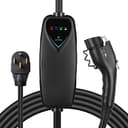
Lectron 40A Portable Level 2 Charger

Lectron 40A Portable Level 2 Charger

The least-expensive honest route into real Level 2 charging. Plug it into a NEMA 14-50 outlet, pull a true 40A / 9.6 kW, and unplug it to throw in the trunk for a trip. The trade-offs for the price are no app and a shorter warranty — both fair at this cost.

Best first upgrade — Level 2 with no install
$269.99 · View on Amazon

Price as of September 13, 2026. #ad How we’re funded

2
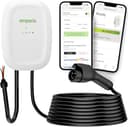
Emporia Level 2 EV Charger

Emporia Level 2 EV Charger

The value pick that never feels like one. You get the full 48 amps, an ENERGY STAR listing, real Wi-Fi energy tracking and a 25 ft cable for well under what the marquee brands charge. When someone asks us where to start, this is usually the first name out of our mouths.

Best if they are ready for a wall charger
$449.00 · View on Amazon

Price as of September 13, 2026. #ad How we’re funded

3
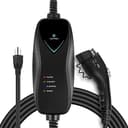
Lectron Level 1 Charger, 15A

Lectron Level 1 Charger, 15A

The charger you buy when you can't install anything. It plugs into an ordinary 120V household outlet and pulls 15 amps — the top of what a standard circuit will give you — which makes it the fastest thing you can do with zero electrical work. It is genuinely slow next to a 240V unit, and we won't pretend otherwise. But for a plug-in hybrid, a short commute or a rented parking spot, slow-and-installed beats fast-and-impossible.

Best when nothing can be installed
$159.99 · View on Amazon

Price as of September 13, 2026. #ad How we’re funded

4
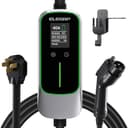
ELEGRP 40A Portable Level 2 Charger (ECP24-40A0-01)

ELEGRP 40A Portable Level 2 Charger (ECP24-40A0-01)

The cheapest charger in this registry that still publishes everything you would want to check: 9.6 kW, five current levels from 16 to 40 amps, an IP67 body with a stated -21°F floor, ETL certification and a 2-year warranty. There is no Wi-Fi and no app — you get a 1-to-12-hour delay timer on the unit instead — and for a lot of households that is the correct amount of charger.

Best budget plug-in with a long cable
$209.99 · View on Amazon

Price as of September 13, 2026. #ad How we’re funded

5
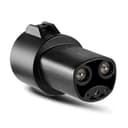
Lectron J1772 to Tesla (NACS) Adapter, 80A

Lectron J1772 to Tesla (NACS) Adapter, 80A

The single most useful accessory a Tesla or NACS owner can keep in the trunk. Snap it onto any J1772 home charger and it plugs straight into a Tesla — so you can buy the charger that's actually the best value and let this bridge the connector. It's rated to 80A/240V and UL 2252 certified, so it isn't the weak link.

Best small gift if the new car is a Tesla
$39.99 · View on Amazon

Price as of September 13, 2026. #ad How we’re funded

The picks in full

#1Best first upgrade — Level 2 with no install

Lectron 40A Portable Level 2 Charger

The least-expensive honest route into real Level 2 charging. Plug it into a NEMA 14-50 outlet, pull a true 40A / 9.6 kW, and unplug it to throw in the trunk for a trip. The trade-offs for the price are no app and a shorter warranty — both fair at this cost.

Strengths

  • A real 40A / 9.6 kW at a budget price
  • Plug-in and portable — no hardwiring, and it travels
  • ETL listed to the UL 2594 / UL 2231 safety standards

Trade-offs

  • No Wi-Fi or app on the base model — the smart version is a separate SKU
  • Shorter 16 ft cable and a 2-year warranty
  • The brand doesn't publish an outdoor/IP enclosure rating
Max output40 A
Power9.6 kW
ConnectorJ1772
InstallNEMA 14-50 plug
Cable length16 ft
Warranty2 years
WiFi + appNo
CertificationsETL listed (UL 2594 / UL 2231)

Our charging-speed math. At 40A (9.6 kW) and 3.5 mi/kWh it adds roughly 34 miles of range an hour.

Build note. A portable plug-in unit — no hardwiring — and the base model carries no Wi-Fi or app.

Specs read from the manufacturer spec sheet, on July 19, 2026. “Not published” means the brand does not state that figure.

#2Best if they are ready for a wall charger

Emporia Level 2 EV Charger

The value pick that never feels like one. You get the full 48 amps, an ENERGY STAR listing, real Wi-Fi energy tracking and a 25 ft cable for well under what the marquee brands charge. When someone asks us where to start, this is usually the first name out of our mouths.

Strengths

  • 48A and ENERGY STAR at a genuinely value price
  • The app tracks energy use, not just an on/off toggle
  • Long 25 ft cable and a remote holster in the box

Trade-offs

  • 48A hardwired needs a 60A circuit; on a NEMA 14-50 plug it's capped at 40A
  • The app is less polished than ChargePoint's, and support is a smaller operation
Max output48 A
Power11.5 kW
ConnectorJ1772
InstallHardwired or NEMA 14-50 plug
Cable length25 ft
Warranty3 years
WiFi + appYes
CertificationsUL listed, ENERGY STAR

Our charging-speed math. Hardwired at 48A (11.5 kW), figure about 40 miles of range an hour at 3.5 mi/kWh. Drop to a 40A plug-in circuit and it's closer to 34.

Build note. Runs 48A hardwired, or 40A on a NEMA 14-50 outlet, with a 25 ft cable and a wall holster included.

Specs read from the manufacturer spec sheet, on July 19, 2026. “Not published” means the brand does not state that figure.

#3Best when nothing can be installed

Lectron Level 1 Charger, 15A

The charger you buy when you can't install anything. It plugs into an ordinary 120V household outlet and pulls 15 amps — the top of what a standard circuit will give you — which makes it the fastest thing you can do with zero electrical work. It is genuinely slow next to a 240V unit, and we won't pretend otherwise. But for a plug-in hybrid, a short commute or a rented parking spot, slow-and-installed beats fast-and-impossible.

Strengths

  • Works from any standard 120V outlet — no electrician, no install
  • 15A is the practical ceiling for Level 1, so it's the fastest version of the slow option
  • IP65 weather resistance and a 16 ft cable at a budget price

Trade-offs

  • Level 1 is genuinely slow — plan in overnights, not hours
  • No app or scheduling on this version
  • Lectron doesn't publish a warranty term for it
Max output15 A
Power1.8 kW
ConnectorJ1772
InstallNEMA 5-15 plug (standard 120V outlet)
Cable length16 ft
WarrantyNot published
WiFi + appNo
CertificationsETL listed (UL 2594 / UL 2231)

Our charging-speed math. 15A at 120V is about 1.8 kW, so at 3.5 mi/kWh it adds roughly 6 miles of range an hour — call it 60-plus miles across a 10-hour overnight, before charging losses.

Build note. Lectron publishes 120V / 15A / 1.8 kW through a NEMA 5-15 plug, a 16 ft cable and an IP65-rated body with over-voltage, over-current and short-circuit protection.

Specs read from the manufacturer spec sheet, on August 11, 2026. “Not published” means the brand does not state that figure.

#4Best budget plug-in with a long cable

ELEGRP 40A Portable Level 2 Charger (ECP24-40A0-01)

The cheapest charger in this registry that still publishes everything you would want to check: 9.6 kW, five current levels from 16 to 40 amps, an IP67 body with a stated -21°F floor, ETL certification and a 2-year warranty. There is no Wi-Fi and no app — you get a 1-to-12-hour delay timer on the unit instead — and for a lot of households that is the correct amount of charger.

Strengths

  • Five current levels (16/20/24/32/40A) — it fits whatever circuit you have
  • IP67 with a published -21°F to 121°F range, and a carrying case in the box
  • 2-year warranty and full ETL certification at the bottom of the price band

Trade-offs

  • No Wi-Fi, no app and no energy monitoring — just an on-unit delay timer
  • Not ENERGY STAR listed, so it may not qualify for some utility rebates
  • 40 amps is the plug-in ceiling; a 48-amp unit needs hardwiring
Max output40 A
Power9.6 kW
ConnectorJ1772
InstallNEMA 14-50 plug
Cable length25 ft
Warranty2 years
WiFi + appNo
CertificationsETL certified

Our charging-speed math. Forty amps at 240V is 9.6 kW, and at 3.5 miles per kWh that is roughly 34 miles of range an hour. ELEGRP's own figure is 37 miles an hour, which assumes a slightly more efficient car than our reference.

Build note. ELEGRP publishes 240V, up to 9.6 kW, five selectable current levels of 16, 20, 24, 32 and 40 amps, a NEMA 14-50 plug, a 25 ft cable measured plug-end to connector, a J1772 connector, ETL certification with its PBE overheat protection, an IP67 rating with a -21°F to 121°F range, a 1-12 hour delayed start, a carrying case and a 2-year warranty.

Specs read from the manufacturer spec sheet, on August 19, 2026. “Not published” means the brand does not state that figure.

#5Best small gift if the new car is a Tesla

Lectron J1772 to Tesla (NACS) Adapter, 80A

The single most useful accessory a Tesla or NACS owner can keep in the trunk. Snap it onto any J1772 home charger and it plugs straight into a Tesla — so you can buy the charger that's actually the best value and let this bridge the connector. It's rated to 80A/240V and UL 2252 certified, so it isn't the weak link.

Strengths

  • Lets a Tesla or NACS car charge from any J1772 charger
  • Rated to 80A / 240V — never the bottleneck on a home circuit
  • UL 2252 certified and IP67-rated for water and dust

Trade-offs

  • One more thing to seat firmly and not lose
  • For AC home charging only — not a Supercharger or DC adapter
Max output80 A
PowerNot published
ConnectorNACS
InstallNot published
Cable lengthNot published
WarrantyNot published
WiFi + appNot published
CertificationsUL 2252 certified, IP67

Our charging-speed math. The adapter doesn't set the speed — the charger does. Rated to 80A, it simply passes through whatever your J1772 charger delivers (typically 40-48A / 9.6-11.5 kW at home).

Build note. Rated -22 to 122 degrees F; converts a J1772 connector to the Tesla/NACS (J3400) plug for AC home charging.

Specs read from the manufacturer spec sheet, on July 19, 2026. “Not published” means the brand does not state that figure.

What a new EV owner is actually dealing with

The cable that comes with most EVs is a Level 1 charger: it runs on an ordinary 120-volt socket and adds somewhere around four to six miles of range per hour, depending on the car. Over a twelve-hour night that is enough for a short commute and not enough for much else, which is why new owners talk about charging so much. A Level 2 charger runs on 240 volts — the dryer-outlet kind of circuit — and adds roughly twenty-five to forty miles of range an hour, so the car is full every morning regardless of the day. Our charging levels guide covers the difference in plain terms and our how long to charge guide does the arithmetic for popular cars.

The reason so many new owners stay on Level 1 is not the cost of the charger. It is that a wall charger sounds like it needs an electrician, a permit and a weekend, and for a hardwired unit that is true. The part they often do not know is that if a 240-volt outlet already exists, a plug-in Level 2 charger needs none of that. Finding out whether that outlet exists is the single most useful thing a gifter can do.

The picks, in gifter terms

The first upgrade: Lectron 40A portable

If there is a four-prong 240-volt outlet in the garage, this is the gift. It plugs in, pulls a genuine 40 amps — about 34 miles of range an hour on our reference car — and unplugs to go in the trunk. It is the least expensive honest route into real Level 2 charging that we know of, and for a new owner it is the difference between charging as a chore and charging as something that happens while they sleep. There is no app and the warranty is two years rather than three; neither is something a new owner tends to miss.

Why it lands: the car is full every morning, from the first night. Who it suits: anyone with an existing NEMA 14-50 outlet, renters especially. Check before buying: the outlet is the four-prong 14-50 type (our outlet guidehas photos), and the car uses the J1772 connector — Tesla drivers want the NACS version. Full spec table in our Lectron 40A review.

The wall charger: Emporia Level 2

For a homeowner who has said they mean to get a “real” charger, this is the one we point drivers to first. Full 48-amp output, an ENERGY STAR listing, a UL safety listing, a 25-foot cable and an app that shows what each charge costs — without the price of the marquee brands. Emporia sells it for a plug-in install on a 14-50 outlet or a hardwired one, which means it can be the works-today gift or the long-term one depending on what is on the wall.

Why it lands: it is the charger they would have chosen after a month of research, delivered without the month. Who it suits:homeowners, or renters with a landlord’s blessing. Check before buying: J1772 car, and be honest in the card about the install: on an existing 14-50 outlet it plugs in; without one, an electrician runs a dedicated circuit, and our installation guide explains what that involves. Our Emporia review has the details.

When nothing can be installed: Lectron Level 1

Some new owners genuinely cannot add an outlet — a rented spot, a condo, a garage with one household socket. This is the charger for them. It plugs into an ordinary 120-volt socket and pulls 15 amps, the top of what a standard circuit gives, which makes it quicker than the 12-amp cables many cars ship with and the fastest option that involves zero electrical work. It is slow — about six miles of range an hour — and we say so. For a plug-in hybrid or a short commute, that is a full battery every morning.

Why it lands: a dedicated, weatherproof charger they can leave plugged in, instead of the cable they are afraid to lose. Who it suits:renters, plug-in hybrid drivers, anyone who has said “I can’t install anything.” Check before buying: J1772 connector on the car, and if the socket is outdoors, that it is a grounded outdoor-rated one. Our Level 1 review explains why 15 amps is the number to look for.

The budget plug-in with reach: ELEGRP 40A

The cheapest charger in our registry that still publishes everything we want to check: 40 amps, five current settings from 16 to 40 amps, a 25-foot cable, an IP67 body rated for outdoors, ETL certification and a two-year warranty. The long cable is the gifter’s reason to pick it over the Lectron above — if the outlet is at the back of the garage and the car’s charge port is at the front, nine extra feet matters. No Wi-Fi and no app; a delay timer on the unit instead.

Why it lands: the most charger for the least money, with a cable that reaches. Who it suits: anyone with a 14-50 outlet who would rather not pay for an app. Check before buying:same as the Lectron — a 14-50 outlet and a J1772 car. Our ELEGRP review and our ELEGRP vs Lectron comparison settle which of the two to pick.

If the new car is a Tesla: the J1772-to-Tesla adapter

A new Tesla owner will meet a J1772 charger within the first month — at a workplace, a hotel, a friend’s garage — and needs this small adapter to use it. Teslas ship with one; a spare in the glovebox is the kind of gift that gets a text message six weeks later. It is rated to 80 amps and UL 2252 certified, so it is not the weak link.

Why it lands: it removes a recurring small problem for a driver who does not yet know they have it. Who it suits: any new Tesla or NACS-port driver. Check before buying: only that the car is a Tesla or has a NACS port. For the rest of the Tesla picture, our Tesla gift list takes over.

The gift we would not give a new owner

A hardwired 48-amp charger for someone who has not yet spoken to an electrician. It is the best long-term setup for a homeowner, and it is also a box that sits unopened until a load calculation, a permit and a circuit have happened. Some panels cannot take a 60-amp circuit at all without an upgrade, and a new owner does not know that yet. If you want to give the big gift, either pair it with the electrician visit or choose a charger that can be turned down to fit — the Emporia above is set at the install, and our 100-amp panel roundup covers units with a published adjustable range. Our do you need Level 2 guide is worth reading first; for some commutes the honest answer is that Level 1 is fine.

What it will cost them to run — a good thing to put in the card

New owners often do not know what charging at home costs, and it is a pleasant surprise. At a typical residential rate, a full charge on a mid-size EV comes to a fraction of a tank of gas, and a Level 2 charger does not change the cost per mile — it only changes how fast the miles go in. Our cost to charge guide has a calculator that takes their actual rate, and our EV vs gas comparison does the side-by-side. If their utility offers a cheaper overnight rate, the time-of-use guide is the one to send them.

On the prices shown here

Every price on this page comes from a daily retailer check and carries the date it was verified. If a price cannot be verified the button says “Check price on Amazon” instead of a number. If you are shopping before the holidays, our Black Friday & Cyber Monday deals hub records what has actually discounted in this category in past years, and we post real deals there when they go live.
Frequently asked questions

What is the single best gift for someone who just got their first EV?

If they have a four-prong 240V outlet where the car parks, a plug-in Level 2 charger — the Lectron 40A or the ELEGRP 40A — is the gift that changes their week, and it needs no electrician. If they do not have that outlet and cannot add one, the Lectron Level 1 charger is the honest answer. If they own the home and have said they want a proper wall charger, the Emporia Level 2 is the one we point drivers to first.

How do I find out if they have a 240V outlet without spoiling the surprise?

Look in the garage or wherever the car parks for a large round-faced outlet with four slots — the type an electric dryer or an RV plugs into. A normal-looking household socket is 120V. If you cannot look, ask whether they have ever run a dryer, a welder or an RV from the garage; if the answer is no, assume there is no 240V outlet.

Is Level 1 charging really enough for anyone?

For more drivers than you would expect. A 15-amp Level 1 charger adds roughly six miles of range an hour, which over a twelve-hour night is around 70 miles — more than most daily commutes. It is not enough for long daily driving or a household with one charger and two EVs, and it does not cope well with a cold snap. Our do-you-need-Level-2 guide has a four-question test.

Does a new EV owner need a smart charger with an app?

Usually not in the first year. Most EVs can schedule their own charging from the car's screen, which covers the main reason to want an app — starting at a cheaper overnight rate. An app becomes worth paying for when they want to see what each charge actually costs, or when a utility rebate asks for a connected charger. Our smart vs basic comparison goes through it.

Will a charger I buy them work with the car they might buy next?

Mostly. A J1772 charger works with any J1772 car, and with a Tesla or NACS-port car via a small adapter. The adjustable-current chargers also fit a different electrical panel if they move. What does not carry over is the connector itself if they change from a J1772 car to a NACS one without an adapter — which is why the adapter is such a durable small gift.

Sources

Keep reading