Plug & Range

Best Lectron EV Chargers

Lectron builds for both connectors and both charging levels, which is its real advantage and the reason its catalog is so easy to buy wrong. These are the Lectron chargers worth owning, ranked by the install each one fits.

By Stephen V.Last updated How we pick

The verdict first. The best Lectron charger for most households is the Lectron Nexus J1772 48A: a full 48 amps hardwired, ETL listed to UL 2594, IP66 rated, and — unusually for a charger with no app at all — on the ENERGY STAR certified list under its own model number. If you drive a Tesla, the same station exists with a native NACS connector as the Lectron Nexus NACS 48A. If you already have a NEMA 14-50 outlet and would rather not hire an electrician, the Lectron 40A portable is the one to buy, and our budget pick is the Lectron Level 1 15A, which needs nothing but a household socket.

Why a brand page? Because Lectron is one of the few makers that covers the whole grid of real-world home charging — J1772 and NACS, Level 1 and Level 2, plug-in and hardwired, chargers and adapters — and because that breadth is exactly what makes the catalog easy to get wrong. Two different chargers carry the Nexus name. Two different portables are described as 40-amp Level 2 units and take different connectors. Two Level 1 cords look identical and pull different current. Picking the right Lectron is almost entirely a matter of matching the connector on your car to the circuit on your wall, which is how this page is organized.

One brand-level finding worth knowing before you shop. Lectron does not publish a selectable current range for any charger on this page. Most of its competitors do: ELEGRP publishes five current levels, Grizzl-E four, EVDANCE five. A Lectron charger draws its rated current or it does not charge, which matters in two specific situations — a panel that cannot carry the circuit the charger wants, and an outlet whose wiring you did not install and cannot inspect. We flag it on each pick below rather than burying it.

Every charger here is currently sold, carries a safety listing we can name, and has its specs read from Lectron’s own product page for that exact SKU, linked from each card with the date we read it. We own none of these units and have bench-tested nothing; the range-per-hour figures are our own arithmetic at a stated 3.5 miles per kWh, and prices come from a live daily retailer check rather than from anything typed into this page.

How this is funded:we earn a commission if you buy through our links, at no extra cost to you. It never changes which product we recommend, and we’ll tell you when we’d skip one. Full disclosure.

Quick picks

Ranked on published specs, charging speed, electrical fit and value. Select a row to jump to the full write-up. We have not bench-tested these chargers — here is exactly what we do instead.

#ProductBest forPrice
1
Lectron Nexus J1772 48A (Hardwired)

Lectron Nexus J1772 48A (Hardwired)

The fastest charger we can find that has nothing to log into. It is a full 48 amps, ETL-listed to UL 2594, IP66 for an outside wall, and — unusually for a charger with no app — it is on the ENERGY STAR certified list under its own model number, which is the kind of proof a rebate administrator will actually accept. The price of that simplicity is real: no published way to dial the current down, so it wants a 60-amp circuit and nothing less, and no scheduling of its own, so your car has to do that part.

Best Lectron overall
$379.99 · View on Amazon

$429.9912% off

Price as of November 19, 2026. #ad How we’re funded

2
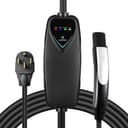
Lectron Nexus NACS (Tesla) Charger

Lectron Nexus NACS (Tesla) Charger

For a Tesla owner who doesn't want to babysit an adapter. The native NACS (J3400) connector goes straight into the car at a full 48 amps, with the safety listings you want to see. There's no app — but a Tesla schedules charging in the car anyway, so you're not really missing one.

Best Lectron for a Tesla at home
$449.99 · View on Amazon

Price as of November 19, 2026. #ad How we’re funded

3
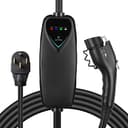
Lectron 40A Portable Level 2 Charger

Lectron 40A Portable Level 2 Charger

The least-expensive honest route into real Level 2 charging. Plug it into a NEMA 14-50 outlet, pull a true 40A / 9.6 kW, and unplug it to throw in the trunk for a trip. The trade-offs for the price are no app and a shorter warranty — both fair at this cost.

Best Lectron for a NEMA 14-50 outlet
$246.49 · View on Amazon

$289.9915% off

Price as of November 19, 2026. #ad How we’re funded

4
Lectron Level 2 Tesla (NACS) Portable Charger, 40A

Lectron Level 2 Tesla (NACS) Portable Charger, 40A

The straightforward native-NACS answer for a Tesla owner who wants real Level 2 speed without hardwiring anything. Plug it into a NEMA 14-50, pull a full 40 amps, and unplug it when you move or travel. There is no app and no adjustable current — what you are buying is the Tesla plug on the end of a proper 40-amp portable charger, at a price well under a wall-mounted NACS station.

Best portable Lectron for a Tesla
$279.99 · View on Amazon

$319.9913% off

Price as of November 19, 2026. #ad How we’re funded

5
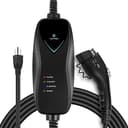
Lectron Level 1 Charger, 15A

Lectron Level 1 Charger, 15A

The charger you buy when you can't install anything. It plugs into an ordinary 120V household outlet and pulls 15 amps — the top of what a standard circuit will give you — which makes it the fastest thing you can do with zero electrical work. It is genuinely slow next to a 240V unit, and we won't pretend otherwise. But for a plug-in hybrid, a short commute or a rented parking spot, slow-and-installed beats fast-and-impossible.

Best budget pick
$159.99 · View on Amazon

$179.9911% off

Price as of November 19, 2026. #ad How we’re funded

6
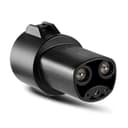
Lectron J1772 to Tesla (NACS) Adapter, 80A

Lectron J1772 to Tesla (NACS) Adapter, 80A

The single most useful accessory a Tesla or NACS owner can keep in the trunk. Snap it onto any J1772 home charger and it plugs straight into a Tesla — so you can buy the charger that's actually the best value and let this bridge the connector. It's rated to 80A/240V and UL 2252 certified, so it isn't the weak link.

Best Lectron accessory
$33.99 · View on Amazon

$39.9915% off

Price as of November 19, 2026. #ad How we’re funded

The picks in full

#1Best Lectron overall

Lectron Nexus J1772 48A (Hardwired)

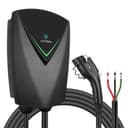
The fastest charger we can find that has nothing to log into. It is a full 48 amps, ETL-listed to UL 2594, IP66 for an outside wall, and — unusually for a charger with no app — it is on the ENERGY STAR certified list under its own model number, which is the kind of proof a rebate administrator will actually accept. The price of that simplicity is real: no published way to dial the current down, so it wants a 60-amp circuit and nothing less, and no scheduling of its own, so your car has to do that part.

Strengths

  • 48A / 11.5 kW with no Wi-Fi, no account and no app to keep working
  • ENERGY STAR certified under its own model number (LECHGNexusHWJ1772), listed with network capability "No"
  • ETL listed to UL 2594, UL 2231 and UL 2251, with an IP66 indoor/outdoor body
  • 23 ft cable, a wall-mount J-hook and a plug holder included, with a 3-year warranty

Trade-offs

  • Lectron publishes no adjustable current range for this model, so it needs a 60-amp circuit to be used at all
  • Hardwired only — a licensed electrician, and it stays with the house
  • No scheduling on the charger: off-peak charging has to be set in the car
  • No operating-temperature range published, which is the spec a cold-climate install turns on
Max output48 A
Power11.5 kW
ConnectorJ1772
InstallHardwired
Cable length23 ft
Warranty3 years
WiFi + appNo
CertificationsETL listed to UL 2594, UL 2231 and UL 2251; FCC; ENERGY STAR (confirmed on the certifier's own list as model LECHGNexusHWJ1772)

Our charging-speed math. Forty-eight amps at 240V is about 11.5 kW, which at our 3.5 miles-per-kWh reference is roughly 40 miles of range an hour, or about 400 miles across a ten-hour overnight window. Lectron's own figure is 46 miles an hour, which assumes a more efficient car than our reference — plan around 40.

Build note. Lectron publishes up to 48 A at 240 V (11.5 kW), an SAE J1772 connector, a hardwired installation it says requires a professional, an IP66 rating for indoor and outdoor use, a 23 ft cable with a wall-mount J-hook and plug holder, UL 2594 / UL 2231 / UL 2251 certification under an ETL listing plus FCC and ENERGY STAR, and a 3-year warranty. Nothing on the page describes Wi-Fi, an app or an account, and the no-app build is a separately certified model: the ENERGY STAR certified AC-EVSE list carries LECHGNexusHWJ1772 with network capability "No" and a separate LECHGNexusHWJ1772-APP row with network capability "Yes". Two figures to note. The ENERGY STAR entry gives the output cord as 22 ft where Lectron and the Amazon listing both say 23 ft, and we record the manufacturer's figure that both of those agree on. And Lectron publishes neither an adjustable current range nor an operating-temperature range for this model, so neither is recorded here — the first of those is the reason it cannot be fitted to a circuit smaller than 60 amps.

Specs read from the manufacturer spec sheet, on October 4, 2026. “Not published” means the brand does not state that figure.

#2Best Lectron for a Tesla at home

Lectron Nexus NACS (Tesla) Charger

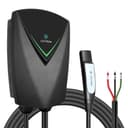
For a Tesla owner who doesn't want to babysit an adapter. The native NACS (J3400) connector goes straight into the car at a full 48 amps, with the safety listings you want to see. There's no app — but a Tesla schedules charging in the car anyway, so you're not really missing one.

Strengths

  • Native NACS connector — no J1772-to-Tesla adapter to keep track of
  • Full 48A output and a weather-rated IP66 body
  • UL/ETL safety listings plus ENERGY STAR

Trade-offs

  • No Wi-Fi app — you schedule in the Tesla app instead
  • Best for Tesla/NACS cars; other EVs need a NACS-to-J1772 adapter
Max output48 A
Power11.5 kW
ConnectorNACS
InstallHardwired
Cable length23 ft
Warranty3 years
WiFi + appNo
CertificationsUL 2594/2231/2251 (ETL listed), ENERGY STAR, FCC

Our charging-speed math. At 48A (11.5 kW) and 3.5 mi/kWh, about 40 miles of range an hour into a Tesla.

Build note. A native NACS (J3400) connector plugs straight into a Tesla with no adapter; a holster is included.

Specs read from the manufacturer spec sheet, on July 19, 2026. “Not published” means the brand does not state that figure.

#3Best Lectron for a NEMA 14-50 outlet

Lectron 40A Portable Level 2 Charger

The least-expensive honest route into real Level 2 charging. Plug it into a NEMA 14-50 outlet, pull a true 40A / 9.6 kW, and unplug it to throw in the trunk for a trip. The trade-offs for the price are no app and a shorter warranty — both fair at this cost.

Strengths

  • A real 40A / 9.6 kW at a budget price
  • Plug-in and portable — no hardwiring, and it travels
  • ETL listed to the UL 2594 / UL 2231 safety standards

Trade-offs

  • No Wi-Fi or app on the base model — the smart version is a separate SKU
  • Shorter 16 ft cable and a 2-year warranty
  • The brand doesn't publish an outdoor/IP enclosure rating
Max output40 A
Power9.6 kW
ConnectorJ1772
InstallNEMA 14-50 plug
Cable length16 ft
Warranty2 years
WiFi + appNo
CertificationsETL listed (UL 2594 / UL 2231)

Our charging-speed math. At 40A (9.6 kW) and 3.5 mi/kWh it adds roughly 34 miles of range an hour.

Build note. A portable plug-in unit — no hardwiring — and the base model carries no Wi-Fi or app.

Specs read from the manufacturer spec sheet, on July 19, 2026. “Not published” means the brand does not state that figure.

#4Best portable Lectron for a Tesla

Lectron Level 2 Tesla (NACS) Portable Charger, 40A

The straightforward native-NACS answer for a Tesla owner who wants real Level 2 speed without hardwiring anything. Plug it into a NEMA 14-50, pull a full 40 amps, and unplug it when you move or travel. There is no app and no adjustable current — what you are buying is the Tesla plug on the end of a proper 40-amp portable charger, at a price well under a wall-mounted NACS station.

Strengths

  • Native NACS connector — nothing to seat, nothing to lose, no adapter
  • A real 40A / 9.6 kW from an ordinary NEMA 14-50 outlet
  • IP65 control box and IP55 handle, rated by Lectron for outdoor use
  • Plug-in and portable, so it moves with you and travels

Trade-offs

  • No Wi-Fi or app on this SKU — the smart version is a separate, dearer listing
  • No adjustable current, so it cannot be trimmed down for an unverified outlet
  • A J1772 car needs a NACS-to-J1772 adapter — buy a J1772 charger instead
  • Lectron does not publish a warranty term for this model
Max output40 A
Power9.6 kW
ConnectorNACS
InstallNEMA 14-50 plug
Cable length16 ft
WarrantyNot published
WiFi + appNo
CertificationsETL listed (UL 2594 / UL 2231), UL 2251 handle, FCC

Our charging-speed math. At 40A on 240V (9.6 kW) and our 3.5 mi/kWh reference, roughly 34 miles of range an hour. Lectron's own figure is up to 36 miles an hour, which assumes a slightly more efficient car than our reference.

Build note. Lectron publishes 240V, 40 A and 9.6 kW through a NEMA 14-50 plug on a 16 ft cable, a native Tesla (NACS) connector, an IP65-rated control box with an IP55-rated handle tested to 10,000-plus insertions, protection against overvoltage, overcurrent and short circuits, and ETL/FCC certification against UL 2594 and UL 2231 with a UL 2251 handle. This SKU has no Wi-Fi or app.

Specs read from the manufacturer spec sheet, on August 21, 2026. “Not published” means the brand does not state that figure.

#5Best budget pick

Lectron Level 1 Charger, 15A

The charger you buy when you can't install anything. It plugs into an ordinary 120V household outlet and pulls 15 amps — the top of what a standard circuit will give you — which makes it the fastest thing you can do with zero electrical work. It is genuinely slow next to a 240V unit, and we won't pretend otherwise. But for a plug-in hybrid, a short commute or a rented parking spot, slow-and-installed beats fast-and-impossible.

Strengths

  • Works from any standard 120V outlet — no electrician, no install
  • 15A is the practical ceiling for Level 1, so it's the fastest version of the slow option
  • IP65 weather resistance and a 16 ft cable at a budget price

Trade-offs

  • Level 1 is genuinely slow — plan in overnights, not hours
  • No app or scheduling on this version
  • Lectron doesn't publish a warranty term for it
Max output15 A
Power1.8 kW
ConnectorJ1772
InstallNEMA 5-15 plug (standard 120V outlet)
Cable length16 ft
WarrantyNot published
WiFi + appNo
CertificationsETL listed (UL 2594 / UL 2231)

Our charging-speed math. 15A at 120V is about 1.8 kW, so at 3.5 mi/kWh it adds roughly 6 miles of range an hour — call it 60-plus miles across a 10-hour overnight, before charging losses.

Build note. Lectron publishes 120V / 15A / 1.8 kW through a NEMA 5-15 plug, a 16 ft cable and an IP65-rated body with over-voltage, over-current and short-circuit protection.

Specs read from the manufacturer spec sheet, on August 11, 2026. “Not published” means the brand does not state that figure.

#6Best Lectron accessory

Lectron J1772 to Tesla (NACS) Adapter, 80A

The single most useful accessory a Tesla or NACS owner can keep in the trunk. Snap it onto any J1772 home charger and it plugs straight into a Tesla — so you can buy the charger that's actually the best value and let this bridge the connector. It's rated to 80A/240V and UL 2252 certified, so it isn't the weak link.

Strengths

  • Lets a Tesla or NACS car charge from any J1772 charger
  • Rated to 80A / 240V — never the bottleneck on a home circuit
  • UL 2252 certified and IP67-rated for water and dust

Trade-offs

  • One more thing to seat firmly and not lose
  • For AC home charging only — not a Supercharger or DC adapter
Max output80 A
PowerNot published
ConnectorNACS
InstallNot published
Cable lengthNot published
WarrantyNot published
WiFi + appNot published
CertificationsUL 2252 certified, IP67

Our charging-speed math. The adapter doesn't set the speed — the charger does. Rated to 80A, it simply passes through whatever your J1772 charger delivers (typically 40-48A / 9.6-11.5 kW at home).

Build note. Rated -22 to 122 degrees F; converts a J1772 connector to the Tesla/NACS (J3400) plug for AC home charging.

Specs read from the manufacturer spec sheet, on July 19, 2026. “Not published” means the brand does not state that figure.

What Lectron does well, and the two things it does not

It covers connectors other brands treat as an afterthought. Most charger makers build a J1772 unit and bolt a NACS variant on later, if at all. Lectron sells matched pairs: the Nexus hardwired station in both connectors, a 40-amp portable in both connectors, and a Level 1 cord in both connectors. For a household with one Tesla and one of anything else, that means you can buy two chargers that behave the same way, or one charger and one adapter, without changing brands.

It names its safety listing on every unit. Every pick below publishes a listing from a nationally recognized testing laboratory against ANSI/UL 2594, the standard for electric-vehicle supply equipment, and the adapter publishes UL 2252 certification. That is a lower bar than it sounds like and a surprising number of cheap listings fail it — see are cheap EV chargers safe, which is where this site’s refusal to recommend an unlisted charger comes from.

What it does not do, one: publish adjustable current. No Lectron charger on this page publishes a current range you can dial down. On the hardwired Nexus that is the single most consequential spec on the card, because it means the charger needs a 60-amp circuit to be used at all — there is no 32-amp setting to fall back on if your panel cannot spare the load. Our electrical panel capacity guide is the honest place to start if you are unsure, and chargers for a 100-amp panel lists the units that do publish a step-down.

What it does not do, two: publish warranty terms consistently. The hardwired Nexus models publish three years. Lectron publishes no warranty term at all for the 40-amp Tesla portable, the Level 1 15A or the J1772-to-Tesla adapter, and two years for the 40-amp J1772 portable. We record an unpublished term as “Not published” rather than guessing, and on a product class that lives outdoors on a wall for ten years, that gap is worth weighing against the price.

A third thing, which is not a fault but is a fact. Lectron rotates SKUs faster than most brands. In the time this site has tracked its catalog, the dual-level NACS portable has gone off Amazon twice and come back as a different variant each time, and the 15-amp Level 1 Tesla cord was replaced by a 12-amp Wi-Fi version. If you are buying a second unit to match one you already own, check the model number rather than the product name.

What we ranked on

1. The connector on your car. This is the only disqualifying spec on the page. J1772 — the SAE J1772 standard — is the AC inlet on essentially every non-Tesla EV and plug-in hybrid sold in the US. NACS, standardized as SAE J3400, is the Tesla-derived plug, now native on some 2025 and 2026 models from other makers too. Open your charge port and look before you spend anything; our J1772 versus NACS comparison shows both side by side.

2. The circuit you have, or are willing to pay for. EV charging is a continuous load, so a charger can use 80 percent of its circuit’s rating. A hardwired 60-amp circuit supports 48 amps. A NEMA 14-50 receptacle is a 50-amp circuit, so anything plugged into one is capped at 40 amps by code rather than by cost. A four-prong dryer outlet is 30 amps, so 24. An ordinary household socket is 120 volts and about 1.4 to 1.8 kW. That ladder is what orders the picks here.

3. A named safety listing. ETL listings to UL 2594 and UL 2231 on the chargers, UL 2252 on the adapter, read from Lectron’s own page for each SKU.

4. ENERGY STAR, because a rebate may require it. Both hardwired Nexus models are certified. None of the portables is. If a utility rebate is part of your budget that is a hard constraint, not a preference — see best ENERGY STAR chargers and EV charger rebates and tax credits.

5. Then reach, enclosure and what is left unpublished. Cable runs 23 feet on the hardwired stations and 16 feet on the portables. Enclosure ratings are IP66 on the Nexus stations, IP65 on the portables, IP67 on the Level 1 Tesla cord and the adapter. Where Lectron publishes nothing — no operating-temperature range on the Nexus J1772, for instance — we say so, because on a cold-climate install that absence is the finding.

The Lectron lineup at a glance

Published figures only, from Lectron’s own page for each SKU. Range per hour is our arithmetic at 3.5 miles per kWh.

ModelConnectorMax currentInstallCableENERGY STARWarranty
Nexus J1772 48AJ177248 A / 11.5 kW (~40 mi/hr)Hardwired, 60 A circuit23 ftYes3 years
Nexus NACS 48ANACS48 A / 11.5 kW (~40 mi/hr)Hardwired, 60 A circuit23 ftYes3 years
40A portableJ177240 A / 9.6 kW (~34 mi/hr)NEMA 14-50 plug16 ftNo2 years
40A Tesla portableNACS40 A / 9.6 kW (~34 mi/hr)NEMA 14-50 plug16 ftNoNot published
Level 1 15AJ177215 A / 1.8 kW (~6 mi/hr)NEMA 5-15 socket16 ftNoNot published
Level 1 12A Wi-FiJ177212 A / 1.44 kW (~5 mi/hr)NEMA 5-15 socket16 ftNoNot published
Level 1 Tesla 12A Wi-FiNACS12 A / 1.44 kW (~5 mi/hr)NEMA 5-15 socket16 ftNoNot published
J1772-to-Tesla adapterNACS outputRated 80 A, passes throughClips onto a J1772 cord——Not published

Two patterns fall straight out of that table. The hardwired Nexus pair is the only place Lectron publishes an ENERGY STAR listing and a warranty term together, which is why both of them head this list. And at Level 1, Lectron now sells more 12-amp units than 15-amp ones — so if speed matters at all on a 120-volt socket, read the amperage and not the model name.

How to choose between the picks

You are hiring an electrician anyway, and you drive a non-Tesla EV: the Nexus J1772 48A. Forty-eight amps, about 11.5 kW, roughly 40 miles of range an hour at our reference efficiency, with no Wi-Fi, no account and no firmware in the chain. It is on the ENERGY STAR certified list under model number LECHGNexusHWJ1772 with network capability recorded as “No”, which is the clean paper trail a rebate administrator will accept for a charger that has no app. Honest cons: no published adjustable current, so it needs a 60-amp circuit and nothing smaller; no scheduling of its own, so the car has to handle off-peak timing; and no published operating-temperature range. Full detail in our Lectron Nexus J1772 review.

You are hiring an electrician and you drive a Tesla: the Nexus NACS 48A. The same 48 amps and the same three-year warranty with the Tesla connector molded on, so there is no adapter to seat, lose or leave at the far end of the cable. It publishes IP66 and a 23-foot cable, and it is ENERGY STAR certified. Cons: there is no app, which on a Tesla matters less than it sounds because the car schedules charging itself; a J1772 car cannot use it without a NACS-to-J1772 adapter, which makes it the wrong choice for a mixed driveway; and like its sibling it publishes no step-down current. See the Lectron Nexus NACS review and Lectron versus ChargePoint on NACS.

You already have a NEMA 14-50 outlet: the 40A portable. This is the cheapest honest route into real Level 2 charging in Lectron’s lineup. A true 40 amps and 9.6 kW, about 34 miles of range an hour, out of an outlet you already own, with an ETL listing to UL 2594 and UL 2231 and a two-year warranty — and because it unplugs, it moves house with you and travels. Cons: no Wi-Fi or app on this SKU (the smart version is a separate, dearer listing), a 16-foot cable that is short next to the 25-foot cords elsewhere in this market, no published enclosure rating, and no step-down current for an outlet you cannot verify. Our Lectron 40A review goes deeper, and NEMA 14-50 portable chargers compares it with the rest of that bracket.

You drive a Tesla and have a 14-50 outlet: the 40A Tesla portable. The same proposition with the NACS plug on the car end: 9.6 kW, no adapter anywhere in the chain, an IP65 control box with an IP55 handle that Lectron rates for outdoor use. Cons, and the third one is the real one: no app, no published warranty term, and no adjustable current — so when you plug into a strange 14-50 in a relative’s garage, there is no conservative 24-amp setting to fall back on. If that scenario is why you are buying, read Tesla Mobile Connector alternatives, which is written around exactly that trip.

You cannot install anything: the Level 1 15A, our budget pick. Fifteen amps at 120 volts is about 1.8 kW and roughly 6 miles of range an hour — call it 60-plus miles across a ten-hour overnight, before charging losses. That is genuinely slow and we will not pretend otherwise, but it is also the fastest thing you can do with zero electrical work, and for a plug-in hybrid, a short commute or a rented parking space it is the right answer rather than a consolation prize. It is also the highest current Lectron sells at Level 1: the Wi-Fi version trades three amps for scheduling. Cons: no app on this SKU, no published warranty term, and Level 1 speeds. Our do you need Level 2 guide is the honest version of that question.

Your charger and your car disagree: the J1772-to-Tesla adapter. At around the price of a tank of fuel, this is the single most useful thing a Tesla owner can keep in the trunk. It is rated to 80 amps at 240 volts, UL 2252 certified and IP67 rated, so it is not the weak link in the chain, and it lets you buy whichever J1772 charger is the best value and bridge the connector for pocket money. Cons: it is one more thing to seat firmly and not lose, and it is for AC home charging only — it is not a Supercharger adapter. More in J1772-to-Tesla adapter picks.

The Lectron products we did not pick, and why

The Level 1 12A Wi-Fi cord. A good product with a narrow case for it. It gives up three amps against the 15-amp unit and gets back the Lectron app, with live status, scheduled sessions and a kWh cap. On Level 1 that trade is defensible — a trickle charge runs most of the night anyway, so starting it when your off-peak rate starts can be worth more than the amps — but most buyers at this price are better served by the faster cord and the car’s own scheduler. See the Level 1 Wi-Fi review.

The Level 1 Tesla 12A Wi-Fi cord. The same unit with a NACS connector, and the right pick if you drive a Tesla and can only reach a household socket. It is not a general recommendation because 12 amps is the slowest thing on this page, and because the 15-amp version of that cord is no longer sold.

The Vortex Plug and Vortex Plus. Both are NACS-to-CCS adapters for DC fast charging at Superchargers, which is a different job entirely from anything on this page — they do not charge a car at home, and Lectron says explicitly that neither works with Level 1 or Level 2 AC charging. If that is what you were looking for, Vortex Plug versus Vortex Plus is the comparison, and the published certification wording differs between the two in a way worth reading.

The Tesla-to-J1772 adapter. The mirror image of our adapter pick, for a non-Tesla car drawing from a Tesla Wall Connector, Destination Charger or Mobile Connector. It is capped at 48 amps and SGS certified to UL 2251, and it is not for Superchargers. Useful, but a narrower case than the other direction.

The dual-level NACS portable. Lectron still builds a switchable Level 1 / Level 2 NACS portable, and it is the closest thing on the market to what Tesla ships with its cars — but Amazon has not carried a live listing for it through two separate checks of our registry, so every buy link we could offer would be dead. We leave it out rather than send you to a 404.

Where Lectron sits against the other brands

Against Grizzl-E, the trade is software and connector choice versus metalwork: Grizzl-E publishes a cast-aluminum UL Type 4 case and a −22°F floor that Lectron does not match on any model here, while Lectron publishes ENERGY STAR certification on both hardwired Nexus stations and sells a NACS version of everything. Lectron versus Grizzl-E works through it spec by spec. Against ChargePoint, the trade is adjustable current versus price: the Home Flex publishes six current steps from 16 to 50 amps, and Lectron publishes none — see ChargePoint alternatives. And if your shortlist is really about budget rather than brand, the best chargers under $400 is the same market sorted by what a live price check says today.
Frequently asked questions

Are Lectron EV chargers any good?

On the specs each product publishes, yes, with one caveat. Every Lectron charger on this page names a safety listing from a nationally recognized laboratory against UL 2594, both hardwired Nexus models are on the ENERGY STAR certified list, and the portables deliver their rated current from an ordinary outlet. The caveat is what Lectron does not publish: no selectable current range on any model here, no warranty term on several of the portables, and no operating-temperature range on the Nexus J1772. We own none of these units and have bench-tested nothing — this is a reading of published figures, not a test result.

Which Lectron charger is the fastest?

The two hardwired Nexus stations, in either connector, at 48 amps and about 11.5 kW — roughly 40 miles of range an hour at our 3.5 miles-per-kWh reference, or about 400 miles across a ten-hour overnight. Both need a dedicated 60-amp circuit and a licensed electrician. The fastest Lectron you can plug in rather than hardwire is the 40-amp portable at 9.6 kW, about 34 miles an hour, because a NEMA 14-50 receptacle is a 50-amp circuit and the continuous-load rule caps it at 40 amps.

Do Lectron chargers work with a Tesla?

Two ways. Lectron sells native NACS versions of the Nexus hardwired station, the 40-amp portable and the Level 1 cord, which plug straight into a Tesla with nothing in between. Or you can buy any J1772 Lectron charger plus Lectron's J1772-to-Tesla adapter, which is rated to 80 amps and costs about as much as a tank of fuel. For a household with one Tesla and one non-Tesla EV, the J1772 charger plus one adapter is usually the cheaper correct answer.

Do Lectron chargers have an app?

Some do and the best ones deliberately do not. The two hardwired Nexus stations have no Wi-Fi, no account and no app at all, which is the point of them — and the J1772 version is separately certified by ENERGY STAR as a non-networked model. The Level 1 12-amp cords do have the Lectron app, with live status, scheduled sessions and a kWh charge cap. The 40-amp portables in this list have no app; Lectron sells smart versions as separate listings.

Can I dial a Lectron charger down to a smaller circuit?

Not on any model on this page, as far as Lectron publishes. This is the brand's main weakness against ELEGRP, Grizzl-E, EVDANCE and ChargePoint, all of which publish selectable current levels. It matters most on the hardwired Nexus units: with no published step-down, 48 amps means a 60-amp circuit, and a panel that cannot spare that load rules the charger out rather than slowing it down. If your panel is the constraint, start with our chargers for a 100-amp panel.

Is the Lectron Nexus ENERGY STAR certified?

Yes, both versions, and the J1772 one in a slightly unusual way: the certifier's own list of certified AC output EV chargers carries model LECHGNexusHWJ1772 at 48 amps with network capability recorded as 'No', alongside a separate LECHGNexusHWJ1772-APP row with network capability 'Yes'. That is the cleanest available confirmation that the no-app build is its own certified model rather than a listing variant, which is what you want if a utility rebate asks for the certification in writing.

What warranty do Lectron chargers come with?

It depends on the model, and on three of them Lectron publishes no term at all. The hardwired Nexus stations publish three years. The 40-amp J1772 portable publishes two. For the 40-amp Tesla portable, the Level 1 15-amp cord and the J1772-to-Tesla adapter, Lectron's own product pages state no warranty length, so our spec tables record 'Not published' rather than a guess. Check the listing at the time you buy.

Sources

  • Lectron — NEXUS Level 2 J1772 48 A hardwired charging station — Manufacturer page: up to 48 A at 240 V (11.5 kW), SAE J1772, hardwired installation requiring a professional, IP66 indoor/outdoor rating, a 23 ft cable with a wall-mount J-hook and plug holder, UL 2594 / UL 2231 / UL 2251 certification under an ETL listing plus FCC and ENERGY STAR, and a 3-year warranty. No app, Wi-Fi or account is listed anywhere on the page; Lectron sells the networked build as a separate SKU (accessed October 4, 2026)
  • Lectron — NEXUS Level 2 NACS (Tesla) 48 A hardwired charging station — Manufacturer page, fetched 2026-10-05: up to 48 A at 240 V (11.52 kW), a native NACS connector, hardwired installation that the page states “requires professional hardwired installation by a licensed electrician on a dedicated 240V circuit”, an IP66 automotive-grade enclosure, a 23 ft cable of 16.0 mm (±0.5 mm) thickness with a wall-mount J-hook and plug holder, ETL listing to UL 2594 / UL 2231 / UL 2251, ENERGY STAR and FCC certification, protection against overcurrent, overvoltage and ground faults, and a 3-year warranty. Listed at $399.99 direct (from $459.99) on the date fetched. Recorded as much for a negative finding: the page publishes NO adjustable current range and no app, Wi-Fi or account anywhere — the amperage is not a setting on this SKU (accessed October 5, 2026)
  • ENERGY STAR — Certified Electric Vehicle Supply Equipment (AC-Output), certified-product list — The certifier's own list of certified AC chargers, by model number, with the measured standby figures behind each certification. Queried 2026-10-04: Lectron's Nexus is certified twice over, once as LECHGNexusHWJ1772 (48 A, network capability 'No', 1.86 W in no-vehicle mode) and once as LECHGNexusHWJ1772-APP (48 A, network capability 'Yes', 3.02 W) — the same hardware with and without a radio. The plug-in pair is recorded the same way (LECHGNexusNEMA14-50J1772 at 1.88 W, the -APP version at 3.14 W). No ELEGRP or EVDANCE product appears anywhere on the list (accessed October 4, 2026)
  • SAE International — J1772 Conductive Charge Coupler — The SAE J1772 connector standard for AC Level 1 and Level 2 charging in North America (accessed July 19, 2026)
  • SAE International — J3400 North American Charging System (NACS) — The SAE J3400 / NACS standard (the Tesla-derived connector) now being adopted industry-wide (accessed July 19, 2026)
  • U.S. DOE Alternative Fuels Data Center — Electric Vehicles for Consumers — US DOE on connector types: J1772 for Level 1/2, and CCS, CHAdeMO or NACS (J3400) for DC fast charging (accessed July 19, 2026)
  • UL Solutions — EV Charging Infrastructure Services — UL on EVSE safety certification: ANSI/UL 2594 is the Standard for Electric Vehicle Supply Equipment (accessed July 19, 2026)
  • NFPA — Using the Latest NEC for EV Charger Installations — NFPA on NEC (NFPA 70) Article 625: EV charging is a continuous load, so circuits are sized to 125% of load (the 80% rule) (accessed July 19, 2026)
  • U.S. DOE Alternative Fuels Data Center — Electric Vehicle Charging Stations — US DOE on charging levels: Level 1 (~1.9 kW, ~5 mi/hr), Level 2 (2.9-19.2 kW, ~7.2 kW typical residential, ~25 mi/hr), and DC fast charging (accessed July 19, 2026)

Keep reading