The one thing none of these replaces
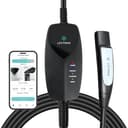
Lead with the honest part. The Mobile Connector’s real trick is not its speed, it is that a single NACS cord handles both charging levels by changing the plug — a household socket on a holiday visit, a 240-volt outlet at home, same cable. Nothing in our registry does exactly that with a native Tesla connector. Lectron builds a switchable Level 1 / Level 2 NACS portable, and Amazon has not carried a live listing for it through two separate checks, so we will not point a buy link at it.
That leaves three honest ways to cover both levels. Buy the 40-amp NACS portable and accept that it is a 240-volt-only cord. Buy the Grizzl-E Mini, which is dual-level by design — the manufacturer publishes 7 to 40 amps at 240 volts and 7 to 12 amps at 120 volts, detected automatically, with a 5-15P adapter in the box — and add the J1772-to-Tesla adapter so it fits the car. Or own two cheap cords, one per level, which is often less money than one clever one. Each of those is a real trade and we would not pretend the first is strictly better than Tesla’s own cord.
What the Mobile Connector publishes, and who beats it
Four numbers, from the certifier’s own record, and what the picks here do against each.
| Published figure | Tesla Mobile Connector | The best alternative here |
|---|
| Maximum current | 32 A | 40 A — Lectron 40A Tesla, Grizzl-E Mini |
| Power | 7.68 kW (~27 mi/hr, our math) | 9.6 kW (~34 mi/hr) — a quarter faster |
| Output cord | 19 ft, 10 AWG | Tesla wins. The NACS picks here publish 16 ft; the Mini 24 ft but through a J1772 adapter |
| Charging levels | Level 1 and Level 2, dual input | Tesla wins on a single cord. Grizzl-E Mini matches it with an adapter on the car end |
| Network / app | None (network capability “No”) | Lectron’s Level 1 Tesla cord publishes an app with scheduling and a kWh cap |
Read that table before you read the picks, because it says something buyers often miss: the Mobile Connector is not a bad charger that an aftermarket cord fixes. It is a 32-amp cord with an unusually long lead and an unusually flexible plug arrangement, and on two of those three counts it is still the best thing in this comparison. What it is not is the fastest, the cheapest, or any use whatsoever to a car with a J1772 inlet.
What we ranked on
1. The connector your car actually has. Everything on this page assumes a NACS inlet, either native or reached with an adapter. NACS is standardized as SAE J3400; J1772 is the AC connector on essentially every non-Tesla EV sold in the US. Some 2025 and 2026 models from other makers now ship with a native NACS port, so brand is no longer a reliable guide — open the charge port and look. Our J1772 versus NACS comparison shows both.
2. A safety listing we can name. Every pick publishes a listing from a nationally recognized laboratory against ANSI/UL 2594 — an ETL listing for the Lectron cords, a UL file number (E510712) for the Grizzl-E, and an Intertek ETL mark with control number 5034626 printed in the EVDANCE manual — and the adapter publishes UL 2252 certification. A portable charger gets plugged into outlets nobody has inspected, which makes this the least negotiable item on the list. See are cheap EV chargers safe.
3. Whether the current can be turned down. This matters far more on a travel cord than on a wall unit, because the whole point of a portable is plugging into circuits you did not install. The Grizzl-E Mini publishes 7 to 40 amps and the EVDANCE five steps to 24; Lectron publishes no adjustable range on either of its Level 2 portables, which is their main weakness in this company. Our what amp to set your charger guide covers how to decide, and charging at an RV park is the scenario where it bites.
4. The plug on the wall end. A native plug beats an adapted one: fewer joints, nothing to lose, and no chance of stacking two adapters. A native NEMA 14-30 cord for a dryer outlet is better than a 14-50 cord with a 14-30 adapter, all else equal — which is why the EVDANCE is here.
5. Then reach, enclosure and warranty. Sixteen feet on the Lectron cords, 24 on the Mini, 25 feet of total length on the EVDANCE. Enclosure ratings run IP65 control box with an IP55 handle (Lectron 40A Tesla), IP67 with a Type 3R handle (Lectron Level 1 Tesla), UL Type 4 (Grizzl-E Mini and the EVDANCE). Warranty is three years on the Mini, one on the EVDANCE, two on the Lectron 40A J1772, and not published at all on the Lectron Tesla cords or the adapter.
How to choose between the picks
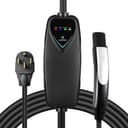
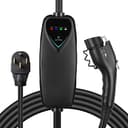
You want the same thing, faster: the Lectron 40A Tesla portable. Native NACS, a full 40 amps and 9.6 kilowatts from a NEMA 14-50 outlet, an IP65 control box with an IP55 handle rated by Lectron for outdoor use, and a handle tested to more than 10,000 insertions. Against the Mobile Connector it is about a quarter faster and it is a plug-in Level 2 cord you can take anywhere there is a 14-50. Honest cons: 240 volts only, so it replaces half of what Tesla’s cord does; no app; no published warranty term; a 16-foot cable against Tesla’s 19; and no published adjustable current, so there is no conservative setting for an outlet you cannot inspect. See our Lectron 40A Tesla review.
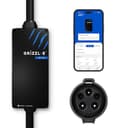
You want the dual-input trick back: the Grizzl-E Mini, plus the adapter. United Chargers publishes it on a NEMA 14-50 plug with 14-30P, 6-50P, TT-30P and 5-15P adapters in the box from the manufacturer, an output adjustable from 40 amps down to 7, and 7 to 12 amps at 120 volts detected automatically — which is the same both-levels-one-cord behavior the Mobile Connector is bought for, in a UL Type 4 metal body published from −22°F to 122°F. Cons, and they are substantial: it is a J1772 charger, so a Tesla needs the adapter permanently in the chain; it ships set to 40 amps and the manufacturer’s own Mini manual states the charger cannot detect a circuit’s amperage limit, so turning it down before the first session on a smaller circuit is your job; setting the hardware cap means removing the front cover; and it is the most expensive thing on this page. Our Grizzl-E Mini review does not soften that.
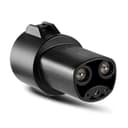
The adapter that makes the J1772 route work. Rated to 80 amps at 240 volts, UL 2252 certified and IP67, published for −22°F to 122°F. It costs about as much as a tank of fuel, it is never the bottleneck on a home circuit, and it converts any J1772 cord into one your Tesla will take. Cons: one more thing to seat firmly and not lose, and it is for AC charging only — it is not a Supercharger adapter. More options in J1772-to-Tesla adapter picks and best NACS adapters.
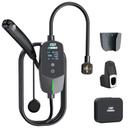
The only 240-volt outlet is the dryer: the EVDANCE 24A NACS. A native NEMA 14-30 plug and a native NACS connector, so nothing is adapted at either end, with a 24-amp maximum that is exactly what a 30-amp circuit allows — no setting can ask that circuit for more. Five current steps below it, an on-unit display of current, voltage, kWh and session time, and a button on the handle that opens a Tesla’s charge-port door. Cons: a one-year warranty; documentation that contradicts itself, including store-page copy that tells Tesla owners they need a J1772 adapter, which this SKU does not; and 25 feet that is total length rather than cable reach. See NEMA 14-30 chargers.
You only ever use the 120-volt side: the Lectron Level 1 Tesla, our budget pick. Twelve amps at 120 volts is about 1.44 kilowatts and roughly 5 miles of range an hour — genuinely slow, and genuinely enough for a plug-in hybrid, a short commute or a car that sits in a driveway for twelve hours a night. It is native NACS, publishes an IP67 control box with a Type 3R handle so an outdoor socket is within spec, and unlike Tesla’s cord it has an app with real-time status, scheduled sessions and a kWh charge cap. Cons: 12 amps rather than the 15 the discontinued version pulled, Level 1 speeds, no published warranty term, and a J1772 car cannot use it. See best Level 1 chargers.
There are two cars in the driveway: the Lectron 40A J1772, plus the adapter. This is the combination we would buy for a mixed household, and it is why we do not recommend a native-NACS cord to everybody. A J1772 portable charges every non-Tesla EV directly and a Tesla through a cheap adapter; a native-NACS cord cannot serve a J1772 car without a dearer, less common adapter in the other direction. Cons on the charger itself: no app on this SKU, a 16-foot cable, no published enclosure rating, and no adjustable current. Detail in our Lectron 40A review and across the whole brand in best Lectron EV chargers.
Two things to settle before you buy any portable
The outlet, not the charger, sets the speed. A 40-amp cord in a 30-amp dryer receptacle is not a 40-amp charger — it is a fire risk unless it is turned down, and only some units can be. The continuous-load rule allows 80 percent of a circuit’s rating: 40 amps from a 50-amp receptacle, 24 from a 30-amp one, and about 12 to 15 from a household socket. Our outlet types guide identifies what you are looking at, and NEMA 14-50 versus 6-50 covers the two 50-amp receptacles that look interchangeable and are not.
A portable is not a permanent install. Every manufacturer here publishes its charger as needing a dedicated circuit, and none of them intends a cord to be left hanging off a kitchen extension lead — see EV charger extension cords for why the connections fail before the wire does. If the charger is going to live in one place on a wall, a hardwired unit is cheaper per amp and safer; our portable versus wall charger comparison is the decision in full, and best NACS home chargers covers the wall-mounted route for a Tesla.