Plug & Range

Best Gifts for EV Road Trippers

The driver who takes the EV on long trips has a different problem from the one who charges at home: every stop is a new outlet. These are the gifts that turn more of those outlets into a fill-up.

By Stephen V.Last updated How we pick

Home charging is a solved problem for most EV drivers within the first year. Road charging never quite is. Public fast chargers are where the long miles happen, but a surprising share of a road trip’s charging happens somewhere slower and more improvised: an RV outlet at a campground, a relative’s dryer socket, a hotel’s parking-lot charger with the wrong plug. The driver who does this a lot builds a kit for it, and the kit is what this list is.

Every pick is a product we already cover for drivers, re-explained for the gifter: what problem it solves on the road, who it suits, and the one thing to check before you order. We have not bench-tested any of them — we read the manufacturer’s published specs and cite them — and we say where a brand does not publish a figure.

Two facts decide most of this list. First, the car’s connector: J1772 on almost every non-Tesla EV, the Tesla-style NACS plug on Teslas and a growing number of newer models. Second, whether the driver already has a portable Level 2 charger. If there is one in the trunk, buy the adapter; if there is not, the portable charger is the gift that makes the rest of the kit useful.

How this is funded:we earn a commission if you buy through our links, at no extra cost to you. It never changes which product we recommend, and we’ll tell you when we’d skip one. Full disclosure.

Quick picks

Ranked on published specs, charging speed, electrical fit and value. Select a row to jump to the full write-up. We have not bench-tested these chargers — here is exactly what we do instead.

#ProductBest forPrice
1
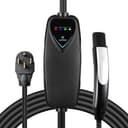
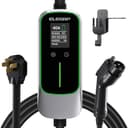
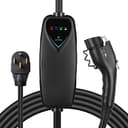
ELEGRP 40A Portable Level 2 Charger (ECP24-40A0-01)

ELEGRP 40A Portable Level 2 Charger (ECP24-40A0-01)

The cheapest charger in this registry that still publishes everything you would want to check: 9.6 kW, five current levels from 16 to 40 amps, an IP67 body with a stated -21°F floor, ETL certification and a 2-year warranty. There is no Wi-Fi and no app — you get a 1-to-12-hour delay timer on the unit instead — and for a lot of households that is the correct amount of charger.

Best road kit charger — long cable, weather-rated
$209.99 · View on Amazon

Price as of September 13, 2026. #ad How we’re funded

2
Lectron 40A Portable Level 2 Charger

Lectron 40A Portable Level 2 Charger

The least-expensive honest route into real Level 2 charging. Plug it into a NEMA 14-50 outlet, pull a true 40A / 9.6 kW, and unplug it to throw in the trunk for a trip. The trade-offs for the price are no app and a shorter warranty — both fair at this cost.

Best value 40A portable
$269.99 · View on Amazon

Price as of September 13, 2026. #ad How we’re funded

3
Lectron Level 2 Tesla (NACS) Portable Charger, 40A

Lectron Level 2 Tesla (NACS) Portable Charger, 40A

The straightforward native-NACS answer for a Tesla owner who wants real Level 2 speed without hardwiring anything. Plug it into a NEMA 14-50, pull a full 40 amps, and unplug it when you move or travel. There is no app and no adjustable current — what you are buying is the Tesla plug on the end of a proper 40-amp portable charger, at a price well under a wall-mounted NACS station.

Best portable for a Tesla
$279.89 · View on Amazon

Price as of September 13, 2026. #ad How we’re funded

4
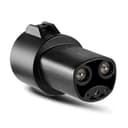
Lectron J1772 to Tesla (NACS) Adapter, 80A

Lectron J1772 to Tesla (NACS) Adapter, 80A

The single most useful accessory a Tesla or NACS owner can keep in the trunk. Snap it onto any J1772 home charger and it plugs straight into a Tesla — so you can buy the charger that's actually the best value and let this bridge the connector. It's rated to 80A/240V and UL 2252 certified, so it isn't the weak link.

Best for Tesla drivers at J1772 stops
$39.99 · View on Amazon

Price as of September 13, 2026. #ad How we’re funded

5
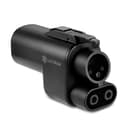
Lectron Tesla (NACS) to J1772 Adapter, 48A

Lectron Tesla (NACS) to J1772 Adapter, 48A

The mirror image of the J1772-to-Tesla adapter, for the other kind of driver: it lets a non-Tesla (J1772) car pull power from a Tesla Wall Connector, Destination Charger or Mobile Connector. Handy if your home charger is a NACS unit, or a relative's Tesla charger is the one in the garage. It's capped at 48A and SGS-certified to UL 2251 — and it is not for Superchargers.

Best for visiting Tesla-owning family
$119.99 · View on Amazon

Price as of September 13, 2026. #ad How we’re funded

6
Lectron Vortex Plus NACS to CCS Adapter

Lectron Vortex Plus NACS to CCS Adapter

The one adapter on this site that has nothing to do with home charging — it is for the road. It lets a CCS1 car whose maker has bought into the Tesla network plug into a Supercharger, at up to 500 amps and 1,000 volts. Lectron publishes it as the first NACS-to-CCS adapter certified to UL 2252, and it carries a mechanical interlock, which is the part that matters on a connector handling that much DC.

Best for a CCS car with Supercharger access
$199.99 · View on Amazon

Price as of September 13, 2026. #ad How we’re funded

The picks in full

#1Best road kit charger — long cable, weather-rated

ELEGRP 40A Portable Level 2 Charger (ECP24-40A0-01)

The cheapest charger in this registry that still publishes everything you would want to check: 9.6 kW, five current levels from 16 to 40 amps, an IP67 body with a stated -21°F floor, ETL certification and a 2-year warranty. There is no Wi-Fi and no app — you get a 1-to-12-hour delay timer on the unit instead — and for a lot of households that is the correct amount of charger.

Strengths

  • Five current levels (16/20/24/32/40A) — it fits whatever circuit you have
  • IP67 with a published -21°F to 121°F range, and a carrying case in the box
  • 2-year warranty and full ETL certification at the bottom of the price band

Trade-offs

  • No Wi-Fi, no app and no energy monitoring — just an on-unit delay timer
  • Not ENERGY STAR listed, so it may not qualify for some utility rebates
  • 40 amps is the plug-in ceiling; a 48-amp unit needs hardwiring
Max output40 A
Power9.6 kW
ConnectorJ1772
InstallNEMA 14-50 plug
Cable length25 ft
Warranty2 years
WiFi + appNo
CertificationsETL certified

Our charging-speed math. Forty amps at 240V is 9.6 kW, and at 3.5 miles per kWh that is roughly 34 miles of range an hour. ELEGRP's own figure is 37 miles an hour, which assumes a slightly more efficient car than our reference.

Build note. ELEGRP publishes 240V, up to 9.6 kW, five selectable current levels of 16, 20, 24, 32 and 40 amps, a NEMA 14-50 plug, a 25 ft cable measured plug-end to connector, a J1772 connector, ETL certification with its PBE overheat protection, an IP67 rating with a -21°F to 121°F range, a 1-12 hour delayed start, a carrying case and a 2-year warranty.

Specs read from the manufacturer spec sheet, on August 19, 2026. “Not published” means the brand does not state that figure.

#2Best value 40A portable

Lectron 40A Portable Level 2 Charger

The least-expensive honest route into real Level 2 charging. Plug it into a NEMA 14-50 outlet, pull a true 40A / 9.6 kW, and unplug it to throw in the trunk for a trip. The trade-offs for the price are no app and a shorter warranty — both fair at this cost.

Strengths

  • A real 40A / 9.6 kW at a budget price
  • Plug-in and portable — no hardwiring, and it travels
  • ETL listed to the UL 2594 / UL 2231 safety standards

Trade-offs

  • No Wi-Fi or app on the base model — the smart version is a separate SKU
  • Shorter 16 ft cable and a 2-year warranty
  • The brand doesn't publish an outdoor/IP enclosure rating
Max output40 A
Power9.6 kW
ConnectorJ1772
InstallNEMA 14-50 plug
Cable length16 ft
Warranty2 years
WiFi + appNo
CertificationsETL listed (UL 2594 / UL 2231)

Our charging-speed math. At 40A (9.6 kW) and 3.5 mi/kWh it adds roughly 34 miles of range an hour.

Build note. A portable plug-in unit — no hardwiring — and the base model carries no Wi-Fi or app.

Specs read from the manufacturer spec sheet, on July 19, 2026. “Not published” means the brand does not state that figure.

#3Best portable for a Tesla

Lectron Level 2 Tesla (NACS) Portable Charger, 40A

The straightforward native-NACS answer for a Tesla owner who wants real Level 2 speed without hardwiring anything. Plug it into a NEMA 14-50, pull a full 40 amps, and unplug it when you move or travel. There is no app and no adjustable current — what you are buying is the Tesla plug on the end of a proper 40-amp portable charger, at a price well under a wall-mounted NACS station.

Strengths

  • Native NACS connector — nothing to seat, nothing to lose, no adapter
  • A real 40A / 9.6 kW from an ordinary NEMA 14-50 outlet
  • IP65 control box and IP55 handle, rated by Lectron for outdoor use
  • Plug-in and portable, so it moves with you and travels

Trade-offs

  • No Wi-Fi or app on this SKU — the smart version is a separate, dearer listing
  • No adjustable current, so it cannot be trimmed down for an unverified outlet
  • A J1772 car needs a NACS-to-J1772 adapter — buy a J1772 charger instead
  • Lectron does not publish a warranty term for this model
Max output40 A
Power9.6 kW
ConnectorNACS
InstallNEMA 14-50 plug
Cable length16 ft
WarrantyNot published
WiFi + appNo
CertificationsETL listed (UL 2594 / UL 2231), UL 2251 handle, FCC

Our charging-speed math. At 40A on 240V (9.6 kW) and our 3.5 mi/kWh reference, roughly 34 miles of range an hour. Lectron's own figure is up to 36 miles an hour, which assumes a slightly more efficient car than our reference.

Build note. Lectron publishes 240V, 40 A and 9.6 kW through a NEMA 14-50 plug on a 16 ft cable, a native Tesla (NACS) connector, an IP65-rated control box with an IP55-rated handle tested to 10,000-plus insertions, protection against overvoltage, overcurrent and short circuits, and ETL/FCC certification against UL 2594 and UL 2231 with a UL 2251 handle. This SKU has no Wi-Fi or app.

Specs read from the manufacturer spec sheet, on August 21, 2026. “Not published” means the brand does not state that figure.

#4Best for Tesla drivers at J1772 stops

Lectron J1772 to Tesla (NACS) Adapter, 80A

The single most useful accessory a Tesla or NACS owner can keep in the trunk. Snap it onto any J1772 home charger and it plugs straight into a Tesla — so you can buy the charger that's actually the best value and let this bridge the connector. It's rated to 80A/240V and UL 2252 certified, so it isn't the weak link.

Strengths

  • Lets a Tesla or NACS car charge from any J1772 charger
  • Rated to 80A / 240V — never the bottleneck on a home circuit
  • UL 2252 certified and IP67-rated for water and dust

Trade-offs

  • One more thing to seat firmly and not lose
  • For AC home charging only — not a Supercharger or DC adapter
Max output80 A
PowerNot published
ConnectorNACS
InstallNot published
Cable lengthNot published
WarrantyNot published
WiFi + appNot published
CertificationsUL 2252 certified, IP67

Our charging-speed math. The adapter doesn't set the speed — the charger does. Rated to 80A, it simply passes through whatever your J1772 charger delivers (typically 40-48A / 9.6-11.5 kW at home).

Build note. Rated -22 to 122 degrees F; converts a J1772 connector to the Tesla/NACS (J3400) plug for AC home charging.

Specs read from the manufacturer spec sheet, on July 19, 2026. “Not published” means the brand does not state that figure.

#5Best for visiting Tesla-owning family

Lectron Tesla (NACS) to J1772 Adapter, 48A

The mirror image of the J1772-to-Tesla adapter, for the other kind of driver: it lets a non-Tesla (J1772) car pull power from a Tesla Wall Connector, Destination Charger or Mobile Connector. Handy if your home charger is a NACS unit, or a relative's Tesla charger is the one in the garage. It's capped at 48A and SGS-certified to UL 2251 — and it is not for Superchargers.

Strengths

  • Lets a J1772 car use a Tesla Wall Connector or NACS home charger
  • 48A / 240V rating covers full-speed home AC charging
  • SGS certified to the UL 2251 standard

Trade-offs

  • Works with Tesla AC connectors only — not Superchargers (DC)
  • 48A ceiling, so it won't exceed a typical home circuit anyway
Max output48 A
Power11.5 kW
ConnectorJ1772
InstallNot published
Cable lengthNot published
WarrantyNot published
WiFi + appNot published
CertificationsSGS certified (UL 2251)

Our charging-speed math. At its 48A / 11.5 kW ceiling and 3.5 mi/kWh, about 40 miles of range an hour — assuming the Tesla source can supply that.

Build note. Converts a Tesla/NACS AC connector to J1772; works with Tesla Wall Connectors, Destination Chargers and Mobile Connectors, not Superchargers.

Specs read from the manufacturer spec sheet, on July 19, 2026. “Not published” means the brand does not state that figure.

#6Best for a CCS car with Supercharger access

Lectron Vortex Plus NACS to CCS Adapter

The one adapter on this site that has nothing to do with home charging — it is for the road. It lets a CCS1 car whose maker has bought into the Tesla network plug into a Supercharger, at up to 500 amps and 1,000 volts. Lectron publishes it as the first NACS-to-CCS adapter certified to UL 2252, and it carries a mechanical interlock, which is the part that matters on a connector handling that much DC.

Strengths

  • 500A / 1,000V rating — it is not the bottleneck at a V3 or V4 Supercharger
  • Lectron publishes it as the first publicly available NACS-to-CCS adapter certified to UL 2252
  • Built-in interlock holds the connection during a high-voltage DC session

Trade-offs

  • Only works if your automaker has enabled Supercharger access for your car
  • Not compatible with Tesla vehicles, and not for AC charging at all
  • Costs multiples of an AC home-charging adapter
Max output500 A
PowerNot published
ConnectorNACS
InstallNot published
Cable lengthNot published
WarrantyNot published
WiFi + appNot published
CertificationsUL 2252 certified

Our charging-speed math. This is DC fast charging, so our 240V home math does not apply. Lectron publishes up to 150 miles in about 15 minutes, and states that the actual rate depends on the Supercharger generation and your car.

Build note. A NACS (SAE J3400) to CCS1 adapter rated 500A / 1,000V with a built-in interlock, certified to UL 2252. Lectron states it is for CCS1 EVs with automaker-granted Supercharger access, and is not compatible with Tesla vehicles or AC charging stations.

Specs read from the manufacturer spec sheet, on August 12, 2026. “Not published” means the brand does not state that figure.

Why a portable Level 2 charger is the road-tripper’s core gift

The four-prong 240-volt outlet called a NEMA 14-50 is everywhere once you start looking: nearly every RV campsite has one, and so do a lot of garages with an electric dryer, a welder or a previous EV in their history. A portable Level 2 charger with a 14-50 plug turns each of those into a proper charging stop — roughly 34 miles of range an hour at 40 amps on our reference car, which over a night at a campground is a full battery. The cable that came with the car usually does not do this; most of them are Level 1 units that add a handful of miles an hour. Our RV park charging guide covers the etiquette and the electrical details of using a campsite pedestal.

The gifter’s job is mostly to match the plug on the car end. The picks below are split by connector, and every one carries a published safety listing — the road is exactly where an unlisted charger on an unknown outlet is the wrong risk to take. Our cheap chargers guide explains what the listings mean.

The picks, in gifter terms

The road kit charger: ELEGRP 40A

Two specs make this the road pick over its rivals. The 25-foot cable reaches a car parked wherever the campsite pedestal happens to be, and the IP67 body with a published cold-weather floor means it can sit outside in the rain or a frost without the driver worrying about it. It delivers 40 amps with five current settings down to 16 amps — useful on an older or shared outlet an electrician would rather not see at full draw — and carries an ETL certification and a two-year warranty. No app; a delay timer on the unit instead.

Why it lands: the most reach and the most weather tolerance for the money. Who it suits: any J1772 driver who camps or visits. Check before buying: J1772 car, and that they do not already have a portable in the trunk. Our ELEGRP review has the spec table and our ELEGRP vs Lectron comparison weighs it against the next pick.

The value alternative: Lectron 40A

Same job, same 40 amps and 14-50 plug, with a shorter 16-foot cable, which also means less to coil up in the trunk. Lectron does not publish an enclosure rating for this unit, which we note rather than assume; the warranty is two years and the certification is ETL. It is the pick for a driver who would rather carry less cable than pay for the extra nine feet, and it is the unit we point to as the least expensive honest way into Level 2 charging.

Why it lands: the least expensive real Level 2 charger we know of. Who it suits: J1772 drivers who park close to the outlet. Check before buying: J1772 car; if the recipient tends to park far from the outlet, choose the ELEGRP instead. Our Lectron 40A review covers the rest.

The Tesla portable: Lectron Tesla 40A

The same proposition — 40 amps from a 14-50 outlet, nothing to install — with a native Tesla plug on the car end, so there is no adapter to keep track of at a campsite. IP65 control box, IP55 handle, ETL certification. Lectron does not publish a warranty term for this model. There is no app, and for a Tesla that barely matters because the car schedules charging itself.

Why it lands: Level 2 on the road with one fewer part to lose. Who it suits: Tesla and NACS-port drivers who camp or travel. Check before buying: that the car is a Tesla or has a NACS port. Our Tesla 40A review and our portable chargers for Tesla roundup have more.

For Tesla drivers at J1772 stops: J1772-to-Tesla adapter

Hotels, workplaces and most public Level 2 chargers are J1772. A Tesla can use every one of them with this adapter, which is rated to 80 amps and UL 2252 certified. Teslas ship with one; a second one that lives in the trunk is the gift a road-tripping Tesla driver will actually use, because the first one is usually at home on the wall charger.

Why it lands: it opens every J1772 charger on the route. Who it suits: every Tesla driver who travels. Check before buying: nothing beyond the car being a Tesla or NACS-port EV. Not for Superchargers. Our adapter review has the details.

For visiting Tesla-owning family: Tesla-to-J1772 adapter

The mirror image, for the non-Tesla driver whose parents or friends have a Tesla charger in the garage. It lets a J1772 car pull up to 48 amps from a Tesla Wall Connector, Destination Charger or Mobile Connector; it is SGS-certified to UL 2251. It is not for Superchargers, and it costs more than the J1772-to-Tesla twin because it is doing the electrically harder job.

Why it lands: it fixes a specific, remembered problem. Who it suits: J1772 drivers with Tesla-owning hosts. Check before buying:that the host’s charger is an AC Tesla unit. Our Tesla-to-J1772 review covers what it can and cannot do.

For a CCS car with Supercharger access: NACS-to-CCS adapter

The one pick here that is about fast charging rather than overnight charging. It lets a non-Tesla car with a CCS port use Tesla Superchargers, at up to 500 amps, provided the car’s maker has been granted access to the network for that model. Lectron publishes it as certified to UL 2252 with a mechanical interlock, which is the part that matters on a connector carrying that much DC. For the right driver it is the single biggest change to a road trip on this list; for the wrong one it does nothing.

Why it lands: it opens the largest fast-charging network to a car that could not use it. Who it suits: only drivers of CCS cars whose automaker has Supercharger access. Check before buying: this is the one gift on the list to confirm with the recipient first — the access condition is model-specific, and our NACS-to-CCS review explains how to check it.

Road-trip gifts we would skip

A heavy-duty extension cord “for charging”. It comes up constantly and it is the one accessory we would not give. EV charging pulls the same current for hours, and the connections on a cord are where that goes wrong, especially outdoors. Our extension cord guide explains why, and what the safer alternatives are.

A generator, unless they have asked for one. Charging an EV from a portable generator is possible in narrow circumstances and pointless in most; our generator guide is worth reading before anyone spends that money.

On the prices shown here

Every price on this page comes from a daily retailer check and carries the date it was verified; when a price cannot be verified the button says “Check price on Amazon” instead of a number. If you are shopping in the run-up to the holidays, our Black Friday & Cyber Monday deals hub records what has actually discounted in this category in past Novembers, and we post real deals there when they go live.
Frequently asked questions

What does an EV road tripper actually need that they don't already have?

Usually a portable Level 2 charger with a NEMA 14-50 plug, because the cable that came with the car is almost always a slow Level 1 unit. With a 14-50 portable, every RV campsite and most dryer outlets become an overnight full charge. After that, the adapter that matches their car's connector to the chargers they meet on the road.

Can any of these charge at a campground?

The three portable chargers can, on the 14-50 pedestal outlet found at most RV sites. Ask the campground first, plug in, and expect roughly 34 miles of range an hour at 40 amps. Our RV park charging guide covers the etiquette and the electrical detail, including why the 30-amp TT-30 outlet is a different job.

Is the Supercharger adapter a safe gift?

Only if you have confirmed the recipient's car qualifies. The adapter is certified and well made, but access to Tesla's network is granted automaker by automaker and sometimes model by model, and a car without that access cannot use it regardless of the adapter. It is the one pick on this list to ask about rather than surprise them with.

Do the portable chargers work in the cold?

The ELEGRP publishes a -21°F operating floor and an IP67 body, which is the most explicit cold-weather spec of the three. Lectron publishes IP ratings for its Tesla unit and no enclosure rating for the J1772 40A. For a driver who camps in winter, that published floor is the reason to choose the ELEGRP. Our cold-weather charging guide explains what the car itself does in a freeze.

Can I give a portable charger to a Tesla driver and a J1772 driver from the same list?

Yes — the Lectron Tesla 40A is the NACS version and the ELEGRP or Lectron 40A are the J1772 versions of the same idea. Either can also be used by the other kind of car with the matching adapter, which is why the two adapters are on this list.

Sources

Keep reading