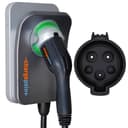
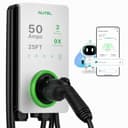
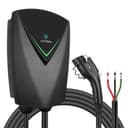
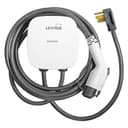
Plug & Range

Best EV Charger Brands

Nine brands sell a home EV charger we can buy and price today. Here is what each one is genuinely good at — judged on what it publishes, what a certifier confirms, and what it refuses to put in writing.

By Stephen V.Last updated How we pick

The short answer. If you want one brand to buy from without thinking about it, buy EVIQO: 48 amps, a named UL and ETL listing, ENERGY STAR, the longest total cable reach we can measure, and a price that undercuts every legacy name here. If the charger will live somewhere genuinely hostile, buy Grizzl-E, the only brand on this page that publishes a cast-metal enclosure and a sub-zero floor on the same product. If you want the most polished software and the longest-running support operation, buy ChargePoint. Our budget pick is ELEGRP, which publishes more specifications at the bottom of the price band than brands charging twice as much. Prices come from our own daily retailer check, as of November 23, 2026.

How you can rank a brand honestly, and how you cannot. We own none of these units, so we do not rank brands on feel, on a reliability score we did not measure, or on a failure rate nobody publishes. What a brand can be held to is its own paperwork: whether it names a UL file number or an ETL control number rather than printing the words “UL listed”; whether its model appears on the ENERGY STAR certified product list under a model number you can read back; whether it states an operating temperature range at all; how long it will stand behind the unit; and whether its own documents agree with each other. Those five things separate these nine brands more sharply than price does.

One flagship per brand, which is the point of the page. If you already know the specification you want, our best home EV chargers roundup ranks models irrespective of who built them, and the amperage pages go narrower still. This page answers the other question — whose charger should I buy — so each brand gets exactly one entry: the unit in our registry that best represents what the brand is for. Where a brand sells a whole lineup worth separating, we say so and link the page that does it.

How this is funded:we earn a commission if you buy through our links, at no extra cost to you. It never changes which product we recommend, and we’ll tell you when we’d skip one. Full disclosure.

Quick picks

Ranked on published specs, charging speed, electrical fit and value. Select a row to jump to the full write-up. We have not bench-tested these chargers — here is exactly what we do instead.

#ProductBest forPrice
1
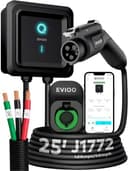
EVIQO 48A Level 2 Charger

EVIQO 48A Level 2 Charger

A lot of charger for the money. You get 48 amps, Wi-Fi scheduling, ENERGY STAR, and the longest usable reach in this group thanks to a 25 ft cable plus a 40-inch input lead. If Emporia is sold out or you want maximum cable, this is the value alternative to have in mind.

Best brand overall for the money
$427.48 · View on Amazon

$510.0016% off

Price as of November 23, 2026. #ad How we’re funded

2
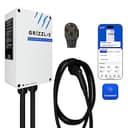
Grizzl-E Classic Connect

Grizzl-E Classic Connect

Grizzl-E put this alongside the old no-app Classic, and it kept the part that mattered: a metal case rated UL Type 4 for a spot with no shelter, published to keep operating down to -22F. What changed is that the electronics caught up — Wi-Fi, an app, and current you can dial from 40A down to 16A to fit a circuit you already have. It's the rugged pick that no longer asks you to give up scheduling to get it.

Best brand for a brutal install
$299.99 · View on Amazon

$349.9914% off

Price as of November 23, 2026. #ad How we’re funded

3
ChargePoint Home Flex

ChargePoint Home Flex

If you'd rather buy a charger once and be done, this is the safe call. You set the current in the app anywhere from 16 to 50 amps, so it fits whatever your panel can spare today and still has room to grow if you upgrade the circuit later. The app is the most polished of the bunch and the warranty is long.

Best brand for app and support
$549.00 · View on Amazon

Price as of November 23, 2026. #ad How we’re funded

4
Autel MaxiCharger Home

Autel MaxiCharger Home

Built for the driveway that takes the full brunt of the weather. The NEMA 4X shell is rated to keep charging through brutal cold and heat, it delivers a full 50 amps, and the app is genuinely capable. If your charger will live fully exposed, this is the one to shortlist.

Best brand at 50 amps
$399.00 · View on Amazon

$568.0030% off

Price as of November 23, 2026. #ad How we’re funded

5
Lectron Nexus J1772 48A (Hardwired)

Lectron Nexus J1772 48A (Hardwired)

The fastest charger we can find that has nothing to log into. It is a full 48 amps, ETL-listed to UL 2594, IP66 for an outside wall, and — unusually for a charger with no app — it is on the ENERGY STAR certified list under its own model number, which is the kind of proof a rebate administrator will actually accept. The price of that simplicity is real: no published way to dial the current down, so it wants a 60-amp circuit and nothing less, and no scheduling of its own, so your car has to do that part.

Best brand for choice of models
$379.99 · View on Amazon

$429.9912% off

Price as of November 23, 2026. #ad How we’re funded

6
Leviton EV Series Smart Home Charger (EV40P)

Leviton EV Series Smart Home Charger (EV40P)

The one charger here from a brand your electrician already stocks. Forty amps, ENERGY STAR, a NEMA 3R shell, a 25-foot cable and a certification list longer than anything else in this registry — plus the My Leviton app, which is the same app that runs Leviton's load centers and switches. You pay a real premium for that, and what it buys is a company that will still be answering the phone in ten years.

Best brand your electrician already stocks
$399.99 · View on Amazon

$499.8520% off

Price as of November 23, 2026. #ad How we’re funded

7
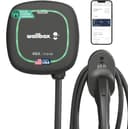
Wallbox Pulsar Plus

Wallbox Pulsar Plus

The one to reach for when wall space is tight. It's among the smallest 48A chargers made, and Power Boost load balancing lets it share a circuit without tripping the main — which can save you a panel upgrade. It's a polished, premium unit, and the price says so.

Best brand for load balancing and a tight wall
$689.99 · View on Amazon

Price as of November 23, 2026. #ad How we’re funded

8
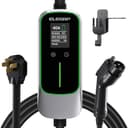
ELEGRP 40A Portable Level 2 Charger (ECP24-40A0-01)

ELEGRP 40A Portable Level 2 Charger (ECP24-40A0-01)

The cheapest charger in this registry that still publishes everything you would want to check: 9.6 kW, five current levels from 16 to 40 amps, an IP67 body with a stated -21°F floor, ETL certification and a 2-year warranty. There is no Wi-Fi and no app — you get a 1-to-12-hour delay timer on the unit instead — and for a lot of households that is the correct amount of charger.

Best budget pick
$209.99 · View on Amazon

Price as of November 23, 2026. #ad How we’re funded

9
EVDANCE 24A NEMA 14-30 Portable Charger (EV-ACS2405U)

EVDANCE 24A NEMA 14-30 Portable Charger (EV-ACS2405U)

The charger a dryer outlet actually wants. The plug on the end is a NEMA 14-30, so it goes straight into a four-prong dryer receptacle with no adapter, and its maximum is 24 amps — exactly what a 30-amp circuit allows — so there is no setting that can ask that circuit for more. Its manual carries an Intertek ETL mark to UL 2594, and it steps down to 10 amps for a circuit you are unsure of. What the low price costs you is a one-year warranty and documentation that disagrees with itself in places worth reading carefully.

Best brand for a dryer outlet
$215.99 · View on Amazon

$269.9920% off

Price as of November 23, 2026. #ad How we’re funded

The picks in full

#1Best brand overall for the money

EVIQO 48A Level 2 Charger

A lot of charger for the money. You get 48 amps, Wi-Fi scheduling, ENERGY STAR, and the longest usable reach in this group thanks to a 25 ft cable plus a 40-inch input lead. If Emporia is sold out or you want maximum cable, this is the value alternative to have in mind.

Strengths

  • 48A output with Wi-Fi scheduling at a value price
  • 25 ft charging cable plus a 40 in input lead — excellent reach
  • UL, ETL, FCC and ENERGY STAR listings

Trade-offs

  • The hardwired version needs a 60A circuit and an electrician
  • A smaller brand with a shorter track record than ChargePoint or Wallbox
Max output48 A
Power11.5 kW
ConnectorJ1772
InstallHardwired
Cable length25 ft
Warranty3 years
WiFi + appYes
CertificationsUL, ETL, FCC, ENERGY STAR

Our charging-speed math. At 48A (11.5 kW) and 3.5 mi/kWh, about 40 miles of range an hour.

Build note. Re-read from EVIQO's own page on 2026-10-04, which publishes more than the spec table above implies. The 25 ft charging cable plus a 40 in input cable is still among the longest total reach in class, and the current is adjustable two ways: 6-48 A in 1-amp increments from the app, and a hardware DIP switch that caps the maximum at 16, 32, 40 or 48 A. The same DIP block can raise the output to 50 A, which EVIQO says requires a 70 A circuit; the 48 A default needs a 60 A one. The enclosure is IP66 / NEMA-4 rated -22°F to 122°F, the warranty is 3 years and extendable to 4, and the app does remote start/stop, consumption and cost tracking, reminders, up to three schedules and over-the-air updates. No load management or load balancing is described anywhere on the page.

Specs read from the manufacturer spec sheet, on October 4, 2026. “Not published” means the brand does not state that figure.

#2Best brand for a brutal install

Grizzl-E Classic Connect

Grizzl-E put this alongside the old no-app Classic, and it kept the part that mattered: a metal case rated UL Type 4 for a spot with no shelter, published to keep operating down to -22F. What changed is that the electronics caught up — Wi-Fi, an app, and current you can dial from 40A down to 16A to fit a circuit you already have. It's the rugged pick that no longer asks you to give up scheduling to get it.

Strengths

  • Metal case rated UL Type 4 indoor/outdoor, published from -22F to 122F
  • Current adjusts from 40A down to 16A, so it fits the circuit you already have
  • 25 ft cable — among the longest here — on a simple plug-in NEMA 14-50 install

Trade-offs

  • 40A caps its charging speed below the 48A units
  • Scheduling runs through Wi-Fi and an account — the no-app Classic, which Grizzl-E still sells, has nothing to update
  • Grizzl-E publishes UL/cUL only for this model, not the ENERGY STAR listing the earlier no-app Classic carries
Max output40 A
Power9.6 kW
ConnectorJ1772
InstallNEMA 14-50 plug
Cable length25 ft
Warranty3 years
WiFi + appYes
CertificationsUL/cUL listed (file E510712)

Our charging-speed math. At 40A (9.6 kW) and 3.5 mi/kWh it adds roughly 34 miles of range an hour — more than enough to refill a daily commute overnight. Dial it down to 16A and you're at about 13.

Build note. A metal case rated UL Type 4 indoor/outdoor and published for -30C to +50C (-22F to 122F), with 2.4 GHz Wi-Fi and current adjustable from 40A down to 16A.

Specs read from the manufacturer spec sheet, on August 11, 2026. “Not published” means the brand does not state that figure.

#3Best brand for app and support

ChargePoint Home Flex

If you'd rather buy a charger once and be done, this is the safe call. You set the current in the app anywhere from 16 to 50 amps, so it fits whatever your panel can spare today and still has room to grow if you upgrade the circuit later. The app is the most polished of the bunch and the warranty is long.

Strengths

  • Adjustable 16-50A fits a modest circuit now and a bigger one later
  • The most complete app here: scheduling, reminders and usage history
  • 3-year warranty and a generous 23 ft cable

Trade-offs

  • You pay a brand premium over value 48A units
  • Using the full 50A needs a 70A circuit most older panels can't spare
Max output50 A
Power12 kW
ConnectorJ1772
InstallHardwired (a plug-in NEMA 14-50 SKU is also sold)
Cable length23 ft
Warranty3 years
WiFi + appYes
CertificationsUL/cUL listed, ENERGY STAR

Our charging-speed math. Run it at the full 50 amps (about 12 kW) and, at a middle-of-the-road 3.5 miles per kWh, it puts back roughly 42 miles of range an hour. Turn it down to 40A to live on a 50A circuit and you're at about 34.

Build note. The headline feature is app-adjustable amperage — anywhere from 16A up to 50A, in software.

Specs read from the manufacturer spec sheet, on July 19, 2026. “Not published” means the brand does not state that figure.

#4Best brand at 50 amps

Autel MaxiCharger Home

Built for the driveway that takes the full brunt of the weather. The NEMA 4X shell is rated to keep charging through brutal cold and heat, it delivers a full 50 amps, and the app is genuinely capable. If your charger will live fully exposed, this is the one to shortlist.

Strengths

  • NEMA 4X enclosure rated for very cold and very hot conditions
  • Full 50A output paired with a 25 ft cable
  • Wi-Fi, Bluetooth and a capable app

Trade-offs

  • 50A means a 70A circuit and, usually, a hardwired install
  • The app and ecosystem are younger than ChargePoint's
Max output50 A
Power12 kW
ConnectorJ1772
InstallHardwired
Cable length25 ft
Warranty3 years
WiFi + appYes
CertificationsCSA certified, ENERGY STAR

Our charging-speed math. At its 50A ceiling (about 12 kW) and 3.5 mi/kWh, roughly 42 miles of range an hour.

Build note. Re-read from Autel's own page on 2026-10-04: 12 kW / 50 A with the output adjustable 16-50 A, 208/240 V AC, hardwired, a 70 A circuit required for full output, a 25 ft J1772 cable, an IP65 / NEMA 4X enclosure with a -40 to 131°F (-40 to 55°C) operating range, Bluetooth, Wi-Fi, Ethernet, CAN and RS485 connectivity, app / AutoStart / RFID-card authentication (cards sold separately) and a 3-year warranty. On load management the page is unusually specific, and it is two different features: it "supports both Adaptive Load Management (ALM) and charger-to-charger Dynamic Load Balancing (DLB)", with "ALM requir[ing] compatible additional hardware, while DLB works between chargers without additional hardware". Autel does not name the ALM hardware on this page, so we do not either.

Specs read from the manufacturer spec sheet, on October 4, 2026. “Not published” means the brand does not state that figure.

#5Best brand for choice of models

Lectron Nexus J1772 48A (Hardwired)

The fastest charger we can find that has nothing to log into. It is a full 48 amps, ETL-listed to UL 2594, IP66 for an outside wall, and — unusually for a charger with no app — it is on the ENERGY STAR certified list under its own model number, which is the kind of proof a rebate administrator will actually accept. The price of that simplicity is real: no published way to dial the current down, so it wants a 60-amp circuit and nothing less, and no scheduling of its own, so your car has to do that part.

Strengths

  • 48A / 11.5 kW with no Wi-Fi, no account and no app to keep working
  • ENERGY STAR certified under its own model number (LECHGNexusHWJ1772), listed with network capability "No"
  • ETL listed to UL 2594, UL 2231 and UL 2251, with an IP66 indoor/outdoor body
  • 23 ft cable, a wall-mount J-hook and a plug holder included, with a 3-year warranty

Trade-offs

  • Lectron publishes no adjustable current range for this model, so it needs a 60-amp circuit to be used at all
  • Hardwired only — a licensed electrician, and it stays with the house
  • No scheduling on the charger: off-peak charging has to be set in the car
  • No operating-temperature range published, which is the spec a cold-climate install turns on
Max output48 A
Power11.5 kW
ConnectorJ1772
InstallHardwired
Cable length23 ft
Warranty3 years
WiFi + appNo
CertificationsETL listed to UL 2594, UL 2231 and UL 2251; FCC; ENERGY STAR (confirmed on the certifier's own list as model LECHGNexusHWJ1772)

Our charging-speed math. Forty-eight amps at 240V is about 11.5 kW, which at our 3.5 miles-per-kWh reference is roughly 40 miles of range an hour, or about 400 miles across a ten-hour overnight window. Lectron's own figure is 46 miles an hour, which assumes a more efficient car than our reference — plan around 40.

Build note. Lectron publishes up to 48 A at 240 V (11.5 kW), an SAE J1772 connector, a hardwired installation it says requires a professional, an IP66 rating for indoor and outdoor use, a 23 ft cable with a wall-mount J-hook and plug holder, UL 2594 / UL 2231 / UL 2251 certification under an ETL listing plus FCC and ENERGY STAR, and a 3-year warranty. Nothing on the page describes Wi-Fi, an app or an account, and the no-app build is a separately certified model: the ENERGY STAR certified AC-EVSE list carries LECHGNexusHWJ1772 with network capability "No" and a separate LECHGNexusHWJ1772-APP row with network capability "Yes". Two figures to note. The ENERGY STAR entry gives the output cord as 22 ft where Lectron and the Amazon listing both say 23 ft, and we record the manufacturer's figure that both of those agree on. And Lectron publishes neither an adjustable current range nor an operating-temperature range for this model, so neither is recorded here — the first of those is the reason it cannot be fitted to a circuit smaller than 60 amps.

Specs read from the manufacturer spec sheet, on October 4, 2026. “Not published” means the brand does not state that figure.

#6Best brand your electrician already stocks

Leviton EV Series Smart Home Charger (EV40P)

The one charger here from a brand your electrician already stocks. Forty amps, ENERGY STAR, a NEMA 3R shell, a 25-foot cable and a certification list longer than anything else in this registry — plus the My Leviton app, which is the same app that runs Leviton's load centers and switches. You pay a real premium for that, and what it buys is a company that will still be answering the phone in ten years.

Strengths

  • ENERGY STAR certified, with an unusually deep listing set (UL 2594, 2231, 2251, 62, 991, 1998, 840)
  • NEMA 3R enclosure and a cable rated to -30°C, so an outdoor install is in spec
  • 25 ft cable and a pre-attached NEMA 14-50 input lead — a genuinely quick install

Trade-offs

  • The most expensive 40-amp charger we cover, by a wide margin
  • Leviton does not publish an adjustable-amperage range for this model
  • 2-year warranty is shorter than ChargePoint's 3
Max output40 A
Power9.6 kW
ConnectorJ1772
InstallNEMA 14-50 plug (pre-attached 3 ft input cable)
Cable length25 ft
Warranty2 years
WiFi + appYes
CertificationsUL 2594, UL 2231-1, UL 2231-2, UL 2251, UL 62, UL 991, UL 1998, UL 840, CSA C22.2 #280, NFPA 70 Article 625, OCPP 1.6, ENERGY STAR

Our charging-speed math. Forty amps at 240V is 9.6 kW, and at a middle-of-the-road 3.5 miles per kWh that is roughly 34 miles of range an hour — about 340 miles across a ten-hour overnight window.

Build note. Leviton publishes 208/240 VAC, 40A, 9.6 kW, a 25 ft (7.6 m) J1772 cable, a NEMA Type 3R water-resistant enclosure, an operating range of -30°C to 50°C, altitude to 6,500 ft, Wi-Fi 802.11 b/g/n with the My Leviton app, optional RFID control, OCPP 1.6 compliance and a 2-year limited warranty.

Specs read from the manufacturer spec sheet, on August 19, 2026. “Not published” means the brand does not state that figure.

#7Best brand for load balancing and a tight wall

Wallbox Pulsar Plus

The one to reach for when wall space is tight. It's among the smallest 48A chargers made, and Power Boost load balancing lets it share a circuit without tripping the main — which can save you a panel upgrade. It's a polished, premium unit, and the price says so.

Strengths

  • Genuinely compact for a 48A charger — easy to tuck in a tight spot
  • Power Boost load balancing can sidestep a panel upgrade
  • Bluetooth and Wi-Fi with a clean, modern app

Trade-offs

  • One of the pricier chargers in this group
  • Hardwired only — no plug-in option, so it's not renter-friendly
Max output48 A
Power11.5 kW
ConnectorJ1772
InstallHardwired
Cable length25 ft
Warranty3 years
WiFi + appYes
CertificationsENERGY STAR

Our charging-speed math. At 48A (11.5 kW) and 3.5 mi/kWh, about 40 miles of range an hour — and Power Boost can throttle it down to protect a shared circuit.

Build note. One of the most compact 48A chargers in its class, carrying both Bluetooth and Wi-Fi.

Specs read from the manufacturer spec sheet, on July 19, 2026. “Not published” means the brand does not state that figure.

#8Best budget pick

ELEGRP 40A Portable Level 2 Charger (ECP24-40A0-01)

The cheapest charger in this registry that still publishes everything you would want to check: 9.6 kW, five current levels from 16 to 40 amps, an IP67 body with a stated -21°F floor, ETL certification and a 2-year warranty. There is no Wi-Fi and no app — you get a 1-to-12-hour delay timer on the unit instead — and for a lot of households that is the correct amount of charger.

Strengths

  • Five current levels (16/20/24/32/40A) — it fits whatever circuit you have
  • IP67 with a published -21°F to 121°F range, and a carrying case in the box
  • 2-year warranty and full ETL certification at the bottom of the price band

Trade-offs

  • No Wi-Fi, no app and no energy monitoring — just an on-unit delay timer
  • Not ENERGY STAR listed, so it may not qualify for some utility rebates
  • 40 amps is the plug-in ceiling; a 48-amp unit needs hardwiring
Max output40 A
Power9.6 kW
ConnectorJ1772
InstallNEMA 14-50 plug
Cable length25 ft
Warranty2 years
WiFi + appNo
CertificationsETL certified

Our charging-speed math. Forty amps at 240V is 9.6 kW, and at 3.5 miles per kWh that is roughly 34 miles of range an hour. ELEGRP's own figure is 37 miles an hour, which assumes a slightly more efficient car than our reference.

Build note. ELEGRP publishes 240V, up to 9.6 kW, five selectable current levels of 16, 20, 24, 32 and 40 amps, a NEMA 14-50 plug, a 25 ft cable measured plug-end to connector, a J1772 connector, ETL certification with its PBE overheat protection, an IP67 rating with a -21°F to 121°F range, a 1-12 hour delayed start, a carrying case and a 2-year warranty.

Specs read from the manufacturer spec sheet, on August 19, 2026. “Not published” means the brand does not state that figure.

#9Best brand for a dryer outlet

EVDANCE 24A NEMA 14-30 Portable Charger (EV-ACS2405U)

The charger a dryer outlet actually wants. The plug on the end is a NEMA 14-30, so it goes straight into a four-prong dryer receptacle with no adapter, and its maximum is 24 amps — exactly what a 30-amp circuit allows — so there is no setting that can ask that circuit for more. Its manual carries an Intertek ETL mark to UL 2594, and it steps down to 10 amps for a circuit you are unsure of. What the low price costs you is a one-year warranty and documentation that disagrees with itself in places worth reading carefully.

Strengths

  • Native NEMA 14-30 plug with a 24-amp maximum — it cannot be set above what the circuit allows
  • ETL listed (Intertek control number 5034626) to UL 2594 and UL 2231-2, per its user manual
  • Five current steps (10/12/16/20/24A) for an older or unverified dryer circuit
  • On-unit display of current, voltage, kWh and session time, plus a 1-12 hour delay timer

Trade-offs

  • One-year warranty, the shortest of the picks on our dryer-outlet page
  • EVDANCE's own pages disagree on the circuit it needs (a "20A circuit" on the store page, a "32A breaker" in the manual) — a 14-30 is a 30-amp receptacle
  • The 25 ft is total length: about 21.9 ft from control box to car and 3.1 ft from box to outlet, per the Amazon listing
  • EVDANCE says the plug-and-socket joint is not waterproof, and the connector needs its cap when stored
Max output24 A
Power5.76 kW
ConnectorJ1772
InstallNEMA 14-30 plug (four-prong dryer outlet)
Cable length25 ft
Warranty1 year
WiFi + appNot published
CertificationsETL listed (Intertek 5034626) to UL 2594, UL 2231-2 and CSA C22.2

Our charging-speed math. At its 24-amp maximum and 240V it delivers 5.76 kW, roughly 20 miles of range an hour at our 3.5 miles-per-kWh reference, or about 200 miles across a ten-hour overnight window. Dropped to 16 amps for an older circuit, it is about 13 miles an hour.

Build note. From EVDANCE's user manual for model EV-ACS2405U: 24A maximum at 240V (5.76 kW); current chosen before plugging into the car by holding the A button and stepping through 10, 12, 16, 20 or 24A; a 1.77-inch display showing real-time current, voltage, power, kWh, session time and temperature; a 1-12 hour delayed start; a Type 4 enclosure; a -22°F to 122°F operating range; 25 ft total length; an SAE J1772 connector; certification to UL 2231-2, UL 2594 and CSA C22.2 under an Intertek ETL mark (control number 5034626); and a 12-month warranty. The documentation is inconsistent, and we record the manual over the store page: the evdances.com spec table for this same product lists a "6-32A" adjustable range, a "Dedicated 20A Circuit" and a "J1772/CCS" connector, and the site banner advertises a 3-year warranty that the product page, the manual and the Amazon listing all put at one year. The manual pictures Wi-Fi and Bluetooth icons and EVDANCE sells a Wi-Fi version on its own store, but the Amazon listing we link does not state an app, so Wi-Fi is recorded as not published.

Specs read from the manufacturer spec sheet, on September 15, 2026. “Not published” means the brand does not state that figure.

The six things we hold a brand to

Every claim below is read from the manufacturer’s own page or certificate on the dated visit recorded in each product card. None of it is a test result, because we have not tested anything.

  1. A named safety listing. A home charger is a continuous 240-volt load bolted to a wall for a decade, and the listing is the cheapest part of it. The brands here that publish an identifier — Grizzl-E with UL file E510712, EVDANCE with Intertek control number 5034626, Lectron with its ENERGY STAR model number — are doing something the rest are not, because an identifier can be looked up and a phrase on a box cannot.
  2. ENERGY STAR, on the certifier’s list rather than in the marketing. It is a standby-power certification, not a speed claim, and it matters for one practical reason: some utility rebate programs name it in writing. Six of these nine brands have a certified model in our registry.
  3. A published warranty term. Three years is the standard among the brands here. One publishes a single year. One sells a longer term as an option.
  4. A published operating temperature range. This is the spec that decides whether an unheated garage or an exposed wall is in or out of warranty, and it is the one most often simply missing. Autel publishes −40°F to 131°F. Grizzl-E publishes −22°F to 122°F. Lectron publishes nothing at all for the Nexus.
  5. Current you can turn down. A charger whose amperage is fixed has to have the circuit it was born with. ELEGRP publishes five levels, EVIQO publishes app control in one-amp steps plus a hardware DIP switch, ChargePoint publishes 16 to 50 in software — and Lectron and Leviton publish no range for the models here.
  6. Documents that agree with each other. This sounds like pedantry until it changes the breaker you buy. EVDANCE’s own pages describe the same charger as needing a “20A circuit” in one place and a “32A breaker” in another, on a unit whose plug is a 30-amp receptacle. We record the manual and say so on the card.

The nine brands at a glance

Specifications only — the live price for each unit is on its buy button above, stamped with the date of the check. One flagship per brand, chosen as the clearest expression of what that brand is for.

BrandFlagship hereMax currentInstallENERGY STARWarrantyAdjustable current published
EVIQO48A Level 248 A / 11.5 kWHardwired, 60 A circuitYes3 years (4th sold)Yes — 6–48 A in app, plus DIP switch
Grizzl-EClassic Connect40 A / 9.6 kWNEMA 14-50 plugNot listed for this model3 years, 5 optionalYes — 40 A down to 16 A
ChargePointHome Flex50 A / 12 kWHardwired (plug-in SKU sold)Yes3 yearsYes — 16–50 A in software
AutelMaxiCharger Home50 A / 12 kWHardwired, 70 A circuitYes3 yearsYes — 16–50 A
LectronNexus J1772 48A48 A / 11.5 kWHardwired, 60 A circuitYes3 yearsNo range published
LevitonEV Series EV40P40 A / 9.6 kWNEMA 14-50 plugYes2 yearsNo range published
WallboxPulsar Plus48 A / 11.5 kWHardwired onlyYes3 yearsPower Boost load balancing
ELEGRP40A portable40 A / 9.6 kWNEMA 14-50 plugNot listed2 yearsYes — 16 / 20 / 24 / 32 / 40 A
EVDANCE24A NEMA 14-3024 A / 5.76 kWNEMA 14-30 dryer plugNot listed1 yearYes — 10 / 12 / 16 / 20 / 24 A

Two columns do most of the sorting. The warranty column is the clearest proxy for how long a brand expects its own hardware to last, and it runs from one year to five across this table. The adjustable-current column is the one that decides whether a charger can be fitted to the circuit you already have — what amps to set your EV charger to explains why that setting matters more than the ceiling on the box.

What each brand is actually for

EVIQO — the best brand overall for the money. EVIQO publishes the specification sheet a far more expensive brand would: 48 amps adjustable from 6 in one-amp app steps and capped in hardware by a DIP switch, a 25-foot output cable plus a 40-inch input lead for the longest total reach we can measure, an IP66 / NEMA 4 body rated −22°F to 122°F, UL, ETL, FCC and ENERGY STAR, a three-year warranty with a fourth sold, and an app that does remote start, cost tracking and over-the-air updates. It is also the brand behind the native-NACS sibling on our best NACS chargers page, so a two-car household can stay with one maker. Cons: the hardwired build needs a 60-amp circuit and an electrician; nothing on EVIQO’s page describes load management; and it is a younger brand with a shorter record than ChargePoint or Leviton, which is a real consideration when the warranty is the product.

Grizzl-E — the best brand for a brutal install. United Chargers is the only maker here that pairs a cast-aluminum case with a published cold floor on the same model: UL Type 4 indoor/outdoor, −22°F to 122°F, UL file E510712 named outright, 25 feet of cable, current adjustable from 40 down to 16, and Wi-Fi scheduling added without giving up the shell. Grizzl-E is also the only brand here selling a longer warranty as a checkout option, and the only one with four distinct units in our registry sharing one body — which is exactly why we built best Grizzl-E EV chargers to separate them. Cons: 40 amps is this model’s ceiling because of the plug; the scheduling runs through an account; and Grizzl-E publishes UL/cUL but not an ENERGY STAR listing for the Classic Connect, even though the older no-app Classic carries one.

ChargePoint — the best brand for app and support. The Home Flex is the charger most roundups open with, and the reason is software: amperage set anywhere from 16 to 50 in the app, scheduling, reminders and usage history in the most mature consumer charging app on this list, backed by the longest-running support operation of any brand here. It is also the only brand on this page with both a J1772 and a native-NACS version of the same charger in our registry, which is the cleanest upgrade path if your next car switches connectors. Cons: you pay a visible brand premium over 48-amp units with the same real-world speed; using the full 50 amps needs a 70-amp circuit many older panels cannot spare; and if you dislike accounts, nearly everything you are paying for here lives behind one. Our ChargePoint alternatives page is the counter-argument, spec by spec.

Autel — the best brand at 50 amps. Autel’s AC Elite Home publishes the widest operating range on this page by a distance, −40°F to 131°F, inside an IP65 / NEMA 4X shell, with a full 12 kW adjustable down to 16 amps, a 25-foot cable, ENERGY STAR, a three-year warranty and three ways to authorize a session: app, AutoStart and an RFID card. On dollars per usable amp it is the strongest number in our registry, which is why it also tops our best value EV chargers page. Cons: 50 amps means a 70-amp circuit and a hardwired install; RFID cards are sold separately; its adaptive load management needs additional hardware Autel does not name; and the software ecosystem is younger than ChargePoint’s.

Lectron — the best brand for choice of models. Nine live Lectron products sit in our registry, more than any other brand: both connectors, both charging levels, hardwired and portable, chargers and adapters. The Nexus J1772 is the clearest statement of what the brand does well — a full 48 amps, ETL to UL 2594 / 2231 / 2251, IP66, a 23-foot cable with a J-hook and plug holder, a three-year warranty, and no Wi-Fi, no app and no account anywhere in the chain, yet still on the ENERGY STAR certified list under its own model number. Cons: the breadth is also the trap, because the model names overlap and it is easy to buy the wrong one — which is what best Lectron EV chargers exists to fix. And Lectron publishes no selectable current range on any unit here, so the Nexus needs a 60-amp circuit or nothing, and no operating-temperature range for it at all.

Leviton — the best brand your electrician already stocks. Leviton is an electrical-wiring-devices company that also makes a charger, and the EV40P reads like it: ENERGY STAR, a NEMA Type 3R enclosure, a cable rated to −30°C, a pre-attached NEMA 14-50 input lead that makes the install quick, OCPP 1.6, and the deepest certification list in our whole registry — UL 2594, 2231-1, 2231-2, 2251, 62, 991, 1998 and 840, plus CSA and NFPA 70 Article 625. It also runs in the same My Leviton app as the company’s load centers and switches. Cons: it is the most expensive 40-amp charger we cover by a wide margin; Leviton publishes no adjustable-amperage range for it; and the two-year warranty is shorter than the three-year standard here.

Wallbox — the best brand for load balancing and a tight wall. The Pulsar Plus is among the smallest 48-amp chargers made, and Power Boost load balancing lets it share a circuit without tripping the main, which in the right house replaces a panel upgrade. Bluetooth and Wi-Fi, a NEMA 4 body, ENERGY STAR and a three-year warranty. Cons: it is the priciest unit on this page; it is hardwired only, so it is not an option for a renter and it stays with the house; and on raw charging speed it does nothing a cheaper 48-amp unit does not. See best compact EV chargers for the size comparison, including which brands publish dimensions at all.

ELEGRP — the best budget pick. ELEGRP is the cheapest brand in our registry that still publishes everything worth checking: 9.6 kW, five current levels from 16 to 40 amps selected on the unit, an IP67 body with a stated −21°F floor, a 25-foot cable, a 1-to-12-hour delay timer, a carrying case and full ETL certification, with a two-year warranty. For a household with an existing NEMA 14-50, this is frequently the correct amount of charger. Cons: no Wi-Fi, no app and no energy monitoring; no ENERGY STAR listing, so it may fail a rebate requirement; and the IP67 figure covers the station body rather than the connector, for which ELEGRP publishes IP54.

EVDANCE — the best brand for a dryer outlet. EVDANCE is the only brand here whose flagship in our registry ends in a NEMA 14-30 plug, which goes straight into a four-prong dryer receptacle with no adapter in the chain. Its maximum is 24 amps, exactly what a 30-amp circuit allows, so no setting can ask that circuit for more; it is ETL listed under Intertek control number 5034626 to UL 2594 and UL 2231-2; and it steps down to 10 amps for a circuit you are unsure of, with current, voltage, kWh and session time on the unit’s own display. Cons: a one-year warranty, the shortest here; the 25 feet is total length, about 21.9 feet of it on the car side; EVDANCE says the plug-and-socket joint is not waterproof; and its own documents disagree on the circuit the unit needs, which is the single clearest documentation failure in this group. Our NEMA 14-30 chargers page works through the dryer-outlet install properly.

The two brands we price but could not rank

Emporia belongs on this list on its paperwork, and leaving it off is worth explaining. Emporia is the brand people reach for when an electrician has said the words “service upgrade”: its Pro model is the same 48-amp, ENERGY STAR, 25-foot-cable hardware as its standard charger with PowerSmart added, and paired with Emporia’s own energy monitor that feature watches the whole-house draw and dials the charger back rather than tripping the main. On our own criteria that is the strongest brand-level argument here. We could not rank it because our price check on the date stamped on this page returned a product image and no buyable offer for both Emporia chargers in our registry — the Pro and the cheaper standard Level 2. We will not rank a brand we cannot send you to, or quote a price we cannot verify. Both reviews stay published: Emporia Pro and Emporia Level 2, and best chargers with load management covers the implementations you can buy today.

WOLFBOX belongs on it on paper too — a 48-amp hardwired smart charger with a three-year warranty and a 25-foot cable, and we keep a review of it. Same reason, same result: at our most recent check its live listing returned a product image and no buyable offer, and the earlier WE48 model is recorded in our registry as discontinued after the retailer stopped carrying it. A brand you cannot buy from today cannot be ranked against nine you can, and we would rather say so than quietly pad the list. Our best EV chargers on Amazon page keeps that check current, and explains why a listing can go quiet without the product being discontinued.

Two brands people ask about are not here at all because they do not sell through the retailer our prices come from. Tesla’s Wall Connector is one; our Tesla Wall Connector alternatives page compares its published figures, read from the ENERGY STAR database rather than from Tesla’s marketing, against units you can buy. ClipperCreek is the other: it joined Enphase and the HCS line is now sold through the Enphase store, which is what ClipperCreek alternatives exists to answer.

Three brand questions with no brand answer

Which brand charges fastest? None of them, in the sense people mean. Charging speed at home is the smaller of two ceilings: the charger’s output and your car’s onboard charger. Most mainstream EVs cap around 11 kW, so a 48-amp unit from the cheapest brand here delivers precisely what a 50-amp unit from the most expensive one does — onboard charger limits shows how to check yours before you pay for amps you can never draw.

Which brand lasts longest? We have no failure data and will not invent any. The closest honest proxies are on the table above: the warranty term the brand publishes, the enclosure rating, and whether it states an operating temperature range at all. Cast metal with a published −22°F floor and a five-year option is a different proposition from plastic with an IP number and no temperature figure, and most reliable home EV chargers ranks the field on exactly those published commitments.

Does the brand decide the bill? Rarely. The circuit does. A 60-amp hardwired run to a garage wall often costs more than the 48-amp charger on the end of it, and a 70-amp circuit for a 50-amp charger costs more again — which is why a well-built 40-amp plug-in from a budget brand on an outlet you already own frequently beats a premium hardwired unit on total cost. Our installation cost guide has real figures, and rebates and tax credits covers where an ENERGY STAR requirement usually hides.
Frequently asked questions

What is the best EV charger brand?

EVIQO, on our reading, if you want one brand to buy from without studying the market: it publishes 48 amps with current adjustable from 6 amps in the app plus a hardware DIP cap, an IP66 / NEMA 4 body rated -22°F to 122°F, UL, ETL, FCC and ENERGY STAR listings, a 25-foot cable plus a 40-inch input lead, and a three-year warranty with a fourth sold — at a price below every legacy name on this page. If the charger has to survive a fully exposed wall, Grizzl-E is the better brand answer; if you want the most mature app and support operation, ChargePoint is.

Who makes the most reliable home EV charger?

Nobody publishes a failure rate, so any brand ranking that claims one is guessing — we own none of these units and have no test data. What you can compare is what each brand commits to in writing: the enclosure rating, the published operating temperature range, the named safety listing, and the warranty term. On those, Grizzl-E (cast aluminum, UL Type 4, -22°F floor, five-year option) and Autel (IP65 / NEMA 4X, -40°F to 131°F) publish the strongest commitments in our registry.

Are cheap EV charger brands safe?

It depends entirely on whether the brand will name its listing. A charger that publishes a UL file number or an ETL control number you can look up has been through a real evaluation; a box printed with the words "UL listed" and no identifier has not necessarily been. ELEGRP and EVDANCE are both budget brands here, and both name their certification — ELEGRP its ETL listing, EVDANCE Intertek control number 5034626 to UL 2594 and UL 2231-2. If the budget is genuinely tight, buy a cheaper listed charger at a lower amperage rather than an unlisted one at a higher one.

Which EV charger brand has the best warranty?

Grizzl-E, with a caveat. United Chargers offers a three or five-year term as a purchase option on its own site, the longest available on anything we rank, but buying through a marketplace means the cover you hold is whatever the seller shipped — check the paperwork. Three years is the standard among ChargePoint, Autel, Wallbox, EVIQO (which sells a fourth) and Lectron's Nexus. Leviton publishes two years and EVDANCE one.

Is a premium EV charger brand worth the money?

It is worth it for software, support and size, and not worth it for speed. A 48-amp charger adds the same range per hour whichever brand built it, because your car's onboard charger is usually the limiting factor. What the premium brands actually sell is a more mature app and support line (ChargePoint), load balancing that can replace a panel upgrade (Wallbox), a smaller body for a tight wall (Wallbox), or a certification list and a company your electrician already deals with (Leviton).

Should I buy the same brand as my car?

There is no technical reason to. Home AC charging runs on two open standards — J1772 for every non-Tesla EV sold in the US, and NACS on Teslas and a growing number of newer models — so any listed charger with the right connector works with any car, and an adapter bridges the two cheaply in either direction. Match the connector and the amperage to the car, not the badge.

Which brands should I avoid?

We will not name a brand as unsafe without evidence, and we have none. What we will say is the rule we apply ourselves: skip any brand that will not publish a safety-listing identifier, an operating temperature range or a warranty term, because each of those omissions is a commitment the manufacturer has declined to make. We also do not rank a brand we cannot buy from today — WOLFBOX's live listing returned no buyable offer at our last check, which is why it is reviewed on this site but absent from the ranking above.

Sources

  • EVIQO — Level 2 48 A hardwired charging station product page — Manufacturer page, fetched 2026-10-04: 48 A / 11.5 kW as standard with a 50 A output available by changing internal DIP switches (which it says requires a 70 A circuit), current adjustable 6-48 A in 1-amp increments from the app, and hardware DIP switches that set the maximum at 16, 32, 40 or 48 A. A 25 ft charging cable plus a 40 in input cable, an IP66 / NEMA-4 enclosure rated -22 °F to 122 °F, UL / ETL / FCC / ENERGY STAR certification, and a 3-year warranty extendable to 4. The app does remote start/stop, current setting, consumption and cost tracking, charging reminders, up to three custom schedules and over-the-air firmware updates. Hardwired only, and a 60 A dedicated circuit is stated for 48 A output. No load management or load balancing is described anywhere on the page (accessed October 4, 2026)
  • United Chargers — Grizzl-E Classic Connect product page — Manufacturer page, fetched 2026-10-05: a 40 A plug-in Level 2 EVSE, “Max power 40A 10kW”, a NEMA 14-50 plug, adjustable current stated as “40A - 16A”, a 25 ft (7.6 m) output cable, UL Type 4 indoor/outdoor protection, certification “UL/cUL E510712”, Wi-Fi (2.4 GHz) with the Grizzl-E Connect mobile application, an operating temperature of -30 °C to +50 °C (-22 °F to 122 °F) and a 10.25 x 6.25 x 3.75 in enclosure. Available with a J1772 or a NACS output cable, and the warranty is a purchase option on the page — 3 year or 5 year. Listed at $349.99 direct on the date fetched. The page also advertises Demand/Response utility-program participation through the app (accessed October 5, 2026)
  • ChargePoint — Home Flex datasheet — Manufacturer datasheet: output adjustable in the app to 16, 24, 32, 40, 48 or 50 A (up to 12 kW); the dedicated dual-pole breaker must be rated for 125% of the maximum load (its example: a 50 A breaker for 40 A output) (accessed September 18, 2026)
  • Autel — MaxiCharger AC Elite Home 50 A product page — Manufacturer page: 12 kW / 50 A with the output adjustable 16-50 A, a 70 A circuit required for full output, 208/240 V AC, hardwired, a 25 ft SAE J1772 cable, IP65 / NEMA 4X, an operating range of -40 to 131 °F (-40 to 55 °C), a 3-year warranty, and Bluetooth, Wi-Fi, Ethernet, CAN and RS485 connectivity with app, AutoStart and RFID-card authentication (cards sold separately). On load management it states that the charger “supports both Adaptive Load Management (ALM) and charger-to-charger Dynamic Load Balancing (DLB) for more flexible home energy management” and that “ALM requires compatible additional hardware, while DLB works between chargers without additional hardware” (accessed October 4, 2026)
  • Lectron — NEXUS Level 2 J1772 48 A hardwired charging station — Manufacturer page: up to 48 A at 240 V (11.5 kW), SAE J1772, hardwired installation requiring a professional, IP66 indoor/outdoor rating, a 23 ft cable with a wall-mount J-hook and plug holder, UL 2594 / UL 2231 / UL 2251 certification under an ETL listing plus FCC and ENERGY STAR, and a 3-year warranty. No app, Wi-Fi or account is listed anywhere on the page; Lectron sells the networked build as a separate SKU (accessed October 4, 2026)
  • Emporia Energy — EV Chargers (Classic and Pro) — Manufacturer page: the Classic and the Pro both list Solar Charging Integration, and both require the Vue Home Energy Monitor for it — with the Vue added, the charger 'automatically charge[s] with your excess solar power'. PowerSmart load management on the Pro requires the Vue plus the PowerSmart upgrade; Emporia also lists Invite2Charge, described as 'multi-user access control for EV chargers' (accessed September 18, 2026)
  • Leviton — EV40P Level 2 smart charger product page — Manufacturer page, fetched 2026-10-04: 40 A, 9.6 kW, a 25 ft (7.6 m) cable, a NEMA Type 3R enclosure, an operating range of -30 °C to 50 °C, UL 2594 / 2231-1 / 2231-2 / 2251 / 62 / 991 / 1998 and OCPP 1.6 compliance, and a 2-year limited warranty. Recorded for a negative finding as much as a positive one: the page states NO load management, load shedding, load balancing or circuit-sharing capability, and publishes no adjustable amperage range — it is specified as a fixed 40-amp unit (accessed October 4, 2026)
  • Wallbox — Pulsar Plus EV Charger (US) — Manufacturer page: solar charging lets the Pulsar Plus run on 100% solar or a mix of solar and grid, and requires a separately sold Wallbox Power Meter; solar charging is not compatible with multiple-charger installations or OCPP; the same power meter enables dynamic load management (accessed September 18, 2026)
  • ELEGRP — 40 A Level 2 EV Charger (NEMA 14-50) product page — Manufacturer page, fetched 2026-10-05: a NEMA 14-50 plug delivering up to 9.6 kW with “5 adjustable current levels (16/20/24/32/40A) to match your home capacity”, a 25 ft cable, a 1-12 hour delay timer, an IP67 charging station with an IP54 connector, a published range of -21 °F to 121 °F, ETL certification with ELEGRP's PBE overheat protection, a carrying case, and “up to a 2-year warranty”. The page states Tesla vehicles are compatible “using a NACS adapter (sold separately)”, and its own comparison table lists a separate 16 A sibling model on NEMA 6-20 (240 V) / NEMA 5-15 or 5-20 (120 V) plugs — the 32 A and 40 A models are both NEMA 14-50 only. ELEGRP's marketing figure is “up to 37 miles/h”, which assumes a more efficient car than our 3.5 mi/kWh reference (accessed October 5, 2026)
  • EVDANCE — EV-ACS2405U portable 24 A NEMA 14-30 charger user manual — Manufacturer manual for the exact model we link, read 2026-09-15 and re-fetched live 2026-10-05 (HTTP 200): 24 A maximum at 240 V (5.76 kW); current chosen before the connector is plugged into the car by holding the A button through 10, 12, 16, 20 or 24 A; a 1.77 in display of current, voltage, power, kWh, session time and temperature; a 1-12 hour delayed start; a Type 4 enclosure; a -22 °F to 122 °F operating range; 25 ft total length; an SAE J1772 connector; certification to UL 2594, UL 2231-2 and CSA C22.2 under an Intertek ETL mark (control number 5034626); and a 12-month warranty. Recorded for the conflicts as well as the specs: the manual states a “32A breaker” where EVDANCE's own store page says a “Dedicated 20A Circuit” and a “6-32A” range, and the manual pictures Wi-Fi and Bluetooth icons the Amazon listing we link does not claim (accessed October 5, 2026)
  • ENERGY STAR — Certified Electric Vehicle Supply Equipment (AC-Output), certified-product list — The certifier's own list of certified AC chargers, by model number, with the measured standby figures behind each certification. Queried 2026-10-04: Lectron's Nexus is certified twice over, once as LECHGNexusHWJ1772 (48 A, network capability 'No', 1.86 W in no-vehicle mode) and once as LECHGNexusHWJ1772-APP (48 A, network capability 'Yes', 3.02 W) — the same hardware with and without a radio. The plug-in pair is recorded the same way (LECHGNexusNEMA14-50J1772 at 1.88 W, the -APP version at 3.14 W). No ELEGRP or EVDANCE product appears anywhere on the list (accessed October 4, 2026)
  • UL Solutions — EV Charging Infrastructure Services — UL on EVSE safety certification: ANSI/UL 2594 is the Standard for Electric Vehicle Supply Equipment (accessed July 19, 2026)
  • NFPA — Using the Latest NEC for EV Charger Installations — NFPA on NEC (NFPA 70) Article 625: EV charging is a continuous load, so circuits are sized to 125% of load (the 80% rule) (accessed July 19, 2026)
  • U.S. DOE Alternative Fuels Data Center — Electric Vehicle Charging Stations — US DOE on charging levels: Level 1 (~1.9 kW, ~5 mi/hr), Level 2 (2.9-19.2 kW, ~7.2 kW typical residential, ~25 mi/hr), and DC fast charging (accessed July 19, 2026)

Keep reading