Plug & Range

Best EV Chargers on Amazon

Every charger on this site is an Amazon listing we re-check every day. So this is the page that says which listings are live right now, what each one is for — and the six things worth checking on a charger listing before you press buy.

By Stephen V.Last updated How we pick

The short answer. The best EV charger listing on Amazon today, on our reading, is the Autel MaxiCharger Home: 50 amps and 12 kW adjustable from 16, IP65 / NEMA 4X, an operating range of −40°F to 131°F, a 25-foot cable, ENERGY STAR and a three-year warranty, at a price below several 48-amp units that publish less. The best 48-amp listing is the EVIQO 48A; the best plug-in — no electrician on the day — is the Grizzl-E Classic Connect; and our budget pick is the ELEGRP 40A. Prices come from our own retailer check, as of November 23, 2026, and every unit below was confirmed to have a live offer and a real product photo at that check.

Why a page about the listing rather than the charger. The specification is only half of what you buy on a marketplace. The other half is which SKU the listing resolves to, whether the certification is an identifier or a phrase, what is actually in the box, and whether the thing is still being sold next month. We have watched all four of those go wrong on real listings we were tracking, which is why the second half of this page is a checklist rather than more picks. If you already know the specification you want, start from best home EV chargers instead, or from the amperage pages.

Our bias, stated up front. We earn a commission when you buy through the links on this page, and that is exactly why we publish the cheaper pick when the cheaper pick is right — our methodology and editorial policy spell out the rules we hold ourselves to. We own none of these units, every specification below is read from the manufacturer’s own sheet on a dated visit, and no price is ever stored on this site — the number on each buy button is fetched, not remembered.

How this is funded:we earn a commission if you buy through our links, at no extra cost to you. It never changes which product we recommend, and we’ll tell you when we’d skip one. Full disclosure.

Quick picks

Ranked on published specs, charging speed, electrical fit and value. Select a row to jump to the full write-up. We have not bench-tested these chargers — here is exactly what we do instead.

#ProductBest forPrice
1
Autel MaxiCharger Home

Autel MaxiCharger Home

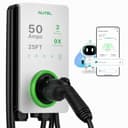
Built for the driveway that takes the full brunt of the weather. The NEMA 4X shell is rated to keep charging through brutal cold and heat, it delivers a full 50 amps, and the app is genuinely capable. If your charger will live fully exposed, this is the one to shortlist.

Best Amazon buy overall
$399.00 · View on Amazon

$568.0030% off

Price as of November 23, 2026. #ad How we’re funded

2
EVIQO 48A Level 2 Charger

EVIQO 48A Level 2 Charger

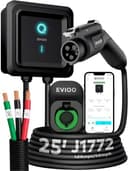
A lot of charger for the money. You get 48 amps, Wi-Fi scheduling, ENERGY STAR, and the longest usable reach in this group thanks to a 25 ft cable plus a 40-inch input lead. If Emporia is sold out or you want maximum cable, this is the value alternative to have in mind.

Best 48-amp listing
$427.48 · View on Amazon

$510.0016% off

Price as of November 23, 2026. #ad How we’re funded

3
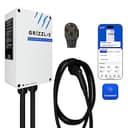
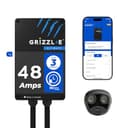
Grizzl-E Classic Connect

Grizzl-E Classic Connect

Grizzl-E put this alongside the old no-app Classic, and it kept the part that mattered: a metal case rated UL Type 4 for a spot with no shelter, published to keep operating down to -22F. What changed is that the electronics caught up — Wi-Fi, an app, and current you can dial from 40A down to 16A to fit a circuit you already have. It's the rugged pick that no longer asks you to give up scheduling to get it.

Best plug-in listing
$299.99 · View on Amazon

$349.9914% off

Price as of November 23, 2026. #ad How we’re funded

4
Lectron Nexus J1772 48A (Hardwired)

Lectron Nexus J1772 48A (Hardwired)

The fastest charger we can find that has nothing to log into. It is a full 48 amps, ETL-listed to UL 2594, IP66 for an outside wall, and — unusually for a charger with no app — it is on the ENERGY STAR certified list under its own model number, which is the kind of proof a rebate administrator will actually accept. The price of that simplicity is real: no published way to dial the current down, so it wants a 60-amp circuit and nothing less, and no scheduling of its own, so your car has to do that part.

Best listing with nothing to log into
$379.99 · View on Amazon

$429.9912% off

Price as of November 23, 2026. #ad How we’re funded

5
Grizzl-E Ultimate 48A

Grizzl-E Ultimate 48A

The Grizzl-E for people who wanted more than 40 amps. It keeps the metal UL Type 4 body and the published -22F floor that make the Classic Connect our exposed-install pick, then raises the ceiling to 48A and adds an OCPP radio on top of the Grizzl-E Connect app. Two catches: it is hardwire-only, so there is no unplugging it and taking it with you, and the SKU Amazon carries today is the NACS cable version, so a J1772 car needs an adapter permanently in the chain.

Best NACS listing
$349.99 · View on Amazon

$479.9927% off

Price as of November 23, 2026. #ad How we’re funded

6
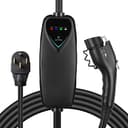
Lectron 40A Portable Level 2 Charger

Lectron 40A Portable Level 2 Charger

The least-expensive honest route into real Level 2 charging. Plug it into a NEMA 14-50 outlet, pull a true 40A / 9.6 kW, and unplug it to throw in the trunk for a trip. The trade-offs for the price are no app and a shorter warranty — both fair at this cost.

Best portable listing
$246.49 · View on Amazon

$289.9915% off

Price as of November 23, 2026. #ad How we’re funded

7
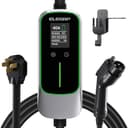
ELEGRP 40A Portable Level 2 Charger (ECP24-40A0-01)

ELEGRP 40A Portable Level 2 Charger (ECP24-40A0-01)

The cheapest charger in this registry that still publishes everything you would want to check: 9.6 kW, five current levels from 16 to 40 amps, an IP67 body with a stated -21°F floor, ETL certification and a 2-year warranty. There is no Wi-Fi and no app — you get a 1-to-12-hour delay timer on the unit instead — and for a lot of households that is the correct amount of charger.

Best budget pick
$209.99 · View on Amazon

Price as of November 23, 2026. #ad How we’re funded

8
Lectron J1772 to Tesla (NACS) Adapter, 80A

Lectron J1772 to Tesla (NACS) Adapter, 80A

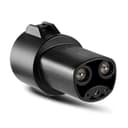
The single most useful accessory a Tesla or NACS owner can keep in the trunk. Snap it onto any J1772 home charger and it plugs straight into a Tesla — so you can buy the charger that's actually the best value and let this bridge the connector. It's rated to 80A/240V and UL 2252 certified, so it isn't the weak link.

Best accessory listing
$39.99 · View on Amazon

Price as of November 23, 2026. #ad How we’re funded

The picks in full

#1Best Amazon buy overall

Autel MaxiCharger Home

Built for the driveway that takes the full brunt of the weather. The NEMA 4X shell is rated to keep charging through brutal cold and heat, it delivers a full 50 amps, and the app is genuinely capable. If your charger will live fully exposed, this is the one to shortlist.

Strengths

  • NEMA 4X enclosure rated for very cold and very hot conditions
  • Full 50A output paired with a 25 ft cable
  • Wi-Fi, Bluetooth and a capable app

Trade-offs

  • 50A means a 70A circuit and, usually, a hardwired install
  • The app and ecosystem are younger than ChargePoint's
Max output50 A
Power12 kW
ConnectorJ1772
InstallHardwired
Cable length25 ft
Warranty3 years
WiFi + appYes
CertificationsCSA certified, ENERGY STAR

Our charging-speed math. At its 50A ceiling (about 12 kW) and 3.5 mi/kWh, roughly 42 miles of range an hour.

Build note. Re-read from Autel's own page on 2026-10-04: 12 kW / 50 A with the output adjustable 16-50 A, 208/240 V AC, hardwired, a 70 A circuit required for full output, a 25 ft J1772 cable, an IP65 / NEMA 4X enclosure with a -40 to 131°F (-40 to 55°C) operating range, Bluetooth, Wi-Fi, Ethernet, CAN and RS485 connectivity, app / AutoStart / RFID-card authentication (cards sold separately) and a 3-year warranty. On load management the page is unusually specific, and it is two different features: it "supports both Adaptive Load Management (ALM) and charger-to-charger Dynamic Load Balancing (DLB)", with "ALM requir[ing] compatible additional hardware, while DLB works between chargers without additional hardware". Autel does not name the ALM hardware on this page, so we do not either.

Specs read from the manufacturer spec sheet, on October 4, 2026. “Not published” means the brand does not state that figure.

#2Best 48-amp listing

EVIQO 48A Level 2 Charger

A lot of charger for the money. You get 48 amps, Wi-Fi scheduling, ENERGY STAR, and the longest usable reach in this group thanks to a 25 ft cable plus a 40-inch input lead. If Emporia is sold out or you want maximum cable, this is the value alternative to have in mind.

Strengths

  • 48A output with Wi-Fi scheduling at a value price
  • 25 ft charging cable plus a 40 in input lead — excellent reach
  • UL, ETL, FCC and ENERGY STAR listings

Trade-offs

  • The hardwired version needs a 60A circuit and an electrician
  • A smaller brand with a shorter track record than ChargePoint or Wallbox
Max output48 A
Power11.5 kW
ConnectorJ1772
InstallHardwired
Cable length25 ft
Warranty3 years
WiFi + appYes
CertificationsUL, ETL, FCC, ENERGY STAR

Our charging-speed math. At 48A (11.5 kW) and 3.5 mi/kWh, about 40 miles of range an hour.

Build note. Re-read from EVIQO's own page on 2026-10-04, which publishes more than the spec table above implies. The 25 ft charging cable plus a 40 in input cable is still among the longest total reach in class, and the current is adjustable two ways: 6-48 A in 1-amp increments from the app, and a hardware DIP switch that caps the maximum at 16, 32, 40 or 48 A. The same DIP block can raise the output to 50 A, which EVIQO says requires a 70 A circuit; the 48 A default needs a 60 A one. The enclosure is IP66 / NEMA-4 rated -22°F to 122°F, the warranty is 3 years and extendable to 4, and the app does remote start/stop, consumption and cost tracking, reminders, up to three schedules and over-the-air updates. No load management or load balancing is described anywhere on the page.

Specs read from the manufacturer spec sheet, on October 4, 2026. “Not published” means the brand does not state that figure.

#3Best plug-in listing

Grizzl-E Classic Connect

Grizzl-E put this alongside the old no-app Classic, and it kept the part that mattered: a metal case rated UL Type 4 for a spot with no shelter, published to keep operating down to -22F. What changed is that the electronics caught up — Wi-Fi, an app, and current you can dial from 40A down to 16A to fit a circuit you already have. It's the rugged pick that no longer asks you to give up scheduling to get it.

Strengths

  • Metal case rated UL Type 4 indoor/outdoor, published from -22F to 122F
  • Current adjusts from 40A down to 16A, so it fits the circuit you already have
  • 25 ft cable — among the longest here — on a simple plug-in NEMA 14-50 install

Trade-offs

  • 40A caps its charging speed below the 48A units
  • Scheduling runs through Wi-Fi and an account — the no-app Classic, which Grizzl-E still sells, has nothing to update
  • Grizzl-E publishes UL/cUL only for this model, not the ENERGY STAR listing the earlier no-app Classic carries
Max output40 A
Power9.6 kW
ConnectorJ1772
InstallNEMA 14-50 plug
Cable length25 ft
Warranty3 years
WiFi + appYes
CertificationsUL/cUL listed (file E510712)

Our charging-speed math. At 40A (9.6 kW) and 3.5 mi/kWh it adds roughly 34 miles of range an hour — more than enough to refill a daily commute overnight. Dial it down to 16A and you're at about 13.

Build note. A metal case rated UL Type 4 indoor/outdoor and published for -30C to +50C (-22F to 122F), with 2.4 GHz Wi-Fi and current adjustable from 40A down to 16A.

Specs read from the manufacturer spec sheet, on August 11, 2026. “Not published” means the brand does not state that figure.

#4Best listing with nothing to log into

Lectron Nexus J1772 48A (Hardwired)

The fastest charger we can find that has nothing to log into. It is a full 48 amps, ETL-listed to UL 2594, IP66 for an outside wall, and — unusually for a charger with no app — it is on the ENERGY STAR certified list under its own model number, which is the kind of proof a rebate administrator will actually accept. The price of that simplicity is real: no published way to dial the current down, so it wants a 60-amp circuit and nothing less, and no scheduling of its own, so your car has to do that part.

Strengths

  • 48A / 11.5 kW with no Wi-Fi, no account and no app to keep working
  • ENERGY STAR certified under its own model number (LECHGNexusHWJ1772), listed with network capability "No"
  • ETL listed to UL 2594, UL 2231 and UL 2251, with an IP66 indoor/outdoor body
  • 23 ft cable, a wall-mount J-hook and a plug holder included, with a 3-year warranty

Trade-offs

  • Lectron publishes no adjustable current range for this model, so it needs a 60-amp circuit to be used at all
  • Hardwired only — a licensed electrician, and it stays with the house
  • No scheduling on the charger: off-peak charging has to be set in the car
  • No operating-temperature range published, which is the spec a cold-climate install turns on
Max output48 A
Power11.5 kW
ConnectorJ1772
InstallHardwired
Cable length23 ft
Warranty3 years
WiFi + appNo
CertificationsETL listed to UL 2594, UL 2231 and UL 2251; FCC; ENERGY STAR (confirmed on the certifier's own list as model LECHGNexusHWJ1772)

Our charging-speed math. Forty-eight amps at 240V is about 11.5 kW, which at our 3.5 miles-per-kWh reference is roughly 40 miles of range an hour, or about 400 miles across a ten-hour overnight window. Lectron's own figure is 46 miles an hour, which assumes a more efficient car than our reference — plan around 40.

Build note. Lectron publishes up to 48 A at 240 V (11.5 kW), an SAE J1772 connector, a hardwired installation it says requires a professional, an IP66 rating for indoor and outdoor use, a 23 ft cable with a wall-mount J-hook and plug holder, UL 2594 / UL 2231 / UL 2251 certification under an ETL listing plus FCC and ENERGY STAR, and a 3-year warranty. Nothing on the page describes Wi-Fi, an app or an account, and the no-app build is a separately certified model: the ENERGY STAR certified AC-EVSE list carries LECHGNexusHWJ1772 with network capability "No" and a separate LECHGNexusHWJ1772-APP row with network capability "Yes". Two figures to note. The ENERGY STAR entry gives the output cord as 22 ft where Lectron and the Amazon listing both say 23 ft, and we record the manufacturer's figure that both of those agree on. And Lectron publishes neither an adjustable current range nor an operating-temperature range for this model, so neither is recorded here — the first of those is the reason it cannot be fitted to a circuit smaller than 60 amps.

Specs read from the manufacturer spec sheet, on October 4, 2026. “Not published” means the brand does not state that figure.

#5Best NACS listing

Grizzl-E Ultimate 48A

The Grizzl-E for people who wanted more than 40 amps. It keeps the metal UL Type 4 body and the published -22F floor that make the Classic Connect our exposed-install pick, then raises the ceiling to 48A and adds an OCPP radio on top of the Grizzl-E Connect app. Two catches: it is hardwire-only, so there is no unplugging it and taking it with you, and the SKU Amazon carries today is the NACS cable version, so a J1772 car needs an adapter permanently in the chain.

Strengths

  • 48A / 11.5 kW in the same UL Type 4 metal case, published from -22F to 122F
  • Speaks OCPP as well as Grizzl-E's own app — rare on a home charger
  • 25 ft cable, and current can be dialed to 40, 32, 24 or 16 amps

Trade-offs

  • The live Amazon SKU is the NACS cable — a J1772 car needs an adapter to use it
  • Hardwire only — no plug, so it is not renter-friendly and not portable
  • 48A needs a 60-amp circuit, which is the install many older panels can't take
Max output48 A
Power11.5 kW
ConnectorNACS
InstallHardwired
Cable length25 ft
Warranty3 years
WiFi + appYes
CertificationsUL/cUL listed (file E510712); ENERGY STAR certified (GRS-077-W-HW-25J48-A-GB, qualified 2026-06-30)

Our charging-speed math. At 48A (11.5 kW) and 3.5 mi/kWh, roughly 40 miles of range an hour — about six more than the 40A Classic Connect, and it needs a 60-amp circuit to get there.

Build note. A metal case rated UL Type 4 indoor/outdoor, published for -30C to +50C (-22F to 122F), with 2.4 GHz Wi-Fi on an extended-range antenna, OCPP support and current selectable at 40, 32, 24 or 16 amps. Grizzl-E publishes the Ultimate 48A with a J1772 or a NACS output cable; the SKU Amazon lists today (GRS-077-W-HW-25N48-A-GB) is the NACS one, which is the connector our spec table records.

Specs read from the manufacturer spec sheet, on August 21, 2026. “Not published” means the brand does not state that figure.

#6Best portable listing

Lectron 40A Portable Level 2 Charger

The least-expensive honest route into real Level 2 charging. Plug it into a NEMA 14-50 outlet, pull a true 40A / 9.6 kW, and unplug it to throw in the trunk for a trip. The trade-offs for the price are no app and a shorter warranty — both fair at this cost.

Strengths

  • A real 40A / 9.6 kW at a budget price
  • Plug-in and portable — no hardwiring, and it travels
  • ETL listed to the UL 2594 / UL 2231 safety standards

Trade-offs

  • No Wi-Fi or app on the base model — the smart version is a separate SKU
  • Shorter 16 ft cable and a 2-year warranty
  • The brand doesn't publish an outdoor/IP enclosure rating
Max output40 A
Power9.6 kW
ConnectorJ1772
InstallNEMA 14-50 plug
Cable length16 ft
Warranty2 years
WiFi + appNo
CertificationsETL listed (UL 2594 / UL 2231)

Our charging-speed math. At 40A (9.6 kW) and 3.5 mi/kWh it adds roughly 34 miles of range an hour.

Build note. A portable plug-in unit — no hardwiring — and the base model carries no Wi-Fi or app.

Specs read from the manufacturer spec sheet, on July 19, 2026. “Not published” means the brand does not state that figure.

#7Best budget pick

ELEGRP 40A Portable Level 2 Charger (ECP24-40A0-01)

The cheapest charger in this registry that still publishes everything you would want to check: 9.6 kW, five current levels from 16 to 40 amps, an IP67 body with a stated -21°F floor, ETL certification and a 2-year warranty. There is no Wi-Fi and no app — you get a 1-to-12-hour delay timer on the unit instead — and for a lot of households that is the correct amount of charger.

Strengths

  • Five current levels (16/20/24/32/40A) — it fits whatever circuit you have
  • IP67 with a published -21°F to 121°F range, and a carrying case in the box
  • 2-year warranty and full ETL certification at the bottom of the price band

Trade-offs

  • No Wi-Fi, no app and no energy monitoring — just an on-unit delay timer
  • Not ENERGY STAR listed, so it may not qualify for some utility rebates
  • 40 amps is the plug-in ceiling; a 48-amp unit needs hardwiring
Max output40 A
Power9.6 kW
ConnectorJ1772
InstallNEMA 14-50 plug
Cable length25 ft
Warranty2 years
WiFi + appNo
CertificationsETL certified

Our charging-speed math. Forty amps at 240V is 9.6 kW, and at 3.5 miles per kWh that is roughly 34 miles of range an hour. ELEGRP's own figure is 37 miles an hour, which assumes a slightly more efficient car than our reference.

Build note. ELEGRP publishes 240V, up to 9.6 kW, five selectable current levels of 16, 20, 24, 32 and 40 amps, a NEMA 14-50 plug, a 25 ft cable measured plug-end to connector, a J1772 connector, ETL certification with its PBE overheat protection, an IP67 rating with a -21°F to 121°F range, a 1-12 hour delayed start, a carrying case and a 2-year warranty.

Specs read from the manufacturer spec sheet, on August 19, 2026. “Not published” means the brand does not state that figure.

#8Best accessory listing

Lectron J1772 to Tesla (NACS) Adapter, 80A

The single most useful accessory a Tesla or NACS owner can keep in the trunk. Snap it onto any J1772 home charger and it plugs straight into a Tesla — so you can buy the charger that's actually the best value and let this bridge the connector. It's rated to 80A/240V and UL 2252 certified, so it isn't the weak link.

Strengths

  • Lets a Tesla or NACS car charge from any J1772 charger
  • Rated to 80A / 240V — never the bottleneck on a home circuit
  • UL 2252 certified and IP67-rated for water and dust

Trade-offs

  • One more thing to seat firmly and not lose
  • For AC home charging only — not a Supercharger or DC adapter
Max output80 A
PowerNot published
ConnectorNACS
InstallNot published
Cable lengthNot published
WarrantyNot published
WiFi + appNot published
CertificationsUL 2252 certified, IP67

Our charging-speed math. The adapter doesn't set the speed — the charger does. Rated to 80A, it simply passes through whatever your J1772 charger delivers (typically 40-48A / 9.6-11.5 kW at home).

Build note. Rated -22 to 122 degrees F; converts a J1772 connector to the Tesla/NACS (J3400) plug for AC home charging.

Specs read from the manufacturer spec sheet, on July 19, 2026. “Not published” means the brand does not state that figure.

Six things to check on a charger listing before you buy

Each one of these comes from something we actually hit while tracking the listings behind this site, not from a general warning about shopping online.

  1. Check which SKU the listing resolves to. Chargers are frequently sold as one listing with several children — hardwired or plug-in, J1772 or NACS, 40 amps or 48 — at different prices, and the child that is in stock is not always the one the page photographs. The Grizzl-E Ultimate 48A is the clean example: Grizzl-E publishes it with either a J1772 or a NACS output cable, and the SKU Amazon carries today is the NACS one, so a non-Tesla needs an adapter permanently in the chain. Read the variation you have selected, not the title.
  2. Check the safety listing is an identifier, not a phrase. “UL listed” printed in a bullet is not a certification; a file or control number is. Grizzl-E publishes UL file E510712, EVDANCE publishes Intertek control number 5034626, Lectron’s Nexus publishes its own ENERGY STAR model number. Those can be looked up. A phrase cannot, and are cheap EV chargers safe covers what we reject outright.
  3. Check ENERGY STAR on the certifier’s own list. If a utility rebate names the certification in writing, the rebate administrator will want the model number, not a logo on a listing. Two examples we had to chase down ourselves: Lectron’s no-app Nexus appears as LECHGNexusHWJ1772 with network capability “No”, separately from its app-equipped twin, and the Grizzl-E Ultimate 48A is certified under GRS-077-W-HW-25J48-A-GB. Rebates and tax credits explains where the requirement usually hides.
  4. Check what is actually in the box. Three real cases from the picks on this page: Autel’s MaxiCharger supports RFID-card access but the cards are sold separately; Emporia’s PowerSmart load management needs the company’s own energy monitor, which is a second device; and Grizzl-E’s longer warranty is a purchase option on the manufacturer’s own site, so through a marketplace the cover you hold is whatever the seller shipped. Check the paperwork rather than the feature list.
  5. Check whether the cable figure is total or car-side. A portable charger’s advertised length can include the lead from the plug to the control box. The EVDANCE 24A is published at 25 feet total, of which roughly 21.9 feet is the part that reaches your car. That is the number that decides whether the connector reaches the charge port, and best chargers with long cables lists them properly.
  6. Check the listing against the manual when they disagree. They do, and it can change the breaker you buy. EVDANCE’s own documents describe the same charger as needing a “20A circuit” in one place and a “32A breaker” in another, on a unit whose plug is a 30-amp receptacle. Where a maker contradicts itself we record the manual and say so on the product card. For the specs that actually matter, how to read a charger spec sheet is the companion to this list.

How we built this list, and what it is not

We cannot see Amazon’s sales ranks, so this is not a best-seller list and we are not going to dress it up as one. What we do have is a daily check of every listing behind this site, which answers a narrower but more useful question: which of the chargers we would recommend on specification can actually be bought today, with a live offer and a real product photo. Three things follow from that.

The list is cross-category on purpose. A hardwired 50-amp unit, a plug-in 40, a portable and an adapter are not competitors — they are four different answers to “what should I put in the cart”, and which one is right depends on the outlet you already have rather than on a ranking. EV charger versus a 240V outlet is the page that sorts that out in five minutes.

The list excludes chargers we otherwise rate, when their listing is not buyable. Three sit out today, each returning a product image and no live offer at the check stamped above: both Emporia chargers in our registry — the standard Level 2 and the load-managing Pro — and the WOLFBOX E48. All three are reviewed on this site and all three stay reviewed, because we would rather tell you a listing is dead than send you to it. An earlier WOLFBOX model and a dual-level Lectron portable are recorded in our registry as discontinued outright after the retailer stopped carrying them. The Emporia Pro is the one that stings: its load management is the single premium feature we think can pay for itself, which is why our best premium EV chargers page discusses it at length and still does not rank it.

And the list carries no price in its prose, here or anywhere on this site. Our product data layer has no price field at all, by design: the only number you will see is the one on a buy button, fetched on the date stamped next to it. A price written into an article is a price that will be wrong, and on a page about buying from a marketplace that matters more than usual.

What each pick is for

Best Amazon buy overall: the Autel MaxiCharger Home. The strongest combination of specification and price we can find on a live listing: 50 amps and 12 kW with the output adjustable from 16 so it fits a smaller circuit, a 25-foot J1772 cable, IP65 / NEMA 4X, the widest published operating range of anything we price at −40°F to 131°F, ENERGY STAR, a three-year warranty and app, AutoStart and RFID-card authentication. Cons: it is hardwired, so an electrician is in the story; the full 50 amps needs a 70-amp circuit; the RFID cards are extra; and its adaptive load management requires hardware Autel does not name on the page, so do not buy it for that.

Best 48-amp listing: the EVIQO 48A. Forty-eight amps with current adjustable two ways — 6 to 48 amps in one-amp steps in the app, plus a hardware DIP switch that caps the maximum — an IP66 / NEMA 4 body rated −22°F to 122°F, UL, ETL, FCC and ENERGY STAR listings, a three-year warranty with a fourth sold, and the longest total reach we can measure thanks to a 25-foot output cable plus a 40-inch input lead. Cons: the hardwired build needs a 60-amp circuit; nothing on EVIQO’s page describes load management; and it is a younger brand than ChargePoint or Leviton, which matters when the warranty is the product.

Best plug-in listing: the Grizzl-E Classic Connect. The listing to choose if you have a NEMA 14-50 outlet and no appetite for electrical work: a cast-metal case rated UL Type 4 indoor/outdoor, published from −22°F to 122°F, UL file E510712 named outright, 25 feet of cable, Wi-Fi scheduling, and current adjustable from 40 down to 16 so it fits the circuit you already have. Cons: 40 amps is its ceiling because of the plug; scheduling runs through an account; and Grizzl-E publishes UL/cUL but not an ENERGY STAR listing for this model, even though the older no-app Classic carries one.

Best listing with nothing to log into: the Lectron Nexus J1772. A full 48 amps and 11.5 kW with no Wi-Fi, no app and no account anywhere in the product, ETL listed to UL 2594 / 2231 / 2251, IP66 for an outside wall, a 23-foot cable with a J-hook and plug holder in the box, a three-year warranty — and, unusually for a charger with no radio, a place on the ENERGY STAR certified list under its own model number. Cons: Lectron publishes no selectable current range for it, so it needs a 60-amp circuit or nothing; no operating-temperature range is published at all, which is the spec a cold-climate install turns on; and off-peak charging has to be scheduled in the car. More at best EV chargers without Wi-Fi.

Best NACS listing: the Grizzl-E Ultimate 48A. The reason it is here rather than on specification alone is the first item on our checklist: this is the variation trap, resolved. Grizzl-E builds the Ultimate 48A with either cable, the live SKU is the NACS one, and that makes it an excellent buy for a Tesla and an awkward one for anything else. What you get is 48 amps in the same UL Type 4 cast-aluminum body with the same published −22°F floor, OCPP on top of the brand’s own app, 25 feet of cable and current selectable at 40, 32, 24 or 16 amps. Cons: a J1772 car needs an adapter permanently in the chain; it is hardwire-only; and 48 amps needs a 60-amp circuit. The wider field is on best NACS home chargers.

Best portable listing: the Lectron 40A. The least-expensive honest route into real Level 2: plug it into a NEMA 14-50, draw a true 40 amps and 9.6 kW, and unplug it for a trip. ETL listed to the UL 2594 and UL 2231 standards. Cons: no Wi-Fi or app on the base model, the cable is 16 feet rather than the 25 most wall units carry, the warranty is two years, and Lectron publishes no outdoor or IP enclosure rating for it — which is a real limit on where it can live. Best Level 2 portable chargers ranks the whole portable field by the outlet you already have.

Best budget pick: the ELEGRP 40A. The cheapest listing we price that still publishes everything worth checking: 9.6 kW, five current levels from 16 to 40 selected on the unit, an IP67 station body with a stated −21°F floor, a 25-foot cable, a 1-to-12-hour delay timer, a carrying case and full ETL certification, with a two-year warranty. Cons: no Wi-Fi, no app and no energy monitoring; no ENERGY STAR listing, so it may fail a rebate requirement; and the IP67 figure covers the station rather than the connector, for which ELEGRP publishes IP54.

Best accessory listing: the Lectron J1772 to Tesla adapter. The cheapest item on this page and often the most useful, because it changes which charger you should buy: snap it onto any J1772 unit and a Tesla or NACS car charges from it, which means you can shop the whole J1772 market on value instead of paying the NACS premium. Rated to 80 amps at 240 volts, UL 2252 certified, IP67, published from −22°F to 122°F — so it is never the bottleneck on a home circuit. Cons: it is one more thing to seat firmly and not lose, and it is for AC home charging only, not for DC fast charging. Our best NACS adapters page covers all four directions.

Two things a marketplace cannot sell you

The first is the circuit. The charger arrives in a box; the 60-amp run to the garage wall does not, and it frequently costs more than the charger on the end of it. Work out that half of the bill before you choose the hardware — installation cost has real figures, breaker and wire size has the specification an electrician will ask for, and permits and inspection covers the part people forget.

The second is permission. A plug-in charger on an outlet you already own is a purchase; a hardwired charger on a new circuit is electrical work, and in most jurisdictions that means a permit and an inspection, with a landlord or an HOA in the loop if you do not own the wall. Our condo and HOA guide and best chargers for apartments and renters are the pages for that, and both lean toward the portable and plug-in listings above for a good reason: they move out with you.
Frequently asked questions

What is the best EV charger on Amazon?

The Autel MaxiCharger Home, on our reading of the live listings. It publishes 50 amps and 12 kW with the output adjustable from 16 amps, a 25-foot cable, an IP65 / NEMA 4X enclosure, an operating range of -40°F to 131°F — the widest we can find — ENERGY STAR certification, a three-year warranty and app, AutoStart and RFID-card access, at a price below several 48-amp chargers that publish less. If you want 48 amps with app control in one-amp steps instead, the EVIQO 48A is the pick.

Is it safe to buy an EV charger on Amazon?

It is, provided you check the listing rather than the title. The two checks that matter most are the certification and the variation: a charger should name a UL file number or an ETL control number you can look up, not just print the words "UL listed", and you should confirm the variation in your cart is the one you want, because a single listing often holds hardwired and plug-in or J1772 and NACS children at different prices. We re-check every listing behind this site daily and drop any charger whose offer disappears.

Do Amazon EV charger prices change?

Constantly, which is why this site stores no prices at all. Our product data layer has no price field by design: the number you see on a buy button is fetched and stamped with the date of the check, and an article here will never quote a figure in its prose. If a charger you are watching looks expensive today, the band pages — under $300, under $400, under $500 — filter the whole field on that day's live check.

Which EV charger listings should I avoid?

Any listing that will not give you an identifier for its safety certification, a warranty term or an operating temperature range, because each of those is a commitment the manufacturer has declined to make. We would also avoid a listing whose own specification contradicts its manual on the circuit it needs — we have one of those among our own picks, and we record the manual and flag the conflict on the product card rather than quietly picking the friendlier number.

Should I buy a hardwired or a plug-in charger on Amazon?

Plug-in, if you already have a dedicated NEMA 14-50 outlet or you may move: it needs no electrician on the day, it caps at 40 amps because of the plug, and it comes with you. Hardwired, if you want 48 amps or more, or the charger is going to live fully exposed. The deciding factor is usually the outlet rather than the charger — a 40-amp plug-in on a circuit you already own is frequently the cheapest real kilowatt in this market.

Does buying through your links cost me more?

No. We earn a commission from the retailer when you buy through a link here, at no cost to you and with no effect on the price you pay. It is also why we are explicit about naming the cheaper pick when the cheaper pick is the right one, and why our budget pick is a genuine recommendation rather than a token entry — our methodology page sets out the rules, including that we own none of these units and claim no hands-on testing.

Why is a charger you review missing from this page?

Because its listing was not buyable at our most recent check. Three chargers we review sat out this list for exactly that reason, each returning a product image and no live offer, and two more are recorded as discontinued after the retailer stopped carrying them. Their reviews stay published and honest — a review page with a discontinuation notice is more useful than a buy button pointed at nothing.

Sources

  • Autel — MaxiCharger AC Elite Home 50 A product page — Manufacturer page: 12 kW / 50 A with the output adjustable 16-50 A, a 70 A circuit required for full output, 208/240 V AC, hardwired, a 25 ft SAE J1772 cable, IP65 / NEMA 4X, an operating range of -40 to 131 °F (-40 to 55 °C), a 3-year warranty, and Bluetooth, Wi-Fi, Ethernet, CAN and RS485 connectivity with app, AutoStart and RFID-card authentication (cards sold separately). On load management it states that the charger “supports both Adaptive Load Management (ALM) and charger-to-charger Dynamic Load Balancing (DLB) for more flexible home energy management” and that “ALM requires compatible additional hardware, while DLB works between chargers without additional hardware” (accessed October 4, 2026)
  • EVIQO — Level 2 48 A hardwired charging station product page — Manufacturer page, fetched 2026-10-04: 48 A / 11.5 kW as standard with a 50 A output available by changing internal DIP switches (which it says requires a 70 A circuit), current adjustable 6-48 A in 1-amp increments from the app, and hardware DIP switches that set the maximum at 16, 32, 40 or 48 A. A 25 ft charging cable plus a 40 in input cable, an IP66 / NEMA-4 enclosure rated -22 °F to 122 °F, UL / ETL / FCC / ENERGY STAR certification, and a 3-year warranty extendable to 4. The app does remote start/stop, current setting, consumption and cost tracking, charging reminders, up to three custom schedules and over-the-air firmware updates. Hardwired only, and a 60 A dedicated circuit is stated for 48 A output. No load management or load balancing is described anywhere on the page (accessed October 4, 2026)
  • United Chargers — Grizzl-E Classic Connect product page — Manufacturer page, fetched 2026-10-05: a 40 A plug-in Level 2 EVSE, “Max power 40A 10kW”, a NEMA 14-50 plug, adjustable current stated as “40A - 16A”, a 25 ft (7.6 m) output cable, UL Type 4 indoor/outdoor protection, certification “UL/cUL E510712”, Wi-Fi (2.4 GHz) with the Grizzl-E Connect mobile application, an operating temperature of -30 °C to +50 °C (-22 °F to 122 °F) and a 10.25 x 6.25 x 3.75 in enclosure. Available with a J1772 or a NACS output cable, and the warranty is a purchase option on the page — 3 year or 5 year. Listed at $349.99 direct on the date fetched. The page also advertises Demand/Response utility-program participation through the app (accessed October 5, 2026)
  • Lectron — NEXUS Level 2 J1772 48 A hardwired charging station — Manufacturer page: up to 48 A at 240 V (11.5 kW), SAE J1772, hardwired installation requiring a professional, IP66 indoor/outdoor rating, a 23 ft cable with a wall-mount J-hook and plug holder, UL 2594 / UL 2231 / UL 2251 certification under an ETL listing plus FCC and ENERGY STAR, and a 3-year warranty. No app, Wi-Fi or account is listed anywhere on the page; Lectron sells the networked build as a separate SKU (accessed October 4, 2026)
  • ENERGY STAR — Certified Electric Vehicle Supply Equipment (AC-Output), Grizzl-E Ultimate 48A record — The certifier's own certified-product list, queried 2026-11-12. ENERGY STAR partner United Chargers Inc., brand Grizzl-E, model name "Grizzl-E Ultimate 48A", primary model number GRS-077-W-HW-25J48-A-GB, qualified 2026-06-30: product type Level 2, 48.00 A at 240 V, 11.52 kW, one output, a 24 ft output cord of 8 AWG, network capability "Yes" over "Wi-Fi or Gigabit Ethernet", 1.70 W in no-vehicle mode and 2.40 W idle, listed for the United States and Canada. The record's additional model numbers include GRS-077-W-HW-25N48-A-GB — the NACS-cable hardwired 48 A SKU this site links on Amazon — so the certification covers the exact model we recommend (accessed November 12, 2026)
  • ELEGRP — 40 A Level 2 EV Charger (NEMA 14-50) product page — Manufacturer page, fetched 2026-10-05: a NEMA 14-50 plug delivering up to 9.6 kW with “5 adjustable current levels (16/20/24/32/40A) to match your home capacity”, a 25 ft cable, a 1-12 hour delay timer, an IP67 charging station with an IP54 connector, a published range of -21 °F to 121 °F, ETL certification with ELEGRP's PBE overheat protection, a carrying case, and “up to a 2-year warranty”. The page states Tesla vehicles are compatible “using a NACS adapter (sold separately)”, and its own comparison table lists a separate 16 A sibling model on NEMA 6-20 (240 V) / NEMA 5-15 or 5-20 (120 V) plugs — the 32 A and 40 A models are both NEMA 14-50 only. ELEGRP's marketing figure is “up to 37 miles/h”, which assumes a more efficient car than our 3.5 mi/kWh reference (accessed October 5, 2026)
  • EVDANCE — EV-ACS2405U portable 24 A NEMA 14-30 charger user manual — Manufacturer manual for the exact model we link, read 2026-09-15 and re-fetched live 2026-10-05 (HTTP 200): 24 A maximum at 240 V (5.76 kW); current chosen before the connector is plugged into the car by holding the A button through 10, 12, 16, 20 or 24 A; a 1.77 in display of current, voltage, power, kWh, session time and temperature; a 1-12 hour delayed start; a Type 4 enclosure; a -22 °F to 122 °F operating range; 25 ft total length; an SAE J1772 connector; certification to UL 2594, UL 2231-2 and CSA C22.2 under an Intertek ETL mark (control number 5034626); and a 12-month warranty. Recorded for the conflicts as well as the specs: the manual states a “32A breaker” where EVDANCE's own store page says a “Dedicated 20A Circuit” and a “6-32A” range, and the manual pictures Wi-Fi and Bluetooth icons the Amazon listing we link does not claim (accessed October 5, 2026)
  • ENERGY STAR — Certified Electric Vehicle Supply Equipment (AC-Output), certified-product list — The certifier's own list of certified AC chargers, by model number, with the measured standby figures behind each certification. Queried 2026-10-04: Lectron's Nexus is certified twice over, once as LECHGNexusHWJ1772 (48 A, network capability 'No', 1.86 W in no-vehicle mode) and once as LECHGNexusHWJ1772-APP (48 A, network capability 'Yes', 3.02 W) — the same hardware with and without a radio. The plug-in pair is recorded the same way (LECHGNexusNEMA14-50J1772 at 1.88 W, the -APP version at 3.14 W). No ELEGRP or EVDANCE product appears anywhere on the list (accessed October 4, 2026)
  • UL Solutions — EV Charging Infrastructure Services — UL on EVSE safety certification: ANSI/UL 2594 is the Standard for Electric Vehicle Supply Equipment (accessed July 19, 2026)
  • NFPA — Using the Latest NEC for EV Charger Installations — NFPA on NEC (NFPA 70) Article 625: EV charging is a continuous load, so circuits are sized to 125% of load (the 80% rule) (accessed July 19, 2026)
  • U.S. DOE Alternative Fuels Data Center — Electric Vehicles for Consumers — US DOE on connector types: J1772 for Level 1/2, and CCS, CHAdeMO or NACS (J3400) for DC fast charging (accessed July 19, 2026)
  • PG&E — Electric Vehicle Charging — A US utility's own published install guidance: a Level 2 charging station averages $500-$700 and installation averages $400-$1,200 excluding the charger; Level 2 needs a professionally installed 240V outlet on a dedicated circuit (accessed July 20, 2026)

Keep reading