Plug & Range

Best Premium EV Chargers

Six pages on this site filter the field downward from a price cap. This one works upward — what the top of the market sells, the three cases where it pays for itself, and the one thing the extra money never buys.

By Stephen V.Last updated How we pick

The short answer. The best premium home charger you can buy today is the ChargePoint Home Flex: 50 amps with the current set anywhere from 16 to 50 in software, the most complete app in this market, and the longest-running support operation of any brand we rank. If the constraint is a full panel or a narrow wall, the Wallbox Pulsar Plus is the better answer — it is among the smallest 48-amp bodies made and its Power Boost load balancing lets it share a circuit rather than force a bigger one. And our budget pick is deliberately not a premium charger at all: the Autel MaxiCharger Home publishes 50 amps, ENERGY STAR, IP65 / NEMA 4X and a −40°F floor for less than any unit above it on this page. Prices come from our daily retailer check, as of November 23, 2026, and every pick here was confirmed to have a live offer at that check — which is why one obvious premium charger is discussed below rather than ranked.

What the extra money does not buy: speed. This is the single most useful thing on the page, so it goes first. Charging at home is limited by the smaller of two ceilings — the charger’s output and your car’s onboard charger — and most mainstream EVs cap around 11 kW, which is 48 amps. A 48-amp charger therefore delivers exactly the same range per hour whether it cost $380 or $690. Every page on this site that claims otherwise would be wrong, and so would every brand that implies it. Onboard charger limits shows how to look up your own car’s figure before you spend anything.

So what is the premium for? Four things, all real, none of them speed: load management that can avoid electrical work; software and a support operation that will still be answering in five years; a physically smaller body for a wall that cannot take a big one; and headroom above 48 amps for the small number of cars that can use it. If none of those four describes your install, the honest recommendation is a charger under $500 and the difference spent on the circuit.

How this is funded:we earn a commission if you buy through our links, at no extra cost to you. It never changes which product we recommend, and we’ll tell you when we’d skip one. Full disclosure.

Quick picks

Ranked on published specs, charging speed, electrical fit and value. Select a row to jump to the full write-up. We have not bench-tested these chargers — here is exactly what we do instead.

#ProductBest forPrice
1
ChargePoint Home Flex

ChargePoint Home Flex

If you'd rather buy a charger once and be done, this is the safe call. You set the current in the app anywhere from 16 to 50 amps, so it fits whatever your panel can spare today and still has room to grow if you upgrade the circuit later. The app is the most polished of the bunch and the warranty is long.

Best premium charger overall
$549.00 · View on Amazon

Price as of November 23, 2026. #ad How we’re funded

2
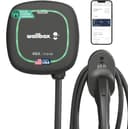
Wallbox Pulsar Plus

Wallbox Pulsar Plus

The one to reach for when wall space is tight. It's among the smallest 48A chargers made, and Power Boost load balancing lets it share a circuit without tripping the main — which can save you a panel upgrade. It's a polished, premium unit, and the price says so.

Best premium for load balancing and a tight wall
$689.99 · View on Amazon

Price as of November 23, 2026. #ad How we’re funded

3
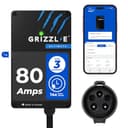
Grizzl-E Ultimate 80A

Grizzl-E Ultimate 80A

Almost nobody should buy this, and the people who should have no real alternative. 80 amps is double what the fastest mainstream home charger delivers, and the overwhelming majority of EVs cannot accept a single amp of it — they cap out at 48. The exception is a small group of cars with an unusually large onboard charger, the 2022-2023 F-150 Lightning Extended Range chief among them, where this unit genuinely halves the overnight charge. It is the same Made-in-Canada aluminum body and the same published -22F floor as the rest of the Grizzl-E line, hardwire-only, and it needs a 100-amp circuit to reach its rating — which is a service upgrade in most houses, not a breaker swap.

Best premium for headroom above 48 amps
$599.99 · View on Amazon

$899.0033% off

Price as of November 23, 2026. #ad How we’re funded

4
ChargePoint Home Flex NACS

ChargePoint Home Flex NACS

The Home Flex you already know, with a factory NACS cable. If you're a Tesla owner who wants ChargePoint's mature app and the same adjustable 16-50A amperage — instead of a plain no-app NACS unit — this is the way to get it. You pay a premium for exactly that.

Best premium for a Tesla
$549.00 · View on Amazon

Price as of November 23, 2026. #ad How we’re funded

5
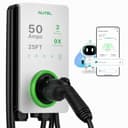
Autel MaxiCharger Home

Autel MaxiCharger Home

Built for the driveway that takes the full brunt of the weather. The NEMA 4X shell is rated to keep charging through brutal cold and heat, it delivers a full 50 amps, and the app is genuinely capable. If your charger will live fully exposed, this is the one to shortlist.

Best budget pick: the cheaper unit that matches them
$399.00 · View on Amazon

$568.0030% off

Price as of November 23, 2026. #ad How we’re funded

The picks in full

#1Best premium charger overall

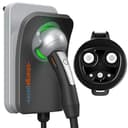
ChargePoint Home Flex

If you'd rather buy a charger once and be done, this is the safe call. You set the current in the app anywhere from 16 to 50 amps, so it fits whatever your panel can spare today and still has room to grow if you upgrade the circuit later. The app is the most polished of the bunch and the warranty is long.

Strengths

  • Adjustable 16-50A fits a modest circuit now and a bigger one later
  • The most complete app here: scheduling, reminders and usage history
  • 3-year warranty and a generous 23 ft cable

Trade-offs

  • You pay a brand premium over value 48A units
  • Using the full 50A needs a 70A circuit most older panels can't spare
Max output50 A
Power12 kW
ConnectorJ1772
InstallHardwired (a plug-in NEMA 14-50 SKU is also sold)
Cable length23 ft
Warranty3 years
WiFi + appYes
CertificationsUL/cUL listed, ENERGY STAR

Our charging-speed math. Run it at the full 50 amps (about 12 kW) and, at a middle-of-the-road 3.5 miles per kWh, it puts back roughly 42 miles of range an hour. Turn it down to 40A to live on a 50A circuit and you're at about 34.

Build note. The headline feature is app-adjustable amperage — anywhere from 16A up to 50A, in software.

Specs read from the manufacturer spec sheet, on July 19, 2026. “Not published” means the brand does not state that figure.

#2Best premium for load balancing and a tight wall

Wallbox Pulsar Plus

The one to reach for when wall space is tight. It's among the smallest 48A chargers made, and Power Boost load balancing lets it share a circuit without tripping the main — which can save you a panel upgrade. It's a polished, premium unit, and the price says so.

Strengths

  • Genuinely compact for a 48A charger — easy to tuck in a tight spot
  • Power Boost load balancing can sidestep a panel upgrade
  • Bluetooth and Wi-Fi with a clean, modern app

Trade-offs

  • One of the pricier chargers in this group
  • Hardwired only — no plug-in option, so it's not renter-friendly
Max output48 A
Power11.5 kW
ConnectorJ1772
InstallHardwired
Cable length25 ft
Warranty3 years
WiFi + appYes
CertificationsENERGY STAR

Our charging-speed math. At 48A (11.5 kW) and 3.5 mi/kWh, about 40 miles of range an hour — and Power Boost can throttle it down to protect a shared circuit.

Build note. One of the most compact 48A chargers in its class, carrying both Bluetooth and Wi-Fi.

Specs read from the manufacturer spec sheet, on July 19, 2026. “Not published” means the brand does not state that figure.

#3Best premium for headroom above 48 amps

Grizzl-E Ultimate 80A

Almost nobody should buy this, and the people who should have no real alternative. 80 amps is double what the fastest mainstream home charger delivers, and the overwhelming majority of EVs cannot accept a single amp of it — they cap out at 48. The exception is a small group of cars with an unusually large onboard charger, the 2022-2023 F-150 Lightning Extended Range chief among them, where this unit genuinely halves the overnight charge. It is the same Made-in-Canada aluminum body and the same published -22F floor as the rest of the Grizzl-E line, hardwire-only, and it needs a 100-amp circuit to reach its rating — which is a service upgrade in most houses, not a breaker swap.

Strengths

  • 80A / 19.2 kW is the highest output any home charger here delivers
  • Current is selectable in hardware at eight steps from 80A down to 16A, so it can be installed smaller and turned up after a panel upgrade
  • Same UL Type 4 cast-aluminum case and published -30C to +50C range as the rest of the line, with OCPP as well as Grizzl-E's own app
  • Grizzl-E publishes ENERGY STAR for this model, which the 48A Ultimate's spec table does not carry

Trade-offs

  • Most EVs cannot use more than 48 amps, so for most buyers every dollar above a 48A charger buys nothing
  • 80A continuous needs a 100-amp circuit, which in most homes means a service upgrade costing more than the charger
  • Hardwire only — no plug, not renter-friendly, not portable
  • Costs roughly twice a good 48-amp charger
Max output80 A
Power19.2 kW
ConnectorJ1772
InstallHardwired
Cable length25 ft
Warranty3 years
WiFi + appYes
CertificationsUL E510712, ENERGY STAR — both as published on Grizzl-E's own Technical Specifications table for this model (the 48A Ultimate's table publishes the UL file only)

Our charging-speed math. At the full 80A (19.2 kW) and a mid-range 3.5 mi/kWh, roughly 67 miles of range an hour — but only on a car whose onboard charger can accept 80 amps. On a 48-amp car it delivers exactly what a 48-amp charger does, about 40 miles an hour.

Build note. Cast-aluminum enclosure, UL Type 4 indoor/outdoor, published -30C to +50C (-22F to 122F), hardwire only, 25 ft output cable, Wi-Fi 2.4 GHz plus OCPP, and current selectable at 80, 64, 56, 48, 40, 32, 24 or 16 amps. Grizzl-E publishes the Ultimate 80A with either a Type 1 (SAE J1772) or a NACS output cable; the SKU recorded here (GRU-077-W-HW-25DJ80-A-GB) is the J1772 build, which is what the Amazon listing resolves to.

Specs read from the manufacturer spec sheet, on October 25, 2026. “Not published” means the brand does not state that figure.

#4Best premium for a Tesla

ChargePoint Home Flex NACS

The Home Flex you already know, with a factory NACS cable. If you're a Tesla owner who wants ChargePoint's mature app and the same adjustable 16-50A amperage — instead of a plain no-app NACS unit — this is the way to get it. You pay a premium for exactly that.

Strengths

  • Native NACS cable with ChargePoint's flexible 16-50A amperage
  • The most mature app of the NACS options here
  • 3-year warranty and an outdoor-rated NEMA 3R body

Trade-offs

  • The priciest NACS pick — you're paying for the app and the badge
  • 50A output needs a 60A circuit to use in full
Max output50 A
Power12 kW
ConnectorNACS
InstallHardwired
Cable length23 ft
Warranty3 years
WiFi + appYes
CertificationsUL/cUL listed, ENERGY STAR

Our charging-speed math. At its 50A ceiling (about 12 kW) and 3.5 mi/kWh, roughly 42 miles of range an hour into a Tesla.

Build note. The same Home Flex hardware with a factory NACS cable for Tesla and NACS EVs.

Specs read from the manufacturer spec sheet, on July 19, 2026. “Not published” means the brand does not state that figure.

#5Best budget pick: the cheaper unit that matches them

Autel MaxiCharger Home

Built for the driveway that takes the full brunt of the weather. The NEMA 4X shell is rated to keep charging through brutal cold and heat, it delivers a full 50 amps, and the app is genuinely capable. If your charger will live fully exposed, this is the one to shortlist.

Strengths

  • NEMA 4X enclosure rated for very cold and very hot conditions
  • Full 50A output paired with a 25 ft cable
  • Wi-Fi, Bluetooth and a capable app

Trade-offs

  • 50A means a 70A circuit and, usually, a hardwired install
  • The app and ecosystem are younger than ChargePoint's
Max output50 A
Power12 kW
ConnectorJ1772
InstallHardwired
Cable length25 ft
Warranty3 years
WiFi + appYes
CertificationsCSA certified, ENERGY STAR

Our charging-speed math. At its 50A ceiling (about 12 kW) and 3.5 mi/kWh, roughly 42 miles of range an hour.

Build note. Re-read from Autel's own page on 2026-10-04: 12 kW / 50 A with the output adjustable 16-50 A, 208/240 V AC, hardwired, a 70 A circuit required for full output, a 25 ft J1772 cable, an IP65 / NEMA 4X enclosure with a -40 to 131°F (-40 to 55°C) operating range, Bluetooth, Wi-Fi, Ethernet, CAN and RS485 connectivity, app / AutoStart / RFID-card authentication (cards sold separately) and a 3-year warranty. On load management the page is unusually specific, and it is two different features: it "supports both Adaptive Load Management (ALM) and charger-to-charger Dynamic Load Balancing (DLB)", with "ALM requir[ing] compatible additional hardware, while DLB works between chargers without additional hardware". Autel does not name the ALM hardware on this page, so we do not either.

Specs read from the manufacturer spec sheet, on October 4, 2026. “Not published” means the brand does not state that figure.

The test a premium charger has to pass

We rank the top of this market on one question: does the feature you are paying extra for change the total cost or the usability of the install, or does it only change the spec sheet? Four features pass that test, and we weight them in this order.

  1. Load management that can replace electrical work. The most expensive line on an EV charging invoice is frequently not the charger — it is the circuit, and in a full panel it can be the whole service. A charger that watches the house and throttles itself can make that quote disappear, which is the only premium feature here capable of paying for itself several times over. Wallbox’s Power Boost is the implementation you can buy today; Emporia’s PowerSmart is the other one, and the note further down this page explains why it is not ranked. Our load management guide explains the mechanism, and best chargers with load management compares the implementations.
  2. Software and support longevity. A charger is a ten-year appliance with a cloud dependency bolted to it. The question is not how pretty the app is today but whether the company will still be running the service, and still answering the phone, when the unit is seven. That is a judgment, not a measurement, and we say so where we make it.
  3. Physical size. Not a vanity spec. A 48-amp charger that fits beside a panel in a narrow garage bay is worth real money if the alternative is a longer cable run through a joist. See best compact EV chargers, which also records which makers publish dimensions at all.
  4. Headroom above 48 amps. Genuinely valuable to a very small group of buyers and worthless to everyone else, which is why it ranks fourth rather than first.

Three things we refuse to count as premium value: a longer cable than you need, a connector you can buy a $40 adapter for, and a brand name on its own. Every pick below publishes a named safety listing, which is a floor rather than a feature.

What each premium unit publishes

Specifications only — the live price for each one is on its buy button above, stamped with the date of the check. The last column is the point of the table: it is the feature that justifies the price, or a blank where there isn’t one.

ChargerMax currentConnectorInstallEnclosureWarrantyWhat the premium buys
ChargePoint Home Flex50 A / 12 kWJ1772Hardwired, 70 A circuit for full outputNEMA 3R3 yearsThe most mature app, and amperage set 16–50 A in software
Wallbox Pulsar Plus48 A / 11.5 kWJ1772Hardwired only, 60 A circuitNEMA 43 yearsAmong the smallest 48 A bodies, plus Power Boost load balancing
Grizzl-E Ultimate 80A80 A / 19.2 kWJ1772Hardwired, 100 A circuit for full outputUL Type 4 cast aluminum3 years, 5 optionalOutput no other home charger here reaches
ChargePoint Home Flex NACS50 A / 12 kWNACSHardwiredNEMA 3R3 yearsA factory Tesla cable with the full ChargePoint app
Autel MaxiCharger Home50 A / 12 kWJ1772Hardwired, 70 A circuit for full outputIP65 / NEMA 4X3 yearsNothing — it is the price control on this page

Read the last row against the four above it. The Autel publishes the same 50 amps as the Home Flex, the same adjustable floor of 16 amps, a tougher enclosure rating than either ChargePoint unit, a wider operating range than anything else here at −40°F to 131°F, the same three-year warranty and the same ENERGY STAR certification — for less money. That is the honest frame for this entire page: the premium is for the four features in the previous section, and for nothing else.

The picks, and who each one is for

Best premium charger overall: the ChargePoint Home Flex. Fifty amps and 12 kW with the current set anywhere from 16 to 50 in software — the widest published range on this page, and the reason this charger survives a circuit change or a house move without being the wrong unit. The app is the most complete here: scheduling, reminders, usage history, and a support operation with a longer track record than any other brand we rank. A NEMA 3R outdoor-rated body, a 23-foot cable, ENERGY STAR and a three-year warranty. Cons: a visible brand premium over 48-amp units that charge identically; the full 50 amps needs a 70-amp circuit older panels cannot spare; and almost everything you are paying for lives behind an account, which is a poor trade if you dislike them. The counter-argument, spec by spec, is on our ChargePoint alternatives page.

Best premium for load balancing and a tight wall: the Wallbox Pulsar Plus. Among the smallest 48-amp chargers made, with Power Boost load balancing that lets it share a circuit without tripping the main, Bluetooth and Wi-Fi, a NEMA 4 enclosure, ENERGY STAR and a three-year warranty. Two of the four premium features in one box, which is why it is here despite being the most expensive unit we price. Cons: it is hardwired only, so it is not an option for a renter and it does not move with you; on raw charging speed it does nothing a cheaper 48-amp unit does not; and Wallbox does not publish body dimensions for it, so “compact” is the manufacturer’s word rather than a number we can check. Autel versus Wallbox is the comparison worth reading before you commit.

Best premium for headroom above 48 amps: the Grizzl-E Ultimate 80A. Nineteen point two kilowatts, which is double what the fastest mainstream home charger delivers, in the same cast-aluminum UL Type 4 body and the same published −22°F floor as the rest of the Grizzl-E line, with eight hardware current steps from 80 amps down to 16, OCPP as well as the brand’s own app, and ENERGY STAR published on this model’s own specification table. Almost nobody should buy it, and the people who should have no real alternative: a small group of cars with an unusually large onboard charger, where it genuinely halves the overnight charge. Cons: most EVs cannot accept more than 48 amps, so for most buyers every dollar above a 48-amp charger buys nothing at all; 80 amps continuous needs a 100-amp circuit, which in most houses is a service upgrade costing more than the charger; and it is hardwire-only. Read best 80-amp EV chargers before buying this, because it is as much a warning as a roundup.

Best premium for a Tesla: the ChargePoint Home Flex NACS. The Home Flex hardware with a factory NACS cable: the same 16-to-50-amp adjustable output and the same mature app, with no adapter permanently hanging off the end of the cord. For a Tesla household that wants software rather than a plain no-app NACS unit, this is how to get it. Cons: it is the priciest NACS charger we price, and the premium is explicitly for the app and the badge rather than for anything electrical; it is hardwired; and a native-NACS 48-amp charger from a value brand delivers the same range per hour for considerably less — the field is on best NACS home chargers.

Best budget pick, and the control on this page: the Autel MaxiCharger Home. We include it deliberately. It publishes 50 amps and 12 kW adjustable from 16, a 25-foot cable, IP65 / NEMA 4X, the widest operating range on this page at −40°F to 131°F, ENERGY STAR, a three-year warranty and app, AutoStart and RFID-card authentication — while costing less than every unit above it. If you came to this page to find out whether spending more is worth it, the answer for most households is this charger plus the money saved going into the circuit. Cons: 50 amps means a 70-amp circuit and a hardwired install; RFID cards are sold separately; its adaptive load management needs extra hardware Autel does not name, so it does not replace PowerSmart or Power Boost; and the software ecosystem is younger than ChargePoint’s. The full reasoning is in our MaxiCharger review and on best value EV chargers, where it also finishes first.

The premium charger we could not rank

The Emporia Pro with PowerSmart would otherwise lead this page, and it is worth saying why plainly. It is the same 48-amp, ENERGY STAR, NEMA 4, 25-foot-cable hardware as Emporia’s standard charger with the one premium feature capable of removing a bill larger than the charger: paired with Emporia’s own energy monitor, PowerSmart watches the whole-house draw and reduces charging current instead of overloading the panel, and the app layers peak-demand management on top of ordinary scheduling. On the criteria at the top of this page that is the strongest premium argument in our registry.

We left it out of the ranking because our price check on the date stamped above returned a product image and no buyable offer for it — the same result it returned for Emporia’s cheaper standard charger. We do not rank a charger we cannot send you to, and we are not going to quote a price we cannot verify today. The Emporia Pro review stays published with the detail, and Emporia Level 2 versus Pro isolates what the extra money buys, so the information is here even when the listing is not. If you want load management you can buy today, it is the Wallbox above; if you want it cheaper, our best chargers with load management page covers every implementation we can find, including the ones that need extra hardware.

When the premium genuinely pays for itself

Three situations, and they are specific enough to check against your own house.

The panel is full. This is the big one. If a licensed electrician has quoted a service upgrade to fit a 60-amp circuit, a load-managing charger that keeps the house under its limit can make the upgrade unnecessary, and the saving is usually several times the price difference between a premium charger and a value one. Wallbox’s Power Boost is the version of this you can buy today. Start with does your panel have room and best chargers for a 100-amp panel.

The wall is the constraint. A narrow bay, a doorway, a panel in the way: a smaller body can shorten the cable run, and shortening a 240-volt run is where the install money actually is. Our mounting height guide covers where a charger can legally and practically go.

The car can take more than 48 amps. Rare, and worth checking rather than assuming. If the car genuinely has a large onboard charger and the panel has the capacity, the 80-amp unit is not an indulgence — it is the only product that does the job.

Outside those three, the arithmetic goes the other way. A 60-amp hardwired run to a garage wall often costs more than the 48-amp charger on the end of it, so the cheapest real kilowatt in this market is usually the one on a circuit you already own — installation cost has the figures, and rebates and tax credits can move the total more than any discount here.

What we did not count, and why

We did not rank on cable length: every unit on this page publishes 23 to 25 feet, which is enough for nearly any single-bay install, and best chargers with long cables handles the cases where it is not. We did not rank on connector: a J1772 charger serves a Tesla through a $40 adapter and a NACS charger serves a J1772 car through another, so the connector is a convenience choice rather than a compatibility one — see J1772 versus NACS. And we did not rank on claimed reliability, because nobody in this market publishes a failure rate and we own none of these units; what we compare instead is the set of commitments each maker puts in writing, which is what most reliable home EV chargers and best EV charger brands are built on. One more thing we did not count: a discount. Prices here move daily, and the listing checks that keep this page honest are set out on best EV chargers on Amazon.
Frequently asked questions

Is an expensive EV charger worth it?

Only for four things, and speed is not one of them. A premium charger is worth the money if it brings load management that can replace a panel or service upgrade, software and a support operation you expect to outlive the warranty, a smaller body for a wall that cannot take a big one, or output above 48 amps for a car that can actually accept it. If none of those applies, a sub-$500 charger adds exactly the same range per hour and the difference is better spent on the circuit.

What is the best premium EV charger?

The ChargePoint Home Flex, of the premium chargers you can actually buy today: 50 amps with the current set anywhere from 16 to 50 in software, the most complete app in this market, an outdoor-rated NEMA 3R body, ENERGY STAR and a three-year warranty, backed by the longest-running support operation of any brand we rank. The Emporia Pro with PowerSmart would arguably beat it on our own criteria, because its load management can replace a panel upgrade — but our price check returned no buyable offer for it on the date stamped on this page, so we discuss it rather than rank it.

Do premium EV chargers charge faster?

No. Charging speed is set by the smaller of the charger's output and the car's onboard charger, and most mainstream EVs cap around 11 kW — which is 48 amps. A 48-amp charger therefore delivers the same miles per hour whichever brand built it and whatever it cost. Above 48 amps you are buying headroom for an unusual car or a second vehicle, not speed for a typical one.

How much should you spend on a home EV charger?

Budget for the whole install rather than the box. In most homes the charger is the smaller line: a 60-amp hardwired circuit frequently costs more than the 48-amp charger on the end of it, and a service upgrade costs several times more again. The practical rule we apply is to buy the cheapest listed charger that meets the specification you need, then spend what is left on the electrical work — unless load management can take the electrical work off the bill entirely, which is the one case for spending more on hardware.

Is a 50-amp charger better than a 48-amp charger?

Rarely, and it can be worse. Fifty amps needs a 70-amp circuit where 48 amps needs a 60-amp one, which is a bigger breaker, heavier wire and sometimes a panel review — and almost no mainstream EV can draw more than 48 amps over AC anyway. The 50-amp units on this page earn their place on their adjustable range and their enclosures, not on the extra two amps.

Which premium EV charger is best for a Tesla?

The ChargePoint Home Flex NACS, if you specifically want a factory Tesla cable together with a full app and amperage adjustable from 16 to 50. It is the priciest NACS charger we price and the premium is for the software rather than anything electrical, so a native-NACS 48-amp charger from a value brand will add the same range per hour for noticeably less. Our best NACS home chargers page ranks that field.

Does a premium charger come with a longer warranty?

Not on this page. Every premium unit here publishes three years, which is the same term the mid-priced EVIQO, Lectron Nexus and Grizzl-E Classic Connect publish, and Grizzl-E sells a five-year option that no premium brand here matches. Leviton, which is priced as a premium brand, publishes two years. Warranty length and price are close to uncorrelated in this market, which is why we compare every published term separately.

Sources

  • Emporia Energy — EV Chargers (Classic and Pro) — Manufacturer page: the Classic and the Pro both list Solar Charging Integration, and both require the Vue Home Energy Monitor for it — with the Vue added, the charger 'automatically charge[s] with your excess solar power'. PowerSmart load management on the Pro requires the Vue plus the PowerSmart upgrade; Emporia also lists Invite2Charge, described as 'multi-user access control for EV chargers' (accessed September 18, 2026)
  • ChargePoint — Home Flex datasheet — Manufacturer datasheet: output adjustable in the app to 16, 24, 32, 40, 48 or 50 A (up to 12 kW); the dedicated dual-pole breaker must be rated for 125% of the maximum load (its example: a 50 A breaker for 40 A output) (accessed September 18, 2026)
  • ChargePoint — Power Management FAQ — ChargePoint's own FAQ for its Power Management feature, which allocates a circuit's capacity across stations. Fetched 2026-10-04: it states that “currently, the CT4000 and CPF50 station families support Power Management with the appropriate cloud plan” — both commercial station families. The residential Home Flex is not named anywhere on the page, and no home hardware requirement, home power-sharing behavior or whole-house panel monitoring is described (accessed October 4, 2026)
  • Wallbox — Pulsar Plus EV Charger (US) — Manufacturer page: solar charging lets the Pulsar Plus run on 100% solar or a mix of solar and grid, and requires a separately sold Wallbox Power Meter; solar charging is not compatible with multiple-charger installations or OCPP; the same power meter enables dynamic load management (accessed September 18, 2026)
  • Wallbox — Pulsar Plus product page (energy-management section) — Manufacturer page, fetched 2026-10-04 for the load-management wording specifically. It describes dynamic load management as “maximize charging speed while staying within your home's power limit. When overall energy consumption is high, charging speed drops. When it's low, you'll charge at maximum speed”, and states that the energy-management features — load management and solar charging — need a Wallbox Power Meter to unlock. The charger is listed in 40 A and 48 A variants up to 11.5 kW with a 25 ft cable. As fetched on this date the page does not use the name “Power Boost”, and states no enclosure rating or warranty term (accessed October 4, 2026)
  • Grizzl-E (United Chargers) — Grizzl-E Ultimate 80A product page and Technical Specifications — The manufacturer's own product page, fetched 2026-10-25. Technical Specifications for SKU GRU-077-W-HW-25DJ80-A-GB: Type AC Level 2; Connector Type 1 (SAE J1772); Max power 80A 19.2 kW; Plug type Hardwire Only; Protection UL Type 4 Indoor/Outdoor Rating; Communication OCPP; Certifications UL E510712, Energy Star; Smart function Wi-Fi (2.4 GHz) and mobile application; Adjustable current 80A, 64A, 56A, 48A, 40A, 32A, 24A, 16A; Output cable length 25 ft (7.6 m); Operating temperature -30C to +50C (-22F to 122F); aluminum enclosure, made in Canada. Warranty is offered as a 3-year or 5-year option, and the connector as J1772 or NACS (accessed October 25, 2026)
  • Autel — MaxiCharger AC Elite Home 50 A product page — Manufacturer page: 12 kW / 50 A with the output adjustable 16-50 A, a 70 A circuit required for full output, 208/240 V AC, hardwired, a 25 ft SAE J1772 cable, IP65 / NEMA 4X, an operating range of -40 to 131 °F (-40 to 55 °C), a 3-year warranty, and Bluetooth, Wi-Fi, Ethernet, CAN and RS485 connectivity with app, AutoStart and RFID-card authentication (cards sold separately). On load management it states that the charger “supports both Adaptive Load Management (ALM) and charger-to-charger Dynamic Load Balancing (DLB) for more flexible home energy management” and that “ALM requires compatible additional hardware, while DLB works between chargers without additional hardware” (accessed October 4, 2026)
  • ENERGY STAR — Certified Electric Vehicle Supply Equipment (AC-Output), certified-product list — The certifier's own list of certified AC chargers, by model number, with the measured standby figures behind each certification. Queried 2026-10-04: Lectron's Nexus is certified twice over, once as LECHGNexusHWJ1772 (48 A, network capability 'No', 1.86 W in no-vehicle mode) and once as LECHGNexusHWJ1772-APP (48 A, network capability 'Yes', 3.02 W) — the same hardware with and without a radio. The plug-in pair is recorded the same way (LECHGNexusNEMA14-50J1772 at 1.88 W, the -APP version at 3.14 W). No ELEGRP or EVDANCE product appears anywhere on the list (accessed October 4, 2026)
  • UL Solutions — EV Charging Infrastructure Services — UL on EVSE safety certification: ANSI/UL 2594 is the Standard for Electric Vehicle Supply Equipment (accessed July 19, 2026)
  • NFPA — Using the Latest NEC for EV Charger Installations — NFPA on NEC (NFPA 70) Article 625: EV charging is a continuous load, so circuits are sized to 125% of load (the 80% rule) (accessed July 19, 2026)
  • PG&E — Electric Vehicle Charging — A US utility's own published install guidance: a Level 2 charging station averages $500-$700 and installation averages $400-$1,200 excluding the charger; Level 2 needs a professionally installed 240V outlet on a dedicated circuit (accessed July 20, 2026)
  • U.S. DOE Alternative Fuels Data Center — Electric Vehicle Charging Stations — US DOE on charging levels: Level 1 (~1.9 kW, ~5 mi/hr), Level 2 (2.9-19.2 kW, ~7.2 kW typical residential, ~25 mi/hr), and DC fast charging (accessed July 19, 2026)

Keep reading