Every published term in our registry
One table, read from the manufacturers’ own pages. The last column is the one to read twice: a term that is standard is worth more than a longer one you have to notice and pay for.
| Charger | Published term | Extendable? | How it is published |
|---|
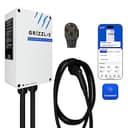
| Grizzl-E Classic Connect | 3 or 5 years | It is the option | A choice at checkout on the manufacturer’s own store |
| Grizzl-E Mini | 3 years default | 5-year option on the brand’s site | Stated on the product page |
| Grizzl-E Ultimate 80A | 3 or 5 years | It is the option | A choice on the product page |
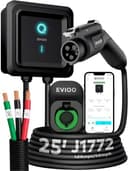
| EVIQO 48A / NACS 48A | 3 years | Yes — 4 years as an extension | Stated plainly on both product pages |
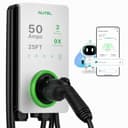
| Autel MaxiCharger Home | 3 years | Not stated | Stated on the manufacturer’s product page |
| ChargePoint Home Flex | 3 years | Not stated | Stated on the datasheet |
| Lectron Nexus J1772 / NACS | 3 years | Not stated | Stated on both Nexus product pages |
| Leviton EV40P | 2 years, limited | Not stated | Stated on the product page |
| ELEGRP 40A | “Up to” 2 years | Not stated | Hedged on the store page |
| EVDANCE 24A | 12 months | Not stated | Stated in the user manual |
| Lectron 40A Tesla portable | Not published | — | No term anywhere on the SKU’s page |
| Lectron Level 1 cords, J1772-to-Tesla adapter | Not published | — | No term anywhere on those pages |
Three patterns fall out of that table. Three years is the market standard for a hardwired Level 2 unit, from four different brands. Portables and adapters are where warranty publishing collapses — the EVDANCE’s twelve months is the shortest term we found, and three Lectron accessories publish no term at all. And the one brand offering five years makes you buy it, which is the quiet asterisk on the best number on this page.
How to choose between the picks
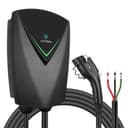
You want the longest cover available: the Grizzl-E Classic Connect. United Chargers offers three or five years as an option at checkout on its own store, and five years is the longest term on anything we rank. The hardware deserves it: cast aluminum, UL Type 4, published from −22°F to 122°F, UL file E510712, 25 feet of cable, Wi-Fi scheduling and current adjustable 40 down to 16, on a plug-in NEMA 14-50 install. The catch is real and we will not bury it — buying through a marketplace means the cover you hold is whatever the seller actually shipped, so read the paperwork in the box and register the unit the day it arrives. See our Grizzl-E lineup page for the rest of the brand.
You want a term you can extend after the fact: the EVIQO 48A. A three-year standard warranty with a four-year extended option, published plainly on EVIQO’s own page alongside 48 amps and 11.5 kW, hardware DIP switches at 16 / 32 / 40 / 48 A with 1-amp app fine-tuning from 6 A, a 25-foot cable, an IP66 / NEMA-4 enclosure rated −22°F to 122°F, and UL / ETL / FCC / ENERGY STAR certification. Cons: hardwired only, 48 amps needs a 60-amp circuit, and the product page carries third-party award claims we have not verified and do not repeat. Our EVIQO 48A review covers the rest.
You want three years on the strongest spec sheet: the Autel MaxiCharger Home. Fifty amps and 12 kW, adjustable 16–50 A, 25 feet of cable, IP65 / NEMA 4X and — the figure that makes the warranty matter less — a published operating range of −40°F to 131°F, the widest on this page. ENERGY STAR, app plus AutoStart and RFID-card access. Cons: hardwired, the full 50 amps needs a 70-amp circuit, RFID cards cost extra, and its adaptive load management needs hardware Autel does not include.
You want a warranty from a company that will still exist: the ChargePoint Home Flex. Three years, a 23-foot cable, ENERGY STAR, and 16 to 50 amps set in software — with the most complete app and support operation of anything here, which is the part of a warranty nobody prints. Cons: a brand premium, and the full 50 amps needs a 70-amp circuit most older panels cannot spare. Our Home Flex review has the detail.
You want three years and no account: the Lectron Nexus J1772. Forty-eight amps and 11.5 kW hardwired, an IP66 indoor/outdoor rating, a 23-foot cable with a J-hook and plug holder, ETL listing to UL 2594 / UL 2231 / UL 2251, FCC, ENERGY STAR, and a three-year warranty — with no Wi-Fi, no app and no account anywhere on the product, which also means nothing to stop working when a server moves. Cons: Lectron publishes no selectable current range for it, so it is a 60-amp circuit or nothing. See chargers without Wi-Fi.
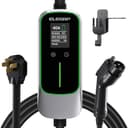
You want the least money with a term in writing: the ELEGRP 40A, our budget pick. ELEGRP publishes “up to a 2-year warranty” — hedged, and we are quoting it as hedged — alongside five on-unit current levels from 16 to 40 amps, an IP67 station body published to −21°F, an IP54 connector, 25 feet of cable, a delay timer, a carrying case and ETL certification. It is the cheapest charger here that publishes any term at all. Cons: no app, no energy monitoring, no ENERGY STAR listing, and 40 amps is the plug-in ceiling.
Read the term as a brand signal
A warranty is the clearest number a maker publishes about how long it expects its own hardware to last, and across our registry the terms run from one year to five with no useful correlation to price — a premium-priced brand publishes two years here, while a mid-priced one sells five. That makes the term worth reading alongside the rest of a brand’s paperwork rather than on its own, which is what our best EV charger brands page does: nine makers, one flagship each, scored on the named safety listing, the ENERGY STAR entry, the published temperature range and this column.
What an EV charger warranty does not cover
This is the part that costs people money. A charger warranty covers the charger. It does not cover the circuit, the breaker, the outlet, the conduit or the labor to take the unit off the wall and put a replacement back — and on a hardwired unit that labor is an electrician’s call-out, which can approach the cost of a budget charger. Three more exclusions worth knowing before you buy:
Installation that does not meet the manufacturer’s own instructions. Every charger here requires a dedicated circuit sized to 125 percent of its maximum current, and a unit found on a shared or undersized circuit is the clearest warranty denial in the category. Our breaker size guide and permits and inspection cover getting that right the first time.
Damage from water where the rating does not reach. An enclosure rating applies to the enclosure. ELEGRP publishes IP67 for the station and IP54 for the connector; a handle left lying in a puddle is outside that number regardless of what the box says. Where the charger is mounted matters more than the rating — see mounting height and garage or outside.
Surges, in most cases. Autel is unusual in publishing a temperature range this wide, but none of these warranties is a surge policy. A 240-volt circuit feeding electronics on an outside wall is exposed, and surge protection is cheaper than the deductible. If your unit has already failed, start with EV charger not charging before you open a claim — a good share of failures are the breaker, the car or the app rather than the charger.