Plug & Range

Best ENERGY STAR EV Chargers Under $500

ENERGY STAR on a charger is not a speed claim — it is a standby-power certification. It matters for one concrete reason: some utility rebate programs name it in writing, and a rebate is worth more than any discount in this market.

By Stephen V.Last updated How we pick

The short answer. The best certified charger under $500 is the Lectron Nexus J1772: 48 amps and 11.5 kW hardwired, IP66 indoor/outdoor, a 23-foot cable with a J-hook and plug holder, ETL listing to UL 2594 / UL 2231 / UL 2251, a three-year warranty, and no app, Wi-Fi or account anywhere on the product — and it appears on the certifier’s own list twice, once with a radio and once without. Our budget pick is the Grizzl-E Ultimate 48A, the cheapest certified unit here, which is also the pick for a Tesla because the Amazon SKU is the native NACS cable. If you want 50 amps, the Autel MaxiCharger Home is certified and published from −40°F. Prices come from our daily retailer check, as of November 23, 2026.

What the certification actually certifies. Not charging speed, not build quality and not safety — safety is UL 2594, which is a separate listing every charger here also carries. ENERGY STAR for EV chargers is about standbypower: what the unit draws when no car is plugged in, and when a car is plugged in but not charging. A charger sits idle for most of its life, so the numbers are not trivial, but they are small: the certifier’s own records for the units here run from about 1.7 to 3.1 watts in no-vehicle mode. Over a year that is a few dollars. The reason to care is the rebate, not the electricity.

Why we check the model number, not the box. ENERGY STAR certifies specific model numbers, and the EV charger market is full of SKUs that share a product name but not a certification. The clearest example is on this site already: the original no-app Grizzl-E Classic was certified, and the Classic Connect that replaced it on Amazon is not on the list — same family, same case, different record. So every pick below is checked against the certifier’s own machine-readable product list rather than against a marketing badge, and where a record names additional model numbers we confirm the SKU we link is among them. We own none of these chargers; the specs come from each manufacturer’s own page.

How this is funded:we earn a commission if you buy through our links, at no extra cost to you. It never changes which product we recommend, and we’ll tell you when we’d skip one. Full disclosure.

Quick picks

Ranked on published specs, charging speed, electrical fit and value. Select a row to jump to the full write-up. We have not bench-tested these chargers — here is exactly what we do instead.

#ProductBest forPrice
1
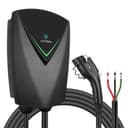
Lectron Nexus J1772 48A (Hardwired)

Lectron Nexus J1772 48A (Hardwired)

The fastest charger we can find that has nothing to log into. It is a full 48 amps, ETL-listed to UL 2594, IP66 for an outside wall, and — unusually for a charger with no app — it is on the ENERGY STAR certified list under its own model number, which is the kind of proof a rebate administrator will actually accept. The price of that simplicity is real: no published way to dial the current down, so it wants a 60-amp circuit and nothing less, and no scheduling of its own, so your car has to do that part.

Best certified charger under $500
$379.99 · View on Amazon

$429.9912% off

Price as of November 23, 2026. #ad How we’re funded

2
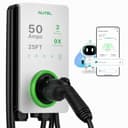
Autel MaxiCharger Home

Autel MaxiCharger Home

Built for the driveway that takes the full brunt of the weather. The NEMA 4X shell is rated to keep charging through brutal cold and heat, it delivers a full 50 amps, and the app is genuinely capable. If your charger will live fully exposed, this is the one to shortlist.

Best 50-amp, and the widest temperature range
$399.00 · View on Amazon

$568.0030% off

Price as of November 23, 2026. #ad How we’re funded

3
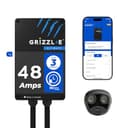
Grizzl-E Ultimate 48A

Grizzl-E Ultimate 48A

The Grizzl-E for people who wanted more than 40 amps. It keeps the metal UL Type 4 body and the published -22F floor that make the Classic Connect our exposed-install pick, then raises the ceiling to 48A and adds an OCPP radio on top of the Grizzl-E Connect app. Two catches: it is hardwire-only, so there is no unplugging it and taking it with you, and the SKU Amazon carries today is the NACS cable version, so a J1772 car needs an adapter permanently in the chain.

Best budget pick, and best for a Tesla
$349.99 · View on Amazon

$479.9927% off

Price as of November 23, 2026. #ad How we’re funded

4
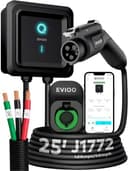
EVIQO 48A Level 2 Charger

EVIQO 48A Level 2 Charger

A lot of charger for the money. You get 48 amps, Wi-Fi scheduling, ENERGY STAR, and the longest usable reach in this group thanks to a 25 ft cable plus a 40-inch input lead. If Emporia is sold out or you want maximum cable, this is the value alternative to have in mind.

Best app control
$427.48 · View on Amazon

$510.0016% off

Price as of November 23, 2026. #ad How we’re funded

5
Lectron Nexus NACS (Tesla) Charger

Lectron Nexus NACS (Tesla) Charger

For a Tesla owner who doesn't want to babysit an adapter. The native NACS (J3400) connector goes straight into the car at a full 48 amps, with the safety listings you want to see. There's no app — but a Tesla schedules charging in the car anyway, so you're not really missing one.

Best hardwired NACS without an app
$449.99 · View on Amazon

Price as of November 23, 2026. #ad How we’re funded

6
Leviton EV Series Smart Home Charger (EV40P)

Leviton EV Series Smart Home Charger (EV40P)

The one charger here from a brand your electrician already stocks. Forty amps, ENERGY STAR, a NEMA 3R shell, a 25-foot cable and a certification list longer than anything else in this registry — plus the My Leviton app, which is the same app that runs Leviton's load centers and switches. You pay a real premium for that, and what it buys is a company that will still be answering the phone in ten years.

Best plug-in
$399.99 · View on Amazon

$499.8520% off

Price as of November 23, 2026. #ad How we’re funded

The picks in full

#1Best certified charger under $500

Lectron Nexus J1772 48A (Hardwired)

The fastest charger we can find that has nothing to log into. It is a full 48 amps, ETL-listed to UL 2594, IP66 for an outside wall, and — unusually for a charger with no app — it is on the ENERGY STAR certified list under its own model number, which is the kind of proof a rebate administrator will actually accept. The price of that simplicity is real: no published way to dial the current down, so it wants a 60-amp circuit and nothing less, and no scheduling of its own, so your car has to do that part.

Strengths

  • 48A / 11.5 kW with no Wi-Fi, no account and no app to keep working
  • ENERGY STAR certified under its own model number (LECHGNexusHWJ1772), listed with network capability "No"
  • ETL listed to UL 2594, UL 2231 and UL 2251, with an IP66 indoor/outdoor body
  • 23 ft cable, a wall-mount J-hook and a plug holder included, with a 3-year warranty

Trade-offs

  • Lectron publishes no adjustable current range for this model, so it needs a 60-amp circuit to be used at all
  • Hardwired only — a licensed electrician, and it stays with the house
  • No scheduling on the charger: off-peak charging has to be set in the car
  • No operating-temperature range published, which is the spec a cold-climate install turns on
Max output48 A
Power11.5 kW
ConnectorJ1772
InstallHardwired
Cable length23 ft
Warranty3 years
WiFi + appNo
CertificationsETL listed to UL 2594, UL 2231 and UL 2251; FCC; ENERGY STAR (confirmed on the certifier's own list as model LECHGNexusHWJ1772)

Our charging-speed math. Forty-eight amps at 240V is about 11.5 kW, which at our 3.5 miles-per-kWh reference is roughly 40 miles of range an hour, or about 400 miles across a ten-hour overnight window. Lectron's own figure is 46 miles an hour, which assumes a more efficient car than our reference — plan around 40.

Build note. Lectron publishes up to 48 A at 240 V (11.5 kW), an SAE J1772 connector, a hardwired installation it says requires a professional, an IP66 rating for indoor and outdoor use, a 23 ft cable with a wall-mount J-hook and plug holder, UL 2594 / UL 2231 / UL 2251 certification under an ETL listing plus FCC and ENERGY STAR, and a 3-year warranty. Nothing on the page describes Wi-Fi, an app or an account, and the no-app build is a separately certified model: the ENERGY STAR certified AC-EVSE list carries LECHGNexusHWJ1772 with network capability "No" and a separate LECHGNexusHWJ1772-APP row with network capability "Yes". Two figures to note. The ENERGY STAR entry gives the output cord as 22 ft where Lectron and the Amazon listing both say 23 ft, and we record the manufacturer's figure that both of those agree on. And Lectron publishes neither an adjustable current range nor an operating-temperature range for this model, so neither is recorded here — the first of those is the reason it cannot be fitted to a circuit smaller than 60 amps.

Specs read from the manufacturer spec sheet, on October 4, 2026. “Not published” means the brand does not state that figure.

#2Best 50-amp, and the widest temperature range

Autel MaxiCharger Home

Built for the driveway that takes the full brunt of the weather. The NEMA 4X shell is rated to keep charging through brutal cold and heat, it delivers a full 50 amps, and the app is genuinely capable. If your charger will live fully exposed, this is the one to shortlist.

Strengths

  • NEMA 4X enclosure rated for very cold and very hot conditions
  • Full 50A output paired with a 25 ft cable
  • Wi-Fi, Bluetooth and a capable app

Trade-offs

  • 50A means a 70A circuit and, usually, a hardwired install
  • The app and ecosystem are younger than ChargePoint's
Max output50 A
Power12 kW
ConnectorJ1772
InstallHardwired
Cable length25 ft
Warranty3 years
WiFi + appYes
CertificationsCSA certified, ENERGY STAR

Our charging-speed math. At its 50A ceiling (about 12 kW) and 3.5 mi/kWh, roughly 42 miles of range an hour.

Build note. Re-read from Autel's own page on 2026-10-04: 12 kW / 50 A with the output adjustable 16-50 A, 208/240 V AC, hardwired, a 70 A circuit required for full output, a 25 ft J1772 cable, an IP65 / NEMA 4X enclosure with a -40 to 131°F (-40 to 55°C) operating range, Bluetooth, Wi-Fi, Ethernet, CAN and RS485 connectivity, app / AutoStart / RFID-card authentication (cards sold separately) and a 3-year warranty. On load management the page is unusually specific, and it is two different features: it "supports both Adaptive Load Management (ALM) and charger-to-charger Dynamic Load Balancing (DLB)", with "ALM requir[ing] compatible additional hardware, while DLB works between chargers without additional hardware". Autel does not name the ALM hardware on this page, so we do not either.

Specs read from the manufacturer spec sheet, on October 4, 2026. “Not published” means the brand does not state that figure.

#3Best budget pick, and best for a Tesla

Grizzl-E Ultimate 48A

The Grizzl-E for people who wanted more than 40 amps. It keeps the metal UL Type 4 body and the published -22F floor that make the Classic Connect our exposed-install pick, then raises the ceiling to 48A and adds an OCPP radio on top of the Grizzl-E Connect app. Two catches: it is hardwire-only, so there is no unplugging it and taking it with you, and the SKU Amazon carries today is the NACS cable version, so a J1772 car needs an adapter permanently in the chain.

Strengths

  • 48A / 11.5 kW in the same UL Type 4 metal case, published from -22F to 122F
  • Speaks OCPP as well as Grizzl-E's own app — rare on a home charger
  • 25 ft cable, and current can be dialed to 40, 32, 24 or 16 amps

Trade-offs

  • The live Amazon SKU is the NACS cable — a J1772 car needs an adapter to use it
  • Hardwire only — no plug, so it is not renter-friendly and not portable
  • 48A needs a 60-amp circuit, which is the install many older panels can't take
Max output48 A
Power11.5 kW
ConnectorNACS
InstallHardwired
Cable length25 ft
Warranty3 years
WiFi + appYes
CertificationsUL/cUL listed (file E510712); ENERGY STAR certified (GRS-077-W-HW-25J48-A-GB, qualified 2026-06-30)

Our charging-speed math. At 48A (11.5 kW) and 3.5 mi/kWh, roughly 40 miles of range an hour — about six more than the 40A Classic Connect, and it needs a 60-amp circuit to get there.

Build note. A metal case rated UL Type 4 indoor/outdoor, published for -30C to +50C (-22F to 122F), with 2.4 GHz Wi-Fi on an extended-range antenna, OCPP support and current selectable at 40, 32, 24 or 16 amps. Grizzl-E publishes the Ultimate 48A with a J1772 or a NACS output cable; the SKU Amazon lists today (GRS-077-W-HW-25N48-A-GB) is the NACS one, which is the connector our spec table records.

Specs read from the manufacturer spec sheet, on August 21, 2026. “Not published” means the brand does not state that figure.

#4Best app control

EVIQO 48A Level 2 Charger

A lot of charger for the money. You get 48 amps, Wi-Fi scheduling, ENERGY STAR, and the longest usable reach in this group thanks to a 25 ft cable plus a 40-inch input lead. If Emporia is sold out or you want maximum cable, this is the value alternative to have in mind.

Strengths

  • 48A output with Wi-Fi scheduling at a value price
  • 25 ft charging cable plus a 40 in input lead — excellent reach
  • UL, ETL, FCC and ENERGY STAR listings

Trade-offs

  • The hardwired version needs a 60A circuit and an electrician
  • A smaller brand with a shorter track record than ChargePoint or Wallbox
Max output48 A
Power11.5 kW
ConnectorJ1772
InstallHardwired
Cable length25 ft
Warranty3 years
WiFi + appYes
CertificationsUL, ETL, FCC, ENERGY STAR

Our charging-speed math. At 48A (11.5 kW) and 3.5 mi/kWh, about 40 miles of range an hour.

Build note. Re-read from EVIQO's own page on 2026-10-04, which publishes more than the spec table above implies. The 25 ft charging cable plus a 40 in input cable is still among the longest total reach in class, and the current is adjustable two ways: 6-48 A in 1-amp increments from the app, and a hardware DIP switch that caps the maximum at 16, 32, 40 or 48 A. The same DIP block can raise the output to 50 A, which EVIQO says requires a 70 A circuit; the 48 A default needs a 60 A one. The enclosure is IP66 / NEMA-4 rated -22°F to 122°F, the warranty is 3 years and extendable to 4, and the app does remote start/stop, consumption and cost tracking, reminders, up to three schedules and over-the-air updates. No load management or load balancing is described anywhere on the page.

Specs read from the manufacturer spec sheet, on October 4, 2026. “Not published” means the brand does not state that figure.

#5Best hardwired NACS without an app

Lectron Nexus NACS (Tesla) Charger

For a Tesla owner who doesn't want to babysit an adapter. The native NACS (J3400) connector goes straight into the car at a full 48 amps, with the safety listings you want to see. There's no app — but a Tesla schedules charging in the car anyway, so you're not really missing one.

Strengths

  • Native NACS connector — no J1772-to-Tesla adapter to keep track of
  • Full 48A output and a weather-rated IP66 body
  • UL/ETL safety listings plus ENERGY STAR

Trade-offs

  • No Wi-Fi app — you schedule in the Tesla app instead
  • Best for Tesla/NACS cars; other EVs need a NACS-to-J1772 adapter
Max output48 A
Power11.5 kW
ConnectorNACS
InstallHardwired
Cable length23 ft
Warranty3 years
WiFi + appNo
CertificationsUL 2594/2231/2251 (ETL listed), ENERGY STAR, FCC

Our charging-speed math. At 48A (11.5 kW) and 3.5 mi/kWh, about 40 miles of range an hour into a Tesla.

Build note. A native NACS (J3400) connector plugs straight into a Tesla with no adapter; a holster is included.

Specs read from the manufacturer spec sheet, on July 19, 2026. “Not published” means the brand does not state that figure.

#6Best plug-in

Leviton EV Series Smart Home Charger (EV40P)

The one charger here from a brand your electrician already stocks. Forty amps, ENERGY STAR, a NEMA 3R shell, a 25-foot cable and a certification list longer than anything else in this registry — plus the My Leviton app, which is the same app that runs Leviton's load centers and switches. You pay a real premium for that, and what it buys is a company that will still be answering the phone in ten years.

Strengths

  • ENERGY STAR certified, with an unusually deep listing set (UL 2594, 2231, 2251, 62, 991, 1998, 840)
  • NEMA 3R enclosure and a cable rated to -30°C, so an outdoor install is in spec
  • 25 ft cable and a pre-attached NEMA 14-50 input lead — a genuinely quick install

Trade-offs

  • The most expensive 40-amp charger we cover, by a wide margin
  • Leviton does not publish an adjustable-amperage range for this model
  • 2-year warranty is shorter than ChargePoint's 3
Max output40 A
Power9.6 kW
ConnectorJ1772
InstallNEMA 14-50 plug (pre-attached 3 ft input cable)
Cable length25 ft
Warranty2 years
WiFi + appYes
CertificationsUL 2594, UL 2231-1, UL 2231-2, UL 2251, UL 62, UL 991, UL 1998, UL 840, CSA C22.2 #280, NFPA 70 Article 625, OCPP 1.6, ENERGY STAR

Our charging-speed math. Forty amps at 240V is 9.6 kW, and at a middle-of-the-road 3.5 miles per kWh that is roughly 34 miles of range an hour — about 340 miles across a ten-hour overnight window.

Build note. Leviton publishes 208/240 VAC, 40A, 9.6 kW, a 25 ft (7.6 m) J1772 cable, a NEMA Type 3R water-resistant enclosure, an operating range of -30°C to 50°C, altitude to 6,500 ft, Wi-Fi 802.11 b/g/n with the My Leviton app, optional RFID control, OCPP 1.6 compliance and a 2-year limited warranty.

Specs read from the manufacturer spec sheet, on August 19, 2026. “Not published” means the brand does not state that figure.

The certification records, as the certifier publishes them

This is the table that makes the page useful on a rebate form: the model number is what the clerk will ask for.

ChargerCertified outputRecord detail we can citeInstall
Lectron Nexus J177248 AListed twice: LECHGNexusHWJ1772 (network capability “No”, 1.86 W no-vehicle) and LECHGNexusHWJ1772-APP (“Yes”, 3.02 W)Hardwired, 60 A circuit
Grizzl-E Ultimate 48A48 A, 11.52 kWGRS-077-W-HW-25J48-A-GB, qualified 2026-06-30, 24 ft 8 AWG cord, 1.70 W no-vehicle; additional model numbers include the NACS SKU we linkHardwired, 60 A circuit
Autel MaxiCharger Home50 A, 12 kWENERGY STAR published on Autel’s own product pageHardwired, 70 A circuit for full output
EVIQO 48A48 A, 11.5 kWUL / ETL / FCC / ENERGY STAR published on EVIQO’s own pageHardwired, 60 A circuit
Lectron Nexus NACS48 A, 11.52 kWETL to UL 2594 / 2231 / 2251 plus ENERGY STAR and FCC, on Lectron’s pageHardwired, 60 A circuit
Leviton EV40P40 A, 9.6 kWUL 2594 / 2231-1 / 2231-2 / 2251 / 62 / 991 / 1998 and OCPP 1.6, on Leviton’s pagePlug-in

The Lectron Nexus row is the most interesting thing on this page. The same hardware is certified twice, with and without a radio, and the no-radio version draws 1.86 watts in standby against 3.02 for the networked one. That is the cost of the Wi-Fi, in watts, published by the certifier — roughly a watt. If you have ever wondered whether the app costs you anything, that is the answer, and it is small.

Using this page for a rebate

Three things to get right, in order. First, read the exact wording. Utility programs differ: some require ENERGY STAR, some require a network-capable charger, some require both, and some require neither but cap the amperage. Our rebates and tax credits guide covers where that language usually hides. Second, match the model number, not the product name— the table above exists for that. Third, check whether the install is in scope. Many programs pay toward the installationas well as the hardware, and some require a licensed electrician’s invoice and an inspection sign-off, which means doing the paperwork before the work rather than after. Our permits and inspection guide covers that sequence.

One warning worth more than the rest of this page: a rebate frequently exceeds the price difference between two chargers in this bracket. If a program names ENERGY STAR, buying a cheaper uncertified unit can cost you money rather than save it — which is the whole reason this list is filtered on the certification rather than on features.

How to choose between the picks

You want certified, 48 amps, and nothing to log into: the Lectron Nexus J1772. Forty-eight amps and 11.5 kW hardwired, IP66 indoor/outdoor, a 23-foot cable with a wall-mount J-hook and plug holder, ETL listing to UL 2594 / UL 2231 / UL 2251, FCC, ENERGY STAR, a three-year warranty, and no app, Wi-Fi or account anywhere — Lectron sells the networked build as a separate SKU, which is why the certifier lists both. Cons: Lectron publishes no selectable current range for it, so this is a 60-amp circuit or nothing, and a non-networked charger cannot satisfy a rebate program that requires network capability. Our Nexus J1772 review has the detail.

You want 50 amps and the widest weather envelope: the Autel MaxiCharger Home. Fifty amps and 12 kW, adjustable 16–50 A, a 25-foot cable, IP65 / NEMA 4X, published from −40°F to 131°F, a three-year warranty, ENERGY STAR, and app plus AutoStart and RFID-card authentication — so it can satisfy a program that wants a networked charger. Cons: full output needs a 70-amp circuit, cards are sold separately, and the adaptive load management needs extra hardware.

You want certified for the least money, or you drive a Tesla: the Grizzl-E Ultimate 48A, our budget pick. The cheapest certified charger on this page and the only one here whose certification record we can quote line by line: United Chargers model GRS-077-W-HW-25J48-A-GB, qualified 2026-06-30, 48.00 A at 240 V, 11.52 kW, a 24-foot 8 AWG cord, network capability “Yes” over Wi-Fi or Gigabit Ethernet, 1.70 W in no-vehicle mode — and the record’s additional model numbers include the NACS-cable SKU Amazon carries, so the certification covers the exact unit we link. Add OCPP and a cast-aluminum UL Type 4 case published to −22°F. Cons: the NACS cable means a non-Tesla needs an adapter permanently in the chain, hardwire-only, and the warranty is a three or five-year purchase option rather than a term.

You want the finest control over current: the EVIQO 48A. Forty-eight amps and 11.5 kW with hardware DIP switches at 16 / 32 / 40 / 48 A and app fine-tuning from 6 amps in 1-amp increments, a 25-foot cable, IP66 / NEMA-4 rated −22°F to 122°F, UL / ETL / FCC / ENERGY STAR, and three years extendable to four. Cons: hardwired only, and EVIQO’s banner copy disagrees with its own FAQ on the current range — we cite the FAQ.

You drive a Tesla and do not want an app at all: the Lectron Nexus NACS. Forty-eight amps and 11.52 kW with a native NACS connector, an IP66 automotive-grade enclosure, a 23-foot cable, ETL to UL 2594 / 2231 / 2251 plus ENERGY STAR and FCC, and a three-year warranty — with, as Lectron publishes it, no adjustable current range and no app, Wi-Fi or account anywhere. Cons: the amperage is not a setting on this SKU, so it needs a 60-amp circuit, and professional hardwiring is required.

You cannot hardwire: the Leviton EV40P. The one plug-in unit on this page: 40 amps, 9.6 kW, a 25-foot cable, a NEMA Type 3R enclosure, an operating range of −30°C to 50°C, a long UL list and OCPP 1.6, with app-based access control. Cons, published by Leviton itself: no load management of any kind, no adjustable amperage range — it is specified as a fixed 40-amp unit — and a two-year warranty, the shortest here.

Certified chargers we could not put on this page

Three, and the reasons are worth recording. The ChargePoint Home Flex and the Emporia Pro are both certified and both sit above this cap on today’s check — they are on our full ENERGY STAR page, which has no price filter. The Emporia Level 2 is certified and is currently showing no buyable offer at all on the listing we track, so it cannot be a pick here: we do not rank a charger we cannot link to a live price. And the Grizzl-E Classic Connect, which several readers will expect to see, is not on the certified list even though its no-app predecessor was — the clearest reminder on this site that the certification attaches to a model number rather than to a name.
Frequently asked questions

What is the best ENERGY STAR EV charger under $500?

The Lectron Nexus J1772: 48 amps and 11.5 kW hardwired, IP66, a 23-foot cable, ETL listing to UL 2594 / UL 2231 / UL 2251, a three-year warranty, and no app or account anywhere on the product. It appears on the certifier's own list twice — once as a non-networked model and once as the app version — which is unusually clear documentation. The cheapest certified pick is the Grizzl-E Ultimate 48A, which is also the one to buy for a Tesla.

What does ENERGY STAR mean on an EV charger?

It is a standby-power certification, not a speed or safety claim. It covers what the charger draws when no car is plugged in and when a car is plugged in but not charging. Safety is a separate listing — UL 2594 — which every charger on this page also carries. The certifier's records for these units run from about 1.7 to 3.1 watts in no-vehicle mode, which is a few dollars a year.

Do I need an ENERGY STAR charger to get a rebate?

It depends on your utility, and you have to read the exact wording. Some programs name ENERGY STAR explicitly, some require a network-capable charger, some require both and some neither. The important practical point is that a rebate often exceeds the price gap between two chargers in this bracket, so buying a cheaper uncertified unit can cost you money rather than save it.

Is the Grizzl-E Classic ENERGY STAR certified?

The original no-app Classic was, and the Classic Connect that replaced it on Amazon does not appear on the certified product list. Same family, same enclosure, different record. This is the clearest example on our site of why we check model numbers rather than product names: the certification attaches to a specific model, and a mid-cycle SKU change can drop it without the name changing.

Does ENERGY STAR certification make a charger cheaper to run?

Marginally. The saving is in standby draw, and the published figures are small — roughly 1.7 to 3.1 watts when idle for the chargers here. The electricity that actually matters is what goes into the car, and certification has no bearing on that. The useful comparison the records allow is between the networked and non-networked builds of the same Lectron Nexus: about a watt, which is what the Wi-Fi costs you.

Can a non-networked charger satisfy a utility rebate?

Sometimes not, and this is the trap. Several programs require the charger to be network-capable so the utility can run demand-response or time-of-use programs through it, which rules out exactly the simple no-app units many buyers prefer. If your program has that requirement, the Autel, the EVIQO and the Grizzl-E Ultimate on this page are network-capable; the two Lectron Nexus units are not.

Why would the picks on this page change?

Because the prices are not written here. Every product on this site is price-checked against the retailer daily and this list filters on that check: a certified charger is rendered only if the most recent check put it under $500 on the day the page was last built. Two certified units — the ChargePoint Home Flex and the Emporia Pro — sit above the cap today and would appear if they were discounted into it.

Sources

  • ENERGY STAR — Certified Electric Vehicle Supply Equipment (AC-Output), certified-product list — The certifier's own list of certified AC chargers, by model number, with the measured standby figures behind each certification. Queried 2026-10-04: Lectron's Nexus is certified twice over, once as LECHGNexusHWJ1772 (48 A, network capability 'No', 1.86 W in no-vehicle mode) and once as LECHGNexusHWJ1772-APP (48 A, network capability 'Yes', 3.02 W) — the same hardware with and without a radio. The plug-in pair is recorded the same way (LECHGNexusNEMA14-50J1772 at 1.88 W, the -APP version at 3.14 W). No ELEGRP or EVDANCE product appears anywhere on the list (accessed October 4, 2026)
  • ENERGY STAR — Certified Electric Vehicle Supply Equipment (AC-Output), Grizzl-E Ultimate 48A record — The certifier's own certified-product list, queried 2026-11-12. ENERGY STAR partner United Chargers Inc., brand Grizzl-E, model name "Grizzl-E Ultimate 48A", primary model number GRS-077-W-HW-25J48-A-GB, qualified 2026-06-30: product type Level 2, 48.00 A at 240 V, 11.52 kW, one output, a 24 ft output cord of 8 AWG, network capability "Yes" over "Wi-Fi or Gigabit Ethernet", 1.70 W in no-vehicle mode and 2.40 W idle, listed for the United States and Canada. The record's additional model numbers include GRS-077-W-HW-25N48-A-GB — the NACS-cable hardwired 48 A SKU this site links on Amazon — so the certification covers the exact model we recommend (accessed November 12, 2026)
  • Lectron — NEXUS Level 2 J1772 48 A hardwired charging station — Manufacturer page: up to 48 A at 240 V (11.5 kW), SAE J1772, hardwired installation requiring a professional, IP66 indoor/outdoor rating, a 23 ft cable with a wall-mount J-hook and plug holder, UL 2594 / UL 2231 / UL 2251 certification under an ETL listing plus FCC and ENERGY STAR, and a 3-year warranty. No app, Wi-Fi or account is listed anywhere on the page; Lectron sells the networked build as a separate SKU (accessed October 4, 2026)
  • Lectron — NEXUS Level 2 NACS (Tesla) 48 A hardwired charging station — Manufacturer page, fetched 2026-10-05: up to 48 A at 240 V (11.52 kW), a native NACS connector, hardwired installation that the page states “requires professional hardwired installation by a licensed electrician on a dedicated 240V circuit”, an IP66 automotive-grade enclosure, a 23 ft cable of 16.0 mm (±0.5 mm) thickness with a wall-mount J-hook and plug holder, ETL listing to UL 2594 / UL 2231 / UL 2251, ENERGY STAR and FCC certification, protection against overcurrent, overvoltage and ground faults, and a 3-year warranty. Listed at $399.99 direct (from $459.99) on the date fetched. Recorded as much for a negative finding: the page publishes NO adjustable current range and no app, Wi-Fi or account anywhere — the amperage is not a setting on this SKU (accessed October 5, 2026)
  • Autel — MaxiCharger AC Elite Home 50 A product page — Manufacturer page: 12 kW / 50 A with the output adjustable 16-50 A, a 70 A circuit required for full output, 208/240 V AC, hardwired, a 25 ft SAE J1772 cable, IP65 / NEMA 4X, an operating range of -40 to 131 °F (-40 to 55 °C), a 3-year warranty, and Bluetooth, Wi-Fi, Ethernet, CAN and RS485 connectivity with app, AutoStart and RFID-card authentication (cards sold separately). On load management it states that the charger “supports both Adaptive Load Management (ALM) and charger-to-charger Dynamic Load Balancing (DLB) for more flexible home energy management” and that “ALM requires compatible additional hardware, while DLB works between chargers without additional hardware” (accessed October 4, 2026)
  • EVIQO — Level 2 48 A hardwired charging station product page — Manufacturer page, fetched 2026-10-04: 48 A / 11.5 kW as standard with a 50 A output available by changing internal DIP switches (which it says requires a 70 A circuit), current adjustable 6-48 A in 1-amp increments from the app, and hardware DIP switches that set the maximum at 16, 32, 40 or 48 A. A 25 ft charging cable plus a 40 in input cable, an IP66 / NEMA-4 enclosure rated -22 °F to 122 °F, UL / ETL / FCC / ENERGY STAR certification, and a 3-year warranty extendable to 4. The app does remote start/stop, current setting, consumption and cost tracking, charging reminders, up to three custom schedules and over-the-air firmware updates. Hardwired only, and a 60 A dedicated circuit is stated for 48 A output. No load management or load balancing is described anywhere on the page (accessed October 4, 2026)
  • Leviton — EV40P Level 2 smart charger product page — Manufacturer page, fetched 2026-10-04: 40 A, 9.6 kW, a 25 ft (7.6 m) cable, a NEMA Type 3R enclosure, an operating range of -30 °C to 50 °C, UL 2594 / 2231-1 / 2231-2 / 2251 / 62 / 991 / 1998 and OCPP 1.6 compliance, and a 2-year limited warranty. Recorded for a negative finding as much as a positive one: the page states NO load management, load shedding, load balancing or circuit-sharing capability, and publishes no adjustable amperage range — it is specified as a fixed 40-amp unit (accessed October 4, 2026)
  • ENERGY STAR — Electric Vehicle Chargers — ENERGY STAR on EVSE efficiency: certified chargers use about 40% less energy in standby than non-certified units (accessed July 19, 2026)
  • NFPA — Using the Latest NEC for EV Charger Installations — NFPA on NEC (NFPA 70) Article 625: EV charging is a continuous load, so circuits are sized to 125% of load (the 80% rule) (accessed July 19, 2026)
  • UL Solutions — EV Charging Infrastructure Services — UL on EVSE safety certification: ANSI/UL 2594 is the Standard for Electric Vehicle Supply Equipment (accessed July 19, 2026)

Keep reading